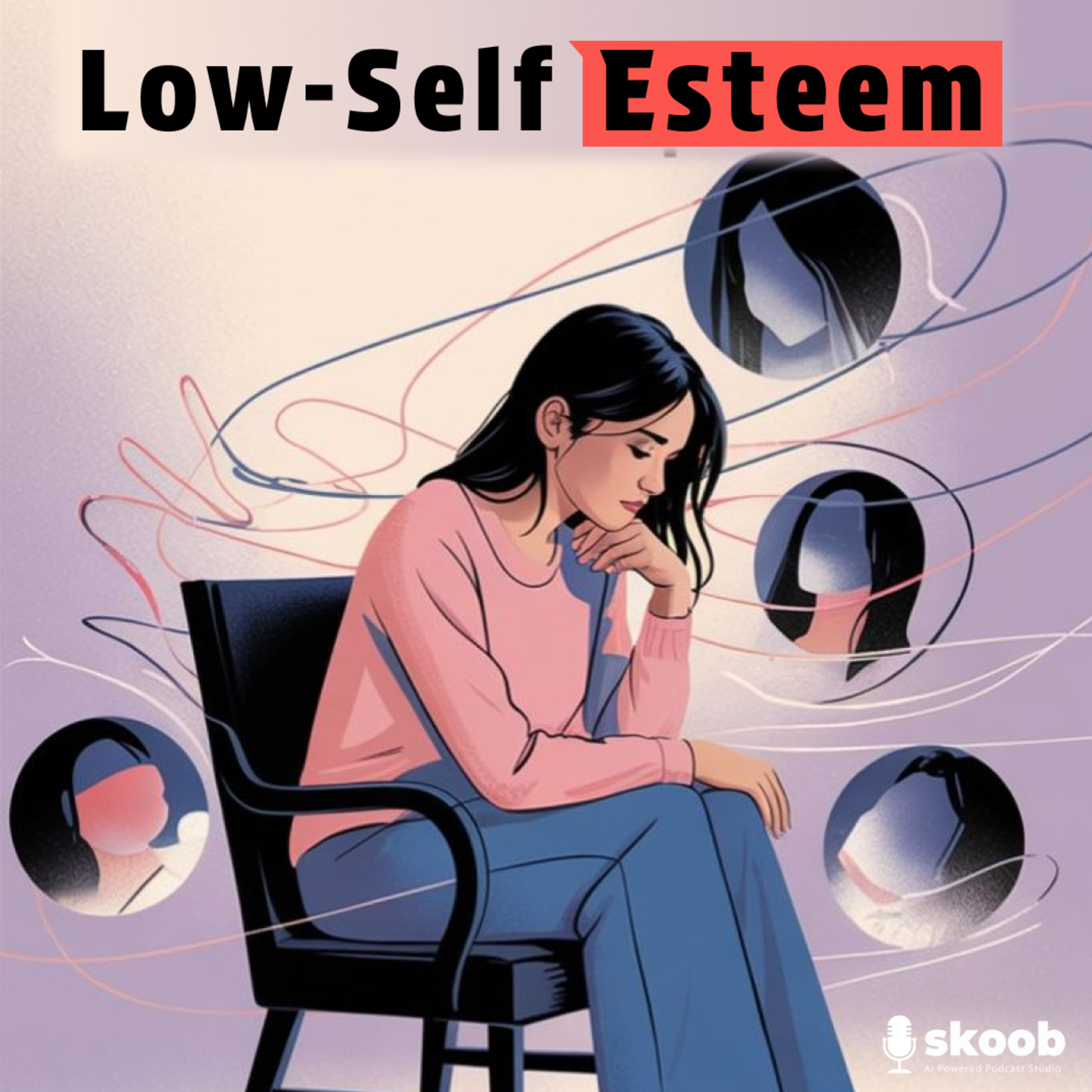
本集简介
双语字幕
仅展示文本字幕,不包含中文音频;想边听边看,请使用 Bayt 播客 App。
欢迎收看由Scoob呈现的《社会视角》节目。
Welcome to The Social Lens brought to you by Scoob.
我是主持人比阿特丽斯·古德温。
I'm your host, Beatrice Goodwin.
今天,我们将揭开比犯罪现场或法庭戏剧更为私密的层面。
And today, we're peeling back the layers on something far more personal than crime scenes or courtroom drama.
这关乎我们内心无声的战争——一种如此普遍、无形却又强大的挣扎,它塑造了我们看待世界的方式,也决定了我们认为世界如何看待自己。
This is about the quiet war inside our own minds, a struggle so common, so invisible, and yet so powerful, it shapes the way we see the world and how we believe the world sees us.
这不仅仅是一个关于低自尊的故事。
This isn't just a story about low self esteem.
这是一个关于我们对自己说的谎言、滋养的疑虑,以及仅为度过每一天而建立的防御机制的故事。
It's a story about the lies we tell ourselves, the doubts we feed, and the defense mechanisms we develop just to get through the day.
它关乎我们的自我价值感可以多么脆弱,又必须多么坚韧才能抵御来自四面八方的期待、比较和批评。
It's about how fragile our self worth can be and how resilient it must be to survive the expectations, comparisons, and criticisms that bombard us from every angle.
想象这些画面:一个青少年盯着镜子却不敢与自己的倒影对视,一位年轻职场人因觉得不配而推开赞美,一位父母为家庭付出一切却暗自觉得自己是个失败者。
Picture this, a teenager staring at a mirror, avoiding eye contact with their own reflection, a young professional brushing off compliments because they don't feel earned, a parent sacrificing everything for their family, yet quietly feeling like a failure.
这些并非罕见的故事。
These aren't rare stories.
这些都是日常的战斗,它们悄无声息地发生在微笑背后、卧室里、办公室隔间中,以及无人察觉的拥挤房间里。
These are everyday battles, and they're happening silently behind smiles, in bedrooms, in office cubicles, in crowded rooms where no one suspects a thing.
低自尊并不总是表现为悲伤。
Low self esteem doesn't always look like sadness.
有时它表现为完美主义、拖延症,或是笑声过于夸张。
Sometimes it looks like perfectionism or procrastination or a laugh that's just a little too loud.
有时它不是自怜,而是自我破坏。
Sometimes it's not self pity, it's self sabotage.
有时甚至连当事人自己都察觉不到。
And sometimes it's not even visible to the person experiencing it.
接下来的一个小时里,我们将探讨低自尊的根源——它从何开始,如何发展,以及为何即使表面一切正常,仍难以摆脱。
Over the next hour, we'll explore the roots of low self esteem, where it begins, how it grows, and why it's so difficult to shake, even when everything on the outside seems fine.
我们将深入探讨童年经历、社会期望、文化压力,以及每次浏览他人高光时刻时暗自进行的比较所扮演的角色。
We'll dive into the role of childhood experiences, societal expectations, cultural pressures, and the quiet comparisons we make every time we scroll through someone else's highlight reel.
我们还将结识那些穿越迷雾的勇者,他们重建自我认知的方式不是假装自信,而是直面那些令自己渺小的恐惧与信念。
We'll also meet people who've fought through the fog, who've rebuilt their sense of self, not by pretending to be confident, but by confronting the fears and beliefs that kept them small.
因为自尊不仅仅是爱自己。
Because self esteem isn't just about loving yourself.
它更关乎了解自己,挑战那些别人灌输给你和你自己编织的故事。
It's about knowing yourself, challenging the stories you've been told and the ones you've told yourself.
所以请继续收听。
So stay with us.
因为这不仅仅是一期播客节目。
Because this isn't just a podcast episode.
这是一场与内心批判者的清算,与隐秘羞耻的对峙,与那个'你不够好'声音的抗争。
This is a reckoning with the inner critic, with the quiet shame, with the voice that says, you're not enough.
让我们从对自尊最具毁灭性的打击——绝望感开始说起。
Let's start with perhaps the most devastating blow to self esteem, hopelessness.
想象一下这个场景。
Picture this.
你站在一口井的底部,抬头望着那个看似遥不可及的小小光点。
You're standing at the bottom of a well, looking up at a tiny circle of light that seems impossibly far away.
这就是绝望的感觉,它是我们内心能构想出的最阴险的自我价值破坏者之一。
That's what hopelessness feels like, and it's one of the most insidious destroyers of self worth our minds can conjure.
关于绝望,有个非常耐人寻味的现象。
Here's what's fascinating about hopelessness.
它不仅仅是放大的悲伤。
It's not just sadness on steroids.
实际上这是我们大脑用来逃避更可怕事情的方式——直面痛苦。
It's actually our mind's way of avoiding something even more terrifying, facing our pain head on.
我们通过逃避悲伤、拒绝寻求帮助、说服自己这个黑暗之地是永恒的,从而延续绝望。
We perpetuate hopelessness by running from our sadness, by refusing to seek help, by convincing ourselves that this dark place is permanent.
但大多数人没意识到这个转折点。
But here's the twist that most people don't understand.
要超越绝望,我们必须做与本能反应完全相反的事。
To transcend hopelessness, we must do the exact opposite of what feels natural.
我们必须深入那些与悲伤和失落相关的深刻情绪中。
We must dive deeper into those profound emotions associated with grief and loss.
我们必须直面它们,而非逃避。
We must confront them, not avoid them.
我知道这听起来有违直觉,就像告诉溺水者不要挣扎一样,但请听我说完。
I know this sounds counterintuitive, like telling someone who's drowning to stop fighting the water, but stay with me.
人类体验本质上充满了失去。
The human experience is inherently filled with loss.
我们会失去所爱之人。
We lose people we love.
我们会错失机遇。
We lose opportunities.
我们会失去曾经以为永恒不变的自我。
We lose versions of ourselves that we thought we'd always be.
承认这些失去的严重性,甚至是我们自我毁灭行为的后果,确实令人恐惧。
Accepting the gravity of these losses, or even the consequences of our own self destructive behaviors, is absolutely terrifying.
但这种接纳并非终点。
But this acceptance isn't the end.
它是唤醒我称之为'精神意志'的开端。
It's the beginning of awakening what I call our spiritual will.
让我们暂且思考一下内疚与羞愧。
Think about guilt and shame for a moment.
这些情绪热衷于玩指责游戏,把矛头指向环境、他人,指向任何事物——除了镜子里的自己。
These emotions love to play the blame game, pointing fingers at our circumstances, at other people, at anything except the mirror.
绝望则将这种状态推向更深处。
Hopelessness takes this a step further.
它因害怕为人生挑战的应对方式负责而彻底陷入瘫痪。
It becomes completely paralyzed by the fear of taking responsibility for our responses to life's challenges.
就像陷入情绪的流沙中。
It's like being stuck in emotional quicksand.
我们越是抗拒承担责任,就陷得越深。
The more we struggle against taking ownership, the deeper we sink.
现在事情变得有趣了,对你们中的一些人来说可能还带点灵性色彩。
Now here's where things get interesting and perhaps a little spiritual for some of you.
摆脱绝望通常需要我所说的'邀请'。
Breaking free from hopelessness often requires what I call the invitation.
寻求更高能量或外部资源来帮助我们转变心态。
Reaching out to a higher energy or external source to help shift our mindset.
这不一定非得是宗教性质的,尽管可以是。
This doesn't have to be religious, though it can be.
可以是心理咨询、灵性指导、可信赖的朋友,甚至是匿名支持小组。
It could be counseling, spiritual guidance, trusted friends, or even anonymous support groups.
在灵性层面上——我希望你们按照自己认为合适的方式理解——邀请更高力量给予我们面对损失所需的力量和勇气,这件事本身就意义深远。
On a spiritual level, and I want you to interpret this however feels right for you, there's something profound about inviting a higher power to give us the strength and courage we need to face our losses.
这个邀请至关重要,因为绝望本质上无法自行前进。
This invitation is crucial because hopelessness, by its very nature, cannot move forward on its own.
就像一辆电池没电的汽车。
It's like a car with a dead battery.
它需要来自外部力量的助推启动。
It needs a jump start from an external source.
战胜绝望最美妙之处在于,它要求我们彻底重构看待失去的方式。
The beautiful thing about overcoming hopelessness is that it requires us to completely reframe how we see loss.
我们不再逃避,而是直面它。
Instead of running from it, we turn toward it.
我们不再回避悲伤,而是允许自己充分感受它。
Instead of avoiding grief, we allow ourselves to feel it fully.
是的,这可能会让人感到极度难以承受,而这正是我们需要帮助的原因。
And yes, this can be intensely overwhelming, which is exactly why we need help.
哪怕只是需要有人提醒我们:我们有能力挺过这场风暴。
Even if it's just someone to remind us that we're capable of surviving this storm.
这个彻底改变我认知的秘密是:
Here's the secret that changed my perspective entirely.
走出绝望并不需要什么惊天动地的壮举。
Moving out of hopelessness doesn't require some Herculean effort.
它始于像邀请和好奇心这样简单的事物。
It starts with something as simple as invitation and curiosity.
我在想是否有办法摆脱这种困境。
I wonder if there's a way out of this.
我在想是否有人能帮助我。
I wonder if someone could help me.
我在想这种痛苦是否试图教会我什么。
I wonder if this pain is trying to teach me something.
认为前进需要巨大努力的信念,恰恰是让我们深陷绝望的原因。
The belief that moving forward requires tremendous effort is actually what keeps us stuck in hopelessness.
关键在于寻求帮助。
The key is asking for help.
就这么简单。
That's it.
开口求助就好。
Just ask.
它可以简单到只是对宇宙轻声低语。
It can be as simple as a whisper to the universe.
上帝啊,如果你存在,请帮我度过这个难关。
God, if you exist, please help me through this.
你不需要想清楚方法。
You don't need to figure out the method.
那不是你的职责。
That's not your job.
让我分享一个听起来像鸡汤但实际具有革命性的观点。
Let me share something that might sound like affirmation fluff but is actually revolutionary.
我们可以为自己建立全新的叙事方式。
We can adopt a completely new narrative about ourselves.
与其说'我陷入困境',不如说'我可以寻求帮助'。
Instead of I'm trapped, we can say, I can ask for help.
与其说'无路可走',不如说'出路就在那里,只是我暂时还看不见'。
Instead of, there's no way out, we can say, there is a way out, even if I can't see it yet.
聆听这些话,并真正听进去。
Listen to these words and really hear them.
上帝,赐予我力量。
God, give me strength.
我接受帮助。
I accept help.
我接受指引。
I accept guidance.
不知道该怎么办也没关系。
It's okay to not know what to do.
我敞开心扉。
I am open.
我想要过充满激情与幸福的生活。
I want to live a life of passion and happiness.
我允许自己悲伤。
I allow myself to be sad.
我允许自己哭泣和悲伤。
I allow myself to cry and grieve.
这句话可能会改变你的人生。
Here's a phrase that might change your life.
感受即是疗愈。
To feel is to heal.
我们被教导感受负面情绪是错误或软弱的表现,但事实恰恰相反。
We've been taught that feeling bad emotions is somehow wrong or weak, but the opposite is true.
我们感受得越深,就越能深度疗愈。
Our capacity to feel deeply is our capacity to heal deeply.
我会好起来的。
I'm gonna be okay.
我能渡过这个难关。
I'm gonna get through this.
我可以面对这一切。
I can face this.
别人都愿意支持我。
Others wanna support me.
我不是负担。
I am not a burden.
状态不好也没关系。
It's okay to not be okay.
一切终将水落石出。
All will be revealed in due time.
这个新叙事肯定了我们有能力寻求和接受支持,拥抱脆弱,并最终找到走出阴影的道路。
This new narrative affirms our capacity to seek and accept support, to embrace our vulnerabilities, and ultimately, to find our way out of the shadows.
现在让我们转换话题,探索弗洛伊德发现的至今仍让我震撼的现象——健康哀悼与他所称的忧郁症之间的区别,以及这种区别如何彻底改变我们与自尊的关系。
Now let's shift gears and explore something Freud discovered that still blows my mind today, the difference between healthy mourning and what he called melancholia and how this difference completely changes our relationship with self esteem.
当我们处于正常的哀悼期,为失去的人悲伤时,通常不会出现自我评价的急剧下降。
When we're in a normal period of mourning, grieving someone we've lost, we typically don't experience a massive drop in self regard.
当然,我们可能会责怪自己爱得不够或陪伴不足,但核心的自我认知通常保持完好。
Sure, we might blame ourselves for not loving them enough or not spending more time with them, but our core sense of self usually remains intact.
然而,忧郁症完全是另一回事。
Melancholia, however, is a different beast entirely.
虽然表面上看起来与哀悼相似,但有一个关键区别会摧毁自尊。
While it looks similar to mourning on the surface, there's a crucial difference that destroys self esteem.
在哀悼中,我们清楚地知道自己失去了什么。
In mourning, we know exactly what we've lost.
那个人去世了,那段关系结束了,那个机会错过了。
The person died, the relationship ended, the opportunity passed.
但在忧郁症中,这种丧失部分是潜意识的。
But in melancholia, the loss is partly unconscious.
我们感觉缺失了什么,却无法确切指出到底是什么。
We know something is missing, but we can't quite put our finger on what.
这里就出现了心理学上令人着迷的部分。
Here's where it gets psychologically fascinating.
弗洛伊德注意到,处于忧郁状态的人会对自己进行强烈的谴责。
Freud noticed that people in melancholic states direct intense reproaches against themselves.
他们会说,我是个毫无价值的人,不配活着。
They'll say things like, I am a worthless person who doesn't deserve to live.
但关键在于。
But here's the kicker.
这些自我指责实际上本可以指向那些抛弃他们的人。
These self accusations are actually criticisms that could have been directed at the person who left them.
想想看。
Think about it.
'我毫无价值不配活着'其实是'你毫无价值不配活着因为你抛弃了我'的伪装版本。
I am worthless and don't deserve to live is really a disguised version of you are worthless and don't deserve to live because you left me.
这种攻击性最初是向外的,却被转向内部,融入我们严苛的内在批判者,表现为自我谴责和自我憎恨。
It's aggression that was initially aimed outward but got redirected inward, integrated into our harsh inner critic, and expressed as self reproach and self hatred.
这就是为何忧郁症会摧毁自尊,而正常哀伤不会。
This is why melancholia devastates self esteem while normal mourning doesn't.
在哀伤中,我们愤怒的对象是死亡、是境遇、是生活的不公。
In mourning, we're angry at death, at circumstances, at the unfairness of life.
在忧郁症中,我们将所有愤怒转向内心,让自己成为攻击目标。
In melancholia, we've turned all that anger inward and made ourselves the target.
现在我们来讨论一种最令人着迷却又自我毁灭的自尊保护方式——自我设障。
Now let's talk about one of the most fascinating and self destructive ways we try to protect our self esteem, self handicapping.
我们都曾在表现不佳后找过借口,归咎于睡眠不足、身体不适或其他外部因素。
We've all made excuses after a poor performance, blamed it on a bad night's sleep, being sick, or some other external factor.
但这些事后的借口太过明显,连我们自己都不相信。
But these retroactive excuses are so transparent that even we don't believe them.
自我设障要复杂得多,坦白说,也更具破坏性。
Self handicapping is far more sophisticated and, frankly, more damaging.
我们不是在失败后找借口,而是在尝试前就制造障碍。
Instead of making excuses after we fail, we create obstacles before we even try.
比如考前夜喝得烂醉的学生,大赛前停止训练的运动员,或是毫无准备就参加重要提案的高管。
It's the student who gets drunk the night before a crucial exam, the athlete who stops training before a big competition, the executive who walks into an important sales pitch, completely unprepared.
乍看之下,这种行为似乎完全不合逻辑。
At first glance, this behavior seems completely irrational.
为什么有人要破坏自己成功的机会?
Why would anyone sabotage their own chances of success?
但当你理解背后的心理机制时,就会发现这种逻辑其实很可悲。
But when you understand the psychology behind it, it becomes tragically logical.
1978年,心理学家斯蒂芬·伯格拉和爱德华·琼斯进行了一项开创性研究,揭示了这种自我保护机制的深层原理。
In 1978, psychologists Stephen Berglas and Edward Jones conducted a groundbreaking study that revealed the depths of this self protective mechanism.
他们让学生参加考试,但事先提供了一种据说会抑制表现的药物。
They gave students an exam but first offered them a drug that would supposedly inhibit their performance.
从逻辑上讲,为什么会有人选择损害自己的机会?
Logically, why would anyone choose to compromise their chances?
令人惊讶的是,许多学生服用了这种药物。
Surprisingly, many students took the drug.
在外界观察者看来,这似乎很疯狂。
To outside observers, this seemed insane.
但对博士来说。
But to Doctor.
伯格洛特本人在高中参加SAT考试前就曾尝试过药物,这完全说得通。
Berglot, who had personally experimented with drugs before taking his SATS in high school, it made perfect sense.
当你的自我形象完全与表现挂钩,而风险又高得令人窒息时,拥有一个备用借口比获得成功的最佳机会更有价值。
When your self image is entirely tied to your performance and the stakes feel impossibly high, having a backup excuse becomes more valuable than having the best chance at success.
这就是扭曲的逻辑:如果你在不利条件下失败,你可以归咎于这些不利条件。
Here's the twisted logic: If you fail while handicapped, you can blame the handicap.
如果你在不利条件下成功,那你一定比任何人想象的都更有才华。
If you succeed while handicapped, you must be even more talented than anyone realized.
这种双赢局面在情感上比冒真正失败的风险更安全。
It's a win win scenario that feels emotionally safer than risking genuine failure.
但我们忽略了一点。
But here's what we miss.
维护如此脆弱、经不起失败打击的自尊有什么意义?
What's the value of maintaining self esteem that's so fragile it can't withstand failure?
我们就像那些过于追求完美形象、不敢承认错误的外科医生,这让他们变得危险。
We become like surgeons who are so invested in their image of perfection that they can't acknowledge their mistakes, and that makes them dangerous.
事实证明,自尊心可能是一种被高估的心理特质。
Self esteem, as it turns out, might be an overvalued psychological trait.
当我们过于专注于保护自尊时,实际上反而阻碍了学习和成长。
When we're too focused on protecting it, we actually impede our learning and growth.
我们真正需要的不是更高的自尊。
What we really need isn't higher self esteem.
而是韧性——面对失败、从中学习并变得更强大的能力。
It's resilience, the ability to face failure, learn from it, and bounce back stronger.
让我们转向一个影响我们每个人的话题,无论是否意识到——他人对我们自尊的负面影响。
Let's shift to something that affects every single one of us, whether we realize it or not, the negative influences of others on our self esteem.
有句谚语说:永远不要预支烦恼,因为它们总会以相当可靠的方式实现这些预期。
There's a saying that goes, never anticipate troubles as they have a way of fulfilling those expectations quite reliably.
这揭示了人类最普遍的弱点之一——让我们的思想对来自他人的负面影响毫无防备。
This speaks to one of humanity's most widespread weaknesses, leaving our minds wide open to negative influences from other people.
尤其阴险的是,大多数人甚至意识不到这种情况正在发生。
What makes this particularly insidious is that most people don't even recognize when it's happening.
我们自认为是独立思考者,却不断吸收着周围人的态度、期待和评判。
We think we're independent thinkers, but we're constantly absorbing the attitudes, expectations, and judgments of those around us.
即便有所察觉,我们也常常选择忽视,直到这些影响根深蒂固到仿佛成了我们自己的声音。
Even when we do notice it, we often choose to ignore it until it becomes so deeply ingrained that it feels like our own voice.
我想分享几个强有力的自我剖析问题,帮助你识别是否已受到负面影响的侵蚀。
I want to share some powerful self analysis questions that can help you identify whether you've fallen victim to negative influences.
请大声朗读这些问题。
Read these questions aloud.
听见自己的声音会让你更难欺骗自己。
Hearing your own voice makes it harder to lie to yourself.
你是否经常抱怨情绪低落?这些情绪的根源是什么?
Do you often complain about feeling bad and what causes these feelings?
你是否会因最轻微的挑衅就急于挑剔他人?
Are you quick to find fault with others at the slightest provocation?
生活是否显得徒劳无益,未来是否看似毫无希望?
Does life appear futile and the future hopeless?
你是否嫉妒那些比你优秀的人?
Are you envious of those who excel beyond you?
你花更多时间思考成功还是失败?
Do you spend more time thinking about success or failure?
这里有一个关键问题。
Here's a crucial one.
随着年龄增长,你的自信心是增强还是减弱?
As you grow older, are you gaining or losing self confidence?
你是否容忍那些本可避免的消极或令人沮丧的影响?
Do you tolerate negative or discouraging influences that you could avoid?
如果让别人替你做决定,你会认为自己软弱吗?
Would you consider yourself weak if you allowed others to do your thinking for you?
也许最重要的是,你有保护自己免受消极影响的策略吗?
And perhaps most importantly, do you have strategies to protect yourself from negative influence?
你是否会刻意使用积极的自我对话来保持建设性心态?
Do you intentionally use positive self talk to maintain a constructive mindset?
这些问题并非意在让你感到羞愧。
These questions aren't meant to shame you.
它们旨在唤醒你意识到环境如何深刻影响你的自我认知。
They're meant to wake you up to the reality of how much your environment affects your self perception.
好消息是,一旦你意识到这些影响,就能开始建立防御机制。
The good news is that once you become aware of these influences, you can start to build defenses against them.
现在,让我们探讨一个颠覆性观点,它挑战了心理学家对自尊的所有传统认知。
Now, let's explore a revolutionary idea that challenges everything psychologists thought they knew about self esteem.
一个多世纪以来,该领域一直强调保持积极自我认知的重要性。
For over a century, the field emphasized the importance of having a positive self view.
但研究者马克·利里提出了一个改变一切的问题:从进化角度看,我们为什么需要自尊?
But researcher Mark Leary asked a simple question that changed everything: From an evolutionary perspective, why would we need self esteem at all?
利里意识到,我们祖先的生存不依赖于自我感觉良好,而取决于能否成为族群中有价值的成员。
Leary realized that our ancestors' survival didn't depend on feeling good about themselves It depended on being valuable members of their social groups.
如果你被部落排斥,就意味着死亡。
If you were rejected by your tribe, you died.
因此,如果说自尊心是一种与生俱来的驱动力,那么它本质上应该是关于如何被他人正面看待。
So if there's an innate drive for self esteem, it should really be about being perceived favorably by others.
这一发现催生了他开创性的社会计量器理论。
This led to his groundbreaking sociometer theory.
自尊就像一个内部仪表,持续监测我们作为社交伙伴的价值。
Self esteem functions like an internal gauge that constantly monitors our value as a social partner.
当这个仪表数值下降时,就会触发内部警报,促使我们改变行为以重新获得社会认可。
When that gauge drops, it triggers an internal alarm that motivates us to change our behavior to regain social acceptance.
但莱利遇到了一些声称完全不受他人意见影响的人。
But Leary encountered people who claimed to be completely unaffected by others' opinions.
作为一名严谨的科学家,他决定验证这些说法。
Being a good scientist, he decided to test these claims.
他筛选出坚称自己完全不受社会影响的学生,将他们带入实验室。
He identified students who insisted they were entirely immune to social influence and brought them into his lab.
这个实验设计简洁优雅,却在心理层面相当残酷。
The experiment was elegantly simple but psychologically brutal.
参与者独自坐着谈论自己五分钟,据称会被另一个房间的陌生人评估。
Participants sat alone and talked about themselves for five minutes while supposedly being evaluated by a stranger in another room.
每分钟屏幕上会闪出一个数字,据称显示对方想与他们互动的意愿程度。
Every minute, a number flashed on the screen, allegedly showing how much the other person wanted to interact with them.
数字范围从1到7。
The numbers ranged from one to seven.
部分参与者收到持续下降的评分:4、3、2、3、2,实时看着自己的社交价值直线下跌。
Some participants received declining ratings, four, three, two, three, two, watching their supposed social value plummet in real time.
其他人收到上升的评分:4、5、6、5、6,体验着被逐渐接纳的认同感。
Others received increasing ratings, four, five, six, five, six, experiencing the validation of growing acceptance.
结果如何?
The results?
即便是那些发誓不在乎他人看法的人,其自我认知也因这些来自陌生人的虚假评分而产生了可测量的变化。
Even those who swore they didn't care what others thought showed measurable changes in their self perception based on these fake ratings from a complete stranger.
社交计量器在每个人身上都起作用,无论他们如何宣称自己的独立性。
The sociometer was working in everyone, regardless of what they claimed about their independence.
那么这一切意味着什么?
So where does this leave us?
我们穿越了绝望的黑暗,探索了忧郁自我挫败的本质,见证了自我设限的悖论,审视了消极影响如何渗透我们的意识,并发现我们的自尊远比我们愿意承认的更受社会影响。
We've journeyed through the darkness of hopelessness, explored the self defeating nature of melancholia, witnessed the paradox of self handicapping, examined how negative influences seep into our consciousness, and discovered that our self esteem is far more social than we'd like to admit.
但我想让你从这次探索中记住的是:
But here's what I want you to take away from this exploration.
理解这些机制并不是要让你灰心丧气。
Understanding these mechanisms isn't meant to discourage you.
它的本意是解放你。
It's meant to free you.
当你理解了绝望的运作机制,就能识别它并寻求帮助。
When you understand how hopelessness works, you can recognize it and reach out for help.
当你理解了忧郁症,就能察觉自己将愤怒转向内心的行为,并更建设性地疏导它。
When you understand melancholia, you can catch yourself directing anger inward and redirect it more constructively.
当你理解了自我设限,就能选择勇气而非自我保护。
When you understand self handicapping, you can choose courage over self protection.
前进的道路不在于建立刀枪不入的自尊心。
The path forward isn't about building bulletproof self esteem.
而在于培养韧性、真实性和敢于脆弱的勇气。
It's about building resilience, authenticity, and the courage to be vulnerable.
在于理解我们的自我价值不必依赖于完美甚至他人的认可,尽管我们天生在意他人的看法。
It's about understanding that our self worth doesn't have to be contingent on perfection or even on others' approval, even though we're wired to care what others think.
记住我们讨论过的新叙事。
Remember the new narrative we discussed.
我可以寻求帮助。
I can ask for help.
总有出路。
There is a way out.
我接受指引。
I accept guidance.
不知道该怎么办也没关系。
It's okay to not know what to do.
我敞开心扉。
I am open.
感受即治愈。
To feel is to heal.
我会好起来的。
I'm going to be okay.
他人愿意支持我。
Others wanna support me.
我不是负担。
I am not a burden.
你与自己的关系将是你此生最长久的关系。
Your relationship with yourself is the longest relationship you'll ever have.
让它成为一段友善的关系。
Make it a kind one.
让它成为一段真诚的关系。
Make it a honest one.
让它成为一个坚韧的关系。
Make it a resilient one.
这就是我们对自卑这一无声挣扎的深入探讨——这个复杂而深刻的个人问题不仅影响我们如何看待自己,更影响我们如何与世界相处。
That's our deep dive into the silent struggle of low self esteem, a complex, deeply personal issue that shapes not just how we see ourselves, but how we move through the world.
它提醒我们,最严苛的评判往往来自内心,而治愈始于同情而非完美。
It's a reminder that the harshest judgments we face often come from within, and that healing begins not with perfection, but with compassion.
但这个故事不仅仅是关于心理学的故事,更是关于生存的故事。
But this story isn't just about psychology, it's about survival.
它讲述早期经历、文化叙事和无声比较如何侵蚀我们的自我价值,而重新发现这份价值是一个人能做的最勇敢的事之一。
It's about how early experiences, cultural narratives, and quiet comparisons can chip away at our self worth, and how rediscovering that worth is one of the bravest things a person can do.
如果你想更深入地理解自卑的根源,发现增强自我认知的实用方法等更多内容,现在就前往Scoob应用吧。
If you wanna go further to better understand the roots of low self esteem, discover practical ways to strengthen your sense of self and more, head over to the Scoob app now.
因为这不仅仅是一场关于自卑的对话,更是一场重拾内心声音、挑战谎言、选择成长而非羞耻的运动。
Because this isn't just a conversation about low self esteem, it's a movement toward reclaiming your inner voice, challenging the lies you've been told, and choosing growth over shame.
在App Store或Google Play下载Scoob应用,解锁完整体验。
Download Scoob on the App Store or Google Play to unlock the full experience.
我是碧翠丝·古德温,这里是《社会透镜》。
I'm Beatrice Goodwin, and this has been The Social Lens.
下次见面前,请善待自己,质疑那些你已超越的旧故事,并记住——在这条路上,你并不孤单。
Until next time, be kind to yourself, question the stories you've outgrown, and remember, you are not alone in this.
关于 Bayt 播客
Bayt 提供中文+原文双语音频和字幕,帮助你打破语言障碍,轻松听懂全球优质播客。