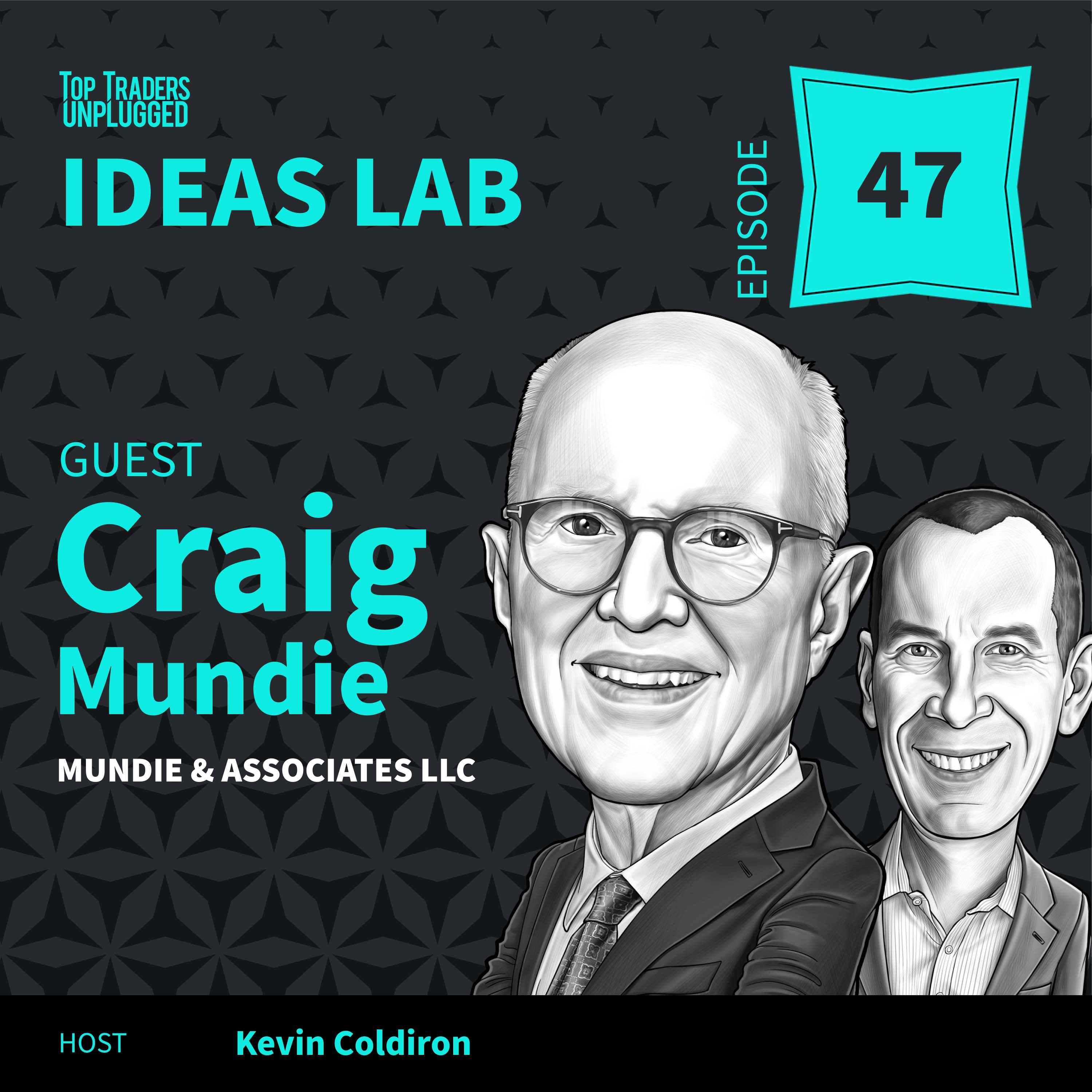
本集简介
双语字幕
仅展示文本字幕,不包含中文音频;想边听边看,请使用 Bayt 播客 App。
我们首次在这些机器中拥有了一位合作者,它将赋予我们前所未有的能力,去理解我们自身,包括我们的生物学乃至思维过程。
For the first time, we'll have a collaborator in these machines that will give us the ability to under understand ourselves, including our biology and perhaps even our thinking, to a degree that has never been possible before.
但它同时也为人类掌控自身命运创造了机会。
But it'll also create the opportunity for humans to take control of our own destiny.
我经常告诉人们,人类的进化,如同一直以来那样,已经结束了。
I often tell people that human evolution, as it has been for all of time, is over.
事实上,我们改变生存环境的速度,已经超出了传统进化过程所能适应的范围。
That in fact, you know, we're changing the environment in which we live at a rate that standard evolutionary processes don't adapt to.
想象一下,花上一小时与世界上最顶尖的交易员相处。
Imagine spending an hour with the world's greatest traders.
想象一下,从他们的经验、成功与失败中学习。
Imagine learning from their experiences, their successes, and their failures.
别再想象了。
Imagine no more.
欢迎来到《顶级交易员未剪辑版》,在这里,你可以向全球最优秀的对冲基金经理学习,从而将你的基金经理尽职调查或投资职业生涯提升到新高度。
Welcome to Top Traders Unplugged, the place where you can learn from the best hedge fund managers in the world so you can take your manager due diligence or investment career to the next level.
在我们开始今天的对话之前,请记住两件事。
Before we begin today's conversation, remember to keep two things in mind.
我们所有关于投资表现的讨论都仅限于过去,而过往表现并不能保证或暗示任何关于未来表现的信息。
All the discussion we'll have about investment performance is about the past, and past performance does not guarantee or even infer anything about future performance.
同时,请理解所有投资策略都存在显著的财务亏损风险,在做出投资决策之前,您需要向投资经理索取并充分了解其产品的具体风险。
Also understand that there's a significant risk of financial loss with all investment strategies, and you need to request and understand the specific risks from the investment manager about their product before you make investment decisions.
接下来有请资深对冲基金经理尼尔斯·卡普斯特-拉森。
Here's your host, veteran hedge fund manager Niels Kaastrup-Larsen.
对我来说,播客之旅最精彩的部分,就是有机会与来自世界各地的众多杰出人士对话。
For me, the best part of my podcasting journey has been the opportunity to speak to a huge range of extraordinary people from all around the world.
在本系列中,我邀请了其中一位——凯文·科迪龙,来主持一系列深入对话,帮助揭示和阐释新理念,助你成为更优秀的投资者。
In this series, I have invited one of them, namely Kevin Coldiron, to host a series of in-depth conversations to help uncover and explain new ideas to make you a better investor.
在这一系列中,凯文将与新书和研究论文的作者对话,以更好地理解全球经济及其塑造机制,从而让我们都能成功应对其中的挑战。
In the series, Kevin will be speaking to authors of new books and research papers to better understand the global economy and the dynamics that shape it so that we can all successfully navigate the challenges within it.
接下来,有请凯文·科迪龙。
And with that, please welcome Kevin Coldiron.
好的。
Okay.
谢谢尼尔斯,欢迎各位来到《Top Traders Unplugged》的Ideas Lab系列。
Thanks, Niels, and welcome everyone to the Ideas Lab series here on Top Traders Unplugged.
今天我们邀请的嘉宾是克雷格·门迪。
Our guest today is Craig Mundie.
克雷格在微软工作了二十二年,担任首席技术官。
Craig spent twenty two years at Microsoft where he was the chief technical officer.
他还曾担任该公司的首席研究与战略官,以及首席执行官的高级顾问。
He also served as chief research and strategy officer there, as well as senior adviser to the CEO.
克雷格还广泛参与公共政策领域,曾八年担任奥巴马总统科学与技术顾问委员会成员。
Craig has worked extensively in the public policy arena as well, including spending eight years on president Obama's council of advisers on science and technology.
他目前是中美人工智能二轨对话的联合主席。
And he's currently co chair of the track two dialogue with China on artificial intelligence.
他今天来这里,是为了讨论他与埃里克·施密特和已故的亨利·基辛格合著的书籍《创世:人工智能、希望与人类精神》。
He's here today to talk about the book he coauthored with Eric Schmidt and the late Henry Kissinger called Genesis, Artificial Intelligence, hope, and the human spirit.
对我来说,这是我对人工智能长期挑战与潜力最深入的分析之一,我非常兴奋能将这些观点分享给今天的听众。
For me, it's one of the most thoughtful analysis of the long term challenges and potential of AI that I've read, and I'm super excited to bring some of those ideas to everyone listening today.
所以,Craig,我们非常感谢你抽出时间。
So Craig, we really appreciate your time.
非常感谢你加入我们,欢迎来到本节目。
Thanks so much for joining us, and welcome to the show.
谢谢,凯文。
Thanks, Kevin.
我很高兴能来到这里。
I'm very happy to be here.
好的。
Alright.
这本书叫《创世纪》,所以我想我们可以聊聊这本书的由来。
Well, the book is called Genesis, so I thought perhaps we could talk about the genesis of the book.
这个与基辛格博士的合作项目是如何开始的?
How did the project with Doctor.
基辛格和埃里克·施密特,对于还不了解的人,埃里克·施密特曾是谷歌的首席执行官和董事长。
Kissinger and and Eric Schmidt and for those of you who don't know, Eric Schmidt was the CEO and chairman of of Google.
那么,写一本关于人工智能的书这个决定是怎么产生的呢?
How did that, you know, the decision to write a book about AI come about?
事实上,早在1998年,我就以一种很特别的方式认识了亨利·基辛格,后来我们成了非常好的朋友。
Well, it turned out that years ago, actually in 1998, I got to know Henry Kissinger in a in an interesting sort of way, and we became very good friends.
所以在过去二十多年里,我们一直合作共事,经常交流,深入探讨当时的各种议题。
And so for twenty six odd years, you know, we both did some work together and collaborated and spent quite a bit of time talking about whatever the issues of the day were.
随着时间推移,当亨利95岁的时候——也就是大约七年前——我和埃里克·施密特一起参加了名为‘Build A Bird’的会议,那一年会议在欧洲举行。
And as time went on, when Henry turned 95, which was basically like seven years now ago, and Eric Schmidt were all attending a meeting in called the Build A Bird meetings, and that one was in Europe that year.
这个会议亨利自1955年左右起每年都会参加,而我也已经参加了很久。
And it was something that Henry had gone to every year, you know, since 1955 I think, and I had been attending for a long time.
在那次由我和埃里克共同策划的会议议程中,有一个议题是关于人工智能的讨论。
And one of the topics at that meeting that Eric and I had collaborated on in putting the program together included a discussion on artificial intelligence.
当时亨利也在场,他认真聆听了讨论,结束后,他深深被机器能力超越人类这一前景所带来的深远影响所震撼。
And so Henry was there, and he listened to the discussion, and at the end of which, you know, he was really struck by the profound implications of the arrival of machines that would exceed human capabilities.
就在那一刻,他决定将余生——无论还剩多少年——专注于帮助人们理解人工智能可能带来的影响,以及我们该如何思考应对它。
And at that moment, in essence, he decided to spend the rest of his life, however many years remained, focused on trying to help people understand what the effects of that were likely to be and how we might think about dealing with it.
因此,他花了不少时间,超过一年,认真地学习和充实自己。
And so he spent quite a bit of time, a year or more, really getting educated.
亨利根本不是技术专家。
Henry was not a technologist at all.
他受过哲学和历史的训练。
You know, he's trained in philosophy and history.
他是一位杰出的战略家,也是个优秀的作家,但技术并不是他的专长。
He was a brilliant strategist and a good writer, but technology wasn't his thing.
几年后,他和埃里克——他也认识埃里克一段时间了——与来自麻省理工学院的丹·胡滕洛克尔联手,决定合写一本关于人工智能的书。
And after a couple of years, he and Eric, who he had known also for some period of time, got together with Dan Huttenlocker out of MIT and decided to write a book about AI.
这本书主要聚焦于他们所认为的人工智能潜在挑战,以及一些潜在的好处。
And that book focused more or less on the what they saw as the potential challenges of artificial intelligence and a little bit about the potential benefits.
但值得注意的是,它并没有深入探讨:我们究竟可以做些什么?
But it notably didn't go very far in trying to talk about, well, what could we do about it?
结果,在所有这些发展的同时,我在从微软退休后,开始与多家公司合作。
And it turned out, in parallel with all that development, I had, in in my retirement from Microsoft, started to work with a variety of companies.
其中一家公司正是萨姆·阿尔特曼和OpenAI的早期阶段。
One of which turned out to be Sam Altman and OpenAI in its early years.
由于这一参与,我本人像亨利一样,对如何应对超级智能机器的出现产生了浓厚兴趣。
And as a result of that involvement, I personally became very interested, as Henry had, in this question of how do you deal with the emergence of super intelligent machines?
我花了不少时间思考这个问题。
And I had spent quite a bit of time thinking about it.
因此,亨利请我在他们完成这本书时担任编辑,我接受了。
So Henry asked me to edit that first book as they were completing it, and I did.
在我们一次双周对话中,我对他说,这很好。
And and then in one of our biweekly conversations, I said to him, you know, this is good.
它帮助人们看到了潜在的好处和风险,但并没有告诉他们该如何应对。
It helps people see the benefits and potential risks, but it doesn't tell them what to do about it.
我一直在深入思考这些问题,于是我和亨利开始讨论其中的一些想法。
And I've been thinking a lot about that, and Henry and I started talking about some of those ideas.
有一天,他对我说:‘现在是你我合写一本书的时候了。’
And he said one day, okay, now it's time for you and I to write a book.
埃里克对补充一些第一本书里没有的内容很感兴趣。
And Eric was sort of interested in adding some things, you know, to that discussion that hadn't been in the first one.
实际上,我认识埃里克已经四十年了。
And I'd known Eric actually for forty years.
你知道,我们当年都是科技行业里的年轻人。
You know, we were both young guys in the tech industry.
我们曾因太阳微系统公司和我当时所在的公司——Alliant计算机系统公司之间的合作而结识。
We had come together in a collaboration between Sun Microsystems and my company, Alliant Computer Systems, at the time.
因此,我们彼此熟识并一直有互动,正如你提到的,我们还在奥巴马总统的科学与技术顾问委员会共事了八年。
And and so we had known each other and interacted including, as you pointed out, on president Obama's council of science and advisors on science and technology for eight years.
于是,我们开始了后来成为《创世》的这本书的写作。
And so we embarked on the book that became Genesis.
最终,我们在亨利去世后不久完成了这本书。
And in the end, we finished it just after Henry passed away.
是的
Yeah.
这本书的第一部分是对基辛格博士的感人致敬。
It's a the first section of the book is quite a moving tribute to to Doctor.
基辛格。
Kissinger.
我忍不住笑了。
And I had to chuckle.
我觉得你提到他最初接触计算机时,想买一台,但中央情报局不让他买。
I think you say that he he first learned about computers and he wanted to get one for himself and the CIA wouldn't let him
有一台。
have one.
是的
Yeah.
是的
Yeah.
我的意思是,事情已经发生了很大的变化。
I mean, things have changed a lot.
是的。
Yeah.
我想开始这个对话。
So I'd like to start the conversation.
这可能有点沉重,但我认为关于知识和理解的概念非常重要。
This is actually maybe a little bit heavy, but I think quite important with the concepts of knowledge and understanding.
我怀疑对于大多数听众,包括我自己在内,到目前为止与人工智能的主要互动就是向它提问。
And I suspect for most people listening, myself included, that their main interaction thus far with AI has been asking it questions.
事实上,就在上周,我参加了一场毕业典礼,演讲者说:嘿。
In fact, I I I went to a commencement ceremony just last week where the speaker said, hey.
我们现在正接近这样一个阶段:几乎任何我们能提出的问题都有可能得到解答。
We're now approaching a point where almost any question we can ask could potentially be answered.
因此,我们需要培养我们的学生成为善于提问的人,这让我觉得很有道理。
And so we need to train our students to be good question askers, and that that made sense to me.
但你的书把我们带得更远了。
But your book takes us all quite a bit further.
在由历史学家尼尔斯·弗格森撰写的引言中,你提到,在这个新时代,人类不再从自身提出的问题出发向前推进,而是面对人工智能对人类从未提出过的问题所提供的答案,这最终将知识与理解、人类的知识与人类的理解分离开来,而这是我们前所未有的经历。
In the intro, which was written by Niels Ferguson, the historian, you say in this new age, rather than working forward from questions posed by humans, humanity confronts answers provided by AI to questions that no human ever asked, and that ultimately this separates knowledge from understanding, human knowledge from human understanding in a way that we really haven't experienced before.
我知道这内容很多,但我认为这正是书中核心的基础所在。
So I know that's a lot, but I I think it's kind of foundational to what's going on in the book.
我想知道,你是否能先对比一下人类知识是如何进步的,与人工智能知识是如何进步的,以及这可能会让我们陷入什么样的困境——比如,我们得到了有效的解决方案,却不知道它们为何有效。
And I I was wondering if perhaps you could start by maybe contrasting how human knowledge advances with how AI knowledge advances and how that might leave us with, I don't know, solutions that work, but but we don't know why they work.
我认为在某种意义上,我们制造了一台机器,它的大脑在很大程度上是模仿我们认为的人类大脑工作方式构建的。
Well, I think in some sense, you know, we built a machine that has a brain that, to some significant degree, is modeled off after what we think is the way human brains work.
因此,从这个角度看,机器的学习方式并不一定与人类不同。
So in that sense, it it isn't necessarily the case that that the machine learns differently than humans.
但正如我们在书中也讨论过的,区别在于机器的学习能力远超人类。
The difference is, as we also talk about in the book, is that the capability of the machine to learn is wildly better than than humans.
原因有几个。
For a couple of reasons.
一个是,我们可以认为人脑的电路时钟频率大约为30赫兹。
One is that the circuits of our brain, you could think, sort of have a clock rate of about 30 hertz.
尽管大脑中的活动非常并行,且耗能极低,但仍然无法以如此快的速度循环执行任务。
And while they're very very parallel in that activity in your head and consume little power, it still can't cyclically do things that quickly.
而当我们用计算机来构建这些系统时,和其他任何计算机一样,这些系统的时钟频率是以吉赫兹为单位的。
And when we build these things out of computers, as is true with any other computer, the clock rates on these things are measured in gigahertz.
因此,你在处理速度上会看到比人类快一千万到一亿倍。
And so you're looking at 10 to the seventh or eighth times faster in terms of the rate which does things.
我认为另一个常被人们忽视的是,如果你把大脑看作一台计算机,那么我们大脑的输入和输出系统相对于计算机来说要弱得多。
I think the other thing that people don't stop and think as much about is that if you think of your brain as a computer, the input and output systems to our brain are very very weak relative to those that we have for the computers.
所以,我们的输入系统主要依赖眼睛、耳朵,以及在较小程度上的触觉。
So, you know, our our input systems are largely our eyes, you know, and our ears, and to some lesser extent, you know, perhaps touch.
这些感官系统不仅分辨率低,而且在某种程度上速度也慢。
And those things are both low resolution and to some extent, low speed.
其中带宽最高的是视觉,但即便如此,它也是一个抽象化的系统。
And the highest bandwidth of those is our vision, and even that is an abstracting system.
你知道,我们的眼睛是这样构造的:它看到东西后会进行一些预处理,然后将部分抽象信息传递给大脑进行推理。
You know, I mean, our eyes are built in a way where it sees things and it preprocesses some of it, and some abstract part of it gets passed into the brain for reasoning.
而且这些系统的分辨率是有限的。
And the and the resolution of these things is kinda limited.
另一方面,机器则拥有极其先进、高带宽的传感器优势。
On the other hand, machines enjoy the benefit of incredibly sophisticated high bandwidth sensors.
你知道,摄像头的分辨率比我们的眼睛还要高。
You know, cameras are higher resolution than our eyes are.
而人类借助普通的计算机,几十年来一直在寻找我们自身感知到的所有事物的数字化表示。
And humans, courtesy of regular old computers, have spent decades now finding digitized representations of all the things that we sense ourselves.
在输出端,我们所创造的一切——无论是图像还是文字——都已被记录并数字化。
And on our output side, you know, those things that we have produced, whether they're images or writings, you know, have all been recorded and now digitized.
因此,机器在输入系统的速度和分辨率方面,相对于人类具有巨大优势,它能够以某种方式完成人类所经历的相同学习过程。
And so this gives the machine a huge leg up over humans, and that with its speed and resolution of input systems, it can go through, in a sense, the same learning process that humans do.
但它完成这一过程的速度,快了几个数量级。
But it goes through it, you know, many decimal orders of magnitude faster.
这种影响在我们书中前几部分通过介绍或提醒人们什么是通才来体现。
The effect of this, which we talk about in the early parts of the book by introducing or reminding people what polymaths are.
你知道,历史上曾出现过一些人类通才,他们能够享受一种非凡的益处,即理解和整合信息,但通常仅限于少数几个领域。
You know, there been human polymaths who are people that enjoy some extraordinary benefit to to know and integrate information, but usually only across a small number of domains.
就连这些人都被视为特殊的存在。
And even those people are viewed as special.
这些机器本质上每一个都是具备非凡能力的通才。
What these machines are is essentially every machine is a polymath of extraordinary capabilities.
事实上,它掌握了所有它能够吸收的关于各个领域的知识。
In fact, it knows everything it's been able to ingest about every domain.
这实际上产生了一种近乎无限的通才能力。
Now this actually produces sort of an unlimited polymathic capability.
正如人类在历史上所看到的,许多突破往往源于某个通才个体获得了其他群体或特定个体从未有过的洞见。
And as humans have seen it in history, a lot of times breakthroughs come because as an individual who is polymathic has an insight that no other group or specific individual has had before.
为什么会这样?
Why is that?
这是因为它们能够同时整合自己在所有专长领域内的信息,就像在你的大脑中一样。
It's because it is able to integrate inside your brain across all the things that it's expert on at the same time.
所以每当它面对一个问题时,普通人往往会从一个非常狭窄的角度来看待它。
So whenever it looks at a problem, you know, a normal human would look at it fairly narrowly.
他们可能只在一个领域是专家,但如果你问另一个领域的问题,他们就完全无法应对。
They might be an expert in one domain, but if you ask a question in another domain, it's completely, you know, ill equipped to deal with it.
现在你有了这样的机器,它们会说:无论问题是什么,当我试图回答时,我都会整合我所学过的所有相关知识。
So now you've got machines that say no matter what the question is, when I try to answer it, I'm integrating across all the knowledge that that I learned about this.
重要的是要意识到,信息在我们大脑和这些机器中的存储方式,与在你的个人电脑或手机中的存储方式不同。
It's important to realize that, you know, the the way information is stored in our brains and in these machines is not the way it's stored on your personal computer or cell phone.
在那些情况下,我们会把这些数字表示形式以文件的形式存储,也就是以比特的形式。
You know, in those cases, we take these digital representations and we store them as files, you know, as bits.
然后我们懂得如何解读这些比特。
And then we know how to interpret those bits.
但当机器学习时,或者大脑学习时,我们会吸收这些信息,然后大脑会将其切分、重组,并分散到大脑的许多不同部分中。
But when machines learn, or the way the brain learns, you know, we take in this information and we sort of the brain slices and dices it and puts it and distributes it across your brain in a lot of different piece parts.
因此,回忆本质上是从这些片段中重新组装出它原本认为的内容。
And so recall is essentially about reassembling from those pieces what it thought the original was.
但它实际上并没有原始内容的精确副本。
But it doesn't actually have a copy of the exact original.
正因如此,你现在可以向这些机器提问,它们会自行整合所有训练所学的知识来作答。
And and so because of that, you can now ask these machines a question and it will answer it by by itself integrating across all the knowledge on which it's been trained.
所以,这些是终极的通才。
So these are the ultimate polymaths.
我认为这一点极其重要,值得深思:作为当今人类物种,我们永远无法在大脑中吸收机器所掌握的同等量信息。
I think that this is super important to ponder because humans will not, at least as we exist as a species today, ever be able to ingest in our brains the same amount of material that the machines do.
因此,机器拥有人类无法获得的洞察力将成为常态。
And as a result, it'll be commonplace for the machines to have insights that humans can't get.
你可能会说,那为什么人类群体也无法获得这些洞察呢?
You say, well, why don't groups of humans have those insights?
答案是,将多个个体的知识融合在一起非常困难。
The answer is it's very hard to meld the knowledge of multiple humans.
部分原因是,协作的事务越多,沟通成本就会呈平方增长。
In part, it's the communications cost grows as the square of the number of things that are collaborating.
这就是为什么小团队能够取得进展的原因。
So that's why small teams of people can make progress on things.
但当团队变得越来越大时,团队成员之间的沟通以及整合他们集体知识的成本会变得越来越难。
But if the teams get bigger and bigger, the cost of communicating among them and then trying to integrate what they collectively know gets harder and harder.
因此,将所有知识集中在同一个大脑中的优势在于,你不需要面对这些沟通成本。
And so the elegance of having all the knowledge in one brain is that you don't have any of that communication caused.
而你大脑以关联方式思考和整合信息的特性,如今在拥有更多信息的机器中得到了体现。
And its associative nature of the way your brain thinks and, know, integrates information is now manifest in machines that have a lot more information.
所以我认为,这些机器最大的馈赠,是它们能够理解或发展出人类永远无法触及的东西。
So I think in the end, the greatest gift of these machines is the things that that it will be able to understand or develop that humans never would.
但这也会带来一种令人困惑的感觉:即使它们试图向我们解释,我们可能也无法理解。
But it also creates this confounding feeling that says, even if they try to explain it to us, we might not understand.
因为事实上,它们涉及的领域如此广泛,即使被解释了,你可能仍然无法完全理解为什么所有这些因素会以这种方式融合在一起。
Because in fact, you know, it ranges across so many areas that even if it was explained, you might not understand exactly why it all comes together that way.
是的。
Yeah.
我想你在书中提到过,也许未来大学会成为人们聚集在一起,试图理解人工智能所产生的一些成果的地方。
You I think you say at one point in the book that maybe universities in the future will be places where people get together and try to try to figure out, try to understand some of the things that that AI is is producing.
是的。
Yeah.
我的意思是,我们在人工智能的早期阶段就已经看到过这种情况。
I mean, we've seen this, you know, in the earliest AI days.
这并不是五十年代的早期,而是指当前这个时代的早期。
It's kinda not not the early days of the fifties, but I mean of the current era.
例如,当DeepMind开发出AlphaGo和AlphaGo Zero,并击败了围棋世界冠军时。
For example, when you had AlphaGo and AlphaGo Zero, which were developed by the DeepMind people and and, you know, beat the world champions in Go.
当然,那个通过学习历史围棋选手对局训练出来的机器,最终学会了击败最顶尖的围棋选手。
And, of course, the machine that was trained on the people, the historical Go players, eventually learned how to beat the best Go players.
但随后他们实际上开发出了AlphaGo Zero,这台机器根本不去研究人类是如何下围棋的。
But then they actually, you know, developed AlphaGo Zero, which was a machine that didn't look at how humans played Go.
好吧?
Alright?
它只是以人类永远无法达到的速度与自己对弈。
It just played against itself at a rate that humans could never achieve.
因此,在短短几周内,它尝试的围棋对局数量超过了人类历史上所有对局的总和。
And so in a matter of weeks, it had tried more Go games than all of humans in history.
果然,它学会了思考如何下棋的新方法。
And lo and behold, it learned new ways to think about how to play the game.
所以现在,人类围棋选手会与机器对弈,或者研究机器之间对弈时的走法,从中获得启发,以达到以前无法企及的水平。
So now, human Go players play against the machine, or look at what the machines did when they played each other to get inspiration for ways that they can play the game at a level that they didn't before.
所以你觉得这种趋势会延伸到我们所做的一切事情中。
So you just think that is gonna get extrapolated into kinda everything we do.
因此,我认为大学不仅可能需要聚集起来,细致研究机器可能产生的洞见,而且整个大学的模式——乃至更广泛地说,教育的本质——在这样一个世界里将变成什么样子?在那里,从最年幼的孩子开始,每个人都能获得一个近乎无限的苏格拉底式导师,那么无论哪个教育阶段,上学的意义又是什么?
And so I think universities not only may have to come together to try to study, you know, in detail the insight that the machines might have had, But, you know, the the whole model of how the what what is a university and what and in fact, broadly, what is education gonna look like in a world where literally every person from the youngest age is going to be afforded the opportunity to have a sort of an unlimited Socratic teacher, then what does it mean to go to school at any level?
是的。
Yeah.
我可以从很多不同的方向来探讨这个问题,就在过去一两年里,我确实亲眼见证了伯克利的学生们在做项目时的状况。
There's so many different directions I could take this, and I have definitely experienced that just in the last year or two where I have students working on projects at Berkeley.
这些项目在技术上极其复杂,但他们能够完成,因为他们现在可以获取数据和代码。
And they are enormously complicated technically, but they can do it because they can, you know, now have access to data and code.
但他们随后还得让人工智能来解释输出结果,而这一点我还不太确定该如何应对。
But they then have to get AI to explain the output to, which is I'm not really quite sure how to handle this.
但我还想问一个问题,关于科学方法——在这种情况下,科学方法还有没有长远的作用?迄今为止,我们正是通过提出假设、设计实验并进行测试来推动人类知识的进步的。
But I I wanted to ask a question about the scientific method and, like, where that leaves the scientific method in that that's how we've progressed human knowledge to date is forming a hypothesis and coming up with the test and running the test.
从长远来看,这个过程还有存在的意义吗?
Then is there still a role for that process long term?
嗯,这个过程可能仍然是个好方法。
Well, the process may be a good process.
只是提出假设这一步,可能由机器来完成了。
It just may be that coming up with hypothesis might be done by the machine.
你知道的?
You know?
那么短期来看,你该如何进行实验呢?
And then the question is, in the short term, how do you do the test?
正如我们在许多其他领域所见,通常至少在计算机模拟中进行这些实验比在现实世界中更便宜。
You know, as we've seen in many other areas, you know, we've found that it's oftentimes cheaper at least to do these tests in silico than in the physical world.
随着计算能力的提升,尤其是针对人工智能本身的新型计算架构加速器的出现,但我认为到本十年末,我们还将看到大规模量子计算机的出现。
And with the computing capability emerging, not with these novel accelerators in terms of computer architecture for the AI itself, But I think by the end of this decade, we'll also see the emergence of utility scale quantum computers.
因此,我认为在物理科学领域,你将看到一种能力,能够超越人类甚至曾经能够推测的范围,去提出假设。
And so I think that, you know, in the physical sciences, you're gonna see, you know, a capability to go beyond what humans have even been able to to to speculate about, to create a hypothesis.
而这将让我们探索那些对人类而言一直无法突破的领域。
And but it'll allow us to explore things that that, you know, have been impenetrable for humans.
而且,同样地,我认为这是人工智能的馈赠,但问题是:在从事科学时,我们与机器的关系是什么?
And, you know, again, I think that that's the gift, but the question is, what is our role in relationship to the machines in doing the science?
随着机器获得越来越多的自主性,事实上,未来几年机器将与先进的机器人技术融合,机器将能够真正地在物理世界中生活、体验并理解世界,而这是它们目前所不具备的能力。
And as the machines get more agency, and in fact, as the machines in the next few years are blended with, you know, sophisticated robotics, the machines will then actually physically be able to to live in experience and understand the physical world to a degree that they don't currently do.
尽管我们有时会抱怨机器会犯一些简单的错误,但我认为其中一个原因是,它们对物理世界的认知仅来自于人类提供给它们的所有代表物理世界的合成数据。
You know, while we complain about the machines making simple mistakes at times, I think one of the reasons is that they only know the physical world by synthesis across all the artifacts that humans have given them to represent the physical world.
但与成长中的婴儿不同,它们实际上是在体验真实世界,触摸它、观察它运动等等。
But unlike a baby that grows up, you know, they're actually, you know, experiencing the real world, touching it, seeing it move, etcetera.
我认为,在仅仅通过从不同视角摄入图像来学习,与真正生活在那个环境中的体验之间,仍然存在保真度的问题。
And and I think that there's still a fidelity question between what you can learn from just ingesting images from various perspectives versus kinda living in that environment.
但即使如此,当机器具备了物理形态后,这一点也将得到极大提升。
But even that will essentially advance as the machines have a physical embodiment.
因此,当它们能够在真实世界中行动时,甚至‘进行实验’这一问题也可能由机器来完成。
And so when they can act in the real world, then even the the question of quote, doing the experiments may be able to be done by the machines as well.
所以它们能够掌握我们前所未见的计算建模能力。
So their ability to master both computational modeling of the likes of which we haven't seen.
它们能够以人类可能难以达到的复杂程度,快速编写出完成这些任务的代码。
The ability to write the code to do these things quickly at a level of complexity that humans might struggle to do.
所有这些都代表了一种思考如何开辟未来的新方式,但这一切实际上都需要我们从根本上转变人类对这一问题的思维方式。
All of these things represent a new way to think about forging a path into the future, but all of which really require some, ultimately, think, inversion of the way that humans think about this.
在书中,我们谈到了这些机器。
You in the book, we talk about these machines.
我们认为,我们与它们的关系会经历三个阶段。
We think going our relationship with them goes through three phases.
好的。
Okay.
是的。
Yep.
第一阶段,我们称之为工具阶段。
The first phase, we call the tool phase.
而我们现在主要就处在这个阶段。
And that's kinda what we're in now, mostly.
为什么会这样呢?
And why is that?
因为人类历史上所有的发明,都只是工具。
Well, because every invention humans have ever had, it was just a tool.
你知道的,它们要么增强了我们的机械能力,要么增强了我们的智力能力。
You know, it either facilitated our mechanical capability or it facilitated our intellectual capability.
但这项技术是历史上第一个不再仅仅停留在工具层面的技术。
But this technology is the first one in history that doesn't stop at being a tool.
因此,第二阶段是我们逐渐意识到,我们正在孕育一种新的物种,只是它并非生物意义上的。
And so the second stage is where we we kind of recognize that what we're doing is we're birthing a new species, it just isn't biological.
在这一点上,我认为对人类而言,最大的机遇在于思考:随着未来的发展,人类究竟想成为什么样的存在?
And at that point, you know, that's sort of the big opportunity in my mind for humans, is to figure out, well, what do humans wanna be as we go forward?
而且,我们第一次拥有了这些机器作为合作者,它们将赋予我们理解自身的能力,包括我们的生物学,甚至我们的思维方式,达到前所未有的深度。
And for the first time, we'll have a collaborator in these machines that will give us the ability to under understand ourselves, including our biology, and perhaps even our thinking, to a degree that has never been possible before.
但它也将为人类掌控自身命运创造机会。
But it'll also create the opportunity for humans to take control of our own destiny.
我经常告诉人们,人类的进化,如同以往所有时期一样,已经结束了。
I often tell people that human evolution, as it has been for all the time, is over.
事实上,我们改变生存环境的速度,已经超过了传统进化过程所能适应的范围。
That in fact, you know, we're changing the environment in which we live at a rate that standard evolutionary processes don't adapt to quickly enough.
这正是我们今天面临诸多疾病以及其他全球性挑战的原因。
And it's why we have many of the diseases we have today and and and other, you know, planetary scale challenges.
但在未来,我们应该能够设计出这些问题的解决方案。
And but in the future, you know, we we should be able to design these things out.
我们将设计出消除疾病的方法,而不是仅仅思考如何治疗它们。
We'll design out diseases instead of kinda think about how to treat them.
这带来了各种长期的道德和伦理问题,也就是我们该如何管理这一过渡。
And that brings all kinds of long term moral and ethical issues that, you know, is how we would manage this transition.
但我认为,这些正是我们的学术界必须开始思考的问题。
But I think those are the kind of problems that that our academic community are going to have to start to contemplate.
你在书中多次将人工智能与进化相类比。
You draw the analogy with evolution a couple times in the book.
一个是关于速度,你刚刚提到了这一点。
One with respect to speed, which you just alluded to.
而且你知道,如果从地质时间尺度来看,人类的历史只是短暂的一瞬。
And, you know, the fact that, you know, if you look at human the human age on a geological scale, it's just a blip.
而人工智能在人类时间尺度上的发展,也将是一瞬之间。
And essentially, the AI scale on the human scale is is also gonna be a blip.
事情将以闪电般的速度推进。
Things are gonna things are gonna move at lightning speed.
我想问一个问题,几个月前我们节目上请过一位风险投资家,她写了一篇关于人工智能经济影响的深刻文章。
And I guess one question I had is we we had a venture capitalist on the show a couple months ago, and she wrote a really thoughtful piece on the economic impact of AI.
这篇文章名为‘宝瓶座经济’。
It was called the Aquarius economy.
她探讨了她所认为的阻碍人工智能发展的‘瓶颈’。
And she she wrote about what she sees as the quote unquote blockers to AI.
所以,潜力是存在的。
So there's like, there's the potential.
我们理解这种潜力。
We understand the potential.
这里是我们现实中看到的、阻碍这一潜力实现的具体障碍。
Here are the practical things we're seeing on the ground that stand in the way of that.
她最终得出结论,我们可能还需要经历两三个资本周期,才能完全实现通用人工智能。
And she ended up concluding that we're probably a couple capital cycles away from fully realizing AG AGI.
所以我想知道
So I guess I'm interested in
是实现其能力,还是充分释放其效益?
Realizing the the capability or fully realizing its benefits?
不是能力,而是将其真正应用于实体经济。
Not the capability, but full but implementing it in the real economy.
这本来就是我想问你的:你是否觉得AI的能力远远领先于它在日常生活中实际产生的影响?
And that was gonna be my question to you is literally, do you see a big I don't know, do you see AI capabilities running well ahead of its actual impact on day to day life?
对吧?
Right?
我会说 yes。
I'd say yes.
我认为,即使是我们今天拥有的这些机器,在某种程度上也已经超越了我们制度层面利用它们的能力。
I think that even the machines we have today, I think, have to some significant degree, run ahead of our institutional capability to capitalize on them.
而且这部分原因因国家而异。
That and part of the reason it and it's different in different countries.
尤其是在美国,过去几年对人工智能的大量媒体报道几乎都集中在负面风险上。
A lot in The United States especially, a lot of the popular coverage of artificial intelligence over the last few years has basically focused a lot on the downside risks.
一些有思想的人指出存在负面风险,最终所谓的存在性风险,这使得它成了每个人似乎都担忧的头号问题。
Know, thoughtful people who identified that there were downside risks and ultimately, quote unquote, existential risks, you know, has resulted in that being, you know, the bugaboo that everybody seems to worry about.
我们会变成机器的宠物吗?
You know, are we gonna become the pets of the machine?
但有趣的是,因为我与中国人在这种对话以及其他方面的互动。
And but it's it's interesting, you know, because of my interaction with the Chinese in this in this dialogue and and otherwise.
你不会在中国看到对这些长期负面风险同样的关注。
You know, you don't find the same focus on these long term downside risks in China.
你知道,我不记得确切的数字了,但最近有一些民调显示,美国普通民众对人工智能的好感度大约在30%出头左右。
You know, if you just I don't remember the exact numbers, but there were some polls recently that said, you know, the favorability of artificial intelligence in the general population in The United States was in the, you know, like, the low 30% range or something.
而在中国,这一数字高达80%以上。
And in China, it was in the high eighties.
我认为,你所看到的是媒体运作方式的证据,也就是说,媒体已经逐渐脱离了呈现事实和新闻周期,转而转向贩卖耸人听闻的内容。
And, you know, I think there, what you're seeing is evidence of, you know, how how the media works, you know, how it's it's sort of shifted away from, you know, presenting facts and news cycles, and essentially, it's selling sensationalism.
这并不是什么新鲜事。
Now that's not new.
我的意思是,从19世纪开始,黄色新闻就一直是靠卖耸人听闻的东西来卖报纸。
I mean, you know, we always all the way back to the eighteen hundreds, you know, yellow journalism was the idea that, you know, you you sold things that that sold newspapers.
不幸的是,我认为在我们这个国家,尤其是西方,这种高度商业化、商品化的媒体环境中,我们正看到同样的现象。
And, unfortunately, I think we're seeing that in this highly, you know, commercialized, commoditized media environment in in this country and the West in particular.
这并不是说没有真正的问题,但你可能担心的是,中国无论是政府还是公众的关注点都在于:这太棒了。
Which isn't to say there aren't real issues, but it's a question of, you know, one thing you might worry about is whether or not China, whose both governmental focus and popular focus is, hey, this is great.
让我们尽可能快、尽可能广地应用它,从而获得好处。
Let's apply it as fast as we can, as broad as we can, you know, and we'll get the benefits.
我们不需要通用人工智能。
We don't need AGI.
我的意思是,现在我们已经获得了 plenty 的好处。
Know, I mean we're getting plenty of benefit as it is.
如果我们恰好达到了那个阶段,那就更好了。
If we happen to get to that point, that's even better.
这可能对战略竞争很重要。
And that may be important for strategic competition.
但你知道,我们不会干等着。
But you know, we're not waiting around.
所以当你看中国这样一个国家时——在我过去四十年访问中国的过程中,它已经从一个相当落后的经济,发展成为与美国或任何西方国家齐头并进的现代经济体。
And so you know, when you look at a country like China, which over the last the forty years that I've been visiting there, has gone from a pretty you know, backward like economy to one that is clearly a contemporary of The US or any of the western nations.
而他们正是借助计算、手机、网络等技术浪潮才实现了这一飞跃。
And if and they've done that on the back of riding this technology wave through computing, cell phones, networking, etcetera.
从某种奇怪的角度来看,他们似乎在心理上更适应‘人工智能是下一件大事’这一理念,并且全力投入其中。
And in a weird sense, they seem better mentally acclimated to the idea that AI is the next big thing and they're just all over it.
因此,我认为美国如果像现在这样过度担忧长期风险,而不以尽可能快的速度推动技术应用,其实是在害自己。
And so I think The US is not doing itself a service by wringing its hands to the degree that we do about the long term risks and not encouraging adoption at the maximum possible rate.
是的。
Yeah.
你提到中国很有趣,因为我刚听了另一个播客,他们正在讨论印度对人工智能的态度,情况非常相似。
It's interesting you bring up China because I was listening to another podcast and they were talking about the attitudes toward AI in India, and it was very similar.
并不是这种恐惧。
It wasn't this fear.
更多是,嘿。
It was more, hey.
这是未来。
This is the future.
这令人兴奋。
It's exciting.
这是新的。
It's new.
所以,这是最新趋势,技术让他们绕过了以往对‘好’的固有观念。
So It's the latest thing where technology allows them to bypass what was the legacy view of good.
就像手机取代固定电话一样。
And, you know, I mean, it's like cell phones versus landlines.
我记得在手机普及之前,就连联合国关于国家发展的统计数据,都会用每百人固定电话数量作为指标。
I mean, I remember in you know, before the cell phone, even the, you know, statistics at the UN on national, you know, national development, you know, had metrics like landline phones per 100 population.
好吧?
Alright?
即使在手机出现之后,这些仍然是衡量标准。
And those things were still the measure of goodness after the cell phone arrived.
而且,你知道,这些国家说,我们不需要那些固定电话。
And, you know, those countries said, we don't need those landlines.
我们直接用手机就行了。
We're just gonna have cell phones.
就这样结束了。
And and that was the end of it.
坦白说,我现在非常担心美国,因为每次我们看到这类变革出现时,政府往往要么被监管俘获,要么缺乏政策远见,尤其是在如今这个有点功能失调的国会环境中,缺乏长期规划。
And, you know, I frankly worry a lot about The United States right now because, you know, each time we've seen these things come, you know, we oftentimes either see regulatory capture or a lack of policy foresight on the part of the government in what has become, you know, I'll say, somewhat dysfunctional congressional environment and and a lack of long term planning.
结果发现,像印度和中国这样的国家,确实有长期规划。
And it turns out in these countries like India and China, you know, they have long term plans.
他们不会在每一次选举周期都把计划推翻重来。
They they don't tend to blow them up every every election cycle.
而且,你知道,他们认识到,自己在不到三十年的时间里,成功地让数十亿人摆脱了贫困,达到了西方的生活水平。
And and, you know, they recognize that their success in bringing literally bill you know, fractions of billions of people, you know, from poverty to, you know, western standards of living in less than thirty years.
这得益于对最新技术的积极采纳。
It has come from the aggressive adoption of the latest available technology.
所以这些人,他们并不。
So those people, they they don't.
他们还年轻,记得以前的样子,因此正在不断前进。
They're young enough to remember what it was before that and they're moving ahead.
在美国和欧洲,我认为我们的人口正在老龄化,政府也难以具备远见和行动力,无法制定出推动这一进程的政策。
In The US and Europe, I think we have an aging population and a government that is, I'll say, struggling to to have the foresight and the the ability to act against it to make policies that would promote this.
我认为,这在全球战略竞争中构成了一种风险,也关系到我所预期的下一个世界秩序的形成。
And I think that that represents a risk in terms of global strategic competition and what I think is likely to to be emergence of the next world order.
即使所有头条新闻都在报道私人领域前所未有的资本投资热潮,你还是这么说吗?
And do you you say that even though, you know, all the headlines are about kind of an unprecedented rate of capital investment in All private.
对。
Right.
是的。
Right.
但我的意思是,这难道不是一件好事吗?
But I mean, isn't that isn't that something's a good thing?
对吧?
Right?
私营部门行动更快,更灵活。
The the the private sector moves faster, is more nimble.
这不正是美国的优势所在吗?
Isn't that the it's kind of the source of strength of The US?
这是否就是那种...
Is that the kind of
确实是。
It is.
但不像以前那么独特了。
Less it's not as unique as it was before.
当你获得私人投资,再加上积极的政府政策,你可能就能走得更快。
And so when you get private investment, you know, coupled with aggressive government policies, you know, then, you know, you've you may be able to go even faster.
我参与了几个项目,其中一个是聚变能源,我们认为这项技术很快就能实现,但政府仍然说,我们认为这还需要二三十年。
And, you know, I'm I'm involved in a number of projects, you know, fusion energy being one, you know, which we think is pretty imminent, and the government still continues to say, well, we think it's twenty or thirty years away.
太阳能、风能等领域也发生过同样的情况——这些技术最初都是依靠私人资本,或许还有学术研究,在这个国家发明出来的。
And, you know, so the same thing happened with solar and and wind and others where the it was all invented on the back of private capital and perhaps academic research, largely in this country.
但最终,作为一个国家,我们在产品化方面并没有准备好去利用这些成果。
But in the end, we weren't prepared, you know, as a nation to capitalize on it from a product point of view.
这其中很大一部分原因可以追溯到政策和既得利益者的监管俘获。
And a lot of that does track back to policy and regulatory capture of incumbents.
这有点跑题了,但我对这个领域很感兴趣。
Does and this is going off in a bit of a tangent, but it's an area that I'm interested in.
中国就是从,是的,
I mean, China has gone from yeah.
正如你所说,太阳能产业是在美国发明的,但现在中国基本上已成为全球主导者。
Like you said, the the the solar industry was invented in The US, and now China is basically is is the dominant world leader.
这使他们能够以零边际成本获得相当多的能源。
And that gives them access to a fair amount of energy at zero marginal cost.
而能源是人工智能发展的一个主要障碍。
And one of the big blockers of AI is energy.
所以,这是否构成了中国的一项战略优势?因为他们拥有这种我们尚未允许自己发展的能源来源?
And so is that a, you know, a strategic advantage to China and that they've got access to this, you know, source of energy that that we've not allowed ourselves to develop?
还是说这种说法过于简单化了?
Or is that oversimplifying?
嗯,我不确定这是否过于简单化,但我认为中国总体上长期以来一直意识到自己在能源方面处于劣势。
Well, I don't know that it oversimplifies it, but I think China, I I would say, writ large, has known that it was in a deficit position relative to energy for a long time.
他们采取了一种‘全面尝试’的策略。
And they've taken on, you know, an approach which says, try them all.
你知道吗?
You know?
而且他们具备制造能力,能够支持那些已经可以量产的技术,比如风能和太阳能。
And they've had the manufacturing capacity to support those which were already manufacturable like wind and solar.
如果你仔细看,他们正在同时建设三种不同类型的裂变核电厂,并且有一个由政府大力资助的聚变能源项目。
If you look at it, you know, they're simultaneously building three different types of fission nuclear plants, and, you know, they've got a very aggressive government funded program around fusion.
而如果你看看美国,我认为这些领域的突破现在都是由私营部门资助的。
And, you know, if you look at The United States, again, I think that the breakthroughs in this are all being funded privately now.
但如果没有一项明确的政策,表明我们希望部署这些技术,甚至能够向全球销售它们,我们可能会发现,自己再次在这里发明了它们。
But, you know, absent a policy, you know, that says we wanna deploy these and in fact, you know, be able to sell them around the world and everything else, you know, we may find that we could invent it here again.
然后在我们广泛利用之前,它们就会从我们手中溜走。
And then before we capitalize on it broadly, it'll, you know, it'll escape us.
因此,拥有完整的基础设施、融资和推广体系至关重要。如果你看看今天的美国,私营公司为获取电力以部署数据中心所付出的努力真的很有意思。
And so having the rest of the infrastructure financing adoption you know, if you if you take today, The United States, I think it's really interesting to look at what the private companies are having to do to get the electricity to do the data center deployments.
对吧?
Right?
这个国家即使使用所有传统方法,也完全无法满足这些公司所需电力。
The country has no capacity using all of its classic methods to really give these people what they need.
而我们却拥有所谓的全球最优质电力。
And we have the, quote, best power in the world.
但电网没有能力输送电力,我们也没有足够的发电能力。
But the grid doesn't have the capacity to haul it, and we don't have the generating capacity.
今天,如果你带着一座全新的发电厂来到美国,说你想把它接入电网。
Today, if you walked up with a brand new power plant in The United States and said you wanted to connect it to the grid.
等待并网的时间长达七年。
The meantime to wait is seven years for an interconnection.
这些问题是,如果你希望留住可能正在流入的资本以及来自本地创业活动的创新想法,就无法容忍的。
And these are the things that, you know, you can't tolerate if you wanna let the capital that may be flowing and the ideas that still come from the entrepreneurial activities here.
他们可以生产这些设备,但如果无法接收,那就是个大问题。
They can produce these things, but if it if the ability to receive it isn't there, that's problematic.
现在发生的情况是,在各州——这并非全国统一,而是各州各自为政——那些允许在电表后为数据中心供电的州,人们正大量购买全球的燃气轮机和其他设备,安装在数据中心后面,说:好吧,我们自己发电。
Now what's happening is in the states, which is not uniform because this is all state by state, in the states that allow behind the meter powering of your data center, you're looking at these guys now buying up the world's, you know, gas fired turbines and other things and slapping them on the back of their data centers and saying, fine, we'll bring our own power.
而且,我真的认为这是正确的解决方案。
But and and I and I actually think that is the right solution.
但这并不是政策远见所导致的结果。
But it has not been a matter of policy foresight that led to that.
事实上,当前的能源基础设施已经无法满足这些公司的需求。
It's in fact the collapse of the current energy infrastructure to be able to meet the needs of of the companies.
当然,当你走出美国时,你可能会说,那我们就得在每个地方都自备电力。
And of course, when you move outside The United States, you you could say, well, then we're gonna have to bring our own power everywhere.
因为其他国家都无法提供足够的电力,也许中国除外。
Because no other country's gonna be able to to provide the power, save maybe China.
我认为,我们需要对如何解决这些问题进行更多长远的考量。
This is where I think there needs to be a lot more long term consideration of how are we gonna solve these problems.
我个人认为,整个电力问题最终会成为一个烟雾弹,因为核聚变将在未来几年内实现商业化,尽管这并不被预期。
Personally, I think that the whole power thing is gonna turn out to be a red herring, simply because fusion is gonna arrive, you know, in the next few years on a commercial basis, even though it's not expected.
是的。
Yeah.
人工智能也同样没有被预期到。
AI was not expected either.
而且,任何情况下,人工智能都将加速这些意外事物的到来。
And if anything, the AI will only help accelerate the arrival of all these unexpected things.
我认为人们还没有真正理解这一点。
And I think this is the thing people are not really wrapping their heads around.
你知道,去年十月达雷·阿马德发表了他的论文,关于‘救赎之机’之类的,或者说是‘慈爱之机’。
You know, when Dare Amade wrote his paper in October a year ago, know, machines of saving grace or something, loving grace.
他指出,如果我们真的因为这些机器的出现而获得科学与工程能力的阶跃式提升——可能是10到20倍——那么人类用旧方法在本世纪所做的一切,都将到2035年之前完成。
You know, he he pointed out that if we actually get a step function increase in science and engineering capability courtesy of these machines arriving, that's maybe 10 or 20 x, then everything humans would have done by the old method this century will all be done by 2035.
我认为这基本是对的。
I think that's largely true.
因此,那些历史上在经济或技术层面被认为不可估量、或难以部署的事情,可能会被极大地加速,导致规划不足的问题变得越来越明显。
And so all these things that were historically imponderable from economic or technological terms or, you know, the ability to deploy may get so dramatically accelerated that that the failures to plan become more and more obvious.
所以,如果我们谈论的是如此非凡的事情,那么从经济角度看,AI的一个潜在作用就是消除劳动力短缺,创造你们所说的丰裕世界。
So, you know, if we're talking about something as extraordinary as that, then, you know, we're talking about the, you know, the the I guess, the potential of AI is to basically one of the potentials from an economic perspective is limit eliminating labor scarcity and creating this what what you guys call a world of abundance.
而这就引出了一个问题:这些产生的财富该如何分配?
And, you know, that then becomes a question of, you know, how does all this wealth that gets generated gets split up?
你在书中确实谈到了这一点,关于谁得到什么。
And you do talk about this in the book, who gets who gets what.
展开剩余字幕(还有 176 条)
当然,存在一种风险,即少数大型企业控制了这一切并掌握了大部分财富。
And certainly, there is a a risk that it's a few large corporations that control it and have most of the wealth.
我的意思是,你对如何思考分配或再分配这种被创造出来的权力和财富有什么看法吗?
I mean, do you have a view on how we ought to think about distributing or perhaps redistributing this power and wealth that gets created?
嗯,我可能更倾向于把这看作是创造电力的过程。
Well, I probably tend to think of this more like creating electricity.
明白吗?
Alright?
我的意思是,最初只有少数人生产电力。
I mean, at the beginning, there were only a few people who made the electricity.
然后人们开始意识到,哦,我应该改变自己做一切事情的方式。
And then people started to realize, oh, well I I should change the way I do everything.
我的意思是,如果你回看工厂,当电动机被发明时,人们会装一个大型电动机来驱动原本由水轮带动的皮带。
Know, I mean, if you go back to factories, you know, when electric motors were created, people put a big one in to drive the big belt that had been turned by the water wheel.
明白吗?
Alright?
但他们还是保留了所有的滑轮系统,你知道的,用来运行工厂。
But they left all the pulley systems there, you know, to run the factory.
最终,有人意识到,哇,我有这么多小型电动机,我可以把它们装在每样东西上。
Eventually, somebody realized, wow, you know, I have all these little electric motors and I could put one on everything.
这样我就不用再让工厂保持原来水力驱动时的样子了。
Then I don't have to keep the factory looking the way it did for water power.
我认为我们现在正处在一个类似的阶段,人们很难想象事情会像我们最终那样彻底改变。
And and I think we're we're at that kind of stage now where it's hard for people to imagine doing things as differently as we ultimately will.
而且人们赚钱的方式将更加分散,我的意思是,另一个类比是平台和应用程序的模式,正是这种模式带来了你今天所熟知的计算方式。
And that the diffusion of the ways in which people make money will go more I mean, another analogy is is sort of the app the model of platforms and applications that brought you computing as you know it today.
我的意思是,它最初是从个人电脑开始的。
I mean, it started with, you know, the PCs.
对吧?
Alright?
是的。
Yeah.
或者微软和苹果在某种程度上创建了平台。
Or Microsoft and Apple to some extent created platforms.
它们拥有一些杀手级应用。
They had some killer applications.
明白吗?
Alright?
这些推动了普及。
Those drove diffusion.
一旦普及开来,平台就被数以百万计的开发者采用。
Once they were diffused, the platform got taken up by literally millions of developers.
他们开发出各种产品,人们消费这些产品。
They produced the products and people consume those products.
我认为你会在这里看到同样的现象:你可能会看到少数几个主要平台,实际上就是这些大型模型本身,以及它们如何持续演进并增强能力。
And I think you're gonna see that same phenomena here, that that you're you'll probably see a handful of major platforms, which are in fact the the the large models themselves and however they continue to evolve and gain capability.
它们已经在做这个时代的杀手级应用了,比如聊天GPT。
And they're they're already doing, you could say, the killer apps of this era, which was things like chat GPT.
你知道,它知道聊天机器人、视频生成器,这些少数几样东西,无论是在商业领域还是消费领域,似乎人人都对它们感兴趣,正是它们推动了平台的融合。
You know, it knows the chat bot, the video generators, you know, these few things that everybody seems to have an appetite for either in business or in the consumer space, they're what drive the fusion of the platform.
一旦平台问世,人们就会开始发挥创意,尝试弄清楚人们究竟想买什么。
Once the platforms are out there, then people will start to be inventive and try to figure out, well, what do people wanna buy?
你刚才说,这些机器可能会取代劳动力。
Now you said that that these machines may displace labor.
是的。
Yeah.
但你说它可能会使劳动力商品化,而这主要通过机器人技术实现。
But it turns or you say, it may commoditize labor, but that comes largely through the robotics aspect.
我认为更快发生的是,它将使智力商品化。
I think the other thing that's gonna happen sooner is it's gonna commoditize intelligence.
而这一点以前从未发生过。
And that's the part that's never happened before.
这就是为什么目前被取代的许多人还不是那些在流水线上的工人,尽管这种情况迟早会发生。
And and that's why many of the people who are they get displaced are not essentially the, you know, the the people on the assembly lines yet, although that'll come.
但你知道,那些初级的知识型工作突然发现更难找到工作了。
But, you know, you have the junior level intellectual jobs, you know, are are suddenly finding it harder to get employment.
部分原因是那些正在试验这项技术的人,虽然还没完全搞清楚,但已经能清楚地看到趋势了。
In part because those that are experimenting with this, they may not have it all figured out yet, but they can certainly see the the writing on the wall.
他们不想继续培养一种认为很快就会被取代的能力。
And they don't wanna continue to build up a capacity that they think is largely gonna get displaced.
所以我很确定,即使在伯克利,上周刚毕业的很多人,即使来自最顶尖的学校,也比以往任何一年都更难找到工作。
And it's why I'm sure even at Berkeley, you know, there's a lot of people running around graduating last week, you know, that that that may be struggling to find jobs even from the most elite schools compared to what they've seen in years gone by.
因此我认为,无论怎样,这场变革中没有任何一类人类工作能够幸免。
And and so I think no matter so you could say there's ultimately no class of of human work that will be unscathed, you know, in in this transformation.
我觉得,这几乎变成了一个哲学问题:我们应该如何调整自己的思维方式。
I, you know, I think it it becomes almost a philosophical question as to how we think we should adjust.
基辛格,在我们合著这本书的过程中,亨利受过历史学和哲学的训练。
Kissinger, of course, in our collaboration on the book, Henry was a historian and a philosopher by training.
你可以看到,尤其是在书的前半部分,他的影响非常明显,因为我们试图从历史和哲学的角度来探讨这个问题,包括引用的轶事和其他内容。
And you know, and you can see, particularly in the early parts of the book, his influence there because we try to approach the thing from a historical and a philosophical point of view, including the anecdotes that are cited and other things.
这是因为亨利长期以来一直关注这个问题,事实上,甚至在我三十年前第一次见到他时就已经如此。
And this is because Henry's big concern for a long time, in fact it was true even when I first met him 30 ago almost.
我们曾讨论过个人电脑如何进入家庭、汽车、媒体等各个领域。
And we talked about personal computing and its emergence in the home and your car and your media and everything else.
他说:‘哇,这看起来像是自印刷术以来最大的变革。’
And he said, wow, you know, this seems like it's the biggest thing since the printing press.
他说:‘但我有一个重大担忧,那就是印刷术花了三百年才彻底改变欧洲社会,而这次变革的速度要快得多。’
And he says, but I have one big concern, which is it took three hundred years for the printing press to completely transform the society of Europe, but this is happening a lot faster.
因此,我担心我们的制度难以从容应对如此巨大的变革。
And so I worry that our institutions can't adjust gracefully to this magnitude of change.
1998年时,这个评论极具远见,因为如果你看看今天我们在错误信息、社交媒体事实等方面面临的诸多挑战,这些都是技术以根本方式重塑社会的例证。
That was a prescient comment in 1998, because if you look at many of the challenges we have today with misinformation and social media facts and others, These are all examples of of society being changed in its in in fundamental ways by technology.
人工智能出现了。
Along comes AI.
这是继计算之后的下一个时代,它的影响将更加迅速。
It's it's the the next epoch beyond computing, and it's gonna have its effect even more quickly.
因此,我们的机构将难以应对这一变化。
And as a result, our institutions are going to struggle to deal with this.
所以,对各国而言,一个关键问题是:他们的领导层在为这场变革做准备方面做得如何?
And so one big question for countries is, you know, how well does their leadership focus on preparing for the transformation?
基辛格在这方面反复强调,无论是与中国领导人还是美国领导人的对话中,他都指出:你的遗产不会是你今天认为重要的那些事情。
Now this was one of the things Kissinger really harped on, both in his conversations with the Chinese leaders as well as, you know, the The US leaders, which was, you know, your legacy won't be these things you think are important today.
你的最终遗产将取决于你管理社会转型的能力——让人工智能成为我们生活和工作中真正的合作伙伴。
Your legacy ultimately will be determined by how well you manage your society's, you know, transformation into a world where AI is essentially a complete partner in our lives and work.
在书中,我们谈到,我们认为人类尊严最终必须被重新定义,因为长期以来,尊严与工作紧密相连。
In the book, we talked about the fact that we thought ultimately human dignity would have to be reconceptualized because so much of it has always attached to your work.
无论是养育孩子、在职场工作、在田间劳作,还是其他任何形式的工作。
You know, whether it was raising kids or working in in workplace or the fields or whatever it was.
你如何完成这些工作,如何养活自己和家人,如何抚养孩子,这些都曾是尊严的重要组成部分。
You know, how you did that and how you provided for yourself and your family and you raised your kids, you know, that was a huge part of what your dignity attached to.
工作将被重新定义。
And work is going to get redefined.
虽然我认为我们可能会看到一种新经济的出现,以及更少的人参与,但可能并非仅仅只有极少数人。
And while I think we may see a new economy emerge, and a much smaller number of people, but maybe not strictly a few.
这就是平台和应用程序的区别。
That's the platform and apps distinction.
你知道,即使在今天,世界上也只有少数几个计算平台,但却有数以百万计的应用程序,这些应用程序正是实现这些平台价值的方式。
You know, even today, the world only has a handful of computing platforms, but it has literally millions and millions of applications that essentially are the way that the benefit of those platforms is is realized.
我认为我们将经历另一个类似的阶段,但我们很难想象它会是什么样子。
I think we're gonna go through another version of that, but it's hard for us to imagine it.
但如果因此,高智商人群的数量,以及事物的制造方式都变得更加高度自动化,且发展速度大大加快,那么失业问题可能会非常严重。
But if in doing so, the number of of both high intellect people and ultimately the way things get manufactured are much much high more highly automated and the development is much accelerated, then the displacement, you know, can be expected to be quite severe.
因此,我现在有两个方面的困扰。
And so one of the frustrations, you know, I kinda have two right now.
你知道,我们在这里讨论的并不是什么全新的想法。
You know, one is what we're talking about here is is not like a brand new idea.
但如果你看看我们国家,你会发现,你打开新闻时,有多少次能听到有人谈论我们该如何为这一切做准备。
But if you look in our country and say, well, how often do you turn on news and hear anybody talking about what we're going to do to, you know, to prepare for this.
你知道,我们会谈论如何为飓风做准备,谈论如何为战争做准备,谈论这样那样的事情。
You know, we talk about preparing for hurricanes, and we talk about preparing for wars, and we talk about this, that, and the other thing.
但这件事最终将以前所未有的程度改变世界,而我们却根本没有为此做任何真正的规划。
But this thing that will ultimately transform the world to a degree that none of those other things have, You know, there's no real planning for it all.
亨利,另一件让我个人感到沮丧的事情,是它与人类在未来将变成什么密切相关。
Henry, other thing that frustrates me personally is it relates a lot to to what humanity is and becomes in the time ahead.
你知道,很多人谈论这个问题时,仿佛我们是机器到来的受害者。
You know, many people talk about this like we're the victims of the arrival of the machines.
但我们才是创造这些机器的人。
But we are creating these machines.
它们并不是从飞船上突然降临,让我们对它们一无所知。
They didn't arrive on a spaceship, you know, where we would know nothing about them.
因此,我们有一段有限的时间,必须努力工作,以确保人类与这些智能机器之间建立一种共生关系。
And so we have a time, a limited time, to try to work hard to ensure that we have a symbiotic relationship between humans and these intelligent machines.
并且我们要利用这段宝贵的时间,尽可能多地推动智人自身的积极变革,为一个截然不同的未来做好准备。
And that we take advantage of that time that we have to try to make as many positive changes in homo sapiens as as we we can to prepare ourselves for a future that'll be quite different.
我认为这些事情需要更多的关注。
And I I think these are the things that need a lot more focus.
某种程度上,这个节目的目的就是邀请像你这样的人来讨论那些在主流媒体上被谈论得不够多的问题。
In some sense, the purpose of this show is to bring people on like you and and raise these issues that aren't being talked enough about on mainstream media.
而且,正如你提到的,接着上一点,你在书的开头和结尾都谈到了我们面临的一个选择:是创造一个让人工智能更像我们的世界,还是创造一个让我们更像人工智能的世界。
And just, you know, you mentioned I mean, just following up on that last point, right at the beginning of the book and right at the end of the book, you talk about sort of a choice that we face, which is creating a world in which AI becomes more like us or one in which we become more like AI.
我想请你解释一下,你这么说是什么意思。
And I wonder if you could just kind of explain what you mean by that.
我确实认真思考过这个问题。
I mean, I thought a lot about it.
我在概念上理解了,但我很好奇,对你来说这具体意味着什么。
I think I I get it conceptually, but I'm curious what you what that means to you.
一方面,当你看到人工智能被描绘成一种朝我们袭来的可怕事物时,自然会产生一种倾向。
Well, on one hand, there's a natural tendency particularly when you you see this thing portrayed as a scary thing coming toward us.
那就是说,我们最好让这个东西慢下来,变得像我们一样。
To basically say, well, we better make that thing slow down and be like us.
当我最初参与OpenAI时,我认为这几乎从那时起就一直如此,不仅在那里,在许多其他公司也是如此。
When I first got involved with OpenAI, and I think it's been true almost ever since, not just there, but in many other companies.
关于这个问题的讨论总是围绕着两个词展开。
The discussion around this always focused on two words.
他们称之为安全性和对齐。
They called safety and alignment.
安全性就是,我们应该确保这些东西不会对我们造成伤害。
And safety was, well, we should try to be sure that these things can't do bad things to us.
你知道吗?
You know?
而第二个是对齐,意思是希望它能以符合人类价值观的方式行事。
And the second is alignment was, well we want it to behave in a way where it's aligned with human values.
结果发现,当你提出这两个目标时,安全性这个概念相当宽泛,但对齐却非常困难,因为你得问:那么,到底是谁的价值观?这些价值观又从何而来?
Now it turned out, you know, when you you say those two goals, safety, that's pretty broad, but alignment is really hard because then you say, well, okay, well like whose values and where did you get them?
当然,当达里奥·阿马德离开去创立Anthropic时,他采取了下一步,建立了一个宪法框架。
And then of course, mean, Dario Amade when he went on to found Anthropic, he took the step to build a constitution in.
结果当他和我都在OpenAI时,他在那里工作,而我正在为山姆·阿尔特曼提供建议,我会和达里奥交流,很快我们俩就达成共识:最终,我们想不出任何控制AI的方法,也就是说,无法确保实现这种对齐或安全目标,除了依靠AI本身。
It turned out when he and I were at OpenAI together, he working there and I was advising Sam Altman, you know I would talk to Dario and pretty rapidly the two of us concluded that in the end, we couldn't think of any way to control an AI, I e to ensure this idea of alignment or safety, except by an AI.
尽管这个想法对某些人来说有些令人不安,但对我们而言,这似乎是最终唯一的希望。
And while, you know, that has some scary aspects for people too, it's it to us, seemed like ultimately the only shot we had.
那时他离开去创立了Anthropic,并在其系统中内置了一部宪法。
He went out to create Anthropic at that point and built a constitution into it.
某种程度上,他试图将这种能力融入自己的AI中。
In a sense, trying to build this capability into his own AI.
在过去五六年里,我投入大量时间更广泛地思考这一问题,以及AI如何能够帮助治理其他所有AI。
I've devoted my time for the last five or six years to thinking much more broadly about this issue, and and how AIs can be used to essentially help govern, you know, all the other AIs.
但这个想法是:我们能否让AI符合某种规范,或者说,我们是否只是想让它比我们稍好一点?
But this idea of can we get it to conform or in a sense, are we gonna constrain it to be just a little bit better than we are?
还是我们要用它来使我们自身的能力超越当前水平?
Or are we going to use it to essentially make us more capable than we currently are?
你知道吗,就像你提到的,回溯地质时间记录,人类出现之前就存在过其他生物。
You know, I mean, go back in, as you said, the geological time record, you know, there were things before Homo sapiens.
今天的问题是,智人之后还会出现其他事物吗?
The question today is, are there things after Homo sapiens?
明白吗?
Alright?
它们是我们自己设计出来的吗?
And do they emerge by our own design?
我个人认为,无论通过哪种方式,最终都会如此。
See, I personally, I think that's what ultimately will happen by one means or another.
当你想到我们与机器关系的前两个阶段是工具时,
And and so when you think of you know, I mentioned the first two stages of our relationship with machines is tools.
这是每个人最自然的倾向。
That's everybody's natural inclination.
但现在,我们开始看到共存的出现。
But now we start to see the emergence of coexistence.
你知道,它已经在这里了,正在变得具有能动性,会越来越自主。
You know, it's here, it's becoming agentic, it you know, it'll increasingly have autonomy.
随着这种情况继续发展,我们该怎么办呢?
And what are we gonna do, you know, as that goes on?
在这一阶段与之建立合作关系,将让人类决定我们长大后想成为什么样的人。
Well, using a partnership with it in that period will allow humans to decide what do we wanna be when we grow up.
这正是这本书所探讨的核心内容。
And and that's in sense the thing that's the book is talking about.
人类会说,我们已经做到了极致吗?
Are humans going to say we are all we can be?
对吧?
Right?
还是说,既然现在我们有能力不必再等待数千年甚至更久,通过自然选择来缓慢调整?
Or given the capability now to not wait for some, you know, millennial, you know, millennium class time period where we may adjust, you know, by by natural selection again?
还是说,我们要迎难而上,果断决定:不,不行。
Or are we gonna take, you know, the bull by the horns and decide, nope.
你知道,我们已经能看到某种更强大的存在出现了。
You know, we can see that there is something that is more capable.
我们该如何变得更有能力?
How should we become more capable?
最终,你可以说只有三种可能的结果。
In the end, you can say there's only three possible outcomes.
第一种结果是,其中一种智能远远超越了另一种,以至于它们的关系变得无关紧要、微不足道,甚至更糟。
Outcome one is that one of these intellects so far exceeds that of the other that their relationship is irrelevant, immaterial, or worse.
而这当然就是你经常读到的、作为存在性威胁的可怕情形。
And of course, that's the scary thing that you read so much about as the existential threat.
但第二种选择是,你决定:哇,这两种事物之间存在一种长期的共生关系。
But the second option is that you decide, wow, you know, these two things have a long term symbiotic relationship.
某种程度上,这就像地球上某些动物与人类之间那种良好的共生关系,比如狗和宠物。
And in some ways, it's like certain animals on the planet humans seem to, you know, have a nice symbiotic relationship with, like dogs and pets.
但这就是我们想要的全部吗?
But is that all we want?
但还有其他一些情况,确实存在着真正的共生关系。
You know, but there's others, you know, where there really is a symbiosis.
你知道的,比如 Pilotfish 和鲸鱼。
You know, pilot fish and whales.
你知道吧?
You know?
这不仅仅是便利的问题。
And it's more than the convenience.
然后你可能会问,长期来看,共生会是什么样子?
And the and then you could say, so what would symbiosis look like long term?
但接着你会意识到,至少人类现在有能力通过设计来引导自己的进化。
But then you realize, okay, now humans have the potential at least to be guiding their own evolution by design.
机器已经展现出它们正走在一条近乎自我递归改进的道路上。
The machines are already demonstrating they're well on a path to essentially recursive self improvement.
人类从未踏上过自我递归改进的道路。
Humans have never been on a path to recursive self improvement.
明白吗?
Alright?
但现在,如果我们选择这么做,我们将有能力做到这一点。
But now we will be empowered to to do so should we choose to do so.
通过这种方式,你最终会走向一种可能的终极结果,即某种形式的混合体。
And through that, you end up in in the final possible outcome, which is some type of hybridization.
如今,我们对人类所做的改变,通常是为了修复人们的缺陷或弱点。
And, you know, today, we start to make changes to humans, usually in the sense of repairing failure or weakness in people.
你知道,那些天生有基因缺陷的人,我们现在可以修复了。
You know, people who have are born with genetic defects, we can now fix.
你知道,那些失去听力、视力或其他感官的人。
You know, people who lose their hearing or their sight or something.
我们现在正在创造各种人工机制来替代这些功能。
You know, we're now creating, you know, synthetic mechanisms to replace these things.
如果你将时间推后一百年,你知道,这在现实中可能实际上只需要十年。
If you fast forward the equivalent of a hundred years, you know, which might actually only be ten in practice now.
你知道,这些东西将来会变成什么样?
You know, what could these things become?
因此,最后的问题是,你会不会最终进入某种混合状态,我们决定:人类有一些优点,机器也有一些优点,也许它们应该合二为一。
And therefore, the final thing is, you know, do you end up in some hybridized thing where we decide, hey, there's some good things about humans, and there's some good things about these machines, and maybe they should just be one.
亨利多年来一直问我,尤其是在他生命的最后阶段。
And Henry always used to ask me for years, and especially near the end.
他说,你知道,哲学家们在哪里?
He said, you know, where are the philosophers?
他说,你知道,上一次我们经历如此重大的变革时,欧洲称之为文艺复兴。
He said, you know, the last time we had a thing this big, it was we called it the Renaissance in Europe.
他说,但那时有科学家和哲学家,他们在一起讨论,试图弄清楚这一切该走向何方。
He said, but then you had the scientists and the philosophers, and they were sort of, like, talking about it and trying to figure out, you know, where should this all go.
他说,但如今,我们似乎严重缺乏哲学家。
And he says, but right now, we seem to have a dearth of philosophers.
你知道,这件事正被科技人士以惊人的速度推动着。
You know, that this thing is being driven at an incredible rate by the technology people.
尽管他们很有思想,你知道,但你真的能听到他们的声音吗?
And while they're thoughtful, you know, are they really and you do hear some of them.
阿尔特曼和其他人时不时地谈论过,社会将如何适应这个问题。
Altman and others, you know, have talked on on off at times about, you know, how is society gonna adjust?
我们是否应该实行全民基本收入?
You know, should we have a universal basic income?
我们是不是应该,你知道的?
Should we you know?
这些问题确实存在,但目前还没有任何大规模的集体人类行动来真正解决它们。
So those questions are out there, but there's no collective human scale activity to really address these things.
我认为在某个时刻,我们必须意识到,这是一场关乎整个人类物种的问题,而不仅仅是某个国家的问题。
And I think that at some point, we're gonna have to realize that this is a is a species problem, not a country problem.
问题是,我们该如何从现在走向那个未来?
And the question is, how do we get ourselves from here to there?
我曾经思考过这个问题,
I I thought about that a
当我读你的书时,我深有感触,书中的部分内容读起来像一本哲学著作,或者至少提出了许多哲学性的问题。
lot when I was reading your book that it it read in parts like a philosophy book or certainly raised philosophical questions.
所以我认为,克雷格,这是个很好的收尾点。
And so I think Craig, that's a good place to wrap up.
感谢您抽出时间参与今天的对话。
We appreciate your time and joining us today.
当然,我们也非常感谢您和您的合著者花时间撰写这本书。
And we also of course appreciate your time and your thought with you and your co authors in writing this book.
这是一本重要的书。
It's an important book.
而且这本书也非常易懂。
And also it's very very accessible.
再次感谢您今天参与我们的对话。
So thanks so much for for joining us today.
非常感谢。
Appreciate it.
谢谢你们邀请我。
Thanks for having me.
我很想知道你的观众对这本书会有什么反应。
Be interested to see how your audience reacts to this.
然后,如果我们需要的话,我们可以再安排一次通话。
And and then maybe we should have another call if we need it.
那真是太好了。
Well, that that would be that would be great.
我们可以十年后再进行一次,但在人工智能的时间尺度上,那可能只相当于六个月。
We could do it in ten years, which in AI time might be six months.
没错。
That's correct.
好的。
Okay.
这本书名为《创世:人工智能、希望与人类精神》。
Well, the book is called Genesis Artificial Intelligence, Hope, and the Human Spirit.
请大家去购买一本。
Please go out and get a copy.
我保证你会觉得这本书发人深省,并关注克雷格的作品,因为正如你所知,我们在这里讨论的许多观点在主流媒体上并未得到足够讨论。
I guarantee you'll find it thought provoking and follow Craig's work because as you can tell, many of the ideas we're talking about here are not being discussed enough on mainstream media.
因此,对于Top Traders Unplugged的全体成员,感谢您的收听,我们下次再见。
So for all of us here at, Top Traders Unplugged, thanks for listening, and we'll see you next time.
感谢您收听Top Traders Unplugged。
Thanks for listening to Top Traders Unplugged.
如果您觉得今天这期节目有所收获,最好的持续关注方式是前往iTunes订阅本节目,这样您就能确保在新 episodes 发布时第一时间收到。
If you feel you learned something of value from today's episode, the best way to stay updated is to go on over to iTunes and subscribe to the show so that you'll be sure to get all the new episodes as they're released.
我们为您安排了一些非常精彩的嘉宾。
We have some amazing guests lined up for you.
为了确保我们的节目持续发展,请在iTunes上为我们留下真诚的评分和评论。
And to ensure our show continues to grow, please leave us an honest rating and review in iTunes.
这只需要一分钟,也是表达您喜爱这个播客的最好方式。
It only takes a minute, and it's the best way to show us you love the podcast.
我们下次在Top Traders Unplugged再见。
We'll see you next time on top traders unplugged.
关于 Bayt 播客
Bayt 提供中文+原文双语音频和字幕,帮助你打破语言障碍,轻松听懂全球优质播客。