本集简介
双语字幕
仅展示文本字幕,不包含中文音频;想边听边看,请使用 Bayt 播客 App。
我是艾莎·罗斯科,这里是《Up First》的周日故事,我们将超越当日新闻,为您带来一个重大故事。
I'm Ayesha Roscoe, this is the Sunday story from Up First, where we go beyond the news of the day to bring you one big story.
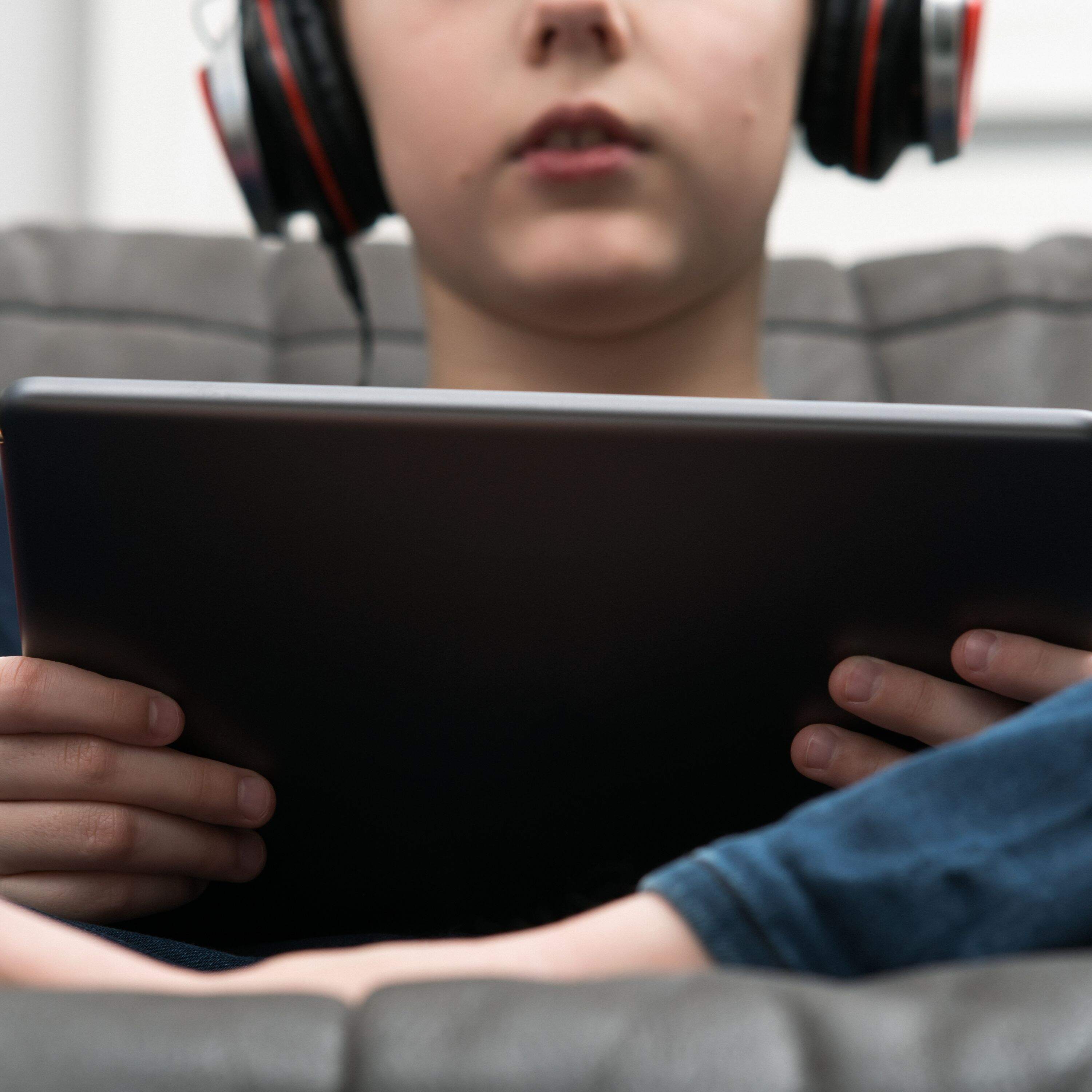
假期到了,我知道现在我家正在共同抚养五个孩子,如果您的家和我家类似,那肯定有很多屏幕。
So the holidays are upon us, and I know in my house right now I am co parenting five children and if your house is anything like mine, there are a lot of screens.
家里每个人,所有孩子,要么拿着平板,要么拿着手机,要么在玩电子游戏。
Everybody in the house, all the kids, they're either having a tablet, a phone, or a video game.
有时候他们甚至同时玩好几个,而且他们几乎一直在玩,尤其是在假期,因为他们不上学。
Sometimes they have multiple, and they're going a lot of the time, especially during the holidays because they're not in school.
所以家里到处都是障碍,Toca Boca、Minecraft、Fortnite,每个人都在玩不同的游戏。
So there's a lot of roadblocks and Toca Boca and Minecraft and Fortnite and everybody's playing something on something.
面对这么多屏幕和这些在线游戏,我确实有些担心:这会带来什么影响?
And with all those screens and all of these online games, I do kind of worry, what are the implications of this?
这安全吗?
What is the safety of this?
在现实生活中,我的孩子们从未离开过我的视线。
In real life, IRL, my kids are never out of my sight.
即使在后院,也是完全围起来的。
Even in the backyard, it's totally fenced in.
我们可以看到他们在做什么。
We can see what they're doing.
在物理空间里,他们很少有无人看管的时间,但在数字空间里,情况就不同了。
It's not a lot of unsupervised time in the physical space, but in the digital space, it's different.
所以你会想,孩子们长时间上网或玩屏幕游戏,这是否不好?
So you wonder, is it bad that kids are online a lot or just like on screens doing games?
为了帮助我理解这一切的后果,我最近与埃利·斯塔克·埃尔斯特坐下来谈了谈。
To help me understand the consequences of all this, I recently sat down with Eli Stark Elster.
他是这方面的专家。
He's kind of an expert on this.
他在加州大学戴维斯分校研究社会的演变。
He studies the evolution of society UC Davis.
我和埃利·斯塔克·埃尔斯特的对话,稍后为您呈现。
My conversation with Eli Stark Elster after the break.
我们马上回来。
We'll be right back.
想在2026年变得更强壮吗?
Wanna get strong in 2026?
结果发现,你不需要每周在健身房花几个小时。
Turns out you don't need to spend hours at the gym every week.
即使每周只进行一次30到45分钟的训练,每个动作做一到两组,就已经相当有效了。
Even just one session thirty to forty five minutes a week doing about one or two sets per exercise, that can be quite effective.
如何开始力量训练。
How to get started with strength training.
本周《Life Kid》播客。
This week on the Life Kid Podcast.
请在NPR应用或您收听播客的任何平台收听。
Listen in the NPR app or wherever you get your podcasts.
2026年音乐、电视和电影行业将有何展望?
What's in store for the music, TV, and film industries for 2026?
我们不知道。
We don't know.
但我们对新的一年做出了一些有趣而大胆的预测,同时还设定了个人流行文化决心。
But we're making some fun, bold predictions for the new year, plus setting some personal pop culture resolutions.
请在NPR应用或您收听播客的任何平台收听《流行文化欢乐时光》。
Listen to pop culture happy hour in the NPR app or wherever you get your podcasts.
我们继续带来周日故事。
We're back with the Sunday story.
我今天和研究员埃利·斯塔克·埃尔斯特在一起。
I'm here with researcher Eli Stark Elster.
埃利,欢迎来到节目。
Eli, welcome to the show.
很高兴能来这里。
Happy to be here.
好的。
Alright.
多年来,孩子们在没有成人监督的情况下在户外玩耍,长时间在一起相处。
So for years, kids played unsupervised outdoors and spent a lot of time together without adults.
发生了什么变化?
What changed?
说到这一点,我认为许多人记得,在20世纪70年代之前,儿童在物理空间中受到的监督远比现在少。
Well, to your point, I think many people remember that prior to the nineteen seventies or so, there was much less supervision of childhood in physical space than there is now.
但我想强调的一个重要观点是,这种差异不仅存在于20世纪早期和现在之间,而是存在于现在和我们所能追溯的整个人类历史长河之间。
But I think an important point to keep in mind is that that difference is not just between, you know, the early part of the twentieth century and now, but between now and as far as we can tell, pretty much the whole course of human history.
当你考察人类社会中儿童成长的记录时,你会发现孩子们通常享有高度的独立性和自主权。
When you look at the record of childhood across human societies, you find that kids are generally afforded a really high degree of independence and autonomy.
我的一位同事多尔萨·阿米尔对此有一个很好的说法。
One of my colleagues, Dorsa Amir, has a good term for this.
他们大部分时间都生活在独立的纯文化环境中。
They spend much of their time in independent pure cultures.
嗯。
Mhmm.
于是孩子们自己组成独立的小团体,远离成年人。
So with other kids forming their own separate little groups away from the adults.
在二十世纪七十年代初左右,孩子们发展这种独立同伴文化的能力急剧下降,并且至今未有改变。
And in the early nineteen seventies or so, the ability for kids to develop these kinds of independent peer cultures drops really precipitously, and that has not changed to the present day.
所以,是啊,为什么会发生这种变化?
So yeah, why why did it change?
嗯。
Yeah.
我认为这一转变背后的一个重要因素是美国的城市化。
I think one big factor underlying this shift is the urbanization of The United States.
越来越多的人搬进城市,越来越依赖汽车,因此现在的物理环境使得孩子们自由活动的安全性 arguably 有所降低,主要是因为交通问题。
More and more people have moved into cities, become increasingly dependent on cars, and so you now have physical environments where, one, it is arguably just a little less safe for kids to roam around due to traffic concerns.
由于这个原因,父母们也更加担心孩子的安全。
Parents also have a lot more fear of their kids being unsafe for that reason.
即使父母没有这些担忧,孩子们在物理空间上往往也并不靠近其他孩子。
And even if parents didn't feel those concerns, often kids are just not all that close to other kids physically.
嗯。
Mhmm.
如果他们想和朋友一起玩,父母就得开车送他们去某个地方。
If they want to hang out with their friends, their parents need to drive them somewhere.
所以这是一个关键因素。
So that's a crucial factor.
另一个我认为潜在的担忧是,不仅仅是交通风险,还有陌生人危险。
Another, I think, underlying concern here is just the fear of not just, you know, traffic, but stranger danger.
所以,物理空间确实发生了变化。
So so it's changed in the physical space.
现在有更多的监督,但这并没有转化为数字空间中的大量监督吗?
There's a lot more supervision, but that hasn't translated to a lot of supervision in the digital space?
是的。
Yes.
对。
Yeah.
没错。
That's correct.
你为什么认为是这样呢?
Why why do you think that's the case?
是因为这是新事物,还是因为缺乏保护措施?
Is it because it's new or because the safeguards don't exist?
一方面,保护措施并不存在。
Well, one hand, the safeguards don't exist.
作家乔纳森·海特有一个很好的类比,他认为某种程度上,让孩子进入社交媒体平台,就像把他们送到火星一样。
The author Jonathan Haidt has a, I think, good analogy that in in some sense, putting kids in social media platforms is a little bit like sending them to Mars.
这是一种非常新的创新,因此我们对这类环境如何运作以及它们如何影响我们的孩子知之甚少。
You know, this is a very recent innovation, and so we understand very little about how these kinds of environments actually work and how they're affecting our children.
但我想强调的是,也许与此相反的是,我们常常关注技术对孩子的负面影响。
But something I would I would emphasize is that maybe a sort of counterpoint to that, I think we often emphasize what technology is doing to our children.
这种向数字空间的转变,孩子们花大量时间玩手机、打电子游戏等,通常被描述为他们被科技公司欺骗或操纵的结果。
And this move into digital space, the fact that kids spend all this time on their phones and playing video games and so on, is often framed as something that they're being sort of tricked into doing by tech companies or or what have you.
但当我观察人类进化趋势以及孩子们明显渴望建立远离我们的秘密世界时,一种不同的图景便浮现出来。
But I think when you look at the the trend in human evolution and this desire kids clearly have to build their, you know, sort of secret worlds away from us, I think a different picture kind of arises.
我认为浮现出来的图景是,孩子们正在将数字空间作为最后的前沿,以逃离我们的掌控。
And I think the picture that arises is kids are using digital space as sort of the last frontier to get away from us.
这是儿童游戏方式的演变吗?
Is that the evolution of how children play?
他们寻找这些空间,是因为这些地方成年人的监督较少吗?
They seek out these spaces because they are less supervised by adults?
没错。
Exactly.
是的。
Yeah.
据我们所知,孩子们被驱使着寻找远离成人的空间,以便在没有监督的情况下与同龄人共度时光,做他们想做的事,特别是以不同的方式玩耍。在物理空间中,由于各种原因,这如今已变得极其困难。
They, from what we can tell, are driven to find spaces away from adults where they can spend time unsupervised with their peers doing what they want to do, and in particular, playing in different ways In physical space, that is now just far too difficult for a variety of reasons.
但在数字空间中,成年人根本不知道正在发生什么。
In digital space, though, adults really have no idea what's going on.
我们对此几乎没有任何控制权,因此他们找到了这个最后的领域,在数字空间而非物理空间中做同样的事情。
We have very little control, and so they found this, I think, last domain where they can do the same thing, but in digital space instead of physical space.
那么,对于孩子来说,拥有这些几乎不受成人干预的区域有多重要?
Well, how important is it for kids to have those almost adult free zones?
我认为这极其重要。
I think immensely important.
关于儿童心理健康趋势的数据很多,这些趋势始于儿童自主性开始下降的时候。
There's a lot of good data on trends in in mental health starting from when childhood autonomy begins to kind of decline.
我们看到一个非常明显的趋势:儿童的各种心理健康指标,开始在他们的自主性受到越来越多限制时下滑。
And we see a very stark trend that different measures of mental health among children begin to decline at around the same time their autonomy becomes more and more restricted.
联合国儿童基金会每隔几年会进行一项名为‘独立流动性’的研究,追踪不同国家儿童独立行动的自由度,以及这种自由度与幸福感指标之间的关系。
There's a study conducted by UNICEF every few years called the Inascenty study, where they track independent mobility in different countries, the amount of freedom kids have to move from place to place by themselves against measures of well-being.
你可以看到一个非常清晰的趋势:更大的行动自由带来更高的幸福感,反之亦然。
And you see a very clear trend that greater mobility leads to greater well-being and vice versa.
因此,我们有大量的数据表明,让孩子拥有这些远离我们的独立空间至关重要。
So we have a lot of data suggesting that it's extremely important for kids to have these independent spaces away from us.
那么,跟我谈谈孩子们用来创造自己空间的在线游戏吧。我家里孩子总是在线玩Roblox、Minecraft和其他游戏,但他们是一起玩的。
Well, talk to me about some of the online games that kids are using to create their own spaces because the kids in my house, my kids, are constantly, like, online playing Roblox with each other, playing Minecraft and other games, but they're playing together.
确实如此。
Definitely.
我认为一个可能有用的对比是两款孩子们都非常喜欢的游戏。
I think one one contrast that is maybe useful is between two games, both of which kids love.
一个是Minecraft,另一个是Fortnite。
One is Minecraft and the other is Fortnite.
嗯。
Mhmm.
Minecraft我认为是有史以来销量最高的游戏,大约有三亿五千万次购买。
Minecraft, I think, is the best selling game in in history, something like 350,000,000 purchases.
Fortnite也非常受欢迎,孩子们在这两款游戏上都花费了大量时间。
Fortnite's also immensely popular, and kids spend a huge amount of time on both of these games.
可以理解的是,父母有时会对这一点感到担忧,因为孩子们在这些虚拟世界中花费如此多时间,这让他们觉得有些奇怪。
And understandably, parents, I think, sometimes have concerns about this because it strikes them as strange that kids would be spending so much time in these virtual worlds.
但当你观察这些游戏的设计方式时,我认为孩子们被它们吸引的原因非常不同。
But when you look at the way that these games are built, I think there are very different reasons that kids are drawn to them.
其中一个原因是好的,而另一个则可能是坏的。
One of those reasons is good, and the other one is probably bad.
以《堡垒之夜》为例,这款游戏的设计公司基本上把它打造成了一个赌场。
In the case of Fortnite, the company that designs the game has essentially built it like a casino.
它的设计目的是吸引孩子,抓住他们的注意力,并让他们陷入重复的循环中,从而促使他们最终在游戏中花费大量金钱。
It is designed to draw kids in, hook their attention, and keep them in these repetitive loops that encourage them to eventually spend lots of money on the game.
嗯。
Mhmm.
《我的世界》并不是这样设计的。
Minecraft is not built that way.
它是一次性购买,因此母公司没有动力让孩子尽可能长时间地留在游戏中。
It's a one time purchase, so there's no incentive for the parent company to get kids to stay on there for as long as possible.
但孩子们仍然非常喜欢它。
But kids still love it.
我认为他们喜欢它的原因与《堡垒之夜》不同,因为这是一款非常开放、富有探索性的游戏,你可以和朋友合作,而且他们对自己想做什么拥有几乎完全的控制权。
I think they love it for a different reason than Fortnite, which is that it's a very open ended exploratory game where you can collaborate with your friends, and they have pretty much total control over what they choose to do.
所以,当你宏观来看时,如果孩子沉迷于电子游戏,这两者看起来可能是类似的情况。
So when you zoom out, it can look like these are two instances of a similar thing if kids addicted to video games.
但当你深入观察他们实际在做什么以及这些游戏是如何设计的,就会得到一个截然不同的画面,我认为这能更真实地反映这些虚拟世界中正在发生的事情。
When you zoom in on what they're actually doing and how those games are built, get a very different picture, I think, of what's actually happening in those worlds.
那社交元素呢?
And what about the socializing element of it?
因为我的孩子确实会在屏幕上一起玩,而且,我不知道你是否了解Toca Boca,这是一种你可以获得房屋、角色,给它们穿衣打扮之类的东西,他们就像玩娃娃或动作玩偶一样和这些角色互动。
Because, I mean, my kids do play with each other on the screens, and even like, I don't know if you know about Toca Boca, but it's like this thing where you get houses and you get characters and you dress them up and stuff and and they kind of play with them like you would dolls or action figures.
就是在游戏里,你知道的。
It's just like in the game, you know?
然后他们还会互相一起玩。
And then they do it with each other.
你扮演一个角色。
You have this role.
我是妈妈。
I'm the mommy.
你是宝宝。
You're the baby.
这和玩真正的娃娃屋有什么不同吗?
Like, is that different from playing with an actual dollhouse?
我不知道。
I don't know.
关于这方面的研究还不是很充分。
I don't know that the research on it is is well developed.
嗯。
Mhmm.
不过我的感觉是,像彼得·格雷这样的人已经非常 eloquently 地写过相关内容了。
My sense though, and this is something that people like Peter Gray have have written about quite eloquently, I think.
当孩子在物理或虚拟空间中玩耍时,关键是要看他们是否拥有在这个空间中自主做决定的自由?
The key thing to look for here when kids are playing in a physical or a virtual space is, do they have the freedom to make their own decisions in this space?
他们在探索吗?
Are they exploring?
他们和其他孩子一起玩吗?
Are they spending time with other kids?
如果这些问题的答案都是肯定的,我认为无论在哪个领域,这种游戏都可能是同样好的。
If the answer to all those questions is yes, my sense is that the play is probably just as good regardless of the domain.
但我还想强调的是,人们常常把这个问题描述为一种取舍:如果孩子们只是离开这些虚拟空间,他们就会出去玩街头棒球之类的游戏。
What I'd also emphasize though is often this is sort of framed as a a trade off that if kids would simply get off of these virtual spaces, they would go out and, you know, play stickball in the streets or or what have you.
但导致如今身体自主性大大降低的许多变化,可能不会改变,或者改变起来会极其困难。
But many of these changes that have led to the state of affairs where physical autonomy is is much lower, they're probably not going to change, or they will be immensely difficult to change.
我认为值得时刻牢记的是,孩子们需要有一个去处。
I think it's worth keeping front of mind that kids need somewhere to go.
如果这不是物理空间,那就必须有某种替代方案。
And if it's not going to be physical space, there has to be some alternative.
所以,孩子们花这么多时间上网就一定是坏事吗?
So is it necessarily a bad thing for kids to spend so much time online?
不一定。
Not necessarily.
我认为,当我们问这是否不好时,关键在于他们具体在做什么。
And I think when we're asking whether it's bad, it really depends on what exactly they're doing.
如果一个孩子花大量时间无意识地刷TikTok,且不与任何人交流,那可能不太好。
If a kid is spending a huge amount of time just scrolling through TikTok mindlessly and not talking to anyone, that's probably bad.
对吧?
Right?
他们并没有真正自己做任何事情。
They're not doing anything really on their own.
他们没有和朋友相处。
They're not spending time with their friends.
他们也没有获得那些独立的同龄人群体时间,而这些正是孩子真正需要的。
They're not getting time in these independent groups of peers that kids really do need to be getting.
如果他们花大量时间通过FaceTime和朋友交流,玩Minecraft,探索一个小世界,建造房屋,我认为这满足了我们在孩子独立同龄人活动中所期待的所有条件。
If they're spending lots of time on FaceTime with their friends, playing Minecraft, exploring a little world, building houses, That, I think, ticks all the checkboxes we're looking for in what kids should be doing in this independent peer time.
因此,这两种活动对我们来说可能都像是屏幕时间,但它们的性质截然不同。
And so both of those activities maybe look like screen time to us, but they're very, very different kinds.
而且,父母应该问的关键问题是:我的孩子是否拥有独立于我的空间,能否在没有监督的情况下与朋友相处,并以他们自己决定的方式进行探索?
And and, again, the key question that parents should probably ask is, are my kids getting space to be independent from me, to spend time with their friends unsupervised, and to explore in ways that they're determining on their own?
你可以对任何虚拟空间提出这个问题。
And you can ask that question about any virtual space.
在某些情况下,答案是否定的。
In some cases, the answer will be no.
在其他情况下,答案是肯定的。
In other cases, the answer will be yes.
因此,当我们思考像屏幕时间这样的衡量标准时——它经常出现在关于技术对心理健康影响的研究中——这实际上就像试图衡量食物对身体健康的影响。
And so when we think about a measure like screen time that often comes up in the studies of the effects of technology on mental health, that's really a bit like trying to measure, let's say, the effect of food on physical health.
对吧?
Right?
这是一个没什么用的衡量标准。
That's not a very useful measure.
你需要像区分不同类型的食物一样,把屏幕时间细分为不同类型。
You wanna break that down into different kinds of screen time in the same way you would break it down to different kinds of food.
那么,在网络空间中,需要发生什么变化,才能既让孩子们做孩子,又保证他们的安全?
Well, so what needs to happen in online spaces to allow kids to be kids, but also for them to remain safe?
对。
Right.
你提到了Roblox,我认为这是一个有趣的例子,因为它结合了从自主性角度看对孩子非常有益的元素,以及一些可能非常有害的元素。
You mentioned Roblox, and I think that's an interesting example because it combines elements that are probably really good for kids, looking from this perspective of autonomy, and elements that are probably quite bad.
是的。
Yes.
好的一方面,Roblox和Minecraft一样,非常以用户为中心。
So on the good side, Roblox, like Minecraft, is very, very user driven.
玩家在游戏中有很大的自由度,可以自行设计游戏体验、社交互动,并协作完成各种项目。
And people playing the game have a lot of freedom to design their own little experiences with the game, to socialize, to collaborate on different kinds of projects.
然而,拥有Roblox的公司也内置了许多类似老虎机的机制和各种激励措施
The company that owns Roblox, though, has also built in many of these kind of slot machine like features, various incentives that
Robux。
Robux.
是的。
Yeah.
他们老是拿走我的钱,但咱们别谈这个了。
They they take my money a lot, but let's go let don't talk about that.
我们来谈谈
Let's go about
别的吧。
something else.
不。
No.
没错。
Exactly.
对。
Right.
这是一个我认为绝对是负面的例子。
And that's an example of something that I think is is certainly a negative.
但话说回来,谈到自主性的问题,我认为这里的好与坏反映了这一问题的两个不同方面。
But, you know, going back to the point of autonomy, I think the good and the bad here reflect different sides of that.
对于孩子们来说,这款游戏的好处在于他们可以自由地构建自己想要的任何东西。
It is good for the independence of kids that in this game, they can sort of build whatever they want.
但对孩子们的自主性而言,这款游戏的公司添加了各种激励机制,试图迫使他们做出可能并不想做的决定,这是不利的。
It is bad for the autonomy of of the kids that the company making this game has added all of these incentives that try to coerce them into making decisions that they probably don't want to make.
而且,里面也可能有成年人,而不仅仅是孩子。
And also, there could be adults in there that aren't kids.
所以这是另一个问题。
So that's the other issue.
对吧?
Right?
是的。
Yeah.
100%。
100%.
不过值得一提的是,就像在现实空间中对陌生人危险的恐慌一样,人们谈论Roblox等平台上掠食者威胁的方式可能有些夸大。
It is worth saying though that as with the sort of stranger danger panic in physical spaces, often the way that people talk about the threat of predators in spaces like Roblox is perhaps a little bit overblown.
数据显示,在这些平台上,当孩子们以适当的方式接触他人时,大多数情况下对方都是他们认识的人,这与现实空间中的情况类似。
The data still suggests that most of the times when kids are approaching appropriately on these platforms, it's very often from someone they know as is the case in physical space.
因此,在某种程度上,这种危险往往相同,而且也被以类似的方式误解了。
So in some ways, the danger is often the same and I think misconstrued in kind of the same way.
那么,归根结底,你如何确保你的孩子安全呢?
And and so but ultimately, I guess, how do you keep your kids safe?
我认为,到目前为止,我们已经做了很多来保障孩子的安全。
Well, I think we've done quite a lot to keep our kids safe at this point.
对吧?
Right?
但我想,这里的一个权衡在于短期安全与孩子未来作为成年人茁壮成长的能力之间。
But one, I think, perspective here is a trade off between short term safety and, you know, long term ability to flourish as an adult.
举个例子,我一位同事最近提到过这件事。
So just as an example, a colleague of mine mentioned this recently.
他和五岁的儿子在公园里,儿子手里拿着一辆小玩具卡车。
He's at a park with his five year old son, and his five year old son had a little toy truck.
另一个孩子过来把卡车抢走了。
Some other kid came and pulled it away.
于是他的儿子和那个孩子开始打了起来。
And so that his son and this other kid started fighting.
但从长远来看,让他的儿子和那个孩子自己解决这个冲突实际上会非常好。
Now in the long term, it would actually probably be really good for his son and this other kid to just figure out this conflict themselves.
对吧?
Right?
嗯。
Mhmm.
但他和另一个家长都立刻介入并解决了问题。
But he and the other parent both jump in and resolve it.
他们这么做是因为在短期内,他们想确保孩子安全。
And they're doing that because in the short term, they wanna keep their kids safe.
他们想确保没人被打到,等等。
They wanna make sure no one gets hit and so on.
但从长远来看,这可能对安全并不一定是好事。
In the long term, though, that might not be such a good thing for the safety.
因此,当我们考虑孩子的安全时,真正的问题是:什么才能帮助他们成长为健康的成年人?
And so when we think about the safety of our kids, the real question is what is going to help them flourish as adults?
在许多情况下,我们为短期内让孩子更安全而采取的措施,实际上可能对长期有害。
And in many cases, the measures that we think we're taking to make them safer in the short term are probably harmful in the long term.
这真的非常有趣。
And that's really that's really fascinating.
是的。
Yeah.
这是埃利·斯塔克·埃尔斯特。
That's Eli Stark Elster.
他在加州大学戴维斯分校研究人类社会的演变。
He studies the evolution of human society at UC Davis.
非常感谢您加入我们。
Thank you so much for joining us.
谢谢。
Thank you.
本集《周日故事》由贾斯汀·严制作。
This episode of the Sunday Story was produced by Justine Yan.
由吉米·基利进行后期制作。
It was mastered by Jimmy Keeley.
原始访谈由戴夫·布兰查德制作,并由哈迪尔·阿尔沙奇剪辑。
The original interview was produced by Dave Blanchard and edited by Hadil Alshawchi.
《周日故事》团队包括安德鲁·马姆博、吉妮·施密特和莉安娜·西姆斯特罗姆。
The Sunday story team includes Andrew Mambo, Ginny Schmidt, and Liana Simstrom.
托马斯·科尔特兰是我们的实习生。
Thomas Coltrane is our intern.
我们的执行制片人是艾琳·诺古奇。
Our executive producer is Irene Noguchi.
我是艾莎·罗斯科。
I'm Ayesha Roscoe.
首先,我们明天将继续为您带来开启一周所需的全部新闻。
Up first, we'll be back tomorrow with all the news you need to start your week.
在此期间,祝您周末愉快。
Until then, have a great rest of your weekend.
想在没有广告中断的情况下收听这个播客吗?
Wanna hear this podcast without sponsor breaks?
亚马逊Prime会员可以通过亚马逊音乐免费收听《Up First》,或者您也可以通过访问plus.npr.org支持NPR的重要新闻报道并获取《Up First Plus》。
Amazon Prime members can listen to Up First sponsor free through Amazon Music, or you can also support NPR's Vital Journalism and get Up First Plus at plus.npr.org.
网址是plus.npr.org。
That's plus.npr.org.
关于 Bayt 播客
Bayt 提供中文+原文双语音频和字幕,帮助你打破语言障碍,轻松听懂全球优质播客。