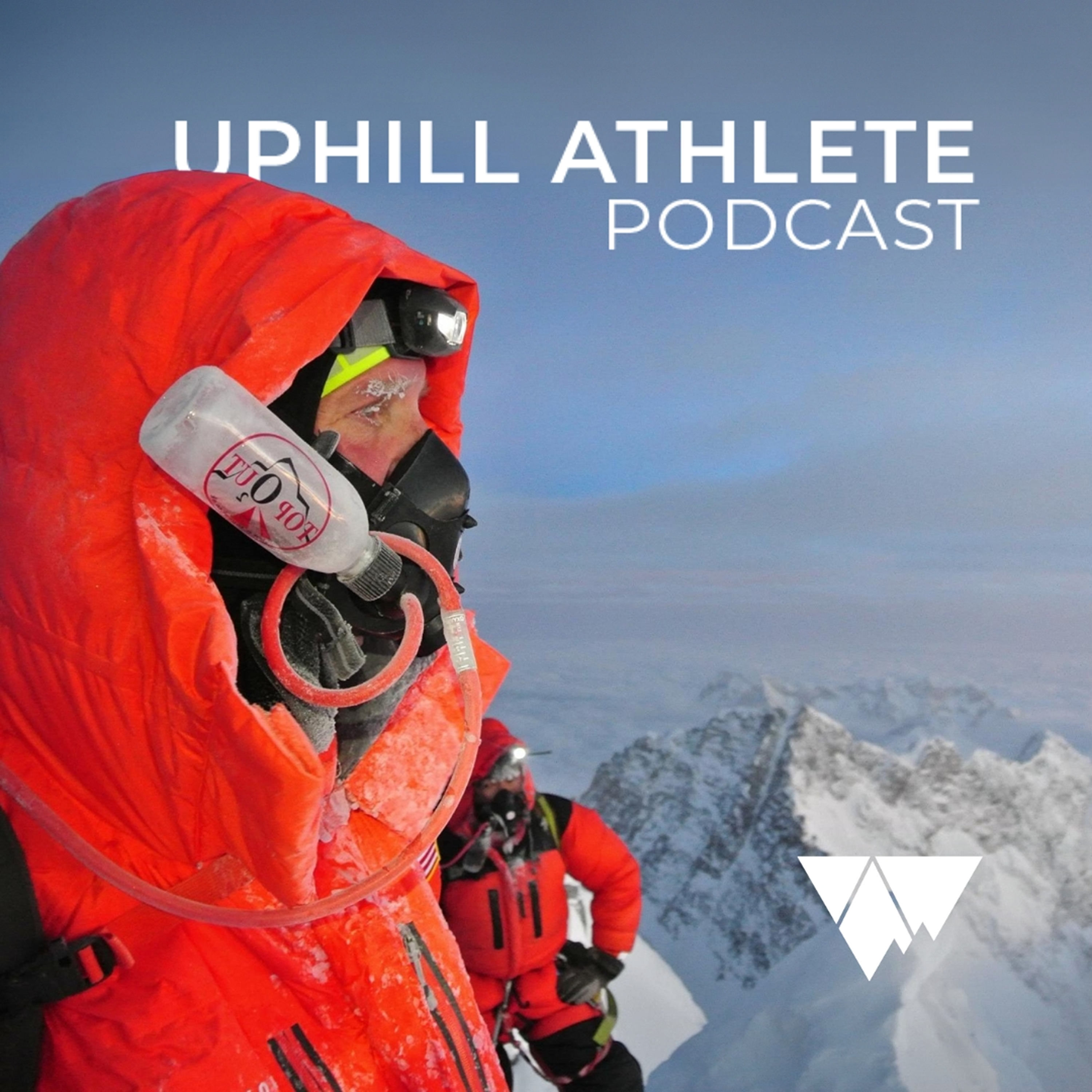
本集简介
双语字幕
仅展示文本字幕,不包含中文音频;想边听边看,请使用 Bayt 播客 App。
大家好。
Hi, everyone.
欢迎收听《上坡运动员》播客。
Welcome to the Uphill Athlete podcast.
我们的使命是通过教育和分享,提升并激励所有山地运动员。
Our mission is to elevate and inspire all mountain athletes through education and celebration.
我是艾莉莎·克拉克,今天由我来主持。
My name is Alyssa Clark, and I will be your host today.
我们为大家精心准备了一个精彩的新季,我很激动地介绍我们全新教育系列的第一集,主题是高原。
We've been brewing a fantastic new season for you, and I'm thrilled to introduce the first episode in our new educational series on all things Altitude.
在第一集里,我邀请了上坡运动员团队中的两位高原专家,和我一起为大家介绍高原知识。
For our first episode, I have two of our altitude specialists on the Uphill Athlete team who are joining me to provide an introduction to altitude.
香特尔·罗比塔耶和马丁·佐尔在高原训练、高原反应、注意事项等方面有着丰富的知识和专业背景。
Chantelle Robitaille and Martin Zhor have extensive knowledge and education in Altitude training, effects, considerations, and more.
谢谢两位来做客。
Thanks for being on, you two.
谢谢,Alyssa。
Thanks, Alyssa.
很高兴能来到这里。
Great to be here.
谢谢你。
Thank you.
我也是。
Me too.
在正式进入海拔主题之前,我想先听听你们俩是怎么对研究海拔及其对运动员的影响产生兴趣的。你们的学术背景是怎样的?另外,在这个大领域里,你们具体专精于哪一部分?
So before we get into our kind of introduction to altitude episode, I'd love to hear from both of you of what drew you to study altitude and its effects on athletes and what your background is in these studies and actually, like, kind of what is your specialty within altitude because it's a big topic.
是的。
Yeah.
我也这么觉得。
I would agree.
确实是个很大的话题,是啊,我们估计能聊上好几天。
Definitely, it's a big topic and, yeah, we could probably well, we will be talking about this for days.
我之所以开始研究高原,是因为我以前住在瑞士的时候,经常跑步、滑雪之类的。
I got into studying altitude since I was, I was living in Switzerland once upon a time, and doing a lot of running and skiing and things like that.
那时候我也在指导超马运动员。
And I was also coaching ultramarathon runners.
虽然我对生理学了解不少,但我真正觉得不够深入的是高原对生理机能的影响,尤其是对运动员在高强度运动中的影响,特别是在比赛时拼命冲刺的情况。
And as much as I understood a lot of physiology, what I really didn't feel I understood enough was the physiology, the impact of altitude on physiology and also on athletes at exercise, especially when they're working really hard in races.
所以我干脆彻底转行了。
And so I actually changed careers completely.
我以前是兼职教练,同时在企业里做全职工作,整天穿着高跟鞋和职业套装。
I was sort of a part time coach and full time corporate woman wearing heels and business suits.
后来我重返校园,拿到了高海拔生理学硕士学位,这样就能更深入地理解这块领域了。
And I went back to school and I got a master's degree in high altitude physiology so that I could understand that better.
虽然我确实花了不少时间在这方面,但这其实是个持续学习的过程,因为科学认知一直在更新。
And although I, you know, dedicated time to doing that, it's still an ongoing process of learning because science isn't fixed.
教练本身就是一种实践,所以永远都在学习中。
Coaching is a practice, so still always learning.
所以我很兴奋能和马丁合作,他目前还在学校里积极学习,所以通过他的经历继续学习也很酷。
So I'm excited to, be working with Martin who is actively studying, in school now, and so it's it's cool to continue learning through his experience as well.
是的。
Yes.
谢谢你,尚特尔。
So thanks, Chantelle.
我觉得这一路走来挺不容易的。
I think it's been quite a journey now.
今天,我们就在这里了。
Today, we are here.
我现在在Achill Athlete团队,指导人们攀登珠峰和其他高山。
I'm in Achill Athlete team coaching people for to climb mountains and Everest and all the others.
这简直就像一场梦。
So it's it can't it's really a dream.
甚至可以说是多个梦想成真了,不过,我来自一个小国家——捷克共和国。
Maybe even multiple dreams come true, but well, I come from small country Czech Republic.
其实没什么山。
There's not really mountains.
我们来聊聊那些海拔分类,比如中等海拔什么的,我们这连中等都算不上。
We will talk about those categories of what is it, like moderate altitude, it doesn't even fit into that one.
但我一直梦想着大山、登山,还读了一些关于传奇性开放山峰的书。
But I kept dreaming about mountains, mountaineering, and reading books about legendary openness.
后来我也成了一名攀登者,去了夏蒙尼,也就是我现在住的地方。我在这里的缆车上工作了大概十二年,海拔三千八百米,这在当地可是相当了不起的经历。
And eventually, I also became one also openness climber, made it to Chamonix where I live here right now, working at, let's say, high altitude, 3,800 meters for, I think, twelve years on a lift, which is pretty legendary around here.
同时我也以运动员的身份进行跑步和攀岩,并试着把这些经历串联起来,去适应更快的节奏甚至极端的高海拔环境。
And then also performing as an athlete, as a runner, and climber, and actually try connecting all those dots then to to some faster sense and even extreme altitude.
我也一直在思考这背后的原理以及相关的生理学机制。
And also wondering what actually lies behind it and physiology of it.
所以,当我在2015年学习体育科学时,本来要写毕业论文,题目必须跟高海拔生理学有关。
And so, when I studied sports science in, back in 2015, and I was supposed to, write the final thesis, so it had to be about altitude physiology.
于是我跟我的教授商量了一下,他同意了。
So I talked to my professor, and he agreed.
所以那是我真正深入研究理论的地方,我选了一个关于快速适应高海拔的课题。
So that's that's where I really dug in to the theory and and chose a topic of faster acclimatization.
实际上,我现在正在做这个,作为瑞典一所大学的硕士生继续这个项目。
And that's actually what I'm doing now, continuing this project as a master student in University in Sweden.
这个项目还在进行中,要找到合适的研究参与者并做实验还需要一段时间,但,是的,我超级兴奋,在这个过程中学习,并把所有东西整合到这份工作中。
And it's an ongoing it will take a while to make the experiment to find the right group of participants in the study, but, yeah, I'm super excited and learning in the process and bringing it all together to this to this, to this job.
所以,是的,很令人兴奋。
So, yeah, exciting.
太棒了。
Love it.
我觉得你们两位都已经提到了,我们通常用“高海拔”这个词,但实际上情况要复杂得多。
And both of you have already, I think, touched on this is that we use the general term altitude, but it's really a lot more complex than that.
马丁,你已经提到了高海拔和极高海拔。
Martin, you've already said high and extreme.
那我们怎么定义不同的海拔区域呢?
So how do we define different altitude zones?
因为待在8000英尺,也就是大约2500米的高度,和待在24000、25000英尺,也就是6000米以上的高度,效果肯定是不一样的。
Because it's certainly a different effect to be at, say, 8,000 feet or that's about 2,500 meters, as opposed to being up in, you know, 24, 25,000 feet, which is above 6,000 meters.
我正试着快速换算一下。
I'm trying to do the conversions right.
不过那是
But That's
给艾莉莎的。
for Alyssa.
哦,谢谢。
Oh, thank you.
对。
Yeah.
临时算的。
On the fly.
因为经常跟欧洲运动员打交道。
Working with a lot of European athletes.
那么,马丁,你能先给我们讲讲,海拔区域是怎么划分的吗?
So, Martin, can you kick us off of how do we define altitude zones?
好的。
Yes.
其实在录这期播客之前,我还专门查了一些论文来复习一下,不过我觉得咱们还是简单点说吧。
I had to actually look up look up some papers before this, podcast to maybe review this, but, actually, I think let's let's just keep it simple.
所以我会说,大概到1800米,或者800米吧,这个高度缺氧刺激不够强,或者说低氧对身体的影响没那么大,所以我把它归为低海拔。
And so I would say until maybe 1,800 meters, 800 meters, there's just not enough hypoxic stimulus or just the the hypoxia doesn't really affect the body as much, so I would really key call it the low altitude.
然后下一个级别是中海拔,一直到3000米,差不多就是10000英尺。
And maybe the next category of moderate altitude until 3,000 meters, which might be 10,000 feet.
我觉得这是一个很重要的分界线,因为一旦超过这个高度,有些人可能就已经开始感到吃力了。
I would call it, like, a really significant threshold where, okay, if you go above that level, some people might already struggle.
如果他们不认真对待适应过程,甚至可能会生病,或者出现一些比较严重的症状。
If they don't really respect the process of acclimatization, they might even get sick and or just have some severe symptoms.
所以我认为中海拔挺重要的,因为像耐力运动员,他们想在平原或者低海拔地区表现出色,就会去这个高度训练,获得那些适应性变化,从而提高自己的携氧能力。
So I think that moderate altitude is quite important because athletes like endurance athletes wanting to perform at a sea level or low level of altitude, they seek this altitude to train and to get those adaptations to actually then boost their oxygen carrying capacity.
所以我们会稍后讨论这些适应机制,这也就是这一类别。
And so we will talk about these adaptations later, but that would be then this this category.
接下来是高海拔,大概在3,000米到5,000米之间。
And so the next one would be high altitude, 3,000 meters until 5,000 meters, I would say.
而超过5,000米的地方,我会称之为极高海拔,因为那里确实是我们地球上最高山峰所处的环境。
And truly anything above 5,000, I would call it extreme because then truly is really the altitude we find in the highest peaks in the world.
所以那真是一个需要充分时间让身体适应、并尊重这一适应过程的环境。
So that's really that's really a realm that need to take your time for the adaptations to occur to to adapt and to respect that process.
至于超高海拔这个类别,我觉得在7,000米以上,没有人能长期居住。
And maybe in these extreme altitudes category, I would say above 7,000 meters, nobody lives permanently.
其实界限可能更低一些,大概在6,200到6,400米左右。
I think it's actually even lower, like 6,200, 400.
我现在不太确定具体数字,但从生理角度来说,超过7,000米几乎是不可能生存的。
I'm not too sure exactly now, but it's physiologically almost impossible above 7,000 meters.
我觉得那基本上就是缓慢但必然走向死亡的过程。
I think you're really going down slowly but surely.
然后就是所谓的死亡地带,大约8000米,缺氧非常严重,没有辅助供氧的话,你真的不想在那里待太久。
And then so called depth zone, about 8,000, the the hypoxia is so severe that you don't really want to be up there for too too long without supplemental oxygen now.
其实没有辅助供氧,去那里的人本来就不多。
We're talking not many people go there without without supplemental oxygen anyway.
所以我觉得,了解一下海拔到底意味着什么也挺好的。
And and so I think it's also good to know that what does it actually relate to with Altitude.
我们关注的是氧气可用性的降低。
We are looking into the reduced oxygen availability.
这实际上取决于气压,海拔越高,气压就越低。
And this is actually a function of the barometric pressure, which is lower and lower the higher we go.
所以我喜欢从这个角度来理解,这样就能更清楚高海拔到底发生了什么。
So I think I like to think of it also that way just to have an idea what is actually happening in in altitude.
我正想说,我觉得这是一个很重要的区别,有些人可能不太理解,他们以为空气中的氧气变少了之类的。
I was just gonna say, think that's an important distinction that I feel some people don't quite understand well about, you know, they think that here's different ways people describe about there's less oxygen in the air, things like that.
实际上,我们周围空气中的氧气含量一直是21%。
It's actually we always have about 21% of oxygen that's around us in the air.
但当我们往更高海拔走,气压变低时,我们吸入的氧气分子浓度就会下降。
But when we are going up to higher altitudes and the barometric pressure is lower, that means the concentration of oxygen molecules that we breathe is going to be less.
所以我觉得大家有必要搞清楚这个关于高海拔的重要区别。
So I think that's an important distinction for people to understand about about altitude.
这个定义挺准确的,就像马丁说的,他还特意去查了一下。
And I think that's a good definition, and as Martin said, he had to look it up.
其实这类高海拔分区有好几种不同的定义,你会看到有些表分成三个区,有些分四个,还有些分五个。
I think there's lots of different definitions right of these different categories of, you'll see some different, tables that will have three distinct altitude zones, some will have four, some will have five.
我觉得关键的区别在于,我们通常会考虑那些有大量人口长期居住或进行高原训练的海拔高度。
I think the important differences is, you know, we think about the altitudes where we do have a lot of people who are tend to be living in training.
还有一些地方是人们为了特定的登山目标而短暂访问的高海拔区域。
We have places that people will, altitudes that people will visit in a transient way for a particular mountain objective.
另外也有人们极少涉足的地方。这些区分对我们来说很重要,能帮助我们了解身体适应机制的差异、在不同环境下的表现能力,以及哪些地方绝对不该久留,或者需要谨慎安排停留时间。
We have, you know, different places where people will go very seldom, so those are important distinctions for us to be able to make to learn, some of the differences in terms of how our bodies will adapt, how we will be able to perform, and places where we absolutely shouldn't be spending too much time or should be spending time carefully.
所以今天我想重点聊聊这个话题,帮大家更深入地理解:当我们去到比平时更高的海拔时,身体到底会发生什么变化,我们会经历些什么,以及体内实际正在发生的过程。
So I think that's what we'll try to focus on today is talk about that a little bit more to to help understand a little bit more of what's happening to our bodies when we are going to, higher altitudes or, than we're used to and what's actually what we will experience and actually what's happening in our bodies.
太棒了。
Amazing.
对。
Yeah.
也就是说,香特尔,你刚才的铺垫非常到位。从宏观角度来看,因为这个问题确实非常庞大。
So that I mean, Chantelle, you teed it up perfectly of in a general sense, because, again, this is a massive question.
我是说,这需要多年的研究。
I mean, years of study.
不过,总的来说,身体在不同海拔区域会有什么反应?
But, generally, how is the body responding in different zones?
有哪些关键的,我想说,我不太确定,对有效海拔的反应或指标?
What are some key, I guess, I don't know, reactions or indicators of the effective altitude?
你的身体内部会发生什么变化,我们观察到的又是哪些类型的反应呢?
What's happening within your body, and what are those kind of reactions that we're seeing?
好的,我觉得我们可以从两个层面来理解这个问题。
So, yeah, I think, we sort of have two levels of this.
对吧?
Right?
比如,我们身体有什么感觉?
Like, what are we experiencing?
我们能察觉到身体的哪些变化?
What are we noticing about our bodies?
那实际上,我们的身体内部发生了什么?
And then what is actually happening in our bodies?
所以通常情况下,当我们去海拔更高的地方时,比如我们拿一个常见的例子,有人住在德克萨斯州的奥斯汀,决定去我住的怀俄明州杰克逊附近看看。
So typically when we are going to a higher elevation, so let's take a typical example of someone lives in Austin, Texas and they decide to visit, well, I live near Jackson, Wyoming.
这很常见。
So pretty typical.
他们会去到不同的海拔高度。
They're going to they're going to a different elevation.
你可能会注意到一些事情,其中比较明显的可能是会觉得呼吸稍微有点费力。
Some of the things that you're gonna notice probably big ones, maybe they're gonna notice that they're, it's a little bit harder to breathe.
所以他们的呼吸会稍微快一点。
So their breathing is a little bit faster.
呼吸频率会稍微加快,这是因为肺部在努力适应气压变化和可用氧气量的改变。
Breathing, rate is a little bit faster, and that's lungs trying to keep up with the change in the barometric pressure and the amount of of available oxygen.
他们的心率也会稍微快一些,所以他们可能会发现自己的静息心率比平时稍快。
Their heart is heart rate is a little bit faster, so they'll notice that their resting heart rate's a little bit faster.
这也是对高海拔环境的正常反应。
That's also normal response to altitude.
这是因为血液在泵送,或者更准确地说,是心脏跳动加快,以便增加体内含氧血液的量。
That's the blood pumping or the heart, rather, beating faster to increase the amount of oxygenated blood in the body.
他们可能还会发现自己排尿更频繁了,尿量增多也是常见的症状之一。
They may also notice that they are peeing more often and increased urination rate, that's also a common symptom.
这是早期症状之一。当身体受到缺氧刺激时,肾脏会接收到信号,身体最初会通过排出血浆来浓缩红细胞。
That's one of the early symptoms as the body is trying to, it kind comes from a hypoxic stimulus that we're getting to our kidneys and the body is initially getting rid of, plasma essentially from the blood to concentrate the red blood cells.
所以你的血液会变得粘稠。
And so your blood is becoming thicker.
红细胞能携带更多的氧气进入血液。
The red blood cells carry more the oxygen in your blood.
所以这对帮助身体适应环境很有好处。
So that's a good way to help your body get through that.
如果你去的海拔再高一点,可能还会发现睡觉有点困难。
If you're going a little bit higher in altitude, you may also notice some difficulty sleeping.
有些人可能会发现自己经常半夜醒来。
So, some people may find that they are, experiencing a lot of frequent wake ups.
通常这种情况发生在海拔两千五百米以上,也就是八千英尺以上,不过有些人可能对此更敏感,所以他们可能会体验到这些症状。
Typically, this is happening above twenty five hundred meters, so above 8,000 feet, but it could be some people might be a little more sensitive to that, so they could be experiencing that.
我们稍后会详细讨论这一点,但一般来说,在高海拔地区,男性比女性更容易出现这种类型的睡眠呼吸暂停。
We'll get into this a little bit more, later on specifically, but tends to be that men will experience this this sort of sleep apnea, more often than women at the higher elevations.
这些都是身体对高海拔环境的正常反应。
And these are all normal responses to altitude.
这意味着你的身体正在内部进行一些非常棒的调整,以便更好地适应高海拔环境。
It means that your body is starting to make some really cool, changes under the hood, so to speak, to help you cope with altitude.
所以在刚开始的那几天,你会注意到一些身体反应,比如呼吸变快、心跳加速之类的。
And so in the early days, you know, these are the types of things that you're gonna start to notice, you know, breathing, heart rate, things like that.
但随着时间推移,经过几天甚至几周,我们的血红蛋白水平会上升。
But what's happening over the days and weeks is that we are getting, we are getting, an increase in hemoglobin.
红细胞的数量也会增加。
We are getting an increase in red blood cell mass.
起初我们流失的血浆量,随着心率和心脏输出量逐渐稳定下来,血浆容量之后也会慢慢回升。
Eventually the plasma volume that, we are initially kind of dumping, it's going to start to increase again over time as our heart rate and cardiac output starts to level out.
你知道的,这种情况会在几周内发生,我们不会再像一开始那样过度换气了。
You know, that will happen within a few weeks and we won't continue to have this sort of hyperventilation that we experience initially.
同样地,在几周之后,这种状况会逐渐减少,因为我们能够抵消缺氧带来的刺激。
Again, over a couple of weeks that starts to decrease as we're able to counteract the hypoxic stimulus that we're having.
所以总的来说,这些都是非常正常的反应,也是身体为了在高海拔地区保持健康和生存所必需的生理变化。
So over all these things are really normal, and they're all necessary for the different physiological changes that we need to experience for our bodies to be able to stay healthy and stay alive at higher altitudes.
然后当我们继续往更高处走时,情况会有些不同,也许马丁你可以稍微展开讲讲这一点。
And then as we go even higher, this is a little bit different, and maybe, Martin, that's something you wanna expand on a little bit.
好的。
Sure.
对。
Yeah.
我觉得这是个很棒的概述。
I think, that's a that's a great overview.
我可能会再多讲讲这些适应过程的时间线。
I would maybe add or stay stay a bit more with the with the timeline of those adaptations.
所以当我们到达那个海拔高度时,正如我刚才提到的,第一个关键的阈值大概是1800米。
So the body, when we go to that altitude, the as as I mentioned, the first kind of threshold might be 1,800 meters.
这时候身体会感知到缺氧的情况。
What happens is that the body senses the hypoxia.
也就是说,我们呼吸的空气中氧气分子减少了。
So reduced amount of oxygen molecules in the air we breathe.
而身体会以一种非常聪明的方式来应对。
And so body works in a very smart way.
所以身体不同部位其实都有这种受体,但最重要的可能是在颈动脉和大脑里的这些。
So there is actually these receptors in in different parts of the body, but the main important ones maybe are the one in our child, the the ones in the brain.
它们非常敏感,毕竟我们的大脑特别依赖氧气才能正常运作。
So very sensitive, obviously, because we are highly dependent of on oxygen to function our brain specifically.
当然,说到表现,因为对运动员来说,核心就是竞技状态。
And, obviously, when it comes to performance, because it's for us, for athletes, it is a lot about performance.
所以你可以想象,我们需要氧气。
So you can imagine that we need the oxygen.
所以一旦缺氧,身体就会开始做出反应。
So if there's a lack of it, the body will start to to to the response, basically.
就像刚才 Chantelle 描述的,有些适应机制发生得非常快,几分钟内就能见效。
And so as Chantelle now described, some of those adaptations happen very quickly within minutes, let's say.
比如呼吸频率加快、呼吸加深,还有心率上升。
So the increased breathing, rate of breathing, depth depth of breathing, increased heart rate.
如果我们继续待在那个海拔高度,或者持续处于缺氧状态,其他的适应机制就会随后启动,因为其中一些过程需要时间,而且它们之间是相互关联的。
And then if we stay at that altitude or at hypoxia, so the other adaptations will start to happen later on because it's some of those actually take a while and it's all interconnected.
当然,对高原生理学的研究一直在持续进行。
And obviously, the study of altitude physiology is an ongoing thing.
可能我们对其中的大部分内容还不太了解。
We still don't probably know a big part of it.
我想我们大概知道,大约60%的基因组在缺氧压力下确实会有所反应。
We I think we we know that about maybe 60%, very large part of the our genome actually does something.
它会表达某些东西。
It expresses something under hypoxia stress.
所以你可以想象,这不仅仅是关于这些点。
So you can imagine that it's not only about these points.
但我想我们可以按照我们理解的方式来处理,并且达成共识。
But I guess we can we can work the way we understand it, and we can agree on.
这些确实是非常重要的方面。
These are really very important ones.
实际上,关键就在于如何更有效地将氧气输送到体内,因为氧气不足,然后还要在组织和肌肉中更好地利用它,从而提高效率。
It's really about trying to bring that oxygen into the body more efficiently because there's a lack of it and then also utilize it within the tissues, within the muscles, and being becoming more efficient.
所以这些适应机制,其实就是身体为了维持功能,甚至可能进一步提升功能而采取的方式。
So all these adaptations are actually the way for for the body to to just bring that to to keep the function and possibly even in to improve that.
因此,在面对高海拔或极端海拔时,关键是要谨慎对待这个过程。因为一旦你跨越了大约三千到三千五百米这个界限——虽然这未必是一个严格的阈值,但确实是一个关键高度——我们就真的有可能引发高原病或其他相关疾病。原因就在于我们上升得太快,身体无法应对缺氧状况。
So when it comes to high or extreme altitude, it's really about being careful to respect that process because if you really cross maybe that three thousand three thousand five hundred meter threshold, maybe it's not a threshold as such, but just the level, then we are really risking some of those altitude sicknesses or illnesses to occur because we're just we're just going too fast, and the body just cannot deal with the hypoxia.
这种情况因人而异。
This is very individual.
有些人更容易频繁患上这类疾病,或者只是随机出现症状。
Some people have a tendency to to to get these illnesses more often or or just randomly.
我们只是还不太清楚具体原因,以及背后的机制是什么。
We just don't exactly know why there are the the mechanisms behind this.
但我真正想说的是,这些不同适应过程的时间线。
But just what I want to want to want to say is to really the the timeline of those different adaptations.
所以当我们去高海拔甚至极端海拔地区时,确实需要一定的时间,比如一两周,先在较低的海拔待着,慢慢适应。
So when we go to to high and extreme altitude, it really needs to be there needs to be certain times, so maybe week or two to really try to stay in that lower levels.
这样最初的适应反应才能启动,让身体先缓一缓,比如心率开始下降。
And then for those first adaptations to kick in to and so that the first ones actually can relax, so the heart rate starts to go down.
血氧饱和度其实是在改善的,呼吸状况也在好转。
The saturation is actually improving, saturation of oxygen and blood, the breathing as well.
因为那些需要更长时间才能完成的适应过程已经发生了,它们之间是相互接替的。
And, so so because the other adaptations that take more longer time, they already happened, and so sort of, like, replaces one another.
所以面对高海拔和极端海拔,我们需要在那里停留数周的时间,并且尝试逐步提升高度。
And, so then for the high and extreme altitude, this relay needs to be weeks weeks spent at those at those levels and actually try to, even progressively increase that level.
太神奇了。
That's amazing.
这也引出了我们接下来的一个问题,你刚才提到了高原病。
And that also brings us to kind of a next question you alluded to altitude sicknesses.
常见的有哪些?
What are the common ones?
我觉得HAPE和HACE这两个术语我们经常听到。
I think we hear the terms HAPE and HACE used quite frequently.
那我们该怎么区分它们呢?
And where do we draw the line?
马丁,你刚才提到过,当你感觉到这些反应发生变化时,开始担心这是否正在演变成高原病。
And, Martin, again, you kind of touched on this between feeling these, you know, changes in these reactions, and really beginning to worry about this is going in the direction of an altitude sickness.
我们可以把这看作某种疾病的第一阶段。因为即使只是去高海拔地区,或者在家使用低氧帐篷这种所谓的模拟高海拔环境,我们可能就已经会感到一些不适了。
Let's say the first first stage of some kind of illness, because we can already talk about some kind of discomfort when we go to altitude or we're using hypoxic fence, for example, at home and so so called simulated altitude.
所以,密切观察这些症状是非常有必要的。
So it's definitely worth to observe those symptoms.
我们的体感、呼吸状况、心率以及血氧饱和度等身体各项指标,都能帮我们判断身体是在逐渐适应,还是已经承受了过大的压力。
So the way we feel, the way we breathe, the the heart rate, the saturation, all those outputs of the body can give us some kind of insight into if we are acclimatizing or our body is just struggling too much.
但随之而来的症状包括头痛、恶心、头晕,以及认知功能下降。
But then, obviously, that comes the the symptoms like headache, nausea, dizziness, lack of cognitive function.
所以你可能自己都没意识到,但周围的人能看出你神志不清、失去平衡,或者出现其他更严重的症状。
So you obviously might not even realize, but people around you can can see that you're confused, that you're you're losing balance or or other more severe symptoms.
它们是不一样的。
So they are different ones.
第一阶段是急性高山病,也就是AMS。
So the first stage is the AMS, acute acute mountain sickness.
所以急性这个特点非常重要。
So the acute is very important.
这种情况通常发生在急性期,比如刚进入高海拔地区,或者突然暴露在缺氧环境中时。
I really u re usually usually happens in this acute stage of agglomerization or when we just are at altitude, so acutely exposed to hypoxia.
如果我们不尊重身体的适应过程,上升得太快或太高,就可能出现这种情况。
So if we really don't respect that acclimatization process and we just go a bit too fast, too high, this can happen.
急性高山病通常表现为头痛,以及恶心或呕吐等症状。
And so acute mountain mountain sickness usually is the the the headache, some kind of nausea or vomiting.
所以最好的办法就是往下走,去海拔低一点的地方,好好恢复,给身体更多时间去适应。
And so the best way to, is is to go down, to go to lower altitudes, and to recover and just to, give the body time to for further adaptations.
如果没能恢复,或者人们倾向于忽视症状、继续往更高处爬,那绝对不建议这么做。
And if we don't recover or we just people tend have a tendency to just ignore or just to push push even higher, definitely not recommended.
接下来还有另外两种更严重的状况,它们非常危及生命。
So then those there are the other two more severe conditions, and they are very life threatening.
也就是HACE和HAPE,分别是高原脑水肿和高原肺水肿。
So HACE and HACE, so high altitude cerebral edema and pulmonary edema.
所以这两种情况显然非常严重,症状也很剧烈,真的就是几分钟到几小时的事。
So those two are obviously very serious conditions and come with very severe symptoms, and this is really minutes and hours.
通常来说,唯一——也不是唯一,但最主要的解决办法就是把患者带下山,或者使用高压氧舱之类的设备。但必须强调,这真的非常危险。
Like, it's really usually the the only not the only, but the main important solution is to bring beat the person down, or just use the hyper hyperbaric chamber or something else, but, it's it's really important to say that this is very, serious.
Chantelle,也许你愿意讲讲这些症状。
Maybe, Chantelle, you you would like to talk about those symptoms.
对。
Yeah.
我觉得这些区分说得很好,Martin。
I think that's something, those are really good distinctions, Martin.
我认为在高海拔地区活动时,大家需要特别注意那些小细节:确保充分休息、保持水分充足、补充好能量,并且真正留意自己的身体感受。
I think one important thing for people to recognize when they are spending time in higher altitudes is to really pay attention to the small things, making sure that they are really, getting a proper amount of rest, that they are staying well hydrated, that they are fueling well, and that they're truly paying attention to how they feel.
比如,别忽视自己的症状。
Like, don't ignore your symptoms.
别因为连续三天头痛就不告诉帐篷里的同伴,诸如此类的事情。
Don't not tell your tent mates that you're having a headache for the last three days, something like that.
急性高山病其实是以头痛加上其他某种症状来定义的。
And acute mountain sickness is really defined by headache plus some other type of some other type of symptom.
对吧?
Right?
所以就是头痛,再加上肠胃不适、疲劳、头晕,或者影响日常活动。
So headache plus GI symptoms, fatigue, dizziness, impact on your activities.
所以如果你只是头疼,那就要多留意一下了。
And so if you have, you know, just a headache, you know, be aware of it.
具体说说这一点。
Share about that.
多留意自己的身体状态。
Pay attention to how you're doing.
尽量多休息一会儿,看看情况有没有好转。
Try to get a little extra rest and and see how that goes.
如果你开始头痛、有点头晕,还伴有肠胃不适,那情况就稍微严重一些了。就像马丁刚才说的,你最好考虑下撤到低海拔地区,等感觉好多了再尝试往上走。
If you're getting a headache and you're feeling a little bit dizzy and you're having some stomach problems, then that's a little bit more serious and then as Martin said, you definitely want to consider going to a lower elevation and waiting until you're feeling a little bit better before you attempt going higher.
因为如果你忽视了那些小小的预警信号,接下来出现的大警报就非常危险了,比如高原脑水肿和肺水肿,这两种情况都会危及生命。
Because if you are ignoring the small warning bells, then big warning bells are really serious like, high altitude cerebral edema and pulmonary edema both are life threatening.
脑水肿是指大脑里积液,这可能导致致命的神经功能障碍,情况极其严重。
And for cerebral edema that's fluid accumulation in the brain and that causes potentially fatal neurological dysfunction and that's extremely serious.
它的症状包括头痛、失去协调性、意识混乱,甚至出现幻觉。
The symptoms for that would be headache, loss of coordination, confusion, hallucination.
你可能会遇到一些人变得很有攻击性,你想去帮忙,但他们却非常愤怒、极具侵略性。
You could have someone that's a little bit combative, know you're trying to help someone and they're just like really angry, really aggressive.
这些确实是需要留意的信号,不仅要在自己身上留意,也要在高山同伴身上留意。要时刻保持警觉,每天、甚至一天之中都要多交流彼此的身体状况。
Those are really signs to look out for in yourself but also in your in your mountain partners to be really aware and really talk about what you're experiencing on a daily basis and throughout the day.
至于高原肺水肿,就是肺部开始积液的情况。
For pulmonary edema, that's when we have fluid accumulating in the lungs.
这意味着氧气在外界和肺部之间的交换会受到阻碍。
So that means that the oxygen exchange, with outside and in your lungs is going to be impaired.
所以这会导致呼吸窘迫,也就是呼吸困难、气短,可能还会胸痛、咳嗽。要注意观察同伴的脸色,你可能会发现他们脸色发青或发紫。
So this leads to some respiratory distress, so really difficulty breathing, short breath, maybe pain in the chest, coughing, pay attention to someone's skin you might see that they're looking a little bit blue.
这非常严重,而且极度危及生命。
That's extremely serious and extremely life threatening.
所以你真的要关注自己的状态、同伴的情况,并且考虑每天监测自己的症状。
So you really want to pay attention to how you're doing, how your partners are doing and thinking about monitoring your symptoms on a daily basis.
那你睡得怎么样?
So how are you sleeping?
你能不能好好吃饭并保持水分充足?
How well are you able to eat and stay hydrated?
你有没有出现肠胃方面的症状?
Are you having any GI symptoms?
监测你血液里的氧浓度,比如带上监测设备,把数据分享给同伴,同时留意自己每天的状态变化。
Monitoring your, the oxygen concentration in your blood, so having a having a monitor and sharing that information with your partners and noticing how you are changing day to day.
如果你发现自己情况没有好转反而在恶化,一定要及时说出来,好好照顾自己。
And if you are noticing that you are, you know, getting worse instead of better, you need to speak up and you need to really take care of yourself.
所以在最初几周里,感觉体能、力量和耐力有所下降是正常的。
So it's normal that you're going to feel a decrease in your performance or decrease in your strength and endurance, particularly in those first few weeks.
这完全正常。
Totally normal.
但你要尊重身体的信号。
But honor that.
赶紧慢下来。
Slow the heck down.
好好休息一下。
Take some take some rest.
但如果你在高海拔地区,肯定会发现反应变慢,判断力也会下降。
But if you're noticing, you know, at the higher elevations, definitely, you're gonna also notice maybe slower reaction times, impaired decision making.
同样,也要留意同伴的这些表现。
And again, notice those things in your partners.
在出发前或旅行期间,大家最好提前沟通这些情况,确保团队成员对症状、风险以及如何互相协助都有清晰的认识,因为在这样的环境中,大家真的需要彼此依赖。
Talk about these things before your your expedition or your trip as well to talk about these things make sure that everyone in the group is on the same page about these symptoms about the dangers and how you can potentially help each other because you really depend on each other, when you're on, in these types of environments.
所以一定要敢于表达,千万不要觉得拖累团队就不好意思说。我觉得大家最容易犯的错误就是怕拖后腿而不敢开口。
And so you really need to speak up and never think about I think the biggest mistake that I see people making is like they're afraid to slow others down in the group.
但如果你需要花时间在高压氧袋里,或者最坏的情况下需要救援,那反而会拖累大家更多。
But you're gonna slow someone down a lot if you need to spend some time in a hypoperic bag or you, worst case scenario, need a rescue.
哦,这个说得太好了。
Oh, this that's excellent.
我觉得这正好强调了登山——说实话,我们做的所有这些运动——都非常依赖团队合作,需要对自己和他人都有觉察,大家必须齐心协力。
And I think it really it just emphasizes the fact that this mountain climbing you know, honestly, all these sports that we do are so team dependent, and this awareness of yourself, of others, that we have to work together.
你知道,这绝对不是一个人的事情。
You know, it is not an individual, endeavor by any means.
所以就是要互相照应,保持高度警觉。
And so just looking out for each other and being really conscientious.
我觉得这也是我们如此强调训练的另一个原因——你应该有一个基准,了解自己在熟悉环境里身体的感觉,无论你住在科罗拉多,还是住在海边,你都要清楚自己身体的运作状态。
And I think that's actually another reason why we emphasize training so much is because you should have a baseline of how your body feels when you are in your home turf, whether you live in Colorado, whether you live, you know, by the seas, that you understand how your body's functioning.
你了解自己的一些基本生命体征。
You understand some of your basic vitals.
这样你就能有所觉察,能分辨出哪些是“不舒服”,哪些是“不对劲”。
And so, hopefully, you have some awareness, some feelings of, like, this is uncomfortable, and then this is, like, not good, to be
这太危险了。
This is dangerous.
对。
Yeah.
这太危险了。
This is dangerous.
对。
Yeah.
我本来想说,‘不好’这个词已经说得很简单直白了。
I was gonna say not good is a very, simple way of putting it.
对。
But yeah.
所以你看,训练的大部分意义就在于让你明白,在那些可以量化、相对安全的环境下,身体会有什么感觉,这样你就能察觉到:嘿,
So just, you know, so much of training is really just understanding how your body feels in, measurable circumstances and kind of safe circumstances so that you can feel, hey.
这就是在‘正常’和‘过头’之间划出的界限。
This is really drawing the line, between okay and over the top.
我插一句,我百分之百同意你刚才说的。
If I may just add here, I I agree a 100% with, yeah, what what you just said.
我觉得这确实也跟经验有关。
I think it really comes with also experience.
你知道,如果你想挑战高山,不妨把它当成一个循序渐进的过程。
You know, try to maybe take take take it as a process if you're aiming to climb high mountain.
所以可以联系我们的Athlete团队,或者那些通常有登山计划的向导公司,比如从比较容易的山开始,然后一步步挑战更高的山,这样你不仅能积累技术方面的经验,还能了解自己的身体对海拔的反应——就像我们之前说的,这因人而异。
So reach out reach out to our team at Athlete, or, you know, the guiding companies that usually have some kind of climbing plan, for example, right, to take it from the to from some easier mountains and then higher and higher so that you actually are getting that experience in, like, technical side of things, but also, yes, knowing your body, the way it reacts to altitude because this is quite individual as we mentioned already.
但每年还是会有事故报告,有人生病,甚至有人死亡,而这些其实完全可以避免。
And so people still every year, there are there are reports about accidents, about people getting sick, and people actually also dying, and it's totally avoidable.
所以去这些地方时保持谦逊非常重要,要真正去学习和理解,可能前五次都没问题,但第六次你仍然可能遇到困难,或者突然生病,不得不下山。
It's it's, it's really important to to to come humble to these places and to really take this learning and knowing that, you know, it might have worked five times, but the the sixth time, you you might still struggle or or just randomly fall sick so you have to go down.
所以我觉得,这种循序渐进的方式通常对你更好,对你的健康也非常非常重要。
Or so, yeah, I think just adding that the the this approach is is usually better also for for you in general, for your health, very, very important.
你准备好实现下一个越野跑目标,在更高海拔的赛事和探险中发挥出色了吗?
Are you ready to achieve your next trail running goal and perform at higher altitude races and adventures?
在 Uphill Athlete,你可以通过我们经过实地验证、有科学依据的训练计划来提升自己。
At Uphill Athlete, you can train your way with our field tested science backed training programs.
你可以选择训练计划、个人教练服务,或者全新的 Uphill Athlete 会员资格。
Choose from training plans, personal coaching, or the new Uphill Athlete training membership.
查看节目简介中的链接,助你实现越野跑目标,不断向上突破。
Check out the link in the show notes to achieve your trail running objectives and put your best foot upward.
接着你刚才说的,每个人的情况确实不同。而且 Chantelle 也提到了一个在高海拔地区经常出现的问题,就是男女睡眠方面的差异。
To tee off that, as you said it's individual and also, Chantelle, you pointed out a difference with sleeping between men and women, at high altitude that can often come up.
高海拔对男性和女性的影响是不同的。
Altitude has a different effect on men a man versus a woman.
所以我很想听听你的看法,这些差异具体有哪些,为什么会发生,以及男性和女性分别应该如何适应高海拔环境。
And so I'd love to hear what you see, some of these differences are, why these differences may occur, and how, a man and a woman should approach going into altitude.
是的。
Yeah.
女性在高原上可能会有一些和男性不太一样的体验。
There are a couple of things that, women might experience a little differently than men.
从好的方面来说,女性通常不会像男性那样出现严重的睡眠呼吸暂停。
On the on the good side, women tend to not experience the level or degree of sleep apnea that men do.
这并不是说女性永远不会遇到这种情况,但总的来说,这是一个观察结果。
Not to say that women are never gonna experience it, but generally speaking, that's an observation.
但我觉得无论男女都需要注意这一点。
But something that I think both men and women need to be aware of.
对于绝经前的女性来说,在月经周期的黄体期早期到中期,她们通常会有更强的低氧通气反应。
For women who are premenopausal, they will experience typically a higher hypoxic ventilatory response when they are in the early to mid, part of their luteal phase of their menstrual cycle.
也就是说在排卵之后。
So we're talking about like post ovulation.
这听起来可能是件好事,但由于女性在这个阶段呼吸频率本来就偏高,所以这可能会导致她们在更高海拔地区出现更频繁的呼吸窘迫。
And this might sound like a positive thing, but since women already have an elevated, an elevated breathing rate during this phase of their cycle anyway, it means that this could lead to them having some higher instance of, respiratory distress at higher altitudes.
在整个月经周期中,女性的呼吸频率、心率甚至体温都会发生变化。
So throughout the menstrual cycle, women experience changes in their ventilatory rate, heart rate, and even their body temperature.
所以,那些在月经周期中本来就有这些症状的女性要特别注意,要知道当她们处于更高海拔时,这些症状可能会加重,需要多加留意。
So these are things to really consider that these things, for women that do experience that normally during their menstrual cycle, know that some of those symptoms may be exacerbated, when they are at higher altitudes of something to be a little bit aware of.
如果她们在周期的那个阶段确实有这种感受,可能就需要放慢一点行动节奏。
They may have to move a little bit more slowly when they're at that phase of their cycle if they are experiencing that.
即使她们在自己居住的海拔高度从未有过呼吸问题,到了高海拔也完全可能第一次出现类似哮喘的症状。
If they've never experienced any breathing issues they may definitely experience some asthmatic type issues even if they've never had problems before at their home elevation.
而到了绝经后,她们的缺氧通气反应会跟之前类似,但心脏的反应会有些不同。
Post when they are postmenopausal, they will have a similar hypoxic ventilatory response but their, cardiac response is gonna be a little bit different.
也就是说,她们心血管系统增加输出量和每搏输出量的能力可能会下降,因为那个阶段的激素水平已经不一样了。
So their cardiovascular systems ability to increase output and increase stroke stroke volume may be decreased because of the the difference in the their hormonal profile at that point in time.
所以,这就是为什么我一直说,对每个人来说——我想马丁你也提到过这一点——
So again, if you, you know, that's why I say for for everyone and I think Martin you've you've stated that as well.
了解自己身体在正常状态下的表现非常重要,这样你才能在新环境中识别出身体是否出现了异常反应。
It's always really important to know how does your body really perform normally and being able to recognize when it is performing or behaving abnormally when you're in a new environment.
海拔显然是一种环境压力源,但在高海拔地区,有时还会叠加其他环境压力因素,对吧?
Altitude is obviously one environmental stressor but you could also at altitude sometimes have compounding environmental stressors as well, right?
比如高海拔再加上高温。
You could also have altitude and heat.
也可能遇到高海拔和寒冷的情况。
You could have altitude and cold.
所以,无论你是男性还是女性,无论你当时的激素水平如何,时刻关注自己的感受和身体反应都非常重要。
So it's really important to really always be monitoring how you're feeling, how your body is responding regardless of whether you're male or female, and regardless of what hormonal profile your body is experiencing at that time.
我们通常看到女性的另一个特点是,她们体脂率更高。
A secondary effect that we typically see with women is that, women carry more body fat.
因此,在高海拔地区,女性比男性更能节省碳水化合物。
And so women tend to be able to spare carbohydrates when they are at higher altitudes compared to men.
而男性身体会更依赖碳水化合物作为能量来源。
So men will men's bodies will rely more on carbohydrates for fuel.
由于女性体脂更多,我们在高海拔地区能更好地燃烧脂肪来获取能量。
And since women have more body fat, we're better able to burn fat at altitude for energy.
但这同时也意味着,当我们在高海拔地区进行高强度运动时,女性会更困难,尤其是对于仍有雌激素的绝经前女性,因为雌激素会促使身体节省碳水化合物,而实际上我们需要燃烧碳水化合物来应对高强度运动。
But that also means that when we are trying to do work at a higher intensity at altitude, it's harder for women, particularly for premenopausal women who still have estrogen in their bodies because estrogen triggers the body to spare carbohydrates and we actually need our bodies to burn carbohydrates for harder efforts.
所以,女性在高海拔地区进行高强度任务时可能会比较吃力。
And so that can be kind of hard to perform at a higher intensity task, for women.
另外,对于绝经前的女性来说,孕酮会自然地提高呼吸频率。
And also, for premenopausal women, progesterone naturally increases breathing rates.
所以,根据女性在生理周期中的不同阶段,如果她正处于孕酮水平较高的时期,也就是排卵后进入黄体期,那么由于激素的影响,她的呼吸频率自然会更高。如果我们再把这种因激素导致的呼吸加快与高海拔环境叠加在一起,就会产生一种双重影响。
So depending on where a woman is at in her cycle, if she is, in a phase of her menstrual cycle where progesterone levels are on the higher side, so you know that's post ovulation into that luteal phase, The breathing rates are going to be naturally higher because of the hormones, and then if we compound that with being at higher altitudes and breathing rate, being higher from that, we have kind of a double effect.
因此,再次提醒大家,要留意自己的身体通常是如何反应的,关注自己的感受以及运动强度。
So again, just something to be aware of of knowing how your body normally responds, how you're feeling, what your effort level is like.
这可能意味着你需要稍微放慢节奏,在尝试进行高强度运动时要格外小心,并且密切关注自己的呼吸和心率。
It may mean that you need to, slow down a little bit and be really careful about pushing your body into higher intensity and really being mindful of your breathing and your heart rate.
所以这些是主要的一些因素,但我认为对任何人来说,无论处于人生的哪个阶段,都要知道男性激素在生命中也会波动。
So those are some of the main ones, but I think in general for any person, at any phase of their life, know, male hormones fluctuate throughout life as well.
不管你是谁,始终重要的是要关注自己的身体、监控自己的努力程度,以及留意你独特的体验。
It's no matter who you are, it's always important to be monitoring your body, monitoring your effort level, monitoring your unique experience.
我觉得这非常关键。
I think that's really critical.
是的。
Yeah.
我想再补充几点,Chantelle刚才的总结非常棒。
I would like to add maybe just a couple of points, but great overview from Chantelle here.
不过,女性身体在缺氧环境下容易出现通气不足的情况,这不仅限于高海拔,也适用于一般的运动场景。
But, women have a tendency or have given female body has a tendency, to hypoventilate in hypoxia, which also relates to exercise in general, not only altitude.
所以在高海拔引起的缺氧情况下,这确实会成为一个问题。
And so this definitely becomes an issue in in altitude related hypoxia.
也就是说,身体对呼吸频率增加的反应通常会比较慢。
So your the body has a tendency to basically react slower with that increased rate of breathing.
所以这就是低氧引起的节段性动脉反应。
So that's the hypo hypo segmental artery response.
但这其实挺自然的。
But it's it's kinda natural.
这和女性稍微不同的生理机制有关。
It's it's related to slightly different physiology in in women.
另外,从非常宏观的角度来说,肺活量通常比较小。
Also, in general, obviously, in very general sense, lung size is is smaller.
女性的肺活量总体上也稍微小一些,这肯定会影响到气体交换的面积,从而降低整体的摄氧能力。
The absolute lung volume in women is is slightly smaller in in general again, so that definitely affects the gas gas exchange surface and and so reduces reduces the capacity.
所以在高海拔地区,这可能也是一个重要的影响因素。
So that might be also one important point in altitude.
另外最后再补充一点,对于月经量比较大的女性来说,存在缺铁的风险。
And maybe just another last point here is for people with heavy menstrual bleeding, there is this risk of iron deficiency.
所以一定要重视这一点,在出发去远征或前往高海拔地区之前做好检查,确保必要时进行补铁。因为铁和铁蛋白对这类人群非常重要,特别是关系到血红蛋白的合成。
So it's definitely important to monitor that to to do testing in in your in the time before you go to the expedition or to altitude to make sure that you get some supplementation if needed because iron and ferritin, they are very important in those set of patients, specifically the the product producing the hemoglobin.
那就是你血液里负责携带氧气的颗粒。
That's that's, the particle in your blood that will carry the oxygen around.
所以,如果你缺铁,那肯定会对红细胞的生成产生负面影响。
So, if you're deficient in iron, that definitely can affect, negatively the the production of the urine blood cells.
马丁,我觉得这点特别棒,而且对所有准备去高海拔地区或者在进行某种预适应训练(比如用帐篷或其他方法)的男女运动员来说都很重要。建议大家在出发前先把铁蛋白和铁储备情况查清楚,这样如果有缺乏的情况,就有时间在高海拔之前纠正过来。同时,也希望大家在远征、徒步或进行其他活动时,能获取一些关于是否需要补充剂的专业医疗建议。
Martin, I think that's a that's a really great, point, and I think something important for all athletes, male and female, when they're preparing to go to altitude or they're doing some type of pre acclimation protocol with a tent or some other method for all athletes to, in advance, have their iron tested, have their ferritin tested to know what are your iron stores so that if there is a deficiency, you have time to correct it before you go to altitude and that you get some good medical advice about supplementation potentially when you are out on your expedition or out on your hike or trek or whatever you're doing.
因为如果你的铁储备状况不好,你肯定会很难适应高海拔环境。
Because without your iron stores being in a good place, you will absolutely struggle to acclimate.
所以这是最容易解决的一环。
So that's really low hanging fruit.
对女性来说,这一点尤其重要,特别是那些吃纯素或素食的人。
So women for women it's particularly important, for people who are on vegan and vegetarian diets.
他们的铁含量往往也偏低,所以可能需要补充一些铁剂,而且市面上也有非动物来源的铁补充剂可供选择。
They also tend to be lower in iron so that that's, you know, they may need some supplementation and there are some, you know, non animal sources of iron supplementation that you can take as well.
不过,对有些人来说,这可能只是他们基因决定的正常情况,也就是天生储铁能力就稍微弱一点。
But even for some people, it's just maybe something that is normal for them or genetic about their genetic makeup that they tend to store iron a little less.
不过对有些人来说,情况可能正好相反。
And for some people they could be on the other end of the spectrum.
有人听说补铁对高海拔有好处,就开始盲目补充,结果身体里的铁反而过量了。
You could have some people that are like just taking iron supplementation because they hear that it's good for altitude and actually their bodies now have too much iron.
所以千万别在没做检查、也没医生指导的情况下自行补铁。一定要确保剂量合适,而且只有在确实需要的时候才补。
So please don't supplement iron without being tested and without doctor supervision so that you make sure that you are taking the right amount, and you are only taking it if you need it.
这点我完全同意。
Definitely agree on that.
我是说,我非常建议做血液检查,特别是如果你要进入高强度训练周期,或者在准备进行高强度运动之前,确保身体各项指标都处于良好状态。
I I mean, I'm a huge fan of getting blood panels, particularly if you're going into hard training cycles or, you know, quite a bit before you're going to do your hard effort, to make sure that everything's in a good spot.
我还想提一点,Martin,你刚才说要明确区分过度换气和通气不足这两个概念,我想大多数人应该都听过过度换气这个词。
I did wanna touch on one thing, Martin, you said just to get a a definition of the difference between hyperventilation, which I think most people have heard that term before, and hypoventilation.
你提到了通气不足。
And you said hypoventilation.
所以你能跟我们讲讲这两者之间的区别吗?
So can you tell us the difference between the two?
对。
Yeah.
所以,hyperventilation(过度换气)或者不管后面跟着什么以hyper开头的词,都代表增加或更高的速率;而hypo则是降低的意思。
So hyperventilation or actually whatever you follows that hyper is something increased or a higher rate, and then hypo is is the lower.
具体来说,我之前提到的低通气现象,在女性生理结构中是这样的:由于各种原因,女性的呼吸反应速度比男性慢一些,也就是说,当身体缺氧时,她们加快呼吸频率来弥补氧气不足的过程会稍微迟缓一点。
So, specifically, what I mentioned about the hypoventilation is that in women woman female physiology, first, for different reasons, works in such a way that compared to men that the reaction to actually increase the rate of breathing to to actually catch up with the lack of oxygen is a bit slower.
因此,在高海拔环境下,这可能会产生影响。
And so related to altitude, this can have an effect.
展开剩余字幕(还有 191 条)
不过我想说的是,关于高海拔或高原环境下男女差异的现有研究,结论还不太一致。
But just wanna say that reading about this specific topic, the sex differences, so between men and and women in a high altitude or in altitude, is still on nonconfusive.
首先,以往那些针对高原生理学的研究,大多是基于大规模的人群样本。
It's first, the the studies, the big studies about altitude physiology which is big groups of people.
所以现在大家正试图搞清楚,
And so now, you know, they're trying to actually say, okay.
这些差异到底存不存在?
Is there are there these differences?
所以我觉得我们现在的讨论非常有价值,认真聊这些话题能帮你在实际做决定时更有底气。
And so I think it's a really good discussion what we're doing here and trying to really talk about these topics that we we already know that's gonna help you out there to actually make your decisions.
对,就是这样。
And so yeah.
不过还是回到你刚才的问题,关于通气不足。
But it could back to your question, hypoventilation.
过度通气肯定是高原反应初期的一种适应机制,当你进入缺氧环境或高海拔地区时就会发生。
High hyperventilation is definitely that for one of those first adaptations, when you come to hypoxia, when you come to altitude.
而且,这其实跟睡眠呼吸暂停有关,就是刚才 Chantelle 提到过的那个问题。
And, it's it's actually then related to the sleep apnea, so that Chantelle mentioned before.
所以这两者在某种程度上是相关的,因为你会吸入更多的空气和氧气。
So that's actually related in a way that you breathe in more air and oxygen.
这正是你希望达到的效果。
So that's what you want.
这也是身体所渴望的。
That's what what the body wants.
所以这是自动发生的,属于无意识的反应,而不是靠主观意愿去控制的。
That's why it's gonna automatic automatically happening involuntarily, not automatically.
但这也导致我们呼出的气体变多了。
So but what it also causes is that we breathe out more.
我们呼出的是二氧化碳,这实际上会打破身体和大脑内部的平衡。
And what we breathe out is the carbon dioxide, and that actually offsets the the balance in our bodies and the the brain.
大脑里不仅有感知氧气的传感器,也有感知二氧化碳的传感器。
Also has the sensors for the carbon dioxide, not only just oxygen.
所以大脑会感知到二氧化碳水平偏低,然后基本上就会让呼吸暂停几秒,或者说一直持续到出现真正的呼吸暂停。
And so the brain sees that or senses there's a, like, lower levels of carbon dioxide, and, so basically, stops breathing for seconds or, you know, it's until the point where it's actually apnea.
简单来说,呼吸会停止十秒钟,有时候甚至更久,然后你就会开始感到窒息。
So basically, breathe breathe stops for ten seconds, even even longer sometimes, and then you'll start to suffocate.
接着就会有一次非常响亮的吸气声,这种情况通常发生在睡眠期间。
So then there's this huge loud inhale, and usually people experience this during the sleep time.
这就是为什么它被称为睡眠呼吸暂停,而且这可不是什么好事。
So that's why it's called sleep apnea, and and it's not very nice.
那种感觉真不好受。
It's not a very nice feeling.
我自己就经历过,顺便提个有趣的事,去年十一月我感冒了,那感觉真是烦死人。
I experienced it myself, just a fun fact on a mother blonde last November, and it's it's just so annoying.
真的特别烦人。
It's just so annoying.
那一整晚,我基本上就是刚要睡着,因为憋气又把自己憋醒了。
I was just and the whole night, was just basically falling asleep and and woke up myself because I was not breathing.
你对此无能为力。
And you cannot do anything about it.
这一切都超出了你的控制范围。
It's it's all, out of your control.
是的。
And, yeah.
所以基本上,我一整晚都在反复经历这个过程。
So basically spent the whole night doing this on a on a repeat.
这只是适应高原反应的初期阶段。
And, it's just the first stage of the acclimatization.
这其实是个好现象,不过我觉得大多数人适应得更好,几天之内这个非常烦人的症状就会消失。
That's a good thing that actually usually, but I think for most people, you acclimatize better, and so within days, this disappears, this, very annoying symptom.
听起来确实让人特别沮丧。
That does sound incredibly, frustrating.
我其实……大家随时可以插话补充。
I actually and please jump in on this.
我猜,光是看历史上男女去高海拔或极高海拔地区的人数比例,很多研究可能自然就偏向男性了,因为当时参与这些活动的女性很少,所以也没法让她们参加研究。
Would assume that just based off of historical numbers of men and women that are going into high to extreme altitude, that probably a lot of the studies are just naturally geared towards men because there weren't there just weren't women, who were doing it and so able to participate in the studies.
这个推测对吗?
Is that a correct assumption?
对。
Yes.
而且,很多科学研究还有个惯性思维,觉得女性有月经周期,算是‘更复杂’的因素,干脆就只研究男性,然后再把结果推演到女性身上。
And also the and also the propensity for a lot of scientific studies to think like, well, women have menstrual cycles, and so they're, quote, unquote, more complicated to study, so we'll just study it in men, you know, and then we'll just extrapolate for women.
我觉得科学界的观念现在正在转变,大家逐渐意识到,嗯,情况已经不一样了。我们现在有很多女性运动员在通过不同方式挑战自我,也有更多女性研究者,甚至男性研究者,都认识到研究两性对于更好地理解这一问题、给出更合理建议的重要性。
So that I think that sense in science is now changing to to to realize that, there are more, you know, and we have we have a lot more, female athletes that are challenging themselves in different ways, and we have more female researchers and even male researchers who recognize the importance of studying both sexes to understand this better to give, better recommendation.
所以值得庆幸的是,这种情况正在改变。不过你也知道,如果你想想那些前往极端环境的大众人群,我们仍然是一小撮有点特别、甚至有点奇怪的人。
So thankfully that's changing, you know it's we still have, you know, if you think about general population of people who are going to these more extreme environments, you know, we're still an odd little funny group of people.
对吧?
Right?
人数确实还是很少。
It's still a small group.
对。
Yeah.
那咱们直接进入正题吧,这是我们的第一期节目。
So let's, jump to it's our first episode.
先把这个说清楚。
Let's just get this out of the way.
关于高海拔环境,你常听到哪些常见的误区?
But what are a few common myths that you see around altitude experiences?
咱们先把这个说清楚。
And you just wanna be like, let's get that right out of the way.
马丁,要不你先来?
Martin, if you wanna lead off.
好的。
Yeah.
我可以先开始。
I I can start here.
对,我是说。
So I was yeah.
我在做教练工作以及自己在山里的经历中反复看到一个问题,就是很多人还是不够重视适应高海拔的过程。
What I what I see are repetitively, like, one with my coaching work, but also with my direct experience in the mountains is that really be people still don't don't respect the acclimatization process enough.
就像我之前提到的,哪怕过了这么多年、这么多季,依然会发生一些事故,但如果大家真的遵循适应流程,主动去了解信息或者咨询一下,这些事故其实都是完全可以避免的。
And as I mentioned before, even these years, these seasons, there's you know, there are accidents that are that are easily avoidable if people really follow follow that process, if they inform themselves or just reach out.
所以再说一次,适应高海拔是需要时间的。
And also so, again, the acclimatization takes time.
所以,适应高海拔是需要时间的。
So adapting to altitude takes time.
我们可以适应的。
We can adapt.
这因人而异,每个人的反应会有些不同,但这一点确实很重要。
It's it's individual, so everybody reacts slightly differently, but it's definitely important.
我发现很多情况是,那些身体素质好的人,或者属于年轻人群体的,会觉得自己没问题。
I think what I've seen, a lot is that, fit people, maybe young people in that category, think that they'll be fine.
他们可能觉得身体好点,但其实这两者并没有太大关系。
They'll be better off, but, it's actually not really correlated.
体能水平和能否适应高海拔,其实关联性并不大。
It's the fitness level and then, being able to, tolerate altitude, is not actually that correlated.
当然有帮助,但我确实见过一些人在高海拔地区累倒或晕厥,而且很明显他们都很年轻。
Definitely helps, but I've seen people collapse or just faint at High Altitude here being working on, we could really clearly see that they were young.
他们本来准备去攀登的,装备也都穿戴整齐了。
They were ready to climb, so they were geared up once.
但与此同时,周围也有一些人,明显不太爱运动,但他们却完全没问题。
But at the same time, there were people around, that were just, clearly not very sporty, and, and they were totally fine.
所以这里面确实有些讲究。
So there is something about it.
在尼泊尔和其他大型山脉地区,我也见过有人直接冲到大本营,结果第二天就出事了。
So also knowing that from Nepal and, and other big ranges that people just go and just go directly to the base camp and actually die the next day.
他们完全忽略了循序渐进的过程,不一步步来,直接跳到五千米甚至更高的地方,结果往往非常糟糕。
They just completely ignore the process to really stage it, to go step by step and go directly to 5,000 meters and higher, and it goes terribly wrong.
说到这个,我建议大家在计划去这些山之前多做些功课。特别是如果你以前没在这些高山上待过,因为有些公司会把行程排得非常紧凑。
I would say, just related to this, I would encourage people to do the research when they plan the trips to to these mountains to really if, specifically, if you haven't have had some experiences in those mountains, because there is a tendency for some companies to organize these trips, in a very short time.
所以很多人被要求或者干脆就是计划在一周内完成登山,这对于海拔五千米甚至六千米以上的山峰来说,时间完全不够。
So people already are asked to or just basically, the plan is to climb the mountain within, like, one week one week time, which is which is totally short for people for mountains that are above 5,000 meters or 6,000 meters.
对有些人来说,这样确实也能顺利搞定。
So for some of them, it works out pretty well.
但我得特别跟我的客户说清楚:如果你在没有充分准备的情况下,只用七八天就把山爬了,等你下山的时候,身体其实还在适应过程中,而你已经把山给登顶了。
But I just, like to to tell my clients specifically that, if you climb the mountain without preparation in seven, eight days, you're leaving and your your body is actually still acclimatizing, and you already climbed it.
对吧?
Right?
你算是运气好,但事情也可能出岔子,甚至生病。而且你可能也没那么享受这个过程,因为身体受不了。所以得咬牙坚持过去。
You you you got lucky, but it might have gone wrong, and you might have gone sick as also, and also you probably didn't enjoy it as much because you just can't suffer it, so suffer through it.
所以我建议他们慢慢来,真正尊重身体的适应节奏,好好享受这段经历。
So I encourage them to take their time and and actually respect the the timeline of of those adaptations and actually enjoy it.
所以我说,这种情况我见得挺多的。
So, I would say that, it'll be something I experience quite often.
对。
Yeah.
我觉得这其实说明了一个道理:侥幸成功并不代表你当初的做法是对的。
I think that that is that really goes to the idea that just because you get away with something doesn't mean you should have done it.
而且很遗憾,这种情况在登山时经常发生,大家总觉得‘这次没事’或者‘反正我做到了’。
And I think, unfortunately, that happens a lot in the mountains where it's like, oh, I got away with it this time or, like, well, I did it.
但你可能只是那次运气好而已,不能把这种偶然当作常态,更不能以此作为未来行动的依据。
And it's like, well, you might have gotten just really lucky that one time, and that's probably not going to, be a something you should hang your hat on all the time or the basis of your your future endeavors.
但是,Chantelle,你有哪些特别想澄清的高原误区?
But, Chantelle, what are what are some of your favorite altitude myth debunks?
对。
Yeah.
我觉得Martin提到的那个就是我特别喜欢的一个:很多人以为自己的体能好就能应付高原环境。
I think the Martin, you touched on one of my favorites is people thinking that their fitness is gonna protect them.
有时候你会发现那些体能特别好的人,平时训练非常刻苦,但在出发前可能没给自己留出足够的休息和恢复时间。
I think sometimes you have these like really fit people are often, working pretty hard in their training and they're maybe not giving themselves enough time to rest and recover before they travel.
所以他们训练得很刻苦,然后坐飞机或者你知道的,他们试图在没休息好的情况下做点什么,结果肯定很难适应高海拔。
So they're training really hard and then they get on a plane or you know they they try to do something without being very well rested and so they are going to struggle to acclimate.
也许他们的身体在某些方面已经透支了,比如铁储备不足,或者只是单纯疲劳,导致身体无法很好地适应。
Maybe their their body is depleted in some way, you know, could be iron stores for example, it could be that they're just fatigued and so the body cannot adapt well.
所以重要的是要管理好自己的健康,照顾好身体,确保出发前身体状况良好。
So it's important to, you know, really manage your health, take care of your health, make sure that you're healthy before you go.
而且没有什么灵丹妙药。
And there's no there's no magic pill.
所以,你确实很健康、准备也很充分,这肯定是个优势。但你还是要尊重自己的身体和这座山,在适应过程中多听听身体的声音。
So your your fitness certainly being fit and being well prepared is is definitely an advantage, but, you still need to respect your body and respect the mountain and listen to your body as you're going through the the process.
有些人还总觉得自己以前去过很多次高海拔地区,或者曾经用那种比较激进的上升速度爬过山,而且之前都没出什么事,所以就以为这次也一定没问题。
Some people also tend to think that they've been to altitude plenty of times before or they've they've they've climbed a mountain with a specific aggressive ascent rate and gotten away with it before, and so they think that it's always gonna happen.
绝对不行。
Definitely not.
没有任何保证。
There's no there's no guarantee.
我有个运动员经历过一次特别吓人的事。他以前去过很多次高海拔地区,甚至几次去得相当高,但从来没出过任何问题。结果有一年夏天,他计划去参加莱德维尔的比赛。
I had an athlete who had a super scary experience who had been to altitude multiple times, been to quite high altitude multiple times, never experienced any issues, and then one summer he was planning to race, in Leadville.
你知道的,那地方海拔大概在一万英尺左右,但他之前已经去过那个高度好几次了,甚至比那还高。
So that's, you know, spending a significant amount of time around 10,000 feet, but he'd been to that level of elevation before multiple times and even higher.
以前从没出过问题,结果最后因为得了高原脑水肿(HACE),被人用直升机从山上救下来了。
Never had any problems, and he ended up, being helicoptered off the mountain because he had HACE.
以前从来没有任何类似的问题。
Never had any kind of problem before.
所以再说一遍,一定要多听听身体的声音,留意自己的感受,照顾好自己,在事情变得太糟之前及时说出来。
So again, just can't say this enough to, really listen to your body, pay attention to how you're feeling, take care of yourself well, and speak up if something before it's too late.
还有另外一点,这个说法可能有点夸张,就是高海拔地区不能喝咖啡因饮料。
And maybe another one, this is a little silly one, that you cannot have caffeine at higher elevations.
我觉得这是大家常听到的一个说法。
That's I think a common one that people say.
并不是说你必须完全避开咖啡因,而是别过量饮用。
It's not that you have to avoid caffeine, but don't, you know, don't overdo it.
如果你平时习惯经常喝咖啡因,突然戒掉反而可能会头痛。
If you're someone that's used to drinking caffeine, quite regularly, you might actually get a headache from removing caffeine.
所以如果你打算去旅行或登山时避开咖啡因,最好在出发前就提前戒断。
So if you're planning to, you know, avoid caffeine on your your trip or your expedition, then do the caffeine detox before you go to the mountain.
别等到上了山再戒。
Don't do it on the mountain.
那样对你身体可不好。
Then, you know, that that wouldn't be good for you.
还有一点,有些人总想找那种‘神药’。对某些人来说,他们可能觉得吃了乙酰唑胺(Diamox)就能包治百病,既能预防高山症,又能让自己爬得更快,还能避免任何麻烦。这就像是一剂万能灵药。但事实是,根本没有什么万能药。
And another one is sometimes people looking for the magic pill and so for some people they may think that taking Diamox is kind of a cure all and it's going to help them avoid altitude sickness or it's going to help them ascend more rapidly and it's gonna avoid any kind of problem right it's it's kind of a magic bullet and the truth is there's no magic bullet.
乙酰唑胺在特定情况下对某些人确实有帮助,但它不是每个人都必须吃的,也不建议大家盲目跟风服用。你要先了解它,知道它对身体的影响,明白它怎么帮到你,又可能在哪些方面带来阻碍,然后为自己做出正确的决定。我们虽然不是医生,但市面上有很多非常优秀的医生可以提供很专业的建议。归根结底,真的没有那种一劳永逸的万能药。
Dimox is certainly helpful for certain people under very specific circumstances but it's not something that everyone needs to take or that someone should just blanket take you know learn about it learn what it does to your body learn how it helps learn how it may hinder and make the right decision for yourself We are not doctors but there are really wonderful doctors out there that can give you really good information and the truth is there's no there's no magic bullet.
没有任何保证。
There's no guarantee.
最终决定权在山里。我们能做的就是尽力照顾好自己,密切监测自己的症状,并严格遵守良好的攀登计划,以确保安全、保持健康,从而能够继续前行。
The mountain always decides, and we have to do the best job we can of taking care of ourselves, monitoring our own symptoms, and doing the best job that we can to to, follow a good ascent protocol that's going to keep us safe and keep us healthy so that we can continue.
目标始终是平安下撤。
The goal is always to get back down the mountain.
对吧?
Right?
不管最后有没有登顶,或者有没有跑完全程,最重要的都是能安全、健康地回到家人身边。
You know, whether whether you summit or not or whether you finish the the race or not, the goal is always to make it back down the mountain safely, healthy back to your loved ones.
所以一定要牢记这一点。
So always keep that in mind.
没错。
Absolutely.
我常说,对于下撤的人来说,山顶就像个停车场。
I like to say the summit is the parking lot when you're backed down.
对。
Mhmm.
我想再补充一点,毕竟我们刚才聊到了不同海拔层次的问题,不过这次可能更侧重于高海拔和极高海拔的情况。
I would like to add maybe one one more because, obviously, we are talking about different levels of of altitude again, but maybe related to the high and extreme altitude.
所以,对于那些还不了解或者没听说过的人来说,其实在家的时候也有办法进行适应。
So for those of for those who don't know or are not aware of, there are ways to acclimatize also at home while whilst you're at home.
对。
So Mhmm.
大家要知道,我们刚才聊到的那些疾病和风险,确实非常重要,必须得提一下。
Just for you to know that it's all this that we just talked about about the sicknesses, illnesses, and how it's risky, definitely, it needed to be mentioned.
但是呢,对有些人来说,离开家待上几周这么长时间,去应对高海拔环境,根本不可能做到。
But, then for some people, it's just impossible to leave to leave, for a longer period of time, let's say, for several weeks for when it comes to, these high mounted.
所以现在市面上有那种家用型的低氧训练设备。
So nowadays, there are subs systems available that you can actually, use at home.
比如低氧帐篷或者低氧舱,这些在城市里,像商业健身房里也越来越常见了。
So hypoxic tents or hypoxic chambers, those are actually becoming more available in the cities, like in the commercial gyms.
不过核心还是在于低氧环境,这样你在进山之前就能提前适应。
But mainly, it's it is about the hypoxic dense, so you can actually preacclimatize before you go to the mountains.
这样你既能待在家里陪家人、在海平面正常生活和工作,又能提前做好充分的适应准备,等出发去登山时,甚至还能缩短在高海拔地区停留的时间。
So you can still stay at home with your families at living at sea level, keep working, having your business, and then preacclimatize for to the really good level before you leave and and actually do even reduced time on those expeditions.
因为,珠峰通常需要八周时间才能完全适应大本营,然后进行攀登。
Because, I mean, Everest takes usually eight weeks until eight weeks to actually completely acclimatize to the base camp and then do the climb.
所以对大多数人来说,要离开工作和家人这么长时间,确实不容易。
So it's really it's a long time for most people to leave the job and the family.
但通过使用这些系统,你完全可以做到。
So by using these systems, you can definitely, make it possible.
所以,这又是一个我们觉得可以确认有效的说法。
And, so just another myth that, I think we can confirm it works.
我们Up In Up Haul Athlete团队一直在使用这些方法,想了解更多的话可以联系我们。
We at Up In Up Haul Athlete, we've been using these methods, and, so reach out if you want to know more.
太好了。
That's great.
所以这真是,天哪。
So this is just I mean, gosh.
多么棒的开场啊。
What a great start.
我觉得我们今天真的聊了很多非常棒的内容,我也特别兴奋,很期待接下来我们会聊到什么。
I feel like we really, covered a lot of amazing, information and stoke I'm super stoked to see where we go from here.
在结束这次关于高原适应的入门介绍之前,你们两位还有什么想补充的吗?
Is there anything else you two would like to add before we wrap up our intro to Altitude?
我觉得我们已经讲了不少有用的内容。
I think we covered a lot of good stuff.
而且马丁也提到了一个很重要的点,就是人们可以在出行前或者正式适应前进行预适应训练。我们未来的几期节目会专门深入讲讲具体该怎么做,以及有哪些方法可用。
And, Martin, you touched on an important, piece as well that there are ways that people can, preacclimate before their trip or before their acclimate before and we'll we'll have some, great future episodes on the specifics of of what that looks like, what some of those methods are.
我觉得,你知道的,购买或租赁这种低氧帐篷系统的成本正变得越来越亲民。甚至有些健身房和其他设施里也配备了专门的恒温训练室,这确实挺酷的。
I think, you know, those, the ability to purchase or rent, one of these hypoxic tent systems is becoming much more affordable or even some gyms, gyms and other facilities where there are actually, rooms, climate controlled rooms where people can train, which is also pretty cool.
另外,有时候人们会采用一种‘平民版’的预适应方法,比如进行热环境训练,这有助于提升或增加红细胞和肌肉中的携氧能力。
There's also the ability to do there's sometimes people do like a poor man's pre acclimation where they will do like a heat heat training protocol, which helps them to improve or increase red blood muscle mass.
不过我认为,除了这些特殊手段外,大家更应关注基础的健康状况。你的铁蛋白水平和体内铁储备,以及其他重要的血液指标都很关键,得确保身体处于健康状态,才能去承受那种高强度的生理压力。
But I think aside from those things other things like basic stuff people should pay attention to is your general health really matters, your iron fair and iron stores and other important blood values to make sure that you're healthy before you are putting your body in a really stressful situation physiologically.
我们还提到了充分休息、保持水分充足以及多摄入碳水化合物的重要性。
We also touched on the importance of getting proper rest, staying hydrated, eating more carbohydrates.
所以对于那些正在执行高蛋白、高脂肪饮食并避免碳水化合物的人来说,千万别这么做。不然到了大本营,你会发现他们提供的全是高碳水食物。
So for those people out there that are following high protein, high fat diets, and avoiding carbohydrates, don't do that and then go to your expedition and then find that in the base camp everything they're providing is high carbohydrate foods.
这对你的身体可不好。
That's not going to be good for your your body.
所以一定要保持均衡饮食,因为在高海拔地区,碳水化合物的摄入真的非常重要。
So make sure that you are also following a well balanced diet because carbohydrate consumption is really important at higher altitudes.
另外你可以做的是,尽量别喝酒。
Other things you can do is, you know, avoiding alcohol.
显然,在高海拔地区这会增加额外的压力。
Obviously, that's gonna be an additional stress when you're at higher altitudes.
要敬畏高山。
Respect the mountain.
尊重适合你身体的上升速度,最重要的是倾听身体的声音。
Respect the ascension rate that works for your body, and listen to your body most importantly.
倾听身体的声音。
Listen to your body.
留意身体发出的信号,在平时的训练中就要学会关注这些细节。
Listen to what's happening and pay attention to those things already now in training.
清楚自己的身体常态是什么样的。
Know what's normal for you.
知道什么感觉对你来说是正常的。
Know what feels normal for you.
了解自己在轻松、可持续地运动时呼吸的声音是怎样的,也要知道在拼命努力、不可持续地高强度运动时呼吸又是怎样的。
Know what is a normal what does your breath sound like when you are working really comfortably and sustainably and know what your breath sounds like when you're working really hard and unsustainably.
因为就算你现在戴着手表、心率带之类的设备在训练,你平时的心率跟海拔四千多米或者一万四千米以上的心率肯定是不一样的。
Because when you're going even if you're training now with your your watch and your heart rate strap and all that stuff, your quote unquote normal heart rates where you live are not gonna be the same as they are going to be at 14,000 feet or above 4,000 meters.
对吧?
Right?
虽然情况确实不同,但你心里还是有数的,知道那种感觉和状态是什么样的。
That's obviously it's gonna be different, but you're still gonna know, like, what it feels like, what it sounds like.
这一点是始终一致的。
That's gonna be something that's consistent.
所以开始留意这些信号吧。说实话,我觉得我们运动员花了很多精力去忽略这些身体发出的提示。
So start paying attention to those things and really, you know, we as athletes, I think we work really hard for a good chunk of our lives to ignore those signals.
所以我认为教练的工作之一,就是帮助运动员学会真正去倾听、去关注,了解在身体彻底罢工之前,它到底想告诉我们什么。
And so I think a lot of what we do as coaches is helping our bodies our our athletes to learn to actually listen and actually pay attention and learn what what your body's trying to tell you before it shuts you down.
我同意。
I agree.
就像Chantelle说的,就是要学会倾听——听山的声音,也听自己身体的声音。我觉得大多数人其实都能放松下来。
I think it's as Chantelle said, it's just learn, just listen to the mountain, listen to yourself, your body, and I think for most people, they can relax.
他们去那里是为了某种体能挑战,但这绝对也是一场巨大的心理考验,甚至带点精神层面的意义。
They go up there for some kind of physical but it's definitely a big mental challenge and sort of some kind of spiritual as well.
在那儿能发现很多关于自己的东西。
A lot of self discovery there.
不过我觉得,目标不仅仅是登顶。这可能有点跑题了,但确实不只是为了那个山顶。
But I think it's not only about the summit, maybe a bit of a different different different topic here, but it's not only about that.
你懂的?
You know?
关键看你投入了多少,付出了多少努力,但前提是不能拿自己的生活和健康去冒险。
It's it's it's really what you put into it, how much effort, but in a way that is not put you putting you and your life and your health at risk.
所以,如果你认真听了这些内容,现在应该更清楚该注意哪些信号了。
So, definitely, if you listen to to this, you probably have a better idea now what what to look out for.
夏奈尔提到心率这一点,我觉得特别好。
So I think great a great point, Chantelle, about the the heart rate.
所以我常跟客户说,要在出发前的几周甚至几个月就开始做恢复性训练(RP),因为到了高海拔地区,心率数据其实参考价值不大。
So I like to tell my clients that, to work with RP already during those weeks and months before the before the expedition because when it comes to the high altitude, the heart rate doesn't make much sense.
所以那些心率区间对你来说可能并不适用。
And so that the zones will not make sense as you know.
如果你只依赖这些区间,我的意思是,你肯定会遇到麻烦。
So if you're only relying on that, I mean, you will run into trouble.
你可能会要么对自己要求太高,要么太低,不过我觉得大多数情况是逼自己太狠了。
You will probably either push yourself too hard or or too little, but I think it's mostly the pushing pushing too hard.
所以要了解自己,结合主观疲劳度(RPE)来调整。
So knowing yourself already, working with the RPE, so rate of perceived exertion.
所以关键是要真正了解自己。你当然可以继续戴手表,但我主要用它来看时间、了解已经走了多久,还有海拔高度和爬升速度。至于心率,我其实根本不看。
So really knowing yourself, you you just obviously, you you can keep using the watch, but I really use it for knowing the time, how long I had been going, and the elevation, the altitude I am, the elevation speed, but the heart rate is really I I'm not really watching that at all.
这点非常重要,需要在训练过程中慢慢体会和学习。
So this is a really important point and the the to to learn throughout the process of training.
除此之外,我觉得高原这个话题真的很有讲头。
But otherwise, I think it's Altitude is such a topic.
我是说,我们可以就这个聊上一两个小时呢。对。
I mean, we could just keep going for hour or two, but Yeah.
我们来看看马丁的情况。
It's let's see if we Martin.
我们会的。
We will be.
我们会的。
We will be.
对。
Yeah.
没有。
No.
这期节目太棒了,我很高兴能邀请到你们两位。
It's been it's been amazing, and, I love having both of you on.
而且,你们俩把接下来的内容铺垫得特别到位。Chantelle,我们下一期节目会请我们的营养师Alyssa Lieb来聊聊高海拔地区的营养问题,特别是碳水化合物方面的注意事项。
And, again, you you both just teed up everything so perfectly because, Chantelle, our next episode is, bringing our dietitian, Alyssa Lieb, on to talk about nutrition at altitude and considerations, in the carbohydrate element.
顺便提一下,就像刚才说的……
And also just saying, like, hey.
提前适应一下你在山上和大本营要吃的食物,因为这对身体来说会是个巨大的冲击。
Get used to the food that you're gonna eat on the mountain, and in base camp because that will be a huge shock to the system.
这是个很好的预演。
It's a a great primer for that.
好的,谢谢两位来做客。
So, yeah, thank you both for being on.
大家也看到了,Uphill Athlete 这里可是人才济济。
As you can see, we have a wealth of knowledge at Uphill Athlete.
如果你想和Chantelle或Martin交流,了解更多他们的经验,可以访问uphillathlete.com网站,通过电话咨询等方式与他们联系。
So if you want to talk to Chantelle or Martin and learn more from them, you can visit uphillathlete.com to chat with them, through phone consults, etcetera.
另外,我们的三级会员资格里还包含关于高海拔的专题分享。
Also, there are presentations about Altitude in our level three memberships.
我有幸听过这些分享,质量非常高,对深入了解这方面知识真的很有帮助。
I've had the privilege of seeing these presentations, and they are top notch, really helpful to learn more about this.
非常感谢两位,也感谢大家收听Uphill Athlete播客。
So thank you both very much, and thank you for listening to the Uphill Athlete podcast.
如果你们能在常用的播客平台上给我们评分、写评论并订阅,这对我们帮助更多人安全应对高海拔环境真的很有帮助。
If you could rate, review, and subscribe on your favorite podcast platform, that really helps us to help more people do their best and be safe in altitude situations.
这不仅仅是一个节目,更是一个社群。
It's not just one, but a community.
我们都是 Uphill Athlete 的一员。
We are a Philathlete.
关于 Bayt 播客
Bayt 提供中文+原文双语音频和字幕,帮助你打破语言障碍,轻松听懂全球优质播客。