本集简介
双语字幕
仅展示文本字幕,不包含中文音频;想边听边看,请使用 Bayt 播客 App。
但创伤带来的很多影响,是让我们与他人产生隔阂。
But a lot of what happens with trauma is that it ends up disconnecting us from other people.
我们通过与他人共处来疗愈。
We heal in community with others.
所以,寻求治疗师的帮助,参加支持小组,与其他领导者建立联系,这些都可能彻底改变你的生活,为你注入能量,同时帮你化解因创伤事件而产生的羞耻感。
So getting the therapist, maybe going to a support group, connecting with other leaders as well, It really can be life changing and energy giving and you're dismantling the shame that you might have from the traumatic event too.
大家好,欢迎收听《女性与注意力缺陷多动障碍》播客。
Hello, and welcome to the womenandadhd podcast.
我是您的主持人凯蒂·韦伯。
I'm your host, Katy Weber.
我45岁时被诊断出患有注意力缺陷多动障碍,这彻底颠覆了我的世界。
I was diagnosed with ADHD at the age of 45, and it completely turned my world upside down.
我一直在回顾自己生命中的许多经历。
I've been looking back at so much of my life.
无论是学业、工作,还是人际关系,所有这一切现在都透过这副新的眼镜重新审视,简直让人应接不暇。
School, jobs, my relationships, all of it with this new lens, and it has been nothing short of overwhelming.
我很快发现,我并不是唯一有这种经历的女性。现在,我采访其他像我一样的女性,她们在成年后才意识到自己患有注意力缺陷多动障碍,终于开始理解真实的自己,并学会在职业和个人生活中充分发挥自己的优势。
I quickly discovered I was not the only woman to have this experience, and now I interview other women who, like me, discovered in adulthood they have ADHD and are finally feeling like they understand who they are and how to best lean into their strengths, both professionally and personally.
你好。
Hello.
你好。
Hello.
你好。
Hello.
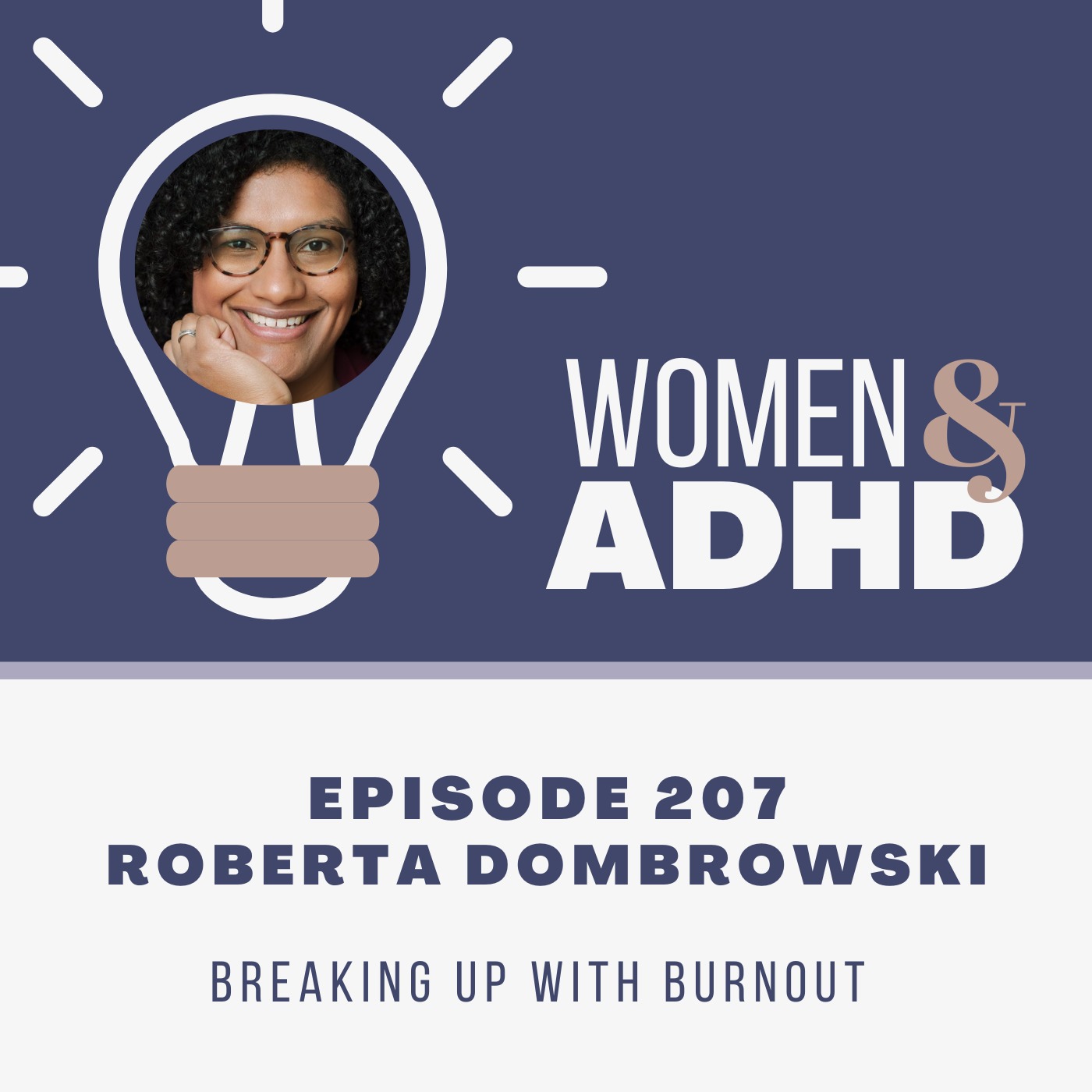
欢迎来到第207期节目,本期我采访了罗贝塔·多姆罗夫斯基。
Here we are at episode 207 in which I interview Roberta Dombrowski.
罗贝塔是一位高管教练,也是‘正念学习’的创始人,她帮助领导者和团队从内而外地茁壮成长。
Roberta is an executive coach and founder of Learn Mindfully, where she helps leaders and teams thrive from the inside out.
罗贝塔在科技行业迅速晋升,29岁就成为副总裁,但她意识到自己的成功是有代价的。
After rising quickly through leadership roles to becoming a VP in the tech world at age 29, Roberta realized her success was coming at a cost.
她发现自己精疲力尽、焦虑不安,身体也因不断证明自己的压力而受到影响。
She found herself burnt out, anxious, and physically impacted by the pressure of constantly proving herself.
在外界看来,她是一位表现卓越的高管。
On the outside, she was the high performing executive.
但在内心,她正咬牙硬撑,应对着倦怠、复杂的创伤,以及常常作为房间里唯一女性或有色人种的孤独感。
On the inside, she was white knuckling her way through burnout, complex trauma, and the isolation of often being the only woman or person of color in the room.
在这次对话中,罗贝塔和我深入探讨了她迟来的ADHD诊断如何帮助她终于理解了自己的大脑、童年以及在学校和工作中的经历。
In this conversation, Roberta and I dig into how her late ADHD diagnosis helped her finally make sense of her brain, her childhood, and her experiences at school and work.
ADHD、创伤与倦怠之间的重叠,尤其是对高成就女性、母亲和创业者而言。
The overlap between ADHD, trauma, and burnout, especially for high achieving women, mothers, and entrepreneurs.
我们讨论了真正以创伤为本的领导力日常是什么样子,为什么工作是唯一被社会接受的成瘾形式,以及如何摆脱这种循环,还有如何在不使一切崩塌的前提下,逐步放下对控制、微观管理和过度承担的执着。
We talk about what trauma informed leadership actually looks like from day to day, why work is one of the only socially acceptable forms of addiction and how to step out of that cycle, and how to start loosening your grip on control, micromanagement, and overfunctioning without letting everything fall apart.
如果你曾觉得自己的成功实际上是建立在过度承担、完美主义和取悦他人之上,并且迫切想要摆脱倦怠却不知如何下手,那么这一集绝对是为你准备的。
If you've ever felt like your success is actually built on overfunctioning, perfectionism, and people pleasing, and you're desperate to break up with burnout, you're not sure how, this episode is definitely for you.
那么,罗贝塔。
Well, Roberta.
很高兴见到你。
It's so great to meet you.
谢谢你来参加这个播客。
Thanks for being on the podcast.
谢谢你邀请我。
Thanks for having me.
我真的很兴奋。
I'm really excited.
我们从你的成年期ADHD诊断开始聊起好吗?
Why don't we start with your adult ADHD diagnosis?
你是什么时候确诊的?当时你的生活中发生了什么,让你觉得真的应该去深入了解这个问题?
Whenhow long ago were you diagnosed and what was happening in your life where you started to think I should really, I should really look into this?
是的,所以那是
Yeah, so it
那是十六年前,实际上是我上大学的时候。
was sixteen years ago, it was actually when I went to undergrad.
所以我开始在罗切斯特理工学院读本科,这是我人生中第一次离家。
So I started college RIT, at Rochester Institute of Technology, first time being away from home in my life.
我刚开始上课。
And I was starting classes.
我记得当时很难保持有条理。
And I remember it was like hard for me to stay organized.
我现在真的很喜欢教育。
Like I love education now.
我真的非常喜欢。
Like, I love it.
我全身心投入学习和一切相关的事情。
I'm all about learning and everything.
但即使回想起童年,教育对我来说也特别困难。
But even when I think back to, like, childhood, education was really tough for me.
当时我并不知道这一点。
And I didn't know this at the time.
我是在确诊之后才了解到的,我小时候的老师其实曾告诉妈妈:‘你应该带她去检查一下是否患有多动症。’
I learned this after I got diagnosed is that my teachers growing up actually told my mom, she was like, know, you should really get her tested for ADHD.
我妈妈不希望这件事出现在我的档案里。
And my mom didn't want it on like my record.
她不希望这成为一种污点,影响到我未来的任何方面。
She didn't want it to be like a scarlet letter that would be held against me in any way.
所以我从小学到高中,为了集中注意力,总是把自己关起来,比如把自己锁在卧室里,而且必须完全安静才能专注。
So I went through all of like undergrad, like, middle school, high school, I used to lock myself away to focus, like I would lock myself in my bedroom, and like everything had to be really silent for me to focus.
然后我会进入高度专注的状态。
And then I would get like into hyper focus.
这些是我成长过程中学会的应对方式。
And so those are really coping skills that I had growing up.
但当我上大学时,我发现我平时的方法不再有效了。
But then when I went to undergrad, I was like, you know, my normal approach isn't really working.
我试着把自己关起来学习,但总觉得哪里不对劲。
I'm trying to lock myself away and like study and something's going on.
我觉得我需要找个人谈谈。
I think I need to talk to someone.
于是我去找了残障服务部门的人,当时我正在和他们讨论申请延长考试时间的事。
And I spoke to someone in disability services because I was talking to them about getting potentially extended testing time.
他们说,你先得有正式的诊断证明。
And they were like, you need the formal diagnosis first.
于是我在那里见了一位精神科医生。
And so I met with a psychiatrist there.
他们做了所有的测试和其他评估。
They did all the testing and everything.
之后我也开始服药了。
And then I also started medication as well.
那一刻我才意识到,原来生活可以变得这么轻松。
And that was like, wow, things are so much easier now.
谁能想到生活原来是这样的呢?
Who knew life was like this?
从那以后,这确实是一段漫长的旅程。
And yeah, it's been a it's been a journey since then.
当然。
For sure.
对。
Yeah.
我完全能理解你妈妈那种想法,就像有个‘红字’一样。
I totally relate to your mom to write that idea that like, there is a scarlet letter.
我的生活和呼吸都离不开ADHD,当我考虑跟学校沟通关于我孩子的事情时,我非常非常紧张,特别担心他们会怎么被对待,会被分到什么样的班级。
I mean, I live and breathe ADHD and I was very, very nervous about approaching the school when it came to my kids and how they, you know, being really, really worried about how they were going to be treated and what classrooms they were going to end up in.
这真的非常复杂。
And it's really complicated.
你拿到正式诊断后,跟妈妈聊的时候感觉怎么样?
What was it like talking to your mom after you did get the formal diagnosis?
她完全支持。
She was, like, all for it.
我跟她聊了这件事,她说:哦,是的。
She like, I talked to her about it, and she's like, oh, yeah.
我们一直觉得你可能一直都有这个问题,很高兴你正在获得你需要的帮助。
We knew that you probably had it this whole time, and I'm glad you're getting the help that you need.
最近这事儿特别有意思,因为一年前我生下了我的儿子。
And it's been really interesting lately because I actually gave birth to my son a year ago.
所以怀孕期间我停用了药物,整个产后的第一年也都没吃药——这实际上是我确诊以来停药时间最长的一次。
And so I went off of my medication during pregnancy and then the whole first year of postpartum, And that was the longest that I had been off of my medication since I got diagnosed actually.
经历产后ADHD的这段过程,是我完全没想到的。
And going through that, like ADHD postpartum, that was something I never expected.
现在回头想想,我才明白,这其实说得通。
And like looking back, I realize now like, oh, it makes sense.
这本来会彻底打乱很多事情。
Like it's it would have upended a lot.
但在过去这一年,当我全力照顾、养育儿子的时候,我的执行功能几乎完全丧失了。
But it was like my executive functioning skills were basically non existent for the last year of my life while I was helping like growing my son, raising my son growing my son.
我妈妈其实一直很支持我,她说:也许你该停止母乳喂养,重新开始服药了,毕竟这对你真的很有帮助。
And my mom's actually been really supportive with like, maybe you should, you know, stop breastfeeding and go back on your medication at this point in time, like it's really works for you.
所以我们现在能进行这样的对话了,她也理解了诊断和药物对我生活的整体影响。
And so we were at this point now we can have these conversations, and she understands like the impact that the diagnosis and medication has had on my life in general.
所以现在我处于一种非常有趣的境况中。
So it's a really interesting dynamic to be in now.
我还觉得,从我上学的时代到现在,社会对神经多样性、ADHD等话题的接纳程度已经大不相同了。
I also think just the climate of when I was in school growing up to now just embracing neurodiversity and ADHD and stuff like that.
现在这些话题更开放、更常被讨论了,虽然仍然存在偏见和误解,但和很多年前相比已经完全不同了。
It's more, it's more open and talked about now, there's still definitely like biases and misunderstanding, but it's just different than it was so many years ago.
是的,这正是我想问你的。
Yeah, that's what I was gonna ask you.
因为我自己已经确诊六年了,每当我遇到那些在像TikTok和新冠疫情引发的ADHD诊断热潮之前就确诊的女性,我总是很好奇:自从你最初确诊以来,我们谈论神经多样性与ADHD的方式发生了哪些变化?
Because I, know, I've been diagnosed for six years at this point and I'm always fascinated when I meet women who have been diagnosed first, you know, before the like TikTok COVID revolution that happened around ADHD diagnosis, which is like, how have you see what has changed about the way that we talk about neurodivergence and ADHD since the time that you were first diagnosed?
是的,这很有趣,因为我确诊时正在上大学。
Yeah, it's interesting, because I was in college when it happened.
而且我在本科期间还曾在残障服务部门工作过。
And I also ended up working in disability services during undergrad too.
所以,我们现在使用的术语完全不一样了。
So there's like, just terms that we use are just completely different.
比如,我们以前会用像阿斯伯格综合征这样的词。
Like, remember we used to use terms like Asperger's and stuff like that.
但现在我们不再这么说了,而是谈论自闭症谱系中的神经多样性。
And now we don't, it's like, talk about neurodiversity in the spectrum.
现在使用的语言也完全不同了。
And it's just different language now that's even being used.
但我记得,当我还在残障服务部门工作时,那是我第一次接触到这么多大脑运作方式不同的人。
But I remember when I was in that environment of working in Disability Services, it was the first time that I was surrounded by so many different people who their brains worked differently.
而且他们对此毫无羞耻感。
And there was no shame in it.
每个人都坦然地在这里寻求自己需要的支持。
There was no shame everyone was in there getting the support that they needed.
这真是一件美好的事情。
And it was really beautiful thing.
我觉得现在随着抖音的普及,信息直接推送到你面前,好像每个人都在谈论这个话题。
I think now with the like expansion of tick tock, it's delivered to you more like it's just everyone's talking about it.
就连我妹妹现在也说,她觉得自己是神经多样性者。
Like even my sister now she she talks about how she believes she's neurodivergent.
她并没有得到正式的诊断。
She's not diagnosed officially.
但她是通过刷抖音,逐渐自我觉察,现在能够谈论这个话题了。
But like, it came through her watching Tik Tok and becoming self aware, and now being able to speak about it.
我说,是的,我觉得你说得对。
And I'm like, Yeah, I think you're right.
我从来没想过,这居然说得通。
Like, I never thought of it that would make sense.
回看我们的童年,很多事情现在看来都豁然开朗了。
Looking back at our childhood so much, you look back and so much more makes sense now.
所以我觉得,很多人,尤其是通过抖音和自我学习,回望过去时都会觉得,哦,现在我们有了看待生活的另一种视角。
So I think a lot of people, especially with TikTok and self education, look back and they're like, oh, it's just a different lens of looking at life now.
是的,没错。
Yeah, right.
不仅如此,我认为这不仅仅是回望各个家庭成员时,觉得‘哦,如果你有这个,那你也肯定有这个’,还包括压力和自我形象的影响——这些因素在多大程度上影响了我们对ADHD的理解?如果当时我们只是把这看作神经多样性,情况会不会不同?
Well, not only that, but I think it's, you know, not only looking back at all the different family members and being like, Oh, yeah, you if I have this, you definitely have this, but also just sort of the impact of, like how does stress and self image, you know, it's so nuanced in terms of like, would we even have ADHD if this was just thought of as neurodivergence, right?
我经常问自己一个问题:如果我们把自己视为神经多样性群体,或者说我有点混乱了,但我觉得近年来对话的一个重大变化是,从强调个体诊断‘这是你的问题’,转向了关注社会如何提供支持。
This is sort of a question I ask all the time, which was like, if we looked at ourselves as neurodivergent or looked at, I think I'm getting all mixed up already, but I'm like, one of the things I feel like the conversation has changed a lot in recent years is this emphasis on the societal accommodations versus the individual diagnosis and that this is like a you problem.
我们能在工作中做些什么?
This is more of like, what can we do in our workplace?
我们能在学校做些什么?
What can we do at school?
我们该如何为神经多样性思维者提供支持?
How can we accommodate neurodivergent thinkers?
而且,当我们为神经多样性思维者提供支持时,其实每个人都会受益。
And also talking about the fact that everybody benefits when we accommodate neurodivergent thinkers.
对。
Right.
所以我觉得,现在的对话正逐渐转向这样一个观点:如果超过百分之五的人口都是神经多样性思考者,那会是什么样子?
And so I think that's sort of I feel like the conversation is is switching more to that idea of like, well, what if way more than five percent of the population were neurodivergent thinkers and what would that look like?
然后,让我们不要再强调你的诊断取决于你有多痛苦、或多需要被修复、改变或调整。
And then, you know, let's put the let's remove the emphasis from like your diagnosis is based on how much you're struggling or how much you are needing to fix or change or, you know, shift.
让我们用更宽广的视角来看待这个问题。
And and let's look at this more of like a with a wider lens.
是的。
Yeah.
当你这么说时,我想到的是,这把焦点从个人化的视角转移了——那种认为你有毛病、需要被修正的观点,这种想法也容易引发羞耻感,让人觉得自己完蛋了。
What's coming to mind as you say that is I think it takes it from the individualistic lens where it's like something's wrong with you, you need to fix it, which can also be very shame inducing, where it's like, oh my god, I'm broken.
你什么意思?
What do you mean?
我不正常。
I'm not normal.
这其中蕴含着很多羞耻感。
Like, there's a lot of shame in that.
现在我认为,我们应该从整体和系统的角度来思考:我们能为所有人做些什么?
To now it's I think there's a holistic there's a systemic lens of like, what can we do for everybody?
我们如何才能让机会更加平等,让每个人都能学习?每个人的学习方式都不同,我们如何更好地协作,接纳创造力和这些不同的方式?
How can we kind of level the playing field a little bit more, and just make it an experience where everyone can learn or everyone has different ways of learning and how can we collaborate and embrace creativity and embrace these different ways a little bit better.
我认为神经多样性有太多不同的类型。
I think that there's so many different flavors of neurodiversity.
我有一些朋友是ADHD教练,他们用的一些方法对我的客户有效,但对我无效。
I have some friends who are ADHD coaches and some techniques that they use with their clients, they don't work for me.
我一些习惯和自我调整的方式,都是我自己在高中时期为了生存、掩饰和适应而逐渐形成的。
Like, some of my kind of habits and ways of adjusting for myself are just ingrained from myself and what I learned through high school and what I had to do to survive and mask and accommodate for myself, basically.
嗯。
Mhmm.
是的。
Yeah.
你刚才提到回顾童年时和你姐姐的事,小时候有哪些迹象,现在回头看才意识到原来早就存在了?
Now, you talked about looking back over your childhood with your your sister, What were some of those things growing up that you're like, Oh, yeah, the signs were there all along?
我妹妹并不认为自己是ADHD。
My sister so she doesn't identify as ADHD.
她认为自己属于自闭症谱系。
She identifies as being on the autism spectrum.
对她来说,我们的性格一直非常不同。
For her, it's our personalities have always been very different.
我一直以来都是那个吵闹、外向、情感丰富的孩子。
I've always been, like, the loud, outgoing, emotive child.
我喜欢谈论情绪、感受,所有这些事情。
Like, I wanna talk about emotions, feelings, all of those things.
我妹妹则完全相反,她非常注重逻辑。
My sister has been the complete opposite where she's been very logic based.
每当我跟她谈论情绪之类的事情时,她要么不理解,要么不想参与。
Like, if I ever talked to her about emotions or anything like that, she kind of didn't get it or want to engage in any type of way.
她会说,我们还是说事实吧。
She's like, let's stick to the facts.
所以这正是我们之间的巨大差异。
And so that is just kind of a big difference between us.
所以当她来找我,说哦,是的,她经常发一些关于自闭症谱系的内容等等。
And so when she came to me about, oh, yeah, you know, she posts about the autism spectrum and all this stuff.
我心想,哇,真的吗。
I'm like, Oh, wow.
是的,这说得通。
Yeah, that makes sense.
我简直不敢相信,我之前居然没有早点把这一切联系起来,尤其是我还在残障服务领域工作过。
Like, I, I couldn't believe that I didn't connect the dots sooner, especially as someone who worked in disability services too.
接触过这么多不同的人。
Was around so many different people.
我知道这些模式和行为,但就好像我太亲近妹妹了,反而无法看清她的情况,你懂我的意思吗。
And I am like, I know the patterns and the behaviors, but it's like I, it's almost like I was too close to my sister to be able to to see it for myself if that makes sense.
我只是,是的。
I just yeah.
她就是这样的人。
That's how she is.
所以是的。
So Yeah.
而且我觉得
Well, and I think
这正是伪装的表现。
that's where masking comes in too.
对吧?
Right?
那就是
Which is
这种表现有多少是真正造成障碍的,而不是像你说的,这只是你本来的样子。
like how much of this is presented in a way that is disabling as opposed to just like you said, like this is just who you are.
那我为什么要试图给你诊断什么呢?
So why would I try to even diagnose you with anything?
我认为这引出了一个话题,也就是诊断与非诊断、将非典型行为病理化之间的区别,我其实对这一切都特别着迷。
And I think that brings, you know, that's why this conversation about like the importance of diagnosis versus not diagnosis or pathologizing not like I'm so fascinated by all of it.
我之前和一个朋友聊过,他五岁的孩子最近被诊断为感觉寻求型。
Like I was talking to a friend whose five year old recently, they were diagnosed as sensory seeking.
当时出现了一阵沉默,心里想着:好吧。
There was sort of this pause of like, Okay.
本质上,他们一直在小心翼翼地回避——他们并不想把孩子诊断为任何一种谱系障碍。
And it was basically they were, you know, they were having this very awkward dance around like we didn't want, you know, they weren't diagnosed as being on any sort of spectrum.
我当时就觉得,这一切突然间显得非常歧视残障人士。
And I was like, this feels very ableist all of a sudden.
但同时,这也挺有意思的。
But then it was also like, interesting.
也许如果我们更关注具体的行为特征,看看如何根据这些偏好提供支持会更好。
Like maybe if we did focus more on traits and like looking at different traits and how we can accommodate those preferences.
我不知道,但确实挺有意思的。
I don't know, was very interesting.
这让我想起了这样一个观点:我们可以改变关于诊断的语言,转而采用以优势为导向的方式,就像你之前说的,不要把它看作是你的问题,或让你感到羞愧的事情。
It just reminded me of that idea of like, that we can change the language around diagnosis in terms of, I guess, being strengths based or looking at it as you know, less of something like you said earlier, like less of a you problem and something that you have to be ashamed of.
是的,我觉得这一点我这些年真的逐渐学会了接纳。我小时候在学校里曾感到非常羞愧。
Yeah, I think that's something that really, I feel like I've learned to embrace over the years like there, I did have a lot of shame growing up in school.
我一直觉得自己很笨。
I always thought I was stupid.
数学是我最差的科目。
Like I did math was my worst subject.
直到今天都是如此。
To this day.
我讨厌数学。
I hate math.
我是个更关注想法、感受和情绪的女孩,这也引导我走上了研究和辅导等相关职业。
I am like a thoughts, feelings, emotions kind of girl, which led me to like my career in research and coaching and all of these things.
我曾经因为逻辑和分析能力而感到深深的羞愧,尤其是因为数学、数字这些东西,我总觉得自己的大脑无法集中到足够好的程度去掌握这些。
And I used to have so much shame around the fact that like, the logic, the analytical side, because of math and numbers and all of those things, like I was just like, I cannot focus my brain enough to be good at these things.
我有问题。
Something's wrong with me.
我觉得到了二十多岁、三十多岁的时候,我意识到:不,我不需要再强迫自己塞进这个框框里。
And I think when I got into later 20s 30s I realized like, no, like, I don't need to keep trying to smush myself into this box.
这根本就不是我的框。
That's not my box in the first place.
我的优势天生就和别人不一样。
Like, my strengths are inherently different than everyone else's.
这没关系。
And that's okay.
我接受并热爱这一点。
And I embrace that I love it.
我不想做那些事。
I don't want to do that stuff.
这些对我来说毫无吸引力。
It's not interesting to me.
这现在才是让我感兴趣的事。
It's what engages me now.
但我认为,要从羞耻转向以优势为导向的视角,花了我很长时间。
But I think it took a long time to get to that more strengths based perspective versus shame.
天啊,我也是,对吧?
Oh, God, same, right?
我的意思是,我觉得自己小时候也经历了很多羞耻,即使我参加了资优班。
I mean, I feel like, yeah, I had a lot of shame growing up too, even though I was in the gifted program.
但我确实有很多难以应对的事情,我一直在隐藏,觉得自己懒惰、愚蠢,生怕被人发现我是个骗子。
And I just but I had, you know, there were a lot of things that were very difficult for me that I was hiding and felt like I was lazy and stupid and somebody was gonna find out what a fraud I was.
我一直以为自己有某种学习障碍,因为和你一样,我在阅读方面问题很多,数学和学习也都很吃力,所以这些方面让我总觉得我可能有学习障碍。我常常想,如果小时候就被诊断出来,情况会不会不一样?因为那样我就会明白这些原因。但说实话,我遇到过很多被诊断为多动症的孩子,他们之所以被诊断,仅仅是因为坐不住,对吧?
I always thought I had some kind of learning disability because similar to you, like I had really ish I had a lot of issues with reading and I had a lot of issues with math and studying, you know, and so all of these things where I was like, I feel like I had some kind of learning disability and so I often wonder like, had I been diagnosed at a child, would it have been different because I would have known these things, but I don't know, like I meet so many kids who are diagnosed with ADHD who are just basically were diagnosed because they couldn't sit still, right?
或者这只是给那些成绩差的孩子找的借口,你知道的,我们并没有从优势的角度来看待多动症。
Or they were there was like it's the explanation for why they are a bad student, you know, and and we're not looking at ADHD through a strength based lens.
如果我们不这样看待它,那本质上还是在给孩子们一个理由,让他们为自己的性格、思维方式和行为方式感到羞愧,仿佛存在一种‘正确’的方式,而你就是‘错误’的。
So if if we're not looking at it that way, then there's no I mean, you're still basically giving kids a reason to feel ashamed about how they are and how they think and how they operate and that there's like a right way and you're the wrong way.
就像如果,是的。
Like if Yeah.
所以,我不确定这是否会有帮助。
So yeah, I don't know anymore if that would have helped.
事后看来总是很清楚的。
Hindsight's always twentytwenty.
所以我很好奇,关于教练,你在你的网站上提到过一种以创伤为导向的领导方式。
So I'm curious, like with coaching and you mentioned on your website, like a trauma informed approach to leadership.
我非常有共鸣,主要是因为我接触很多企业主,他们正经历着过度付出带来的压力和倦怠,就像你提到的,还有过度控制,以及未能真正接纳领导角色。
And so I really resonated with that mostly because I work with a lot of business owners who are dealing with like stress and burnout of like over functioning, like you talked about, but also like micromanaging and, you know, not really kind of embracing leadership.
而压力会影响执行功能。
And then the executive functioning is affected by the stress.
因此,我们主要关注压力带来的创伤症状。
And so like we really work on a lot of like trauma symptoms of stress.
我觉得你为‘以创伤为导向的领导’这个概念赋予了清晰的语言,这真是太有趣了。
And so I thought it was so fascinating that you've really like put a language to this idea of trauma informed leadership.
所以从你的角度来看,你是怎么进入这个领域的?你会如何描述创伤知情的领导力辅导?
And so I guess from your perspective, how did you get into this and how do you even describe trauma informed leadership coaching?
是的,这是一段旅程。
Yeah, it's been a journey.
这源于我自己的经历。
It's been my, it really started with my own journey.
我在科技行业工作了十多年,一路做到了高管级别,曾是一家初创公司的用户研究副总裁。
I worked in the tech space for over thirteen years, made it all the way to executive level, I was VP of user research at a small startup.
我非常喜欢与人共事,但我真的在各个方面都精疲力尽了。
And I loved working with people, but I just burned out like I burned out by every sense of the word.
我当时正在接受自己的教练和治疗师的帮助,深入探索自己过去的经历和童年。
And I was working with my own coach and my own therapist, and really digging into things about my own past and childhood.
所以当我谈到我的辅导时,我其实就是最典型的客户,我就是一个过度付出的人。
So like, when I talk about my coaching, like I was my prime like client, like I was over functioning.
这些都是我在童年时期养成的模式和习惯,一直带到工作中:要做个好员工,别抱怨,埋头苦干,做所有这些事。
They were patterns and habits that I had picked up into childhood that I was still carrying into the workplace of like, be a good performer, don't complain, put your head down, do all these things.
所有这些信念最终让我逐渐陷入了倦怠。
And all of those beliefs led to the burnout for me over time.
我当时作为一名高管,试图在工作中做到完美,但事实上你不可能事事都做到。
Was like I was trying to be perfect in the workplace as this executive when it's like you can't do it all, you can.
这真正引领我走上了教练之路。
And so that really led me into my experience with coaching.
作为一名高管,我实际上参加了一个教练认证项目。
And I was an executive, I actually went through a coaching certification program.
然后我又参加了一个专注于人际关系和职场创伤的项目。
And then I ended up doing a another program that focused on relational and workplace trauma.
我后来接触的很多人经历了职场创伤,他们正经历裁员等各种问题。
A lot of people that I ended up working with went through workplace trauma, they were going through layoffs, all of those things.
创伤的关键在于,每个人通常都在某种程度上经历过它。
And the thing with trauma is that everyone has experienced it typically in some way.
它可能是我们许多人经历过的不良童年事件。
It might be adverse childhood events that many of us experience.
但可能是像裁员这样的事,裁员非常具有创伤性,也可能是失去父母。
But it could be things like a layoff, a layoff is very traumatic, could be losing a parent.
实际上,只要我们遇到某种压力源,并以某种方式压垮了我们的神经系统,那就是创伤。
It's really any time that we encounter some type of stressor, and it overwhelms our nervous system in some way.
随着时间推移,我们经历的创伤越多,就越可能导致复杂性创伤后应激障碍(CPTSD)。
Over time, the more traumas that we encounter, it can lead to things like CPTSD.
因此,当你反复经历多种创伤和压力源,身体开始不堪重负时,通常就会出现这种情况。
And so that's usually when you are encountering multiple traumas, multiple stressors, and it begins to overload the body.
我本人就患有CPTSD,这是源于童年以及各种经历不断累积的结果。
That is something that I have, I have CPTSD just from childhood and all of those things adding up.
许多其他人可能尚未确诊,因为当你经历创伤时,你的神经系统会启动战斗、逃跑、僵住或讨好反应,而大多数人只是继续硬撑着。
Many other people may be undiagnosed because they just usually when you're going through trauma, your nervous system has these fight flight freeze fawn responses, they just keep going most of the time.
我所接触的许多高管和领导者,他们在自己的领域都非常出色。
A lot of executives, leaders that I work with, they are amazing at what they do.
而这种出色往往正是创伤的结果。
And often it is a result of the trauma.
因此,他们在童年或成年时期经历的创伤,不知为何导致他们过度表现、表现出色、极度独立、并在某些情境中主动承担领导角色。
So the trauma they experienced in childhood, adulthood for some reason, it led them to over perform or to do really well, excel to be super autonomous and take charge and lead in certain situations.
这些都是他们为生存而获得的非常美好的品质。
These are all really beautiful qualities that they gained for survival.
但也有负面影响:你不休息,不倾听身体的信号,始终处于战斗或逃跑状态,最终就会崩溃和耗尽。
There's also negative impacts where you're not taking breaks, you're not listening to your body, you're operating on that fight or flight all the time, and then you just kind of collapse and burnout.
因此,如果你长期处于这种状态,这种模式在长远来看是不可持续的。
And so it can be unsustainable over the long term if you end up operating at that level for a really long time.
是的,没错。
Yeah, right.
我把这叫做硬撑。
I call it white knuckling.
但你的身体以某种方式紧抓着压力,形成了一种多米诺骨牌效应:你承受的压力越多,就越拼命硬撑,越不关注自身,你的内感受就会完全消失。
But just the way in which your body holds on to that stress in a way that then it's like this domino effect of like the more stress you're holding, the more you're pushing through, the less you're paying attention, then your like interoception becomes nonexistent.
于是,这就自我延续了这种想法:哦,我就继续硬撑下去吧。
And so then it's just like self perpetuates this idea of like, oh, I'm just going to push through.
我会硬撑下去。
I'm going to push through.
我会硬撑下去。
I'm going to push through.
现在我感觉我看到了很多关于神经多样性与硬撑之间的联系,以及荷尔蒙等生理层面的因素。
And now I'm feeling like I feel like I'm seeing so many of the connections around neurodivergence and white knuckling it and kind of the physical elements of hormonal elements.
所以你看,女性自身免疫性疾病的发生率在上升。
So it's like, you know, the rise in autoimmune disorders in women.
皮质醇。
Cortisol.
是的。
Yeah.
对。
Right.
我看到长期创伤和身体积压的压力会带来疾病,而这些疾病在女性身上的表现形式多种多样,从听力丧失到纤维肌痛和子宫内膜异位症,各种情况都有。
And just seeing how like what comes with prolonged trauma and stress held in the body is disease and the way in which disease is showing up in women, from anything from like hearing loss to fibromyalgia and endometriosis, everything in between.
就好像感觉那些红线就在那里,全都连在一起了。
It's like it feels like, you know, I feel like the red strings are there and they're all connecting.
我觉得,天啊,我们真的需要重新评估如何应对你所说的社交和职场压力。
I'm like, dude, like we really need to reevaluate how we are dealing with, like you said, relational and workplace stressors.
那我们到底该从哪里开始呢?
And like, where do we even begin with that one?
这感觉实在太庞大了。
Like, it just feels so huge.
是的,我当客户咨询时,昨天刚录完我自己的播客节目。
Yeah, I when I work with clients, one of the I just recorded my own podcast episode yesterday.
我总是告诉客户,也在节目里提到,工作是唯一一种被社会接受的成瘾形式。
And one of the things I always tell clients and I said in the episode is work is one of the only socially acceptable forms of addiction.
我们中的许多人工作是为了生存。
So many of us work because we work one in order to survive.
有些人工作是因为喜欢,热爱它。
Some of us work because we enjoy it, we love it.
但我们最终会从中获得一种快感。
But we end up getting like this high from it.
我们很有成效,证明了自己的价值,于是形成了一种循环:你因为工作而得到奖励,因为没有界限、接受更多任务而得到奖励。
We're productive, we're proving our worth our value, and then it becomes a cycle where you're rewarded for the work that you do, you're rewarded for not having boundaries for taking on more things.
这个系统就是这样,永远不够,永远不够,你永远不可能完成清单上的所有事情。
And there's it's the system, there's never enough, there's never enough, you're, you're never going to get everything on the list done.
因为我们不是机器人。
Because we're not robots.
我们是完整的人,我们需要休息。
We're holistic humans, we need breaks.
但确实,我们所处的就是这样一个系统。
But yeah, it is just this this system that we're in.
它就是被设计成这样的。
It's been designed this way.
真正要对抗这个系统,就要拥抱一种全新的存在方式——在工作中放慢脚步,倾听自己、倾听身体,以不同的方式投入,学会设立界限,关掉电脑和手机,所有这些。
And it really is going against the system and really embracing like a new way of being new way of being at work, slowing down, listening to yourself listening to your body, showing up in different ways, teaching yourself boundaries and turning off shutting off the computer, the phone, all of those things.
所以当我从系统层面思考如何应对时,就会感到非常不知所措。
So when I think about tackling it on a systemic level, it becomes very overwhelming.
因此,我很多时候是一对一地帮助个人,有时也会进行团体辅导或组织层面的工作。
And that's why a lot of the time I work one on one with individuals, sometimes, group coaching, organizational and stuff like that.
但我总是说,当我一对一地与人合作时,我知道点滴积累的力量——他们正在学习所需的方法,从而改变自己的行为方式。
But I always say like, I know little by little when I work with someone one on one, they're learning the tools that they need to be able to shift for themselves and how they're showing up.
如今网上关于多动症的建议多得数不胜数,要分辨该相信谁或什么真的很难。
There is no shortage of ADHD advice online right now, and it can be difficult to know who or what to trust.
这正是我欣赏Inflow的原因之一。
That's one of the reasons I appreciate Inflow.
Inflow是一款专为成年多动症患者设计的自助应用,尤其适合那些晚期确诊或仍在理解多动症在现实生活中如何表现的女性。
Inflow is a self help app designed specifically for adults with ADHD, especially women who are late diagnosed or still making sense of how ADHD actually shows up in real life.
你可以把它想象成多动症版的Duolingo。
Think of it like Duolingo for ADHD.
每天你都能收到一些简短的互动课程,大约五分钟就能完成。
Every day you get short, interactive lessons you can complete in about five minutes.
我非常欣赏这款应用中蕴含的同理心与细致用心。
I really appreciate the compassion and thoughtfulness that goes into this app.
它们提供了学习模块、领域专家的录音,以及一个活跃且支持性的社群。
They have learning modules, recordings from experts in the field, and an active, supportive community.
对我来说,真正让Inflow脱颖而出的是信任。
For me, what really sets Inflow apart is trust.
其内容基于循证心理学,而非那些捷径或TikTok潮流。
The content is grounded in evidence based psychology, not hacks or TikTok trends.
这款应用由一位专攻ADHD且自身患有ADHD的心理学家创立。
It was founded by a psychologist who specializes in ADHD and has ADHD himself.
该应用已通过正式研究评估,并成为ADDA(注意力缺陷障碍协会)和Attitude杂志等机构的官方合作伙伴。
The app has been evaluated through formal research and is an official partner of organizations like ADA, the Attention Deficit Disorder Association, and Attitude Magazine.
经过多年筛选ADHD的建议、技巧和方法,能找到一款帮助我首先理解自己大脑特质的应用——比如拖延、情绪过载、时间盲区和负面自我对话——让我能基于这些认知做出明智决策,而不被羞耻感左右,这感觉真好。
After years of sorting through ADHD advice and tips and tricks, it feels good to find an app that helps me understand my brain firsttraits like procrastination, emotional overwhelm, time blindness, and negative self talkso I can make informed decisions about what strategies without work the shame.
如果你正在寻找一种体贴、易共鸣且基于研究的ADHD支持,可以从Inflow免费的ADHD特质测试开始,网址是womenandadhd.com/inflow。
If you're looking for ADHD support that's thoughtful, relatable, and research based, you can start with Inflow's free ADHD Traits Quiz at womenandadhd.com/inflow.
再次提醒,网址是 womenandadhd.com/inflow。
Again, that's womenandadhd.com/inflow.
这也是我很难弄清楚的另一件事,因为我觉得在创伤相关的领域里,好像每个人都是神经多样性者。
This is the other thing I have a really hard time figuring out, too, because I feel like in trauma spaces, it feels like everybody is neurodivergent.
我不确定是不是因为创伤和压力也会导致执行功能障碍。
And I'm like, I don't know if it's because trauma and stress also lead to executive dysfunction.
这就是我当时所处的状态。
Like, that's the thing where I was.
这就像先有鸡还是先有蛋的问题。
There's like a chicken egg thing there.
但我想知道,是不是因为我们本身具有神经多样性或ADHD,才会陷入这些复杂的创伤后应激障碍和勉强支撑的局面?
But I'm like, is it because of neurodivergence and ADHD that we end up in these, you know, situations of complex PTSD and that white knuckling it?
是的,你知道,这种感觉就是如此。
Yeah, you know, this idea that like, you know, it just feels like.
当我们面对这类事情时,就像飞蛾扑火一样。
We're like moths to a flame when it comes to that kind of thing.
所以我在想,是ADHD导致了这种情况,还是这些环境导致了ADHD?
So I'm like, is it the ADHD that's causing it or is ADHD being caused by these environments?
我觉得我不确定。
Like, I think I don't know.
这种情况是可能的。
It can be.
这种情况是可能的。
It can be.
我想这就是我的想法,是的,当我思考因果关系之类的问题时,我会想,这重要吗?
I think that's where I yes, and I'm like I think about causality and stuff like that, I'm like, does it matter?
不重要。
No.
我知道。
I know.
我经常得到这样的回应。
I get get that response so often.
我不明白为什么会这样。
And I'm like, I don't know why it does.
是的。
Yeah.
不。
No.
嗯,我认为很大一部分原因是我想解决问题的那部分自我。
I well, I think a lot of it is that just is that like wanting to solve the problem part of me.
是的。
Yeah.
你想要一个理由,想要一个源头,想要那种确定性。
You want a reason you want a source you want that.
是的。
Yeah.
我认为这些都提醒了我,我需要放慢脚步,回到呼吸上。
I think that those are like I've learned that this is a reminder to like, Okay, that's where I need to slow down and like get back to the breath.
就像你所说的,这种自下而上的压力应对方式,就是要放慢脚步。
And like you were saying, that kind of bottom up approach to stress, it's like slow down.
甚至,你知道,我一直在和我的教练一起实践这个,他一直在谈论这个。
Even, you know, I've been working with it with my own coach who has been talking about this.
我觉得我们很多人都有一种‘硬撑’的观念,认为舒适、安全、放松是未来某件事,我们不断把目标推得越来越远。
I you know, I feel like a lot of us have this notion around white knuckling it that like comfort, safety, relaxation is somewhere down the line and we keep pushing the needle further and further along.
然后我们就崩溃了,对吧?
And then it's like we crash, right?
所以我们的循环就是:精疲力尽、崩溃、再重复。
And so our our cycle is burnout, crash, repeat.
所以她一直在我个人层面帮助我,教我如何每天、在当下让自己感到舒适,而不是觉得那是在未来才会发生的事,这真的很有帮助,
And so she's been working with me personally just on like, how do I make myself comfortable every day, know, in the moment as opposed to thinking it's something later and it's been really,
确实很难,但显然非常有启发,去思考:这并不是一件未来才会发生的事,对吧?
really difficult but obviously very helpful to think about like, it's, it's not this thing that is in the future, right?
舒适与安全,就在此时此刻,始终是核心。
Comfort safety, it's right now always absolutely central.
是的,我还没有对此做太多研究。
Yeah, and I, I haven't done much research into it.
但我猜测,许多患有注意力缺陷多动障碍(ADHD)的人很可能符合这种情况——ADHD导致的倦怠在人群中可能统计上更常见,因为我们总是在经历新奇、重复、然后崩溃、再恢复的循环。
But I have a guess that many people with ADHD probably fit like there's ADHD burnout, probably higher statistically happens and populations because we're going through the cycle of like novelty, something new, and then we repeat again, and then we kind of collapse, and then we recover and all of that.
但我猜测,ADHD人群中的倦怠现象可能更为普遍。
But my guess is that it is probably more high, high prevalent with folks with ADHD and burnout.
是的,没错。
Yeah, right.
对。
Yeah.
那么,你觉得创伤在领导行为中是如何体现的呢?
So how do you feel like trauma shows up in leadership behavior?
我知道你提到过一些
I know you kind of mentioned some
那些特质,但它们之间有什么联系呢?
of those traits, but like, what's the connection there?
经历过创伤的人通常会有很强的自主感和控制欲。
So with trauma, people who have experienced trauma, they usually have a high sense of autonomy and control.
他们通常身处各种系统或环境中,事情总是发生在他们身上。
Usually they've been in these systems environments where things have happened to them.
因此,他们希望掌控一切。
And so they want to take control of things.
这最终表现为强烈的野心和主动担当。
This ends up showing up as like a lot of ambition, taking charge.
它也可能表现为过度微观管理。
It can also show up as things like micromanagement.
如果你曾遇到一个超级微观管理的老板,要求你必须按他说的方式做事,或者他把任务委派给下属后,又回去修改和调整,因为结果不符合他的标准。
If you've had a boss who is super micromanaging, do as I say, do things this way, or they're actually delegating things to their direct reports, And then they're going back and fixing and editing because it's not up to their standards in some way.
他们很难放松控制,放手让别人来主导。
It's really, really hard for them to like loosen their grip and let go and let somebody else take charge.
因为他们通常习惯独自做事——这是他们过去生存所必需的。
Because they're usually used to doing things on their own, something they had to do in order to survive.
所以它确实会以这些方式表现出来。
So it can definitely manifest in those ways.
也有些人不愿意追求领导角色,因为他们经历过创伤事件。
There's also people who don't want to pursue leadership, like they've been through traumatic events.
他们不是处于高度唤醒状态,而是处于低度唤醒状态。
And instead of being the hyper arousal, they're hypo arousal.
当工作中出现冲突时,他们会说:不,不,不,不,不,不。
So conflict comes up at work, and they're like, Nope, nope, nope, nope, nope, nope.
他们有取悦他人的倾向。
And they have people pleasing tendencies.
他们会说:是的,我愿意为你做任何事。
They're like, Yeah, I'll do anything for you.
他们经常加班。
They're working overtime.
他们没有界限,所有这些表现都有。
They don't have boundaries, all of those things.
所以这也是另一种例子。
So that's another kind of example, as well.
但这真的因人而异。
But it really depends.
以上所有情况都可能同时存在。
It can be all of the above.
是的。
Yeah.
我觉得这其中也有联系,当我意识到完美主义和讨好型人格本质上都是过度警觉的表现时,这对我来说是个重大转折点。
Well, I think there's a connection there too in terms of like like it was like a big moment for me when I realized that like perfectionism, people pleasing, that these were basically forms of hypervigilance.
这些都是在控制别人对我的看法。
These are forms of controlling how I'm being perceived.
就像你所说的,尽可能地控制我周围的环境。
And like you said, trying to control the environment around me as much as possible.
所以当我开始把这些视为过度警觉和创伤反应时,我简直惊呆了。
And so when I started looking at that as hypervigilance and a trauma response, it was like, woah.
展开剩余字幕(还有 322 条)
所以我认为,这种回避行为其实就是讨好型反应,对吧?
So I think, you know, even that avoidant behavior is the fawning, right?
那么,我们该如何将这一点转化为依然能够领导呢?
So how do we then translate that into still leading?
因为我觉得,这也是很多ADHD创业者所面临的问题——至少和我合作的那些人,他们最初都是单打独斗的个体经营者,全身心投入某件事,根本没考虑过增长或可持续性。
Because that's an I feel like another thing that a lot of ADHD entrepreneurs work with or at least the ones who end up with working with me is that like they started out as a one man band, as a solopreneur, and they were really into something and they weren't even thinking about like growth or sustainability.
一切都是靠冲动和多巴胺驱动的。
It was all on impulsivity and dopamine.
等他们反应过来时,已经有一支12人的团队了,却还是事必躬亲,每个人都感到痛苦,而他们自己也精疲力尽。
And the next thing they know, they have a staff of 12 people and they are still trying to do everything and everybody seems miserable and, you know, they're burnt out.
于是我们开始探讨:如何慢慢松开控制,减轻这种掌控欲,同时又让公司正常运转?
And like we get into this, like, how do we start to like loosen the reins and loosen the grip of it, but also still have a functioning company.
我觉得,这种能力并不是很多创业者会学到的。
And like, I don't feel like that's a skill a lot of entrepreneurs learn.
没错,我以前也给一些人做过商业教练。
No, I've done business coaching with folks before.
而这通常主要聚焦于重新连接那个愿景。
And that's usually a lot of what it focuses on is first, reconnecting to that vision.
所以,患有ADHD的人通常很有创造力,抱有宏大的愿景,但需要重新连接这个愿景——看看你现在的企业状态,和你最初起步时相比,你希望它发展到什么样子?
So people with ADHD, very creative, large visions, typically, but reconnecting with that vision, like, here's where the business is like now what you originally started, where do you want it to be?
然后,你希望事业之外的生活是什么样子?你希望一直埋头苦干,始终用超专注状态每周工作六十小时吗?
And then what do you want life outside of the business to look like to do you want to be working heads down using that hyper focus always being on sixty hours a week?
还是希望它呈现另一种样子?
Or do you want it to look like something else?
从那里开始,通常会讨论你希望你的团队是什么样子。
And then from there, it's usually conversation about like, what do you want your team to look like?
我总是会向人们介绍‘高管团队’这个概念。
I always ask people I introduced this concept of like an executive team.
如果你是组织里的高管,你就有一个高管团队,可能是你的老板、你的治疗师、你的伴侣等等。
So if you're an executive at an organization, you have an executive team, it could be your boss, it could be your therapist, your partner, etc.
我们每个人都有自己的一支高管团队。
Every single one of us has our own executive team, too.
我们通常不会这样去思考。
We typically just don't think about it that way.
所以我常问:你的团队有哪些人?
And so I'm like, Who's on your team?
你需要谁在你的团队里,才能到达你想要的地方?
Who do you need to be on your team to be able to get where you want to go?
很多时候,这始于引入类似首席运营官的角色,具体取决于组织规模,或者一位执行助理,他们可以介入并确保业务运转顺畅。
And a lot of the times it is starting to introduce like maybe a chief of staff depending on the organization, or an executive assistant, somebody who can come in and keep the wheels turning as things are going on in the business.
我合作过的许多高管都喜欢配备执行助理,因为他们可以把所有讨厌的事情——比如预算、会计——都交出去,专注于更有创意的愿景设定,甚至有时是他们喜欢的销售工作。
A lot of executives that I've worked with love having executive assistants because they can hand off all the stuff they hate, the budget, the accounting, all of those things and stick to the more creative vision setting, or even sometimes sales work that they love doing.
所以这真的因人而异。
So it really depends.
也可能是为自己建立一套系统,同时配合教练一起完成。
It might just be creating a system for yourself too, And working with a coach on that as well.
这取决于你所处的业务规模。
If it depends on the scale of the business that you're in.
对吧?
Right?
是的,我觉得关键在于,我该怎么避免陷入琐事?
Yeah, I feel like it's like, how do I stay out of the weeds?
你知道,很多企业主的优势和资产在于战略规划和创意生成。
You know, because I think a lot of business owners, their their strengths or their asset is strategy and idea generation.
所以有时候我觉得,你的全职工作就是避免陷入琐事,让别人去做这些事。
And so it's like, how do I Sometimes I feel like your full time job is to stay out of the weeds and to get other people to do it.
而且,我总是用育儿来打比方,对吧?
And, you know, I always use the analogy of parenting, right?
作为父母,我们的责任是教会这个小人儿如何独立完成事情。
Which is like our contract as a parent is to teach this little human how to do things for themselves.
所以,没错,如果我一直替他们洗头发,直到他们长大成人,对所有人来说都会轻松很多,因为我更擅长,也知道怎么做。
And so, like, yes, it would be a lot easier for all of us if I continued to like wash their hair for the rest of their life because I'm better at it and I know what I'm doing.
但终究,我得让他们自己走进浴室,独立洗头,哪怕一开始洗得一团糟,然后一遍又一遍地让他们尝试,直到他们真正学会。
But at some point, I have to let them like go into the shower by themselves and wash their own hair and do a really crappy job and then send them back over and over and over again until they figured it out.
我认为,作为企业主,这确实是最难放手的事情之一。
And it's like that kind of is, I think, one of the hardest things to let go of as a business owner for sure.
当然了。
Oh, definitely.
这一直是我在不断挣扎的问题。
It's something I struggle with all the time.
尤其是今年,产后恢复期间经营我的业务,又没有靠药物支撑,连基本的执行功能都缺失。
Like, especially this year coming out of postpartum and running my business and not have it being on medication and like no executive functioning.
我通常每天都会用一个笔记本,上面列着我的任务清单。
Like, I have usually have a notebook that I use like every day and I'm like, here are my tasks.
过去这一年,我脑子里只有零散的想法。
Last the last year, like it was just ideas.
我不断地从一件事跳到另一件事。
And I was like jumping from one thing to the other to the other.
我一直在想,为什么呢?
And I'm like, why?
我会突然意识到自己在想:我为什么又在做这个?
Like, I would have moments of being awareness when I'd be like, why am I working on this again?
就是我之前已经做过的那种策略。
Like this strategy that I've already done like before.
那时候我就得对自己说:停一下。
And it's like, would just have to be like, stop.
停下吧,罗贝塔。
Stop, Roberta.
别再碰它了。
Just stop touching it.
已经够好了。
It's good enough.
我通常会告诉自己:这已经达到它该有的状态了吗?尤其是作为一个独立创业者?
That's usually like the thing that I tell myself is like, is this in a good enough spot of where it needs to be, especially as a solopreneur?
然后我就会转而去做下一件事。
And then I'll usually move on transition to the next thing.
那么,领导者如何知道该在自己身上使用创伤知情实践,而不是那种‘再努力一点,坚持下去’的感觉呢?我想我们内心已经内化了所有这些信息。
And so how do guess how do leaders know how to use like trauma informed practices on themselves versus, you know, that that feeling of like, just work harder, just keep at it, just, you know, you'll get this all of the all of the like messages I think we've internalized.
是的,我认为首先要明确的是,你不必独自面对这一切。
Yeah, I would say the first things first, you don't have to do it alone.
去寻求帮助吧,找一位治疗师或教练来支持你、和你讨论这些问题,这完全没问题。
Like go ahead, it's okay to go out look for a therapist, look for a coach to be able to support you and to talk about these things with.
我认为,尤其是如果你曾经经历过创伤,这是获得认知的最佳方式。
I think that's usually the best way to get exposure, especially if you've experienced trauma before.
因为有时候,比如我同时也是一名冥想导师。
Because sometimes you might like for example, I'm a meditation teacher as well.
有时候,当我为人们开展正念入门课程时,如果他们是第一次接触且有创伤经历,可能会被触发,根据他们的背景,可能会产生创伤反应,因为连接呼吸或进行身体扫描对他们来说并不安全,感觉不到安全。
Sometimes when I do like intro to mindfulness sessions with people, if it's their first time they they have experienced with trauma, it can be triggering, they can have a trauma response depending on their background, because connecting to the breath, or doing a body scan is not safe, it doesn't feel safe to them.
因此,当你与教练或治疗师合作时,他们可以引导你尝试不同的技巧。
And so usually when you're working with like a coach or a therapist, they can walk you through different techniques.
例如,如果我正在与某人合作,正念总是帮助你重新调节神经系统的一种方式。
So for example, if I was working with someone, mindfulness is always one way to kind of reset your nervous system.
如果我正在与有创伤背景的人合作,我可能不会使用呼吸法,而是会使用声音,或者可能用气味或香味。
If I'm working with someone with a trauma background, I'm probably won't use the breath, I might use sound, maybe I'll use smell or scent potentially.
但这些都是我们可以讨论的内容。
But those are all things we would be able to talk about.
通常,会有一个初步访谈环节,我们会谈论他们的经历,然后我会谈到我称之为‘设计你的自我关怀菜单’的部分。
Usually, there's like an intake portion, we talk about experiences, and then we'll talk about ice, I call it designing your self care menu.
因此,我们通常会逐一探讨这些方法。
And so we'll usually run through things.
很多时候,是和人们聊聊他们已经喜欢或过去做过的事情,比如泡泡浴、涂色,或者你小时候热爱的某种爱好。
And oftentimes, it's talking to people about things that they already enjoy or have done in the past, like maybe it's a bubble bath or coloring, or there's a hobby that you had when you were a kid that you love doing.
这实际上是重新将这类活动引入你的生活,让你也能有办法调节自己的神经系统。
It's really introducing those sorts of things again, back into your life so that you have the ability to reset your nervous system as well.
所以我想说,你不必独自面对这一切。
So but I would say you don't have to do it on your own.
对很多人来说,他们会说:‘我会自己搞定的。’
For a lot of people, they're like, I'll figure it out.
我会自己做。
I'll do it on my own.
但你不必这样。
But you don't have to.
有很多人能够支持你,帮助你建立成功所需的系统和行为。
There are people out there who are able to support you and help you set up set up the systems behaviors that you need to be successful.
对。
Right.
而且我觉得,就像你之前说的,我们不必擅长每一件事,要专注于那些让你感觉轻松或毫不费力的事情,把消耗你的事情外包出去。
And I think also, like you said earlier that we don't have to be good at every single thing, like lean into the things that are feel easy for us or effortless and outsource the things that drain us.
我其实非常印象深刻。
I was actually really impressed.
我刚读完莱内·布朗最新出版的书《坚实根基》。
I just finished reading Renee Brown's most recent book, Strong Ground.
我不知道你有没有读过,但如果你是她的粉丝,你会发现她大量谈论高管层,我感觉她的目标受众似乎不再是我这样的群体了,但我特别喜欢的一点是,她强调了教练的重要性,不断讲述教练有多么了不起。
I don't know if you've read it yet, but it was like or if you're a fan, a lot of it, she talks a lot about like C suite and it was a bit like, I didn't really feel like her target demographic anymore, but one of the things I really loved was she talks about the importance of coaching and how she was like going on and on about how amazing coaches is.
她说,我们期望运动员,还有某些人,理所当然地应该有教练。
And she's like, we expect athletes and, you know, there are certain people we just expect to have coaches.
而对另一些人,我们对某些职位的刻板印象却是:你必须靠自己完成一切。
And then there's other people where we've sort of the narrative around certain positions is like, oh, you have to do it on your own.
你必须自己穷尽所有途径。
You have to exhaust exhaust all avenues on your own.
你怎么敢自称是领导者,却不能自己搞定一切?
How dare you call yourself a leader and not figure everything out on your own?
我们需要彻底打破这种认为领导者应该无所不能的想法,因为这简直是糟糕透顶的建议。
And it was like, we need to absolutely dismantle this idea that leaders should be able to do it all because that's terrible, terrible advice.
是的,我觉得
Yeah, I think
这也可能是美国式领导力所推崇的孤胆英雄主义造成的。
it's also probably a result of US based leadership to the rugged individualism that we have going on.
而其他文化则明显更注重集体协作。
Whereas other cultures are definitely can be more community based.
我总是说,我们是在社群中愈合的。
I always say that we heal in community.
因此,这也是创伤知情领导力中非常重要的一部分:我们经历创伤时,通常是集体性的,世界上现在正发生着集体创伤。
And so that's been really an important part of trauma informed leadership too is we go through trauma typically, it can be done collectively, there is collective trauma going on in the world right now.
但创伤常常导致我们与他人疏离,与自己疏离,与他人疏离。
But a lot of what happens with trauma is that it ends up disconnecting us from other people, we disconnect from ourselves, we disconnect from others.
所以我们需要在社群中与他人一起愈合。
And so we heal in community with others.
因此,寻求治疗师、参加支持小组、与其他领导者建立联系,真的可以改变人生、带来能量,同时也能化解你因创伤事件而产生的羞耻感。
So getting the therapist maybe going to a support group connecting with other leaders as well, It really can be life changing and energy giving and you're dismantling the shame that you might have from the traumatic event too.
是的。
Yeah.
我认为,丽妮·布朗多年来的工作中另一个引起共鸣的观点是:脆弱性是领导力和成长的核心。
And I think that's another thing that has resonated from Renee Brown's work too over the years is this idea that vulnerability is central to leadership and growth.
没有脆弱性,就不可能有赋权。
And like there is no empowerment without vulnerability.
我不确定她会不会说过那句话。
I don't know if she would have said that quote.
我得查一下。
I have to look it up.
但你知道,当我们不展现脆弱时,我们会与他人脱节,感到孤独。
But you know, this idea that like we, when we are not vulnerable, we are disconnected and we are alone.
真正的力量在于展现脆弱并消除羞耻感。
And that the real strength is in being vulnerable and eliminating that shame.
所以,团体活动,我相信也一定非常非常有力量。
So yeah, the group work, I'm sure it must be really, really empowering too.
是的,我下个月就要启动一个新团体。
Yeah, I have a group that's actually kicking off next month.
所以是二月,这其实是三年来我第一次带领这个团体。
So February, it's been it's actually my first time running it in three years.
我非常期待这次活动。
I'm really excited to do it.
但通常我们会聚集六到十位女性组成一个小组。
But usually it is getting together a group of women around six to 10 people.
这正是我们正在讨论的内容。
And it's exactly what we're talking about.
那些表现优异的人正在经历倦怠。
The people who are the high performers, they're burning out.
他们擅长自己的工作,但希望未来能以不同的方式去做。
They are good at what they do, but they want to do it in a different way moving forward.
因此,我们非常关注愿景和价值观,会进行神经系统练习,我甚至会请一位躯体教练和瑜伽老师来教授一些练习方法。
And so we focus a lot on vision values, we do nervous system exercises, I even have a somatic coach come in and yoga teacher come in to to teach practices and stuff like that.
所以这是一个非常美好的环境。
So it's been a really lovely environment.
我喜欢一对一的工作,但在小组环境中,彼此分享智慧、学习和协作所能带来的收获是巨大的。
I love one on one work, but there is so much lessons just to be shared wisdom to be shared within the group setting of being able to learn from each other and collaborate too.
因此,这是一个我非常喜爱构建的美妙空间。
So it's like really beautiful container that I love putting together.
我认为,看到其他女性——尤其是那些聪明、强大却又愿意展现脆弱、接受帮助的女性——可能也非常有收获。
Well, I think also seeing other women especially who are brilliant and powerful and also vulnerable and accepting help, I think, is probably very rewarding too.
对吧?
Right?
很多时候,我们只是在寻找方法,让自己有资格去依靠他人,确实如此。
Like, like, a lot of the time, it's just like, how do we find ways to give ourselves permission to lean on others and Absolutely.
是的。
Yeah.
确实如此。
Absolutely.
不过,你说得对。
But no, you're right.
我觉得,老实说,我在这个播客里谈论的几乎都是:我之所以感到挣扎,是因为我是女性吗?
I think well, I mean, mean, I feel like I all I ever talk about on this podcast is like the intersection of like, is this am I struggling because I'm a woman?
还是因为我生活在美国?
Am I struggling because I live in America?
我是在因为我是女性而挣扎吗?
Am I struggling because I
有注意力缺陷多动障碍吗?
have ADHD?
以上这些。
Of the above.
所以,是的。
So Yeah.
是的。
Yeah.
我认为这确实源于我们这种个人主义文化——你知道,我们的自我价值感完全建立在自己独立做事的能力和生产力上,对吧?
I think it's definitely the the that individualistic nature of like, you know, our entire sense of self worth is wrapped up in how well we do things on our own and also how productive we are, right?
我们的身份如此根深蒂固地与工作、我们所做的事情和产出联系在一起,我认为这在我们的文化中也非常独特。
Like our identity is so ingrained in our work And what we do and what we produce, which I think is also very unique to this culture.
对。
Yes.
自从你生了孩子、成为妈妈之后,你的看法有改变吗?
Has your perspective changed since you've given birth and become a mom?
就像,自从你上次跑完这次以来,有什么变化吗?
Like, since the last time you ran this has has what has changed for you?
我身上发生了很多变化。
A lot has changed for me.
我觉得对我而言最大的变化之一就是学会寻求帮助。
Would say one of the biggest changes for me is asking for help.
我一直都是个喜欢规划的人。
I've always been a planner.
这某种程度上是我的创伤反应——通过规划来应对。
That's kind of how my trauma response comes up as in planning.
所以即使在进入产后阶段时,我也列好了清单,规划好了产后该做什么。
And so like even going into postpartum, was like, I got my list, here's what I'm going to do with postpartum.
但随后突然发现,清单全都没用了。
And then like being dropped into as like, the list is gone.
根本不行,那个清单完全派不上用场。
Like none, the list is not happening.
这并不是我现在需要的。
It's not what I need right now.
所以,这是一段慢慢放缓、倾听自己、并承认当下真正需求的旅程。
And so it's been a journey of like, slowing down and listening to myself and acknowledging what I need in the moment.
所以,我之前提到的第一年,我正在母乳喂养,也没有服药。通常当我服药时,我特别喜欢文字工作。
So the whole first year that I was talking about where I was breastfeeding and not on my medication, typically when I'm on my medication, I love like the written word.
我是个超级爱写作的人。
I'm a huge writer.
我热爱写博客。
I love blogging.
我热爱写作。
I love writing.
我根本无法集中精力坐下来写东西。
I couldn't like get executive functioning to like sit down and like, write at all.
但我可以聊很多。
But I could talk a lot.
我可以滔滔不绝地谈论各种事情。
I could talk so much about things.
因此,我甚至改变了自己表达自我的方式。
And so it's like I even shifted mediums that I was using for myself to express myself.
我当时开始做我的播客,因为我发现我可以整天和人聊天。
I ended up starting my podcast at that point, because I was like, I can talk to people all day.
这太棒了。
This is great.
所以这真的是一种放慢脚步、信任自己的过程。
And so it really is like a slowing down trusting yourself.
还有一件事也浮现出来,就是我儿子,他这个月就要满一岁了,看着这些成长里程碑,作为父母你会收到一份清单,上面列出了孩子必须在特定时间点达到的指标,这带来了很大压力。
One thing that's also come up too is my son, so he's turns a year later this month, is just seeing the milestones, you get these lists of milestones as a parent that they have to hit by specific like times and then it's like there's a lot of pressure.
比如翻身、从坐姿过渡到爬行这些,他稍微晚了一点,于是经历为这么小的婴儿安排早期干预评估的过程,让我直面了自己关于注意力缺陷多动障碍(ADHD)的种种情绪。
And so like things like crawling or transitioning from sitting to crawling, he was a little delayed on and so going through the process of like having an early intervention assessment for a little baby, like he's a little baby is something that put me face to face with some of the feelings around my ADHD and stuff like that.
我只是希望他能获得成功所需的帮助。
I've just like I want him to have the support that he needs in order to be successful.
而我妈妈小时候则完全不开放。
Versus my mom was very much like, like, it was a closed off growing up.
她说:不,我不想让你背负污名。
She's like, No, I don't want you to have the Scarlet Letter.
我要为这个孩子做所有评估,给他他需要的帮助。
And I'm like, do all the assessments for this baby, get him the help that he wants, he needs.
他没问题。
And he's fine.
他有自己的节奏。
He's on his own schedule.
他刚学会爬,从坐到站,到处乱动,但他完全是按照自己的时间表来的。
Like, he just started crawling and doing sit to stand like he's all over the place, but he's just doing it on his timeframe.
所以
So
是的,我很喜欢这一点。
yeah, I love that.
而且我认为,当我们谈论优势导向的方法时,有时会混淆,比如,我觉得有时会被误认为是毒性积极心态。
Well, and I think sometimes we confuse like when we talk about strengths based approaches like, you know, I think sometimes I could get conflated with like toxic positivity.
是的,没错,注意力缺陷多动障碍是一种超能力。
Yeah, no, ADHD is a superpower.
你做得到的。
You've got this.
一切都不会出错。
Nothing could ever go wrong.
你没有遇到困难。
You're not having trouble.
但其实,关键是找到你需要的支持,这样你才能充分发挥自己的优势,也就是说,你本身没有任何问题。
And it's like, no, actually, like, find the support you need so that you can lean into your strengths is really, you know, that idea of, yes, nothing is wrong with you.
但与此同时,如果你能让生活更轻松,那就去这么做吧。
But at the same time, like, if you can make your life easier, go for it.
我觉得关键在于,曾经作为一个在卧室里努力做作业、试图屏蔽一切干扰的少女的经历。
That's the thing I think, like, from being the the teenage girl in her bedroom, trying to focus on homework and, like, shutting out everything and, like, all this stuff.
我确实经历过这样的阶段。
Like, I went through that experience.
我也经历过服用ADHD药物的过程。
I also have gone through the experience of like taking my ADHD medication.
我知道,我可以选择艰难的方式——把自己孤立起来,强行集中注意力。
And knowing that like I can do it the hard way of like isolating myself and trying to focus.
或者,我也可以选择服用这种能帮助我的药物,让事情变得轻松一点。
Or I can take this thing that can help me and make it a little bit easier.
我更愿意选择后者。
I want to go with that.
我希望获得我所需要的帮助和支持。
Like I want to have the help and support that I need.
生活不必如此艰难,这我想是个很好的提醒。就像我们之前说的,美国那种崇尚坚韧的个人主义观念,无论是女性还是男性,都觉得事情必须很艰难才行。
It doesn't have to be so hard, Which is I think a good reminder, I think with the like we said, the rugged kind of individualism that we have in The US, women, men too, it's like, it has to be hard.
这正是很多人所持的主要信念体系。
That's kind of the main belief system that a lot of people have.
但我特别喜欢和客户探讨的一件事是:什么是轻松的状态?
But one of the things that I really love working on with clients is like, what does it mean to be easeful?
事情不必那么艰难。
It doesn't have to be hard.
它可以是轻松的。
It can be easeful.
轻松并不意味着没有困难。
Easeful doesn't mean that it's not difficult.
你仍然可能会遇到困难。
It can still you can still encounter difficulties.
但那种强烈的紧绷感并不会伴随其中。
But it's not this like intensity along with it.
它更像是:哦,是啊,这确实很难。
It's like, oh, like, yeah, that's difficult.
我正在考验自己。
I'm testing myself.
但这并不沉重。
But it's not heavy.
我喜欢这一点。
I love that.
是的。
Yeah.
我认为这是一种更好的表达方式,比我原本想说的更好,那就是去拥抱那些让你感到轻松的事情。
And I think that's a much better way of saying what I was trying to say, which is like lean into the things that feel effortless.
因为这些才是你的优势。
Because those are your strengths.
不要在那些别人能轻松做到的事情上浪费太多时间和精力。
And don't spend a lot of time and frustration on the things that other people could do with ease.
没错。
Exactly.
没错。
Exactly.
我喜欢这个。
I love that.
轻松自如。
Easeful.
这并不一定意味着,哦,我已经搞砸了。
It doesn't necessarily mean, Oh, I already screwed it up.
等等。
Wait.
你刚说了什么?
What did you just say?
你说'轻松自如'并不一定意味着我觉得
You said easeful doesn't necessarily mean I think
你说'轻松自如'并不一定意味着容易。
you said easeful doesn't necessarily mean easy.
它可能仍然很难,但依然从容。
It could still be difficult and be easeful.
是的。
Yeah.
对。
Right.
对。
Yeah.
哦,是的。
Oh, yeah.
这并不意味着它不难。
It doesn't mean it's not difficult.
对。
Right.
不管怎样,我总是擅长把别人的精彩搞得一团糟。
Anyway, I have a have a flare for butchering other people's brilliance.
好的。
Okay.
所以,好吧。
So Okay.
所以,如果现在有位女性正在收听这个播客,她是一位企业家,或者有一个团队,正深受过度负责、陷入倦怠循环的困扰,不知道如何放松和委派任务——我们很多人都有类似的问题,那么第一步该怎么做呢?
So if you were if there's a woman listening to this podcast right now and she's an entrepreneur or, you know, has a team and she's really struggling right now with like feeling, oh, like she's over functioning and she's in that cycle of burnout and not knowing how to unclench and delegate, you know, a lot of the things that we struggle with, like what what's the first step?
她该从哪里开始呢?
What's kind of the where does she start?
我常让别人做的第一个练习叫做‘能量审计’。
One of the first exercises that I do with people is called an energy audit.
这是我最喜欢的练习之一。
So I it's one of my favorites.
如果你访问我的网站 learnmindfully.co,上面就有这个工具。
If you go on my website at learnmindfully.co I have it there.
这是一个免费资源,你可以下载,它的核心是让你在一天中追踪自己的能量消耗。
It's free resource you can download, but essentially asks you to just throughout your day track.
我让人们写下:你正在做什么?
And I asked people to write down like, what are you doing?
这通常是人们默认会做的事情。
So that's usually what people that's usually what we default to.
它是以任务为导向的分析,非常紧张,然后你在做这些事时,你是什么样的状态?
It's the task based analytical, the intense and then who are you being as you're doing it?
所以你的能量状态如何?
So what's your energy like?
你喜欢它吗?
Do you enjoy it?
你是否感到匆忙和紧迫?
Do you feel rushed and hurried?
有没有某些活动比其他活动更消耗你的能量?比如,你与某些群体见面时,是消耗能量还是给予你能量?
Are there certain activities that are draining your energy more than giving you energy certain groups that you're meeting with that are draining versus giving.
通常,这是我给人们的第一个建议,因为它能帮助他们放慢脚步,并开始意识到哪些地方需要做出改变。
And so usually, that's the first thing that I that I give to people because it helps them slow down and also start to gather the awareness around where changes might need to take place.
然后,通常我们会聚焦于价值观和愿景,并为他们设定一些界限。
And then usually from there, we focus on values and vision and then designing some boundaries for them.
对于那些让你耗能、你不希望做的事务,你能否交给团队中的其他人?同时教会他们如何委派任务,以及如何在委派后不再重新介入、过度干预之类的。
So those things that you don't want to do that are draining your energy, can you give them to somebody else in your team, and teaching them techniques of how to delegate and how to not kind of once they've delegated jump back into micromanaging and stuff like that.
因此,这其中涉及大量的心态调整工作。
So there's a lot of mindset work that ends up being involved.
因为一些阻碍来自于:我是靠自己一手做到现在的。
Because some of the blockers are, I got here by doing it all by myself.
这很棒。
Well, that's great.
但这无法带你走向你未来想要到达的地方。
That's not going to get you where you want to go moving forward.
所以这通常像一座阶梯,有时我会把它形容为洋葱的层层剥开,我们正在一层层地揭开这些内容。
So it is usually like this ladder, or I will describe it sometimes as onions layer on oven onion, where we're kind of peeling back things.
对,或者至少思考一下:长期收益和短期收益分别是什么?
Right, or at least thinking about like, what are the long term benefits versus the short term benefits?
我在想,现在事无巨细地插手管理,是否符合我长期的价值观?
And I'm thinking like, is, you know, is this aligning with my long term values by micromanaging right now?
不是。
No.
是的。
Yep.
是的。
Yep.
没错。
Exactly.
没错。
Exactly.
很多我合作的创业者,比如我有一个客户,他经营着两家公司。
And a lot of people, lot of business owners I work with, like I had one business owner, he runs two businesses.
他是房地产老板,拥有一家房地产公司,然后又刚启动了另一项业务。
He's a real estate owner, he owns his real estate company, and then he just started another business.
他在开始第二份事业之前就已经精疲力尽了。
He was already burned out before he even started the like second business.
但从长远来看,他的愿景是想陪伴孩子和孙子,想出去度假之类的。
But long term vision is like he wants to be there for his kids, his grandkids, he wants to go on vacations and stuff like that.
所以当日常的倦怠感不断出现时,通常需要重新连接你的愿景和初心,这样未来做决定就会更容易。
And so when the day to day the burnout keeps coming up, it's usually let's connect to that vision your why it makes the decisions easier to make moving forward.
那你是否也接触过那些并非管理者、却因苛刻且要求过高的上司而感到疲惫的客户?
Now, you work with clients who aren't necessarily in charge who are kind of feeling burnt out by an overbearing, over demanding boss?
是的。
I do.
对。
Yeah.
所以我主要帮助个体贡献者。
So I work with individual contributors.
他们通常是高级别员工。
They're usually like senior level.
所以是从资深的个体贡献者一直到高管、创始人都有。
So like senior ICs all the way up through executives, founders as well.
我总是说,我觉得治疗师也会说同样的事情。
I always say, I think therapists say the same thing.
通常那些寻求帮助的人,是为了他们生活中那些没有寻求帮助的人而去的。
It's like usually the people who are getting help are going there for the people in their lives who are not getting help.
所以,我教的很多技巧,比如教给资深的个体贡献者,甚至一些管理者,是如何与难相处的人进行对话。
So a lot of the times, some of the techniques that I'm teaching, like the senior ACs and even some of the managers too, It's how to have like conversations with difficult people.
不幸的是,很多模式表明,领导层中有很多 narcissists 是因为错误的原因而身处领导岗位。
Unfortunately, lot of patterns too are there are not a lot of narcissists in leadership that are in leadership for the wrong thing.
那么,你该如何应对这样的人呢?
And so how do you deal with those people?
对一些人来说,最终的选择是换到不同的工作环境,甚至自己创业。
For some folks, it ends up being transitioning to different workplaces or even starting their own businesses too.
所以,这真的因人而异。
So yeah, it really depends.
从火坑跳进火海。
Jumping from the frying pan into the fire.
是的。
Yes.
但没错,就是这样。
But yeah, right.
你的网站上也有很多非常好的免费资源。
So you have a lot of really great free resources on your website too.
我的意思是,你还有一个播客叫《In Her Words》,对吧?
I mean, you also have your podcast In Her Words, right?
是的。
Yes.
这个播客太棒了。
Which is phenomenal.
继续坚持下去。
And keep doing that.
我知道播客是一条通往倦怠的单行道,但这确实是一个很好的教训:把令人沮丧的事情外包出去,而专注于你享受的事情,这正是我们讨论的主题。
I know podcasting is a one way ticket to burnout, but but that's a really good lesson in like outsourcing the stuff that is frustrating, frustrating versus doing the stuff that's fun, which is the topic.
没错,当我决定只做那些有趣的部分,把所有不再有趣的事情都外包出去时,我就找到了自己的节奏。
Yes, where I'm like, I figured I found my groove when I decided that the only thing I wanted to do was the fun parts and outsource all the stuff that stopped being fun.
是的。
Yes.
对。
Yes.
但确实,你
But yeah, you
你还有《Reclamation Journal》。
also have the Reclamation Journal too.
是的,
Yes,
这对任何人来说都是一个绝佳的入门资源。
that is a great first resource for anybody.
如果你感到精疲力尽,你是个完美主义者,充满雄心壮志,但却感到疲惫不堪。
If you are feeling burned out, you're over performer, you're highly ambitious, but you're feeling burned out.
这是一些引导性问题,帮助你反思:你最初为什么想要工作,以及你的价值观——就像你之前谈到的那样,去构想你理想中的工作。
This is just some prompts to help you reflect on why are you motivated to work in the first place and then some of your values envisioning work like you talked about.
因此,除了我提到的能量审计之外,这也是一个非常棒的初步练习。
And so that's a really great first exercise too in addition to the energy audit that I mentioned.
是的,这很有趣,因为我刚读完另一本书,叫《创伤照护》,这本书在从事危机工作的治疗师中非常流行,主要是讲如何通过治疗经历替代性创伤,以及如何实现可持续的自我关怀。
Yeah, that's interesting because I just finished reading another book called Trauma Stewardship, which is very popular book for therapists who work in crisis, basically like, lost the word for it, but vicarious, experiencing vicarious trauma through therapy and kind of how to how to have sustainable self care.
这本书让我觉得,我认识的每一个女性都该读一读,因为身为女性本身就是一种创伤,所以社会对自我关怀的强调如此之高。
And it's one of those books where I'm like, God, I feel like every woman I've ever met needs to read this because being a woman is so traumatic that like, you know, there's such an emphasis on self care.
但书中第一个问题,是问所有助人行业的人——这不只是治疗师,还包括急诊人员等所有相关职业——让你彻底想清楚:你为什么要做这份工作,然后从那里出发。
But one of the one of the first questions she asks people in the helping professions, because it's not just therapists, it's really anybody, you know, ER work, all of that is like get really clear about why you do what you do and then move from there.
这是一个非常重要的问题,但也是一个很难回答的问题。
And that's a really big it was a really hard prop.
就像,要回答‘你为什么做这件事?’真的很难。
Like, was a hard question to be like, why are you doing this?
是的,因为我不得不面对很多取悦他人的倾向。
Yeah, because I had to face a lot of like people pleasing.
而且,我觉得我不得不面对很多令人不适的微观管理,以及想要证明自己价值的渴望,还有很多类似的东西,哦,这些提示确实不错。
And, you know, I felt like I had to face a lot of those uncomfortable like micromanagement and like a desire for, you know, proving my worth and you know, a lot of that stuff that was like, oh, there was some good prompts.
所以我认为,真正弄清楚你为什么做你正在做的事是非常重要的。
So I think, yeah, really getting clear about like why why you're doing what you're doing is important.
是的。
Yeah.
许多领导者和普通员工都不会停下来,放慢脚步去问自己这个问题,或者他们即使问过,也是很久以前的事了。
A lot of leaders and workers in general don't stop to slow down and ask themselves that or they when they did ask themselves that it was a really long time ago.
那是在他们刚踏入职业生涯时问的,而不是现在所处的阶段。
It was like when they first started their career, not where they are now.
因此,我提供的某些活动和反思提示,我通常会告诉客户:嘿,设置一个日历提醒吧,你可以定期回顾,人生有不同的阶段,各种事情会浮现,你的价值观和这些信念会随着时间推移和你所处的阶段而变化。
And so some of the activities reflection prompts that I have, I usually tell clients like, hey, like add just a calendar reminder, you can revisit it, we have different seasons of life and things that come up and your values and all of these beliefs will shift over time depending on the season that you're in.
我曾经有一段时期,是个极度投入的高管。
So I had that season where I was like super intense executive.
现在我进入了当妈妈的阶段,同时经营着自己的事业,生活就这样不断变化。
Have the season where now I'm a mom and I have a business and life shifts along the way.
我很喜欢这一点。
I love that.
我也需要这个提醒,因为我自己回到了研究生院,相当于在事业中间扔了一颗炸弹。我一直在允许自己处于这个阶段,同时试图继续维持那些原本就占满我时间的事情。我心想,怎么能再把这么多事加进来呢?这让我不得不重新审视优先级,放手一些事情,并做出调整。
And I needed that reminder too because I've sort of, you know, I went back to grad school and basically threw a grenade into the middle of my business by doing this and I've been really kind of allowing myself to be in this season while trying to like hold on to everything that was already taking up so much And time and I was like, could just throw this into the mix and really having to like see priorities and let going of things and shifting.
但同时,优先级也在变化,有些事情被搁置了,但并不一定就永远消失了。
But also it's like priorities are shifting and things are moving into backburners, but they're not necessarily like going away forever.
但确实,要一直坚持这一点真的很难。
But yeah, it's really hard to kind of hold on to that.
我觉得,对于注意力缺陷多动障碍(ADHD)的人来说,还有关于工作记忆和执行功能的挑战,比如害怕忘记待办事项中的事情。
And I think with ADHD and even just like executive function around like working memory and that fear of like for getting things exist straight with our to do list.
是的,没错。
Yeah, yeah.
这以一些非常有趣的方式显现了出来。
Has shown up in really fascinating ways.
这真是一场很棒的对话。
So I just this has been an amazing conversation.
非常感谢你,罗贝塔。
Thank you so much, Roberta.
我简直不敢相信这一小时就这么过去了。
I'm like, I can't believe this hour flew by.
感谢你抽出时间,我非常欣赏你所做的一切和你分享的内容。
So thank you for your time and I love what you're doing and what you're putting out there.
在结束之前,还有什么你希望我们提到的吗?
So is there anything else that you want to make sure we we mentioned before the end
这一集的结尾?
of the this episode?
是的。
Yeah.
非常感谢你邀请我。
Thank you so much for having me.
如果你想了解更多,可以访问 learnmindfully.co,我这里有免费的资源、文章之类的内容。
If you want to learn more, you can go to learnmindfully.co Yeah, I have free resources, articles and stuff like that.
但我非常期待听到你的反馈。
But would love to hear from you.
是的。
Yeah.
而且我猜你2026年还会举办更多的小组课程吧?
And and the I'm assuming you're gonna you're gonna have more group sessions in the future for 2026?
是的。
Yes.
小组课程将在二月份启动。
The group program will be kicking off at the February.
我不确定这个节目什么时候发布,但我会在夏末秋初再办一期小组活动。
I'm not sure when this episode will come out, but I will have another group later in the end of summer, early fall as well.
太棒了。
Awesome.
哦,好的。
Oh, okay.
太好了。
Great.
嗯,我会把所有关于你网站、审计和回收日记等的链接都放上去。
Well, yeah, I'll have all the links to your website and, the audits and the reclamation journal and everything.
这些都在你的网站上。
That's all on your site.
谢谢。
So thank you.
这次对话非常愉快。
This has been really lovely.
非常感谢你。
Thank you so much.
非常感谢你邀请我。
Thanks so much for having me.
这就是全部了。
There you have it.
感谢收听,我真心希望你们喜欢本期《女性与注意力缺陷多动障碍》播客。
Thank you for listening, and I really hope you enjoyed this episode of the Women and ADHD Podcast.
如果你想了解更多关于我和我的辅导项目,请访问 womenandadhd.com。
If you'd like to find out more about me and my coaching programs, head over to womenandadhd.com.
如果你是一位被诊断为注意力缺陷多动障碍的女性,并希望申请成为本播客的嘉宾,请访问 womenandadhd.com/podcastguest,该链接也可在节目说明中找到。
If you're a woman who was diagnosed with ADHD and you'd like to apply to be a guest on this podcast, visit womenandadhd.com/podcastguest, and you can find that link in the episode show notes.
另外,你知道我们这些ADHD患者特别渴望反馈,我非常期待听到你们听众的声音。
Also, you know we ADHDers crave feedback, and I would really appreciate hearing from you, the listener.
请花一点时间在Apple Podcasts或Audible上给我留下评价。
Please take a moment to leave me a review on Apple Podcasts or Audible.
如果觉得这太麻烦了,我完全理解,请现在就花几秒钟给我打个五星评分,或者在你的社交媒体上分享本期节目,帮助更多尚未发现并接纳神经多样性这份礼物的女性。
And if that feels like too much and I totally get it, please just take a few seconds right now to give me a five star rating or share this episode on your own social media to help reach more women who maybe have yet to discover and lean into this gift of neurodivergency.
她们可能正在挣扎,却根本不知道原因。
And they may be struggling, they don't even know why.
下次我会采访另一位了不起的女性,她发现自己并不懒惰、疯狂或破碎,而是患有注意力缺陷多动障碍,现在她正走在理解自己神经多样性思维的道路上,并终于学会利用这份天赋为自己谋利。
I'll see you next time when I interview another amazing woman who discovered she's not lazy or crazy or broken, but she has ADHD, and she's now on the path to understanding her neurodivergent mind and finally using this gift to her advantage.
在此期间,保重。
Take care till then.
关于 Bayt 播客
Bayt 提供中文+原文双语音频和字幕,帮助你打破语言障碍,轻松听懂全球优质播客。