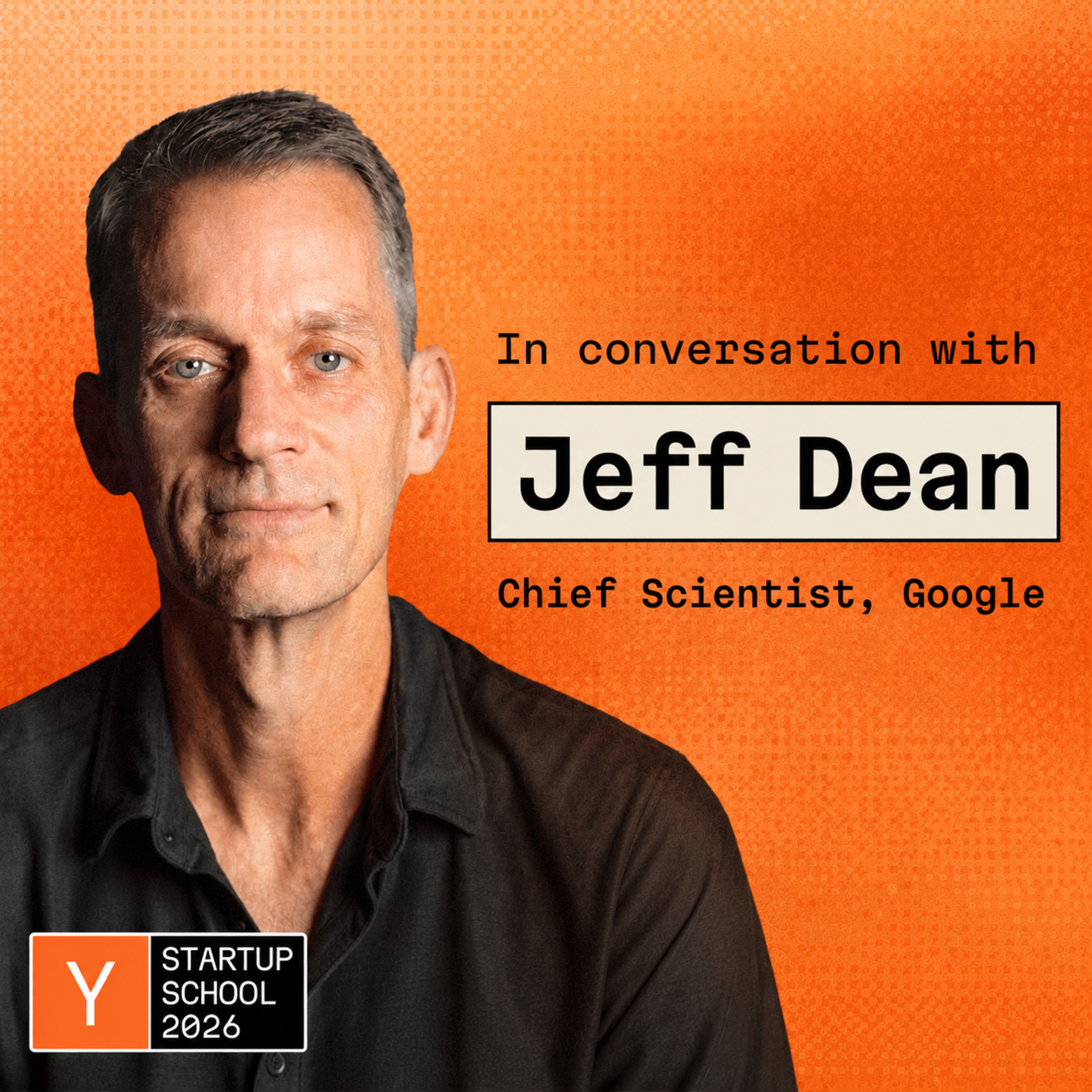
本集简介
双语字幕
仅展示文本字幕,不包含中文音频;想边听边看,请使用 Bayt 播客 App。
好的。
Alright.
杰夫,我们开始吧?
Should we get started, Jeff?
当然。
Sure.
听起来不错。
Sounds great.
好的。
Alright.
杰夫,欢迎你。
Jeff, welcome.
再次感谢你能来,尤其是我刚感冒了,真的很感谢你过来。
And again, thank you so much for being here, especially I just got a cold, and thank you for being here.
我担心自己嗓子哑了。
I'm afraid I've lost my voice.
我平时声音不是这样的,但我们会尽力而为。
I don't normally sound quite like this, but we'll we'll do what we can.
所以你构建了MapReduce、Bigtable、TensorFlow、TPU和Gemini。
So you built MapReduce, Bigtable, TensorFlow, the TPU, Gemini.
你做的这些事,我们聊一个小时都聊不完,但我欣赏的是,你仍然在公开场合大胆预测。
We could spend a whole hour on all the things you've done, but what I love is that you're still making bold predictions in public.
去年是的。
Last year yes.
去年2025年5月在AI Ascent大会上,你说人工智能的水平相当于初级工程师。
Last year in May 2025 at AI Ascent, you said that AI is at the level of a junior engineer.
那大约是一年前的事了。
That was about a year ago.
现在我们离那个预测有多接近?
It's been how close are we to that prediction?
对。
Yeah.
我觉得模型在基于智能体的长时间编码任务上进步了很多,现在看起来确实相当有实力了。
I mean, I feel like, the models have been getting a lot better at sort of agent based longer running coding tasks, and it seems pretty clear that they are now actually pretty capable.
具体看你对初级工程师的定义,我觉得这个预测还是挺准的。
Depending on exactly your definition of of junior engineer, it seems pretty spot on, I would say.
你当时那个预测,有哪些地方低估了?
What did you underestimate from that prediction?
我觉得模型处理越来越复杂任务的能力,增长得比我预想的要快。
I mean, I think the the ability to do more and more complex tasks has been growing faster than I thought.
而且除了编程之外,基于智能体的系统在其他领域也开始大放异彩。
And I also think outside of coding, agent based systems are really starting to shine in other domains.
我认为这会是未来一个重要的趋势。
And I think that's gonna be an important trend in the future.
那再给我们一个大胆的预测吧。
So give us another bold prediction.
你觉得2027年会是什么样?
What do you think is gonna be the 2027 edition?
我觉得你会看到机器学习系统本身实现更多自动化,基本上就是让机器学习系统通过大量实验来提升自身能力,把问题拆解成子问题,然后在一个紧密的自动实验循环中处理这些子问题,再把结果整合起来,最终得到一个改进后的系统——这种全自动的问题分解和自动化实验会非常厉害。
I think you will see a lot more automation of, ML systems themselves, basically getting ML systems to improve their capabilities by running lots of experiments, breaking things down into subproblems, you know, running those subproblems in a tight automatic experimentation loop, putting the results together, and being able to then, you know, get some improved system, out from that, sort of fully automated problem decomposition and and automated experimentation.
我觉得这会非常令人兴奋。
Think that's gonna be really exciting.
我认为这不仅适用于机器学习,也适用于其他科学和工程领域。
I think that also applies not just to ML, but also to other fields of science and engineering.
基本上,只要有一个可衡量的目标,我觉得现在都能取得很大进展。
Basically, anything where you can have a measurable objective, I I think you can actually make a lot of progress these days.
现在让我们稍微回顾一下历史。
Now let's go back to a little bit in history.
早在2001年,谷歌搜索还是运行在硬盘上的。
Back in way back in 2001, Google Search used to run on hard drives.
对。
Yep.
你和桑杰算了一笔账,意识到总有一天整个搜索索引会完全装进你们所有运行中的计算机的内存里。
And you and Sanjay did the math and realized that at some point the whole search index would finally fit in all of the RAM of all the computers you had running.
然后你做出了那个颠覆性的判断。
And you made that radical realization.
你和桑杰在短短几天内,就把一个全新的、基于内存运行的搜索版本推上了生产环境,而不是用硬盘。正是这个改变,让谷歌搜索变得如此迅速。
And you basically, in a few days with Sanjay, shipped in production a whole new search version that worked in RAM rather than And hard that was the thing that got Google to be so fast, Google searches.
历史总是会重演。
So history tends to remix.
那么在2026年,这个‘内存够用’的时刻又是什么呢?在座的各位现在就应该思考和设计的东西是什么?
What is the it fits the memory moment right now in 2026 that everyone in this room is still should be thinking about and designing?
对。
Yeah.
我的意思是,情况有点不同,但我觉得你会看到越来越多高性能、低能耗的推理硬件系统。
I mean, it's a little different, but I think you're gonna see more and more high performance and low energy inference hardware systems.
因为现在大家都意识到,推理是让这些基于智能体的系统能够服务更多人的关键。延迟非常重要,而硬件专用化是让设备比GPU或TPU这类通用计算设备更节能、延迟更低的重要途径。
Because I think everyone is now realizing that inference is the key to making, you know, these agent based systems be available to more and more people and that latency is really important, and that specialization of the hardware is a really key way you can make, things that are more energy efficient and lower latency than more general purpose, computational devices like, say, GPUs or TPUs.
因为我觉得在座的各位都习惯了等待回复,对吧?
Because I think all everyone here is used to waiting for responses on Yeah.
在模型上。
On models.
所以
So
等待可不好玩。
Waiting is no fun.
掌控速度。
Master speed.
所以你的意思是,如果我们不用再等待了呢?
So you're saying, what if we don't have to wait anymore?
对。
Yeah.
我觉得我们可以想象一下,如果延迟能提升50倍,那能做些什么。
I mean, I think we'll imagine what you could do with something where the latency is, you know, 50 x better.
有意思的想法。
Interesting thought.
现在,在座大概有6000人,其中有一个关于AI的假设,大家已经觉得它不成立了,那是什么呢?
Now what's one assumption that perhaps 6,000 people in this room hold as already false about AI?
对,这个问题问得好。
Yeah, that's a good question.
我觉得有一点是,很多人还没有真正意识到,基于智能体的系统可以运行多久——不是只花一两个小时去解决你关心的问题,而是在某些问题领域,加上底层有非常强大的模型,你可以让它们连续运行几天甚至几周,去完成非常非常复杂的任务。
I think probably one thing is people don't quite realize how possible it is to have you know, agent based systems that can run not just for an hour or two hours on a problem you care about, but for some problem domains and with highly capable models underlying them, you can get them to run for days or weeks and do really, really complicated tasks.
而且我觉得,有些人已经开始看到一些苗头了,但并不是所有人都真正理解了这一点。
And I think that's starting some people are starting to see inklings of this, but I don't think everyone has really internalized this.
而这将会是一件非常了不起的事情。
And that's gonna be really, a pretty big deal.
你有没有做过什么特别的任务,是连续运行了几周的?
What's a particular task that you have run that has run for weeks?
你让那些智能体去解决什么问题?
What did you tell the agents to solve?
是的,我觉得你可以让智能体去实现一个全新的软件版本,用不同的编程语言,可能具有更好的安全性或性能,然后它们就能非常认真地去做这件事。
Yeah, I mean, I think you can tell agents to go off and implement you know, completely new versions of software in a different programming languages that might be you know, have better safety properties or better performance properties, that and then then they can go off and and actually do that in a, you know, pretty serious way.
那挺酷的。
That's pretty cool.
你有一个很出名的地方,就是特别擅长做粗略估算。
Now one thing that you've been very well known for is you're really good at napkin math.
听起来挺有意思的。
Sounds funny.
有个关于你的故事是这样的:2013年,谷歌的语音识别开始投入使用,你做了个粗略估算,如果每个谷歌用户都用手机对着它说话,每天只用三分钟语音识别,结果发现系统需要占用谷歌的服务器。
So one of the stories about you is that back in 2013, when speech recognition started to work at Google, you did the nap napkin math, where if every Google user used their phone and talked to it and used the speech recognition system for three minute just three minutes a day, You found that the system requires a Google server.
你得把服务器数量翻倍才行,光是为了做语音识别,成本就高得吓人。
You would have to double the fleet, which would be really, really expensive just to do speech translation.
对。
Yeah.
然后
And
你干脆自己造了个专用芯片,这就是TPU的起源故事。
instead, you basically built a custom ship, and that was the origin story of the TPU.
是的。
Yeah.
我是说,我大概已经做过一些……你知道,我们开始看到基于深度学习的语音模型训练出了非常好的质量结果。
I mean, I sort of had done You know, we were starting to see really good quality results on the sort of deep learning based speech models we were training.
但相比旧的语音系统,它们的计算成本很高,不过错误率降低了一半。
But they were computationally expensive compared to the old speech system, but they halved the error rate.
这相当于语音识别领域二十年的进步,仅仅在几个月内通过调整模型、稍微扩大规模以及获取更好的数据就实现了。
So that was like the equivalent of twenty years of advances in speech recognition in just a few months of, like, fiddling with the model and scaling it up a bit and getting better data.
于是我们开始担心,如果语音识别效果更好,人们会更频繁地使用它。
And so we started to get worried that if speech worked a lot better, people would use it more.
所以那个粗略估算其实就是针对这个问题的。
And so that that back of the envelope calculation was really about that.
比如,如果人们开始更多地使用语音识别来口述邮件、跟手机对话或者做其他事情,那会怎么样?
Like, well, what if people start start to use speech recognition more to dictate emails or to talk to their phone or whatever?
然后,确实,我们意识到当时需要比在CPU上运行更好的解决方案。
And, yeah, it turned out that we realized that we needed some better solution than running on CPUs at the time.
所以我们研发了TPU,它本质上是一种专门用于低精度密集线性运算的芯片,而这正是当今几乎所有机器学习算法的核心。
And so we came up with TPUs, which are sort of very specialized for essentially low precision dense linear algebra, which is at the heart of nearly all of the modern machine learning algorithms we use today.
如果你造一个只能做低精度密集线性运算、其他什么都干不了的专用芯片,你会发现它对机器学习推理特别有用,哪怕它跑不了Chrome或者Word之类的软件。
And, if you build a specialized chip for low precision dense linear algebra and can't do anything else, that turns out to be really useful for machine learning inference, even though it can't run Chrome or Word or whatever.
几年后,这个系统造出来的芯片,能效比当时的CPU和GPU高出30到80倍,而且延迟也低得多,大概只有它们的二十分之一到三十分之一。
And so that system produced a chip a couple years later that was, 30 to 80 times more energy efficient than CPUs and GPUs of the day, and also much, much lower latency, like 20 to 30 x lower latency.
这太不可思议了,TPU如今已经成了这么重要的基础。
Which is incredible what the foundation that TPU has become today.
你肯定想不到,TPU后来会跟Transformer架构结合得这么紧密,而Transformer架构是在你发明TPU之后很久才出现的。
No way you would have predicted that TPU would be so foundational now with transformer architecture, which was invented way later before you actually invented the TPU.
对。
Yeah.
其实,这就是我们打造通用线性运算系统的原因,TPU本质上就是干这个的。
I mean, that's sort of why we built a general purpose linear algebra system, which is what a TPU is, really.
因为我们知道机器学习算法还在不断进化,不能过度专门化,但又要专门到一定程度,才能获得巨大的性能提升,比如我们可以用上非常大的乘法单元。
Because we knew ML algorithms were still evolving, and you didn't wanna overspecialize, but you wanted to specialize enough that you got the dramatic performance benefits of we could have very big multiplier units.
我们可以有高速内存。
We could have, you know, high speed memory.
我们还可以有高速互连,或者后来的TPU,能高效地把许多芯片集中起来解决同一个问题。
We can have high speed interconnect or later TPUs that, like, brought many, many chips to bear on the same problem efficiently.
而且,我们一直在不断扩展它们的规模,提升性能,已经持续了很多代。
And, you know, we've continued to scale those up and and improve their performance, for over many, many generations now.
真是令人惊叹的粗略估算。
Incredible napkin math.
那么,什么是好的粗略估算呢?
So what's Good.
粗略估算确实很有用。
A napkins are good.
那么,实际上,在座各位想成为未来创始人的,今晚应该做怎样的粗略估算,才能打造出像TPU这样有影响力的东西呢?
So, actually, what's a good napkin math that everyone here who wants to be a future founder should run tonight to potentially build something as consequential as the TPU?
对。
Yeah.
这个嘛,总是很难说。
I mean, it's always hard to say.
我觉得你应该去思考你看到的问题,以及你正在琢磨的事情,看看瓶颈在哪里。
Think I about what problems you see and whatever it is you're thinking about, what bottlenecks you see.
然后想想有没有完全不同的思路来解决这些问题,能让性能、能力或者其他方面提升一个数量级甚至两个数量级。
And are there very different ways of thinking of the solutions to some of those problems that would get you, you know, an order of magnitude or two orders of magnitude better, performance or capability or whatever it is.
你明白吗?
You know?
因为有时候,你只要换个角度去看问题,不要被现有的解决方案束缚住,而是从基本原理出发去思考,就能想出一些特别好的点子,这些点子可能别人根本没想到。
Because sometimes if you just squint at a problem and you think about not necessarily being anchored on exactly how that problem is solved today, but how you would solve it from first principles, you can come up with really good ideas that are, you know, maybe not what other people are thinking about.
这是个好建议。
That's a good tip.
在座的可能有人不知道,多年前杰夫写过一份很有名的清单,叫《每个工程师都应该知道的延迟数据》。
Now, for everyone here who doesn't know, years ago, Jeff wrote a very famous list called the latency numbers every engineer should know.
这些数据包括,比如,缓存未命中需要多长时间,磁盘寻道需要多久,网络数据包从加州到荷兰需要多久等等。
And these are numbers around, for example, how long a cache miss takes, disk seek, a network package traveling, let's say, from California to Netherlands.
很多像这样的数字,都是关于分布式系统和系统工程的。
Lots of numbers like this about distributed systems and systems engineering.
这份列表后来被广泛传播,成了很多分布式系统工程师的圣经。
And it's been sort of taped and become the bible for a lot of distributed systems engineers.
好的。
Okay.
对。
Yeah.
现在快进一下。
Now fast forward.
那份列表该更新了。
That list is up for an update.
给我们一个AI版本,针对2026年。
Give us the AI edition for now 2026.
是的。
Yeah.
我觉得,如果你看看现在AI系统里什么最重要,你会想知道一些东西,比如你的加速器主存和片上内存之间的带宽,再到乘法单元之类的。
I I think if you looked at what is important in AI systems these days, you would want to know things like the bandwidth between, you know, your main memory system on your accelerator to the on chip memory to the, you know, the multiplier unit or whatever.
你想知道做一次乘法运算要消耗多少能量。
You wanna know how much energy does it take to do a single multiplier operation.
还有,芯片之间的互联带宽是多少,以及用这个带宽能连接多少芯片?
You know, what is the interconnect bandwidth between chips and how much does that, how many chips can you connect with that bandwidth?
然后,如果你超出这个范围,比如当你要连接一万个芯片而不是五百个时,网络带宽的衰减情况是怎样的?
And then if you go beyond that domain, like, what is the falloff in in network bandwidth when you need to talk to 10,000 chips instead of instead of, 500 or something?
我觉得这些都是非常重要的数字,值得去了解,而且它们真的会影响你思考如何解决特定类型的问题。
I think these are all really important numbers to to learn and and really affect how you think about solving particular kinds of problems.
我听过你讲一个有趣的观点,就是现在衡量一切的单位是能量。
And one interesting thing that I've heard you talk about is that nowadays, the unit that you measure everything is energy.
对。
Yeah.
你指出,做一次计算或数学运算大约消耗一皮焦耳,但移动数据和做数据输入输出消耗的能量是它的上千倍。
You pointed out that doing a calculation or math cost about one picajoule, but moving the data and doing Data AIO cost thousand times that.
对。
Yeah.
就是把数据从加速器的高带宽内存搬到处理器里,让它能真正进行计算。
Just bringing it in from HPM on an accelerator into the processor so it can actually compute on it.
没错。
Yep.
这个差距其实悄悄决定了哪些产品能做出来,以及这些AI算法是怎么构建的。
That gap kinda quietly decides what products are possible and how these algorithms in AI are built.
那么,创始人经常说是模型问题,但实际上却是能源或数据IO问题的情况有哪些呢?
So what are the kinds of problems that founders keep calling model problems but are in fact actually energy or data IO problems?
是的。
Yeah.
我觉得你刚才提到的,移动数据和实际计算之间在能耗上有一千倍的差距,这个例子非常关键,它很大程度上影响了我们在机器学习领域的很多做法。
I mean, I think the the example you raised of a thousand x difference in bringing moving data versus actually computing on it, in in terms of energy is is a pretty significant one, and it shapes a lot of aspects of what we do in machine learning.
因为如果没有这一千倍的差距,那就不需要做批处理了。
Because if you didn't have that thousand x difference, then, you know, you wouldn't have to do batching.
但你必须把多个样本或许多token一次性打包处理,才能分摊数据移动的成本,这样就不会付出1000倍的减速,而是付出1000倍除以批次大小的能量代价。
But you have to do batching of many examples or maybe many tokens at once in order to amortize that data movement so that you can not pay a 1000x slowdown, but pay a 1000x divided by batch size energy cost.
而且,对于低延迟场景来说,批处理其实效果不太好。
And, you know, for really low latency, batching is not really very good.
所以我觉得,这些因素以及计算机硬件中各种决策背后的能耗问题,确实深刻影响了我们在构建更高级系统时所做的很多选择。
So I think these kinds of things and the energy behind various decisions in the computer hardware we use really affects a lot of decisions we make in building higher level systems.
一个很具体的例子就是训练模型的方式。
A very concrete example is just how training models is done.
这里面有整个关于数据集分批和运行轮次的概念。
There's this whole concept of batching the the datasets and running epochs.
这基本上就是人们可能会误以为是模型问题,但实际上它是个系统层面的数据输入输出问题。
That's basically people perhaps may confuse that as a model problem, but it's really a systems data IO problem.
对吧?
Right?
对。
Yeah.
对。
Yeah.
我的意思是,你得把数据分批处理,才能让硬件效率更高。
I mean, you have to assemble batches to get better efficiency in your hardware.
你知道,理想情况下,你可能会用批次大小为1来训练,但这样效率就没那么好了。
You know, ideally, you might do batch size one training, but, you know, it's, not as not as good in terms of efficiency.
所以现在人们都用相当大的批次。
So people use pretty large batches these days.
你觉得有没有可能——我知道你以花一整个长周末或周末想出绝妙解决方案而闻名。
Do you think it's possible for I know you're you're well known for taking off on a long week or weekend and coming up with this brilliant solution.
有没有像杰夫·迪恩那样,花上几周时间研究,最终实现批次大小等于1的训练?
Is there such things of Jeff Dean going and working on it for a couple weeks and getting batch size equals one training done?
对。
Yeah.
实际上,我最近更多在思考推理方面的问题。
I've been thinking more about inference, actually.
所以我觉得推理是个挺有意思的问题,因为你确实需要非常低的延迟。
So I think inference is a pretty interesting problem because you do want very low latency.
训练的话,倒不一定需要极低的延迟。
Training, you don't necessarily need incredibly low latency.
而且我认为,在硬件上针对推理做更多专门优化,还有很大的空间。
And I think there's a lot of room for specializing hardware more for inference than we are today.
关于推理,你最近在深入思考哪些有意思的方向?
What are some of those interesting things that are on inference that you're really thinking a lot about?
其实就是尽量降低数据移动,考虑极低精度的运算,可能不需要支持太多不同的精度类型。
I mean, just trying to minimize data movement, trying to think about incredibly, low precision operations, and maybe not supporting lots and lots of different kinds of precisions.
如果你对需要什么样的精度有清晰的答案,那就直接把它做到硬件里,别的就不用管太多了。
If you feel like you have a good answer for what kinds of precision you need, maybe just build that into the hardware and and, not much else.
这让我想起一位著名计算机科学家说过的一个核心类比:整个AI过程其实就是一个巨大的压缩问题。
Which I think it brings down to a core analogy I heard from famous computer scientists that really the whole process of AI is a big compression problem.
因为要让数据完全有损压缩再恢复,你基本上得先理解它。
Because in order to have the data to be fully lossy and compress it and then restore it, you basically need to understand it.
对。
Yeah.
我的意思是,如果你真正理解了数据,就应该能把它压缩得很好。
I mean, if you truly understand the data, you should be able to compress it really well.
而现在的Transformer架构,就是其中一种被证明效果很好的方法。
And now transformer architecture is basically one of the ways that has turned out to work really well.
是的。
Yeah.
没错。
Yeah.
我也这么觉得。
I would say.
嗯。
Mhmm.
目前看来效果确实不错。
Working pretty well so far.
我的同事们干得不错。
Good work by my colleagues.
是的。
Yes.
现在,我们稍微把视角拉远一点。
Now, let's zoom out a bit.
过去,AI的进步通常只是指更好的模型。
AI progress used to mean just better models.
用更多的数据训练,更大的模型,更多的参数。
You had more data trained, bigger models with bigger parameters.
但最近几年,越来越重要的是模型周围的一切,而不仅仅是模型的大小、参数数量或更多数据。
But increasingly in the last years or so, it's everything around the model, not just the model size and number of parameters or more data.
它涉及检索、工具、记忆、智能体工具等方方面面,这些可能最终会整合成人们所说的上下文工程。
It's everything around things like retrieval, tools, memory, agent tools, and it might kinda get consolidated into what people call context engineering.
对吧?
Right?
对。
Mhmm.
是的。
Yeah.
我觉得模型其实只是整个系统的一部分,你要做的是构建一个能真正解决复杂问题的完整系统。
I mean, I think the model is really only one piece of what you're trying to do, which is build an overall system that can solve really interesting problems.
这涉及到模型要学会使用各种工具。
And that involves, you know, a model that knows how to use various tools.
它可能需要检索相关信息,可能还保留着过去处理问题时的历史信息,然后把这些信息整合到模型的上下文里。
It maybe knows how to retrieve relevant information, maybe has a history of other, information that has retrieved for past problems, and it can put information into the context of the of the model.
这样做的好处是,这些信息对模型来说非常清晰。
And the nice thing about that is that information is really clear to the model.
不像训练数据那样,几千亿甚至上万亿个token混在一起,变成几百亿或几千亿参数的“大杂烩”,远不如模型在处理具体问题时直接看到的上下文那么清晰。
Unlike the training data the model is trained on where it's all kind of like, trillions of tokens stirred together into a soup of of hundreds of billions or trillions of parameters, but it's all less clear than the actual context, that the model sees directly for this particular problem or uses use case.
然后,我觉得关键是要理解有哪些工具可用,哪些能帮助模型解决当前问题,如何把问题拆解成一系列工具调用,甚至尝试多种方法,看看哪种有效,并且能评估效果。
And Then I think being able to understand what tools are available, which ones are gonna help me solve the help the model solve this next phase of the problem, how to decompose the problem into a sequence of tool calls, maybe trying multiple approaches to solve the problem and seeing which ones work and be able to evaluate that.
你看,这就是整个复杂代理和多代理系统的编排,我认为它会变得越来越重要,而且现在正是非常激动人心的时代。
You know, this is the whole, you know, orchestration of complex agent and multi agent systems that I think is gonna be more and more important and, super exciting times out there.
我觉得这个特定问题领域的有趣之处在于,在座的每个人其实都能做到。
And I think the fun thing about this particular problem domain set is actually something that everyone in this room can actually do.
因为以前要训练一个模型,你需要大量的资源,大量的GPU和数据访问权限。
Because before, to train a model, you needed incredible amount of resources, incredible amount of access to GPUs and data.
但对于上下文工程,在座的每个人都能做。
But for context engineering, everyone here could do it.
你只需要一个像Gemini这样的API,然后搭建自己的检索系统、工具调用等等。
You just need the API to do something like Gemini and then work on your own setup for your own retrieval, your own tool calls, and etcetera, etcetera.
对在座的各位有什么建议吗?
What are some tips for everyone here?
大家怎样才能在上下文工程方面变得更好、更出色?
How does everyone get better at and become exceptional at context engineering?
对。
Yeah.
我觉得一个很好的方法就是利用这些模型以及各种工具和框架去尝试解决问题。
I mean, I think a really good way to do it is to use these models and sort of harnesses and tools and so on to try to solve problems.
然后有时候你就能看到模型在哪些地方会出错。
And then sometimes you can actually see where the models are failing.
很多时候,你其实可以让模型表现得更好,成功解决这类问题,方法不是调整模型参数——从外部很难做到——而是为模型制定更好的指导原则,比如编写技能,让模型知道如何使用不同的工具,这些工具对解决特定类型的问题会非常有用。
And often, can actually make the model work better and succeed at that kind of problem by not just adjusting the model parameters, which is hard to do from the outside, but from, you know, creating better guidelines for the model, you know, writing skills for the model to know how to use different tools that would be incredibly useful for solving this particular class of problem.
而且我觉得,当你这样做的时候,你最终会进入一个自我改进的循环,不断优化你用来解决问题的这套设置。
And I think as you do that, you end up on this kind of improving self improving of the setup that you're trying to use to to solve things.
这样一来,你就能更好地理解模型还需要哪些额外信息才能变得更强大。
And, you know, that that's a really good way to get better at understanding what what additional information the model would want in order to become more capable.
你能举一个你自己做过的上下文工程的例子吗?
Can you give an example of some context engineering you personally have done?
比如你写的技能、用的工具,哪些真的对你的工作流程产生了巨大影响。
Don't know, skills you wrote, tools that really made a huge difference in your workflow.
好的。
Yeah.
嗯,我想想,几周前我和桑杰一起工作的时候,我们经常会对一些底层库做性能优化。
I mean, I guess, Sanjay and I were working a few weeks ago, and we, you know, we often do some amount of, like, performance improvement for very low level libraries.
我们在谷歌写了一个微基准测试库,可以用来测试不同操作需要多长时间,比如填充这个数据结构要多久之类的。
And we have a microbenchmark library we've written at Google where you can write microbenchmarks of how how long different kinds of operations take or how long does it take to populate this data structure or whatever.
有时候这些数据结构会在谷歌数百万个进程中使用,所以确保它们的高性能其实非常重要。
And sometimes those data structures are used on millions of processes across Google, so it's actually pretty important to make sure they're high performance.
所以你可以写一些微基准测试。
And so you can write microbenchmarks.
但如果没有基于代理的系统,通常的做法是,先测量你关心的基准测试的当前性能。
But then without an agent based system, what you usually do is you measure what the current performance is on some bank benchmarks you care about.
然后做一些修改,希望能提升性能。
You make some modifications to improve the performance you hope.
接着重新运行基准测试,看看哪些地方有改进。
Then you rerun the, the benchmarks, see where things improved.
可能还会运行更广泛的基准测试,测量缓存占用情况等等。
You run maybe a broader set of benchmarks, measure the cache footprint of things.
所以我们写了一个技能,基本上教会了模型如何以各种顺序完成这些操作,这样它就能自我改进、测量基准、优化代码、测量性能提升,然后不断迭代。
And so we wrote a skill that basically taught the model how to do most of those things in in very in various sequences so that it could actually, you know, do self improving, benchmark measurement, benchmark improve you know, code changes, measure the performance improvement, and then iterate on that.
对于某些类型的问题,这个方法效果还不错。
And that that seemed to work, pretty well for some kinds of problems.
这其实就是把我们人类会用的方法,以一种模型能用的形式教给它。
And it really just is us giving the approach we would use as people to the model in a form that it could use.
哇。
Wow.
听起来很厉害啊。
That seems very impressive.
所以你的意思是,如果有人能用到这个技能,就能像杰夫·迪恩那样做性能优化了?
So you're saying you have this skill that if someone got access to it, you could do perform optimizations like Jeff Dean.
感觉全世界都会想要这个,而且对某些人来说,这价值连城。
Seems like the world would love this and it's worth infinite amount of money to someone have access to this.
哦,其实我们几个月前发布了一篇文档,叫《性能提示》,是我和桑杰写的。
Oh, we actually published the document maybe a few months ago called performance hints that Sanjay and I wrote.
那是一份大概30页的文档,里面讲的是各种性能优化的技巧。
It's like a 30 page document about, you know, various kinds of performance tricks.
有些人拿到这份文档后,把它总结了一下喂给不同的模型,结果发现这些模型在分析代码性能问题方面变得更厉害了。
And some people have taken that and then given it in summarized form to various models and seen that they that model can now get, you know, better at reasoning about performance issues and code.
所以,你可是头一个听到这个消息的。
So you heard it all here.
你要是拿到这份《性能提示》论文,真的能像杰夫·迪恩一样优化自己的代码。
You could actually get your own optimize your own code like Jeff Dean if you take this this paper that you published in Performance Hints.
没错。
Yep.
它
It's
是完全免费公开的。
this It's all free available.
所以大家都该试试。
So you should all try it.
太酷了。
Very cool.
是的。
Yep.
现在我们聊聊智能体。
Now we're talking about agents.
在座的各位可能都在开发或曾经开发过智能体。
Everyone here is probably building one or built one at some point.
我敢肯定大家都见过自己的智能体在大概第30或40步的时候失控。
And I'm sure everyone has seen your agent go off the rail at perhaps, like, step 30 or 40.
智能体在前十步左右表现不错,但到第50步就开始不稳定了。
Like, agents are great for, like, up to step, I don't know, 10 or something, and then gets shaky at step 50.
你觉得现在的瓶颈是什么?
What do you think is the constraint today?
是上下文限制、评估器的问题,还是因为本质上是个开环系统,错误不断累积?
Is it like context, evaluators, or just errors that compound because it's basically an open loop system?
对。
Yeah.
我的意思是,显然我们希望智能体能够长时间运行,因为这样才能解决越来越复杂的问题。
I mean, obviously, we want agents to be able to run for very long periods of time because that's how they're gonna solve more and more complicated problems.
但就像你观察到的,它们有时候在跟工具交互十次左右之后就会出问题。
But as you as you observe today, you know, they sometimes stop working after, you know, ten ten interactions with the tools and so on.
有时候是因为模型在尝试做一些它不太有经验的事情。
And sometimes that's because the model is trying to do something it doesn't have a lot of experience doing.
它是在大量任务上训练出来的。
So it's been trained on a whole set of things.
一旦稍微偏离它熟悉的任务范围,就像大多数机器学习模型一样,它的表现就会突然开始下降。
And as soon as you get a little bit off the distribution of things it knows how to do, then like most machine learning models, it will you know, its performance will suddenly do will start to degrade.
离它擅长的舒适区越远,就越可能表现不佳。
And the farther you get off the comfort zone of what it knows how to do, the the more likely it is to to not work as well.
所以其实有很多方法可以应对。
So there's a bunch of things you can do.
所以一个方法是,给模型一些技能和提示,让它尽量走在它熟悉的光明大道上。
So one is, you know, give the model skills and hints that kind of tend to keep it in in the, sort of more brightly lit path of things it does know how to do.
我觉得,采用多智能体系统,让多个智能体尝试不同的方法,然后由另一个模型或智能体来评估哪些方法看起来有希望,这从某种意义上说,也是一种搜索解决方案空间的方式——坚持那些最有希望的路径,放弃那些看起来行不通或偏离轨道的。
I think, you know, having multi agent systems where you have multiple agents trying different approaches and you can evaluate you have maybe another model or another agent that's evaluating which ones of those seem promising is another way to kind of, in some sense, search the path of search the space of possible solutions and stick to the ones that seem most promising and discard the ones that that didn't seem to work or maybe that went off the rails or whatever.
这是一种非常非常实用的通用技术,也就是在推理时进行计算,来搜索解决问题的合理路径,这可以显著提升长期运行的智能体流程的性能和可靠性。
And that's a very, very useful general technique is, you know, inference time compute to perform search over plausible ways of solving the problem that can get much, much higher performance or much more reliability in long running agent flows.
你们内部是怎么为你们的智能体实现这种特定工作流程的?
How are some ways you implemented this particular workflow for your agents internally?
对。
Yeah.
我们有一些工具框架,还有一整套技能,特别是在谷歌内部开发环境中。
I mean, we have, you know, harnesses and then we have a whole set of skills, particularly in the internal Google development environment.
我们有一些技能,让智能体知道如何使用我们内部的各种工具,比如编码、代码审查、性能测量、获取日志文件等等。
We have skills so that the agents can know how to use lots of our internal tooling for coding or for code reviews or for, you know, measuring performance or, you know, fetching log files.
这些技能可以添加到基础模型上,让它变得更强大,即使它没有专门针对谷歌内部工程师如何从我们的专有系统中获取日志文件的方式进行训练,但通过正确的技能定义,你实际上可以让它正常工作。
And, those are just skills that you can add to make the base model more capable, even though it hasn't necessarily been trained on exactly the way that, you know, Google internal engineers would fetch log files from our, you know, proprietary system with the right kind of skill, definition, you can actually get it to work.
这样一来,代理的实用性就提高了。
And that that improves the usefulness of the agents.
现在我们来聊聊初创公司能在哪些地方大放异彩。
Now let's talk about where startups can Insane.
能赢。
Can win.
这部分我个人非常在意,因为在座的各位都需要决定未来要做什么,尤其是未来的创业者们。
This section is one that I personally care a lot about because, also, everyone here in this room needs to decide what to build in the future of your future founder.
谷歌的特点是,从处理器到产品,整个系统都是协同设计的。
So the thing about Google is you co design everything on the system from the processors to the products.
哪些层面是像谷歌这样的公司会持续投入、不断积累优势的?
Which are the layers that someone like Google would keep building and compounding being better?
而两三个人的小团队又能在哪些地方取胜?
And where does a two, three person team can still win?
对。
Yeah.
我觉得,很明显,谷歌和我们的Gemini模型以及硬件基础设施,都在努力构建非常通用的模型,几乎什么都能做。
I mean, I think, obviously, Google and and our Gemini models and and our hardware infrastructure are really trying to build very general models that can do almost anything.
但在很多情况下,这意味着我们对特定领域关注不多,而一个设计精良的界面,加上一个模型和一套技能,或者一个专门的模型——这种模型可能不在我们通用模型擅长的范围内——反而能拥有显著优势,因为你可以在自己真正热爱的领域打造出令人愉悦、高精度、高质量的产品。
But in a lot of cases, that means that we don't have a lot of attention on particular domains where perhaps a really well designed surface that and maybe a model and set of skills or maybe a specialized model that, isn't in sort of the general mix of of things that our models do well can actually have a significant advantage because you can build something delightful and, you know, really high accuracy and really high quality for a domain that you are really passionate about.
我认为,这就是两三个人在一个房间里,满怀热情地构建他们真正兴奋的东西时,能获得优势的地方。
And I think that's that's where, you know, the two or three people in a room building that that they're really excited about can have an advantage.
不过我也要提醒一下,通用模型确实在越来越多的领域变得越来越强。
But I I would also caution that the general models are definitely getting better at a broader and broader range of things.
所以你得想清楚,你现在做的东西,它能不能持久?
So you have to figure out, you know, is that thing you're working on, is that going to be a durable thing?
或者说,你觉得最前沿的模型在接下来六个月或十二个月内,会不会在这方面变得更强?
Or do you think the models, at the forefront are gonna get better at that in the next six months or twelve months?
还是说,它们要过两三年甚至更久才能做到?
Or is it something they're not gonna be able to do for a couple of years or three years?
你在决定做什么的时候,需要权衡一下这些因素。
And, you know, you wanna weigh that as you're as you're deciding what to work on.
那我们深入聊聊这个话题吧。
So let's dive deeper into this.
通用模型嘛,你们肯定会继续优化,让它们变得更好。
So the general models, of course, you're gonna keep working on and keep making them all better.
那听众该怎么判断,哪些领域是通用模型不擅长的呢?
And how should the audience reason about what are those areas that it doesn't?
我是说,创始人应该怎么选择方向,然后去投入呢?
I mean, how how should founder think about things to pick on and work on?
对。
Yeah.
我觉得最重要的是,选一个你特别有热情、特别想去做、而且你觉得对世界有用的东西。
I mean I mean, the most important thing is to pick something you're super excited about and want to build and you think would be useful in the world.
对吧?
Right?
如果你能做到这一点,那你就已经领先很多了。
So if you do that, that that's you're already way ahead.
然后如果你早上醒来,心想‘哎呀,我真的不想干这个’或者别的什么,那你做出来的东西可能对世界或对很多人来说其实没什么用。
Then if you wake up and you're like, oh, I don't really wanna do this or whatever, Or you're gonna build something that is actually not that useful to to the world or to to many people.
所以我觉得这是我选择下一个要解决的问题时,首要的筛选标准。
So I think that's the number one selection criteria I try to apply for what problem should I work on next.
其次,我觉得你要看看当前那些更通用的模型在这个问题领域里能做到什么程度。
Second, I think you want to look at what the current more general models can do in that problem domain.
对吧?
Right?
你可以测试一下它们,比如,它们能不能很好地完成这件事?
You can you can test them with, like, are they able to do this thing very well?
如果它们完全做不了,那可能是个好兆头。
And if they're completely failing, that's probably a good sign.
如果它们能做一些但做得不太好,那可能就不是什么好兆头了,因为这可能意味着这种能力已经开始在这些模型里出现了。
If they're kind of able to do some of it but not very well, that's maybe not a great sign because that's probably a sign that the capability is starting to be present in those models.
而且随着更多的训练数据、更大的模型规模或者其他改进,这种能力很可能会变得更好。
And with more training data or larger scale models or or whatever, it's likely to get better.
所以,你要找的是模型成功率只有0%或1%的问题,而不是20%的那种。
So, you know, look for something where the model succeeds 0% or 1% of the time, not not 20%.
你怎么找到这些问题的?
How do you find those?
我的意思是,这些问题是不是本质上就超出了训练集的分布范围?具体来说,什么样的问题形态才符合这个条件?
I mean, are those things effectively out of distribution from the training set, and what exactly is the problem shape that fits that?
对。
Yeah.
我觉得有时候,你做的产品可能能接触到某种特定数据,而底层模型——也就是通用模型——不一定能接触到这些数据。
I mean, I think sometimes it's a a product that you build that might have access to particular kind of data that the underlying model might not, the general model.
比如,你开发一个帮用户整理个人信息的工具,通用模型不一定能访问到那些信息。
So it might be you're building something to help users organize all their own personal information, and the model won't necessarily have access to that.
这样一来,你就有很大的优势,因为你的模型或产品突然就能看到那些重要的数据了。
And so there, you can have a big advantage because all of a sudden, your model has visibility or your product has visibility into important data.
也可能是某个极其困难的问题,如果你能拿到合适的训练数据,训练出一个比通用模型更专门的模型,而且成本还非常可控。
It could be some incredibly hard problem where if you get the right training data and you can train a more specific model than a general purpose one, you can actually do that in a very affordable way.
也许训练一个针对这个特定问题的专业模型并不需要太多算力,但你能得到一个高度精准的结果。
You maybe it doesn't take that much compute to train a a niche model for this particular problem, but you can get something that's highly accurate.
这有时能成为解决一个重要问题的绝佳基础,而这个问题通用模型可能处理得不太好。
That can sometimes be a a really good, building block for for solving a important problem that is maybe not handled very well by the general model.
我觉得这很有意思。
I think that's interesting.
我觉得你基本上有两条路。
I think you're basically two paths.
第一条路有点意思。
The first path is a little bit funny.
你们在整理全球的信息。
You guys are organizing the world's information.
这个领域可能已经比较成熟了。
That's probably kind of well covered.
是的。
Yep.
但整理个人数据这块,现在还是开放领域,这挺有意思的。
But organizing your personal information, that's open, which is funny.
对。
Yeah.
然后第二条路,你提到了某些领域的专业化模型。
And then the second path, you talked about more specialized models in certain domains.
能跟我们多聊聊这些领域具体有哪些吗?
Can you tell us more about what are some of these domains?
好的。
Yeah.
我觉得,比如看我同事在AlphaFold上的工作,那是一个专门针对蛋白质折叠的模型,非常成功,能很好地处理这个领域的问题,突然间你就有了一个超棒的工具和模型,能高效地回答关于蛋白质及其结构的问题。
I mean, I think, like, if you look at, my colleague's work on, say, AlphaFold, that was a very specific model for, protein folding, and it was highly successful, and was able to really handle that domain quite well so that all of a sudden, you now have this amazing tool and model that can give you answers to questions about proteins and their structure, really effectively.
但它不是通用模型。
But it's not a general model.
它是一个非常专门的模型。
It's a very specific one.
而且我觉得,在其他领域,比如材料科学或芯片设计之类的,这种思路也能发挥很大作用,让你利用一个非常精准但专精的模型,去完成现在很难做到的事情。
And there are other, I think, domains where that kind of approach can work really well, maybe in material science or chip design or things like that, that will enable you to leverage the capabilities of a very accurate but but niche model, to do things that are hard today.
这些例子很好。
Those are good examples.
所以,如果你们中有人发现了一个和AlphaFold类似的问题,那可能就是个值得研究的方向。现在假设你已经找到了要解决的问题。
So if some of you find a problem that's similar shape like AlphaFold could be a good problem to work on, now let's assume you found a problem to work on.
我们来聊聊怎么成为一个AI原生的创业者。
We're gonna talk a bit about how do you become an AI native founder.
怎么才能真正擅长这件事呢?
How do you really become good at it?
你之前说过,管理一群智能体,比如50个或100个,关键在于写出非常清晰、精准的设计文档或规格说明。
You in the past said that managing a fleet of agents, let's say 50 or 100 agents, is all about writing really good, crisp design docs or specs.
那人们怎么才能做到这一点呢?
And how do people get good at that?
这些文档应该是什么样的?
What do those look like?
对。
Yeah.
我觉得,如果你能清楚地说明自己想要什么,和虚拟代理合作时成功的几率会大很多。
I mean, I think it's you'll have a lot more success when working with your virtual agents if you can clearly specify what it is you want.
你越明确自己的目标,代理就越能获得清晰的指导原则和规则,也就是它要完成的任务的大致框架。
And the clearer you are on what it is you want, the more the agent will have sort of guidelines and sort of rules of, you know, an outline of what it is trying to accomplish.
相反,如果你没有明确说明,代理就只能去猜测你的意图。
Whereas if you don't specify very much stuff, the agent has to sort of infer what it is you meant.
很多时候,它猜出来的东西可能和你想象的完全不一样。
And in many cases, it might infer things that are different than what you imagined.
所以我们从一开始就告诉计算机科学家,在写软件之前,先明确软件要完成什么目标,这一点非常重要。
So we've always told computer scientists from the very beginning that it's really important to specify what the software that you're writing is trying to accomplish before then going and writing it.
现在,我们有了基于代理的系统,它们可以自己写代码,但明确需求的重要性反而更高了。
And so now we actually have agent based systems that can do the writing, but the importance of specifying what you what it is you want has actually gone up.
因为以前,你是把任务交给一个非常聪明的人,他可能了解上下文,或者能问你后续问题。
Because before, you'd be handing it off to a very intelligent human who maybe has context or can ask you follow-up questions.
智能体有时也能做到这一点,但我认为清晰的规格说明确实是个好主意。
And agents can sometimes do that, but I I think clear specifications is is a really good idea.
举个例子,编程智能体有一个非常出色的应用场景:你可以让现在的模型把软件从一种计算机语言翻译成另一种语言,效果非常好,因为在这种情况下,你实际上拥有极其详细的规格说明。
And to give you an example of a use of a coding agent that works extremely well is you can ask today's models to translate software from one computer language to another very effectively because in that case, you actually have a incredibly detailed specification.
你拥有整套软件,它明确说明了系统应该做什么。
You have the whole software that says what the system is supposed to do.
所以,如果你有一个Python实现,想要一个Go版本,这似乎是当前模型非常擅长的事情——因为它可以提取Python中的所有测试,确保它们在Go版本中通过,把测试翻译成Go,比较两个实现之间的行为差异直到完全一致,而且效果非常好,因为规格说明非常清晰。
And so if you have a Python implementation of something and you want a Go implementation of it, you know, that is something that the models seem incredibly capable of doing these days because you can it can sort of take all the tests that are in Python, make sure they pass in the Go version, translate the test to Go, you know, compare behavioral differences between the implementations until there aren't any, and be, you know, highly effective because that spec is so clear.
现在假设每个创始人都能熟练地同时运行数百个智能体,所有代码都由智能体编写,那么什么技能会变得稀缺呢?
Now let's assume now every founder gets good at running hundreds of agents at the same time and all the code is written for them by the agents, what becomes the scarce skill?
对。
Yeah.
我觉得关键在于,你让智能体去做什么事情,你得有极其出色的判断力。
I mean, I think it's really having incredibly good taste in what you ask your agents to work on.
对吧?
Right?
从我的背景来看,这其实是研究问题的核心所在。
That is the the crux of, you know, from my background, a research problem.
你知道,一个研究者可能拥有所有的工具和技术,但大多数时候,关键是你选择把时间花在哪个问题上。
You know, a researcher can have all the tools and all the techniques, but often, most of the battle is what problem are you gonna spend your time on.
如果你选对了问题并且成功解决了它,那可比你愉快地研究一个无聊的问题要好得多。
And if you pick the problem well and you succeed in in solving it, that's way better than if you, you know, delightfully execute a research investigation into a rather boring problem.
所以,这种关于该做什么的高层次判断力,我认为极其重要。
And so that high level wisdom of what to work on, I think, is incredibly important.
我觉得模型在这方面不一定能做得那么好。
I think models are not necessarily gonna be that good at it.
所以,还是需要人来引导,借助大量AI辅助计算,才能更快地完成伟大的事情。
So you're gonna have people steering, a lot of AI assisted computation in order to accomplish great things and more quickly.
但你想让模型做什么,这个本质才是你真正应该关注的重点。
But that essence of of what it is you want your models to do is the the the key thing you should focus on.
那我们来多聊聊品味吧,因为在这个智能体解码的时代,这个话题现在被讨论得很多。
So let's talk a bit more about taste because it gets talked a lot about right now in this current era with agent decoding.
展开剩余字幕(还有 218 条)
那你到底是怎么培养品味,又是怎么做到的呢?
How do you exactly build taste and do that?
我是说,对,这听起来确实很玄乎。
I mean, yeah, that sounds so esoteric.
你怎么把它具体化呢?
How do you make it concrete?
对。
Yeah.
我是说,这确实是个难题。
I mean, it it is a difficult thing.
在很多情况下,品味并不是一个可以量化的目标。
It's not like there's a measurable objective of of taste in a lot of cases.
我觉得一部分来自经验。
I think some of it is from experience.
你知道,过去处理过很多不同的问题,这能让你学到哪些问题将来可能有趣,或者哪些事情通过拼凑以前的方法再加上一些需要解决的开放性问题,就能勉强实现,最终做出有点神奇或者非常实用的东西。
You know, working on a lot of different problems in the past kind of teaches you about what kinds of problems might be interesting in the future or what kinds of things might be just barely possible by cobbling together these previous approaches and then some open problems you might have to work on in order to get to something kinda magical or or, you know, highly useful.
另一个提升自己经验的方法就是,写下你觉得未来十二个月里可能重要的事情。
Another way you can get more experience for yourself is to just write down a bunch of things you think might be important in the next twelve months.
然后你可以挑其中一件来做,但十二个月后回过头来评估一下,看看其他那些事情里,哪些真的变得重要了,哪些被世界上其他人做出来了,哪些似乎还没人动手。
And maybe you pick one of them to work on, but go back and evaluate in twelve months of these other things, which ones actually seemed important or which ones did other people in the world go out and and create and which ones did they did not seem to do yet.
这能给你提供更多样本,来培养你自己的品味判断力,而这是一项很重要的能力。
That can give you a lot more samples for your own sort of taste creation capability, and and that's an important skill to have.
我觉得我们之前聊到的第三种方法,就是做一些非常疯狂的思想实验。
I think a third way we were talking earlier was doing very crazy thought experiments.
哦,对。
Oh, yeah.
那也是个好办法。
That's another good way.
我觉得,有时候不要把大多数人视为理所当然的事情当作理所当然,是件好事。
I mean, I think, sometimes it's good to not take as a given things that most people seem to take as a given.
前几天我和几个同事做了一个疯狂的思想实验,你想啊,六十年来,整个硅芯片设计和制造行业,付出了巨大的努力,把晶体管的尺寸越做越小,而且错误率极低。
So I was doing a crazy thought experiment with some colleagues the other day about, you know, for sixty years, the whole silicon chip design industry, design and fabrication industry have, you know, done tremendous work to make smaller and smaller scale transistors that are very low error rate.
对吧?
Right?
因为我们默认的假设是,同一设计制造出来的每一块芯片都应该和其他芯片一模一样。
Like, because what what the assumption that we want is that every chip we manufacture of the same design should be identical to every other chip.
你不想有任何比特位翻转。
You don't want any bits to flip.
一切都不能
Everything No
比特位不应该翻转。
bits should flip.
因为有很多
Because there's
各种各样的因素。
all kinds of things.
现在内存里都内置了各种纠错机制,比如ECC内存。
You there's all kinds of error margins built into, you know, memories, have ECC memory these days.
你看,在宏观层面上,我们在构建大规模分布式系统时并不会做这种假设。
You know, at the at the macro scale, we don't make that assumption when we're building large scale distributed systems.
对吧?
Right?
我们是用不可靠的部件来构建可靠的大规模分布式文件系统的。
We we build reliable large scale distributed file systems out of unreliable parts.
对吧?
Right?
比如,单个磁盘可能会坏,但你的数据应该是安全的。
Like, individual disks can fail, but your data should be safe.
所以我们有更高层的机制,比如把数据复制三份,放在三台不同的机器、三个不同的机架上,这样即使某个机架交换机、某台机器或某个磁盘坏了,你的数据还在。
And so we have mechanisms at a higher level to enable us to have, you know, three copies of the data on three different machines and three different racks so that if any rack switch or individual machine or disk fails, you still have your data.
我们还有里德-所罗门编码技术。
We have Reed Solomon encoding techniques.
但在我们正在研究的晶体管级别的技术中,我们似乎并没有把这种思路贯彻到极致。
But we don't seem to do this at a really extreme level in the, sort of transistor level scale of of the technology we're working on.
所以一个有趣的思想实验是,如果你尝试用每天可能出20次错的晶体管来构建系统,会发生什么。
So what would basically, an interesting thought experiment is what would happen if you tried to build a system out of transistors that might have, you know, 20 errors per day.
天哪。
Oh my god.
而不是每百万年才出一次错。
Than one every million years.
对吧?
Right?
那会是一个非常不同的设计思路,可能还能在制造工艺上带来一些非常有趣的可能性。
That would be a very different design point and might be might enable you to do really interesting things in the fabrication side of things.
你会采用完全不同的设计方法,因为如果你想把一个信号从这儿传到那儿,而晶体管又极其不可靠,那你可能就得用完全不同的方式来传输信号。
You have very different kind of design methodologies because if you wanna get a signal from here to there, you and you have these super unreliable transistors, you might have very different ways of signaling.
你可能会通过多条冗余路径同时发送,确保至少有一条能到达。
You might send it along multiple redundant paths, in order to make sure that it gets along one of them.
我觉得这会是一系列相当有趣的思想实验。
And I think that would be a pretty interesting set of thought experiments.
我不是说我们真得这么做,但这就是那种需要时不时质疑一下假设的情况。
I'm not saying we should go do this, but that's the kind of thing where you do want to, you know, occasionally question assumptions.
很多时候,这些思想实验行不通,是因为过去五十年里,我们这么做而不那么做,是有充分理由的。
Now oftentimes, these thought experiments don't work out because there are very good reasons that, you know, for the last fifty years, we've done this thing this way and not that way.
但每隔一段时间重新审视一下,还是挺好的。
But it it's good to kind of revisit those every so often.
这太不可思议了。
That is so wild.
我是说,这跟神经形态计算或者人脑,还有自然运作的方式,有很多相似之处。
I mean, it's starting to rhyme a lot with neuromorphic computing or the human brain and and how nature works.
对,没错。
I mean, exactly.
就像我们大脑里的信号,从一个地方传到另一个地方,并不是特别可靠。
Like, signals in our brain are not especially reliable from getting one place to another.
所以我觉得,在大脑里,有些重要的信息需要从一个地方传到另一个地方,就会有多条路径来确保你能做到这一点。
And so I think in brains, there are really important things you need to get from one place to another, there are multiple pathways that that enable you to sort of do that.
我是说,你的职业生涯真是令人印象深刻。
What is I mean, you have such an impressive career.
你过去有没有推翻过某个疯狂的假设,结果却建成了一个重要的系统?
What is one of these crazy assumptions that you threw out of the window that actually built a consequential system in the past?
对。
Yeah.
嗯,我觉得吧……
I mean, I guess
结果还真成功了。
That worked out, actually.
是的。
Yeah.
我觉得,TPU 就是个好例子。
I mean, I think, well, TPUs is a good example.
比如,为某个非常小众的领域专门定制硬件,嗯。
Like, being able to specialize hardware for a very niche Mhmm.
在那个问题领域变得像今天这么重要之前,这本身就是一个思想实验。
Problem domain before that problem domain seemed as important as it is today is one thought experiment.
你知道,我觉得MapReduce的起源是另一个好例子。
You know, I think the origin of MapReduce is another good example.
这真是个传奇。
It's a legendary.
我和Sanjay以及其他几位同事,在谷歌的爬虫和索引系统上做过各种迭代。
We had worked know, my Sanjay and myself and a number of other colleagues had worked on various iterations of the crawling and indexing system at Google.
我们写了很多手动并行化的代码,加了很多检查点,确保在100台或1000台计算机上运行时,即使有些机器挂了,也能保持稳健可靠。
And, you know, we'd sort of written lots of hand paralyzed code with lots of checkpointing to make sure it would be robust and reliable if it was running on a 100 computers or a thousand computers and some of those died.
但那些代码往往和你真正想做的简单事情混在一起。
But that code tended to be intermixed with the actually relatively simple thing you often were trying to do.
比如,我只是想看看所有网页的内容,然后计算一下,从URL映射到页面是什么语言。
Like, I just want to, like, look at all the contents of all the web pages and then compute on the side, mapping from URL to, you know, what language is this page in.
就是页面的文本内容。
It's the text of this page.
而这些内容往往会被那些并行化和可靠性相关的代码给掩盖掉。
And it would get obscured by all this kind of other code for parallelization and reliability.
所以我们回想起在函数式语言中学到的东西,意识到我们可以换个角度看这些问题,开发出这个MapReduce抽象层,放在具体实现之上。
And so we sort of remembered our training in functional languages and realized we could squint at those problems and develop this map produce abstraction that you could have above this implementation.
然后在实现层之下,我们可以把所有的检查点和可靠性机制放到那个底层库里,这样所有程序都能基于它来构建。
And then below the implementation, you could put all the checkpointing and reliability mechanisms into that lower level library that everything could then build on.
于是,这成了谷歌处理超大规模计算的一种极其成功的方式,既稳健又可靠——这一切都源于那个思想实验:如果我们换个角度,能不能找到很多符合这种抽象模式的问题?
And so that became a hugely successful way of of dealing with very large scale computations at Google in a robust and reliable way from that thought experiment of, like, well, if we squint at it, could we find lots of problems that fit into this abstraction?
这真了不起。
That's impressive.
所以这个思想实验让你们创造了MapReduce。
So this thought experiment led you to create MapReduce.
是的。
Yeah.
太棒了。
Awesome.
现在回到你之前提到的,你目前对定制化硬件很感兴趣。
Now let's go back to you talked a bit about about your interest right now in working on a
很多
lot of
定制化硬件。
customized hardware.
现在,AlphaChip 正在设计芯片布局。
So right now, alpha chip lays out chips.
你还推出了 AlphaEvolve,它能提出方案、评估方案,并保留所有有效的方案。
Now you also got Alpha Evolved that proposes solutions, evaluates them, and keeps all the ones that work.
看起来你正在构建一个能不断叠加的系统,让 AI 来构建 AI。
Seems like you're starting to build all these system that can compound and build AI that builds AI.
对。
Yeah.
我觉得更广泛地说,这有点像科学方法的基础:你提出一个实验,然后实现实验所需的一切,接着评估实验,最后从结果中得出结论。
I mean, I think more generally, there's this sort of the foundation of the scientific method of you propose an experiment, you implement what you need to run the experiment, and you evaluate the experiment, and then you get results from that.
而且我觉得,现在有越来越多的问题可以这样解决,就是让整个循环——不是只跑几个实验,而是跑很多很多实验——因为你能自动化这个循环,并且把它的延迟降到极低,这会变得非常非常重要。
And I think there are more and more problems that are now possible to implement where that whole loop of running, not just a few experiments, but running many, many experiments because you're able to automate that loop and make the latency of that loop extremely low is gonna be really, really important.
这将让我们能够应对科学、工程、机器学习模型设计本身,以及像芯片设计这样的工程任务中,各种各样的难题。
It's gonna enable us to tackle lots of different problem domains in science and engineering and machine learning model design itself, and also in engineering tasks like designing chips.
所以,如果你能自动化地做这些事情,并且有一个编排框架,可以把非常高层级的目标分解成子问题。
And so if you can actually do those things in an automated way and have some orchestration framework that can take very high level objectives and break them down into subproblems.
而每个子问题都可以是这样一个自动化的循环,去探索解决该子问题的最佳方式。
And each of those subproblems can be one of these automated loop that is exploring the best way to solve that subproblem.
然后,这个编排框架再把子问题的解决方案整合起来,形成更高层级问题的整体解决方案,这将会非常有影响力,也极其重要。
And then a orchestration framework that can put together subproblem solutions into a you know, the overall solution for the higher level problem, that's gonna be really impactful, and it's really, really important.
而且我认为,这将让我们能够加速机器学习的进步。
And I think it'll enable us to do you know, accelerate machine learning progress.
它将让我们能够加速科学的发展,也能加速工程的进步。
It'll enable us to accelerate science and enable us to accelerate engineering.
我觉得那将会非常了不起。
And I think that's that's gonna be amazing.
听起来太棒了。
That sounds awesome.
我的意思是,听起来很多领域,只要你有很好的评估标准,或者接近那些可以形式化验证的东西。
I mean, sounds like a lot of fields basically where you can have very good evaluators and maybe adjacent to basically things that can be formally verified.
对吧?
Right?
这些领域非常适合能自我改进的AI系统。
Those are ripe for AI systems that can self improve.
对。
Yeah.
我觉得在很多情况下,有时候你的评估标准需要做得更快。
I think in a lot of cases, sometimes your evaluators need to be made much faster.
明白。
Mhmm.
举个例子,我的同事大概十年前做过一些量子化学方面的工作,就是试图理解某个特定分子的性质,你可以生成一些分子构型,然后想了解它有什么特性。
So as an example, my colleagues did some work, maybe a decade ago on, some, problems in quantum chemistry where you're trying to understand the properties of a particular molecule, and you can, you know, generate some molecule configuration, and then you wanna understand what properties it has.
所以你可以运行一个计算量非常大的密度泛函理论模拟器,这可能需要一整晚的计算才能得出一个结果。
And so you can run a very computationally intensive density functional theory simulator, which is something that might take, like, a a night of computation to tell you the answer for one thing.
但我同事们做的是,从这些模拟运行中收集大量输出数据——包括输入的分子构型和昂贵模拟器的输出结果——然后用它们训练出一个神经网络的近似模拟器。
But what my colleagues did was take a bunch of output from those simulation runs, the input molecule configurations and the outputs of the the expensive simulator, and then use it to train a neural approximation to the simulator.
所以这现在成了一个验证工具。
So this is now a validation device.
但这次不需要一整晚,他们做出了一个速度快了30万倍的模型。
But instead of it taking a night, they made something that was 300,000 times faster
哇。
Wow.
而且准确度几乎和运行完整模拟器一样高。
And nearly as accurate as running the full scale simulator.
所以这彻底改变了你做科学研究的方式。
So now that completely changes how you would do science.
对吧?
Right?
因为现在你有上千万个东西需要筛选。
Because now you have 10,000,000 things to screen.
你想想看,以前你可能得花六个月时间,拼命凑够计算资源才能跑完所有模拟,现在吃个午饭的功夫就能搞定。
You know, you could do that while you go to lunch rather than it being a six month endeavor where you could try to scrape together enough compute to run all these simulations.
我觉得在很多领域,都有很大的空间去开发更快的验证模型,可能是通过学习得到的验证模型,能让你更快地接近真实答案。
And I think there's a lot of room in a lot of domains for much faster validation models, possibly learned value validation models that can, you know, get you a approximation to the true answer much, much more rapidly.
这样一来,整个实验流程的思考方式就变了,你也能更快地完成这些循环。
And that changes how those experimental loops can be thought of and how quickly you can go around those loops.
有哪些领域或问题,是你特别期待这种超高速科学方法能解决或实现的?
What are some of the spaces and problems that you're super excited that this super sped up scientific method is going to solve or achieve?
具体是哪些问题或领域?
What particular problems or spaces?
对。
Yeah.
我觉得,很明显,机器学习本身就是一个领域。
I mean, I think, well, clearly machine learning itself is one.
那么,我们能不能有一个模型,能够通过大量实验来自我递归改进呢?
So can we have a model that is able to recursively self improve itself by running lots of experiments?
而且,你想一下现在大型研究团队是怎么改进模型的。通常,人们会先想一些点子。
And, you know, if you think about how models are improved today in large research teams, you know, what usually happens is people think of some ideas.
然后他们跑一批小规模的实验。
They run a bunch of small scale experiments.
看看这些小规模实验的效果好不好。
They see if those small scale experiments worked out well.
如果效果好,就从中挑出最有潜力的几个。
If so, they take the most promising ones of those.
再放到更大规模上去试,然后进行评估。
They try them at larger scale, and that gets then evaluated.
最后把结果整合起来,形成模型的新方案。
And then the results get integrated together into, you know, a new recipe for your model.
但我觉得,这完全可以变成一个更自动化的循环,没什么真正的障碍。模型自己决定要探索什么,或者在高层次上,有人稍微点拨一下,比如‘哎,你试试在模型架构里加入这个新想法怎么样?’
But I think there's no, you know, real impediment to making that be a much more automated loop where the model itself decides it's gonna explore or maybe with a nudge from some people, at the various highest level, like, oh, why don't you try some new ideas around model architectures that incorporate this?
然后他们会跑大量实验,看看哪些有效,接着这些成果会以更快的速度被整合进来。
And then they will go run lots of experiments, see which ones work, and then those will get incorporated at a much more rapid rate.
实际上,你真正想优化的是每单位计算投入下的发现数量。
And, you know, effectively, you wanna optimize, you know, your discoveries per unit of compute input.
非常棒。
Very cool.
对。
Yeah.
现在回到刚才的话题,你们所有人将来要么创业,要么开始职业生涯,过程中很可能会收到很多拒绝。
Now, going back to the room, as all of you will become at some point founders or start your careers, you will probably collect lots of rejections.
这是难免的。
That will happen.
杰夫,你也有过这样的经历。
It has happened to you too, Jeff.
我记得有个故事,2014年你和杰夫·辛顿、奥里奥尔·维尼亚尔斯合写了一篇关于蒸馏的论文。
I mean, there's a story that in 2014, you, with Jeff Hinton and Oriole Finals, wrote a paper on distillation.
就是用一个大的教师模型来训练一个更小、更高效的模型,这样计算成本更低,模型参数也更少。
It has to do with taking a big teacher model to train a much smaller and more efficient model that's a lot cheaper to compute, less model parameters.
现在这已经成了行业里大家都在用的一个技巧。
And it has become a trick that everyone is using right now in industry.
对。
Yeah.
而且
And
问题是,这篇论文在NeurIPS被拒了。
the thing is, this paper got rejected at new reps.
对。
Yeah.
确实是的。
I mean yeah.
我觉得也不能怪程序委员会,因为很多时候,一篇论文会收到三份审稿意见,然后其中一位审稿人会仔细看。
I mean, I think I don't fault the program committee because, you know, a lot of times, a paper gets three reviews, and someone will look at one of the reviewers will look at it.
然后在这个案例里,他们就说,哦,这不太可能产生重大影响。
And in this case, they said, oh, it's unlikely to have significant impact.
不太可能产生重大影响。
Unlikely to have significant impact.
但是,你知道,我觉得我们写这篇论文的时候,其实就意识到这是个非常重要的问题,因为我们知道,从更大的模型里做出更便宜、能力更强的模型,是我们非常想做的事情,因为我们想把模型服务给越来越多的人,用在像语音、视觉这些不同的领域。
But, you know, I think, you know, when we wrote the paper, we actually saw this was a super important problem because we knew making cheaper, highly capable models from larger scale models was something we desperately wanted to do because we wanted to serve models to more and more people in many different domains like speech or vision.
但是,有时候审稿人可能没有那种经验,因为他们可能没在考虑大规模的人工智能服务,而是在想,这是不是个根本性的突破?
But, you know, sometimes the reviewer maybe didn't have that that experience because maybe they're not thinking about, you know, large scale AI services and are thinking about, you know, is this a fundamental advance?
所以呢,时不时就会被拒稿。
So so, you know, it gets rejected every so often.
这也没关系。
That's fine.
我们把它放到预印本网站上。
We put it on archive.
大家都会引用它。
People write it.
大家也都在用。
People use it.
一切都挺好的。
It's all good.
而且,我们确实在用这项技术来制作我们的闪存模型,比如从更大的专业模型里提炼出来的。
And, you know, we do use it in making our flash models, for example, from our larger scale pro model.
这也就是为什么我们的闪存模型,比如 Gemini 里的那些,在体积和速度上能表现得这么出色。
That's partly why our flash models, for example, in Gemini are so capable, relative to their size and and speed.
它们在同类模型大小的基准测试中表现最好,这确实很厉害。
They're some of the best in the benchmark for their model size class, which is impressive.
我觉得从中得到的教训是,就算被拒绝了,也要继续坚持。
I think part of the lesson is that even if you get rejected, keep going.
对。
Yeah.
这就是我从这件事里总结出来的经验。
That's the lesson I would distill from that.
我觉得有意思的是,你1999年加入谷歌的时候,它还是个20人的初创公司。
Now I think the fun thing is that you basically join when you when you join Google as a 20 person startup back in 1999.
如果能把当年的年轻杰夫·迪恩瞬间传送到现在,
Now if you were to take the young Jeff Dean from way back then to tele transport him to now, today
对。
Yeah.
带着你当时的技能来到这个时代,
In this era with your skills.
我现在感觉自己充满活力,还很年轻呢。
I'm feeling so vigorous and and young now.
你会怎么做?
What would you do?
是加入前沿实验室,还是自己创业?
Do you join a frontier lab, start a company?
我也不知道。
I don't know.
如果今天的杰夫·迪恩是你,你会怎么做?
What would you do with Jeff Dean today?
25岁的杰夫·迪恩?
25 year old Jeff Dean?
对,这很难说,而且这完全是个人的选择,取决于你想把时间花在什么事情上。
Yeah, I mean, it's always hard to say, and it's a very personal choice of what it is you want to spend your time on.
对我来说,最重要的问题之一是,你是否会去做自己真正关心的事情?
To me, some of the most important questions are, are you going to work on something you really care about?
当你做这件事的时候,如果能和一群你喜欢的同事一起推进,并且你们能共同解决或取得进展,那这件事会不会以某种积极的方式改变世界?
Will you're working on that, and if you're able to make progress on it with a bunch of colleagues you like working with, if you're able to collectively solve it or make progress on it, will that make a difference in the world in some positive way?
你突然能做出一些东西,并提供给某个领域——也许它很小众,但能极大地帮助生物化学家之类的群体。
Will you suddenly be able to do something and offer that service to maybe it's a very niche thing, but it will tremendously help biochemists or something.
或者它可能更广泛一些。
Or maybe it's a broader thing.
它能帮助程序员,或者帮助所有互联网用户,或者其他方面。
It'll help programmers or it will help all consumers, on the Internet or or other things.
你应该努力去做的是,对世界产生积极的影响,和你喜欢的人一起工作,并且全力以赴做到最好。
What you should strive to do is to have impact in the world that is positive and to work with people you enjoy working with and to work hard and do your best.
所以,就你提到的那个具体取舍来说,加入前沿实验室,还是和两三个好朋友一起创业,我觉得这两种体验是不同的。
So in terms of, say, the particular trade off you offered, joining a frontier lab versus, say, starting a company with just one or two or three of you and your close friends, I think those are different experiences.
对吧?
Right?
在大型成熟的组织里,你会有一定的架构。
In a large established organization, you have some structure.
你会有很多很多优秀的同事,他们懂很多你不知道的东西。
You have lots and lots of amazing colleagues who know lots of things you don't.
你会有很多有趣的问题可以研究,而且你的工作本身就已经有了影响力,能够影响到世界上很多人。
You have lots of interesting problems that you can work on, and you already have a platform for impact by your work, you know, influencing lots and lots of people in the world already.
而作为一个小型初创公司,你必须对自己做的事情充满热情,并且要承担很大的风险,去解决那个特定问题,才能成功,才能把事业做大。
And then as a very small startup, you have to have something you're passionate about and there's a lot of risk working on that particular problem in a way that you're going to succeed and you're going to grow an endeavor in order to do that.
但我想,那也会带来巨大的成就感。
But that can also be incredibly rewarding, I would imagine.
所以,你知道,这真的取决于个人喜好,但至少,无论你选择哪条路,都要问问自己:如果我致力于解决这个问题,并且取得了最好的结果,世界会不会因此变得更好?
So, think you know, it's really up to personal taste, but at the very least, regardless of what path you take, ask yourself, If I work on this problem and the best possible outcome happens, you know, will the world be a lot better in some way?
或者世界只会觉得‘还行吧,但也就那样了’。
Or will the world go, that's kind of cool, but whatever.
那种事情不值得你花时间。
That's not the kind of thing you should spend your time on.
现在,我们来多聊聊第二条路,就是和你真正喜欢的人在小团队里工作。
Now, let's talk a bit more about that second path of working with people that you really like in a small team.
你一直是一位出色的导师和管理者,带过很多工程师,也构建过庞大的系统。
You've been able to be an incredible mentor and manager to many, many engineers, and you've been able to build huge systems.
对于在座的各位,在如何最大化利用资源、如何与聪明人合作或找到聪明人方面,你有什么经验可以分享?
What are some some of the lessons for everyone here on how to get the most and how to work with smart people or find smart people?
对。
Yeah.
我的意思是,你总是想找到那些在你试图组建的团队中——无论是在公司内部还是创业——所需领域里技能非常出色的人。
I mean, you always want to find people who have really good skills in area that's needed in, you know, a team you're trying to form, whether that's inside a company or starting a company.
但你也想找那些你乐意和他们待在一起的人。
But you also wanna find people that are people you delight being around.
对吧?
Right?
因为你会花很多时间和他们一起解决非常棘手的问题。
Because you're gonna spend a lot of time around people working on really hard problems.
你希望他们谦虚、有团队精神,最好还能和你互补。
And you want people who are low ego, that are team players, that, you know, have complementary skills to your own perhaps.
我一直觉得,在一个小团队里工作,别人懂我不懂的东西,而我也有一些别人不太擅长的技能,这特别有意思,因为你们是在共同建造或攻克某个单靠个人可能无法完成的事情。
I always find working in a small team where people know things that I don't know, and where maybe I have some skills that other people don't have as much of, you know, it's super fun because you're collectively building something or working on something that none of you could maybe do individually.
而且在合作的过程中,你自己也能学到很多新知识、新技能,对方也一样。
But in the process of working on that, you actually gain a lot of new knowledge and new skills for yourself and so do they.
你应该把自己的工程或研究生涯看作一个神奇的工具箱,里面装满了各种技术,你要不断往里面添加新工具,因为你永远不知道什么时候会遇到一个问题,需要这四个专用工具而不是那三个。
And you kind of want to view your engineering or research career as you have an amazing tool belt of techniques and you always want to be adding new tools to that tool belt because you never know when you might come across a problem where you need these four specialized tools rather than these three.
工具越多,未来遇到问题时,你能自己解决的可能性就越大。
And adding more tools makes it more likely that the problems you encounter in the future will be solvable by you.
好了,最后再问一个问题。
Now, one last thing.
我敢肯定,在座的有人,甚至不止一位,将来会做出像你做的MapReduce、TPU、蒸馏技术那样有影响力的成果。
I'm pretty sure someone in this room or multiple people will eventually build something as consequential as you've done with MapReduce, TPU, distillation, etcetera, etcetera.
你希望他们去解决什么问题?
What problem do you hope they would be working on?
哦,对。
Oh, yeah.
我觉得世界上有趣的问题很多。
I mean, I I think there's a lot of interesting problems in the world.
我就随便列举几个。
And I'll just rattle off a few.
这肯定不全,因为世界很大,问题也很多。
This is not exhaustive because the world is a very big place and full of problems.
我特别看好硬件方面的新思路。
You know, I'm particularly excited about new approaches to hardware.
你看,我们之前有过思想实验,那其实就暗示了这一点,或者说是更高效的推理硬件。
You know, we've had thought experiment there was kind of, you know, a, you know, indication of that or much more efficient inference hardware.
我觉得机器学习领域可能存在一些截然不同的算法,它们的数据效率可能比我们目前使用的方法高得多。
You know, I think there are radically different kinds of algorithms for machine learning that might be much much more data efficient than the approaches we're using today.
想想我们现在的那些大模型,它们看到的数据量,可能是一个人类到18岁所接触数据的一千倍。
If you think about our large scale models today, they probably see a thousand times as much data as a human does by the age of 18.
但一个18岁的人类在很多方面反而更出色,甚至能和那些看过更多数据的顶尖模型不相上下。
Yet the human by the age of 18 is better in a lot of things and, you know, on par, with those frontier models that have seen way more data.
所以,能不能开发出数据效率更高的系统,让它们能够持续学习,从自己的行为中学习?
So could you come up with much more data efficient systems that can learn continuously, learn from their own actions?
持续学习确实是个很有意思的方向。
Continual learning is a really interesting thing.
多智能体交互也很有意思。
I think multi agent interactions is an interesting thing.
我觉得,想办法让世界上的人们更好地交流,这可能会很有趣。
You know, I think, you know, creating ways of having better discourse among people in the world could be interesting.
有没有办法让对话更文明,帮助人们根据兴趣结识世界各地值得认识的人?
Are there ways to have much more civil conversations and, you know, helping people meet other people all over the world that they should know based on their interests.
我觉得这些都是挺有意思的事情。
You know, these are kind of interesting things, I think.
世界上有很多很酷的事情,我们都应该努力去创造更酷的事情。
There's lots of cool things in the world and we should all go and strive to make even cooler things occur.
听起来真不错。
That sounds wonderful.
非常感谢你,杰夫·迪恩。
Thank you so much, Jeff Dean.
今天我们就到这里。
That's all we have today.
你也是。
You.
我们很感激。
We appreciate it.
谢谢大家。
Thank you all.
谢谢大家。
Thank you all.
关于 Bayt 播客
Bayt 提供中文+原文双语音频和字幕,帮助你打破语言障碍,轻松听懂全球优质播客。