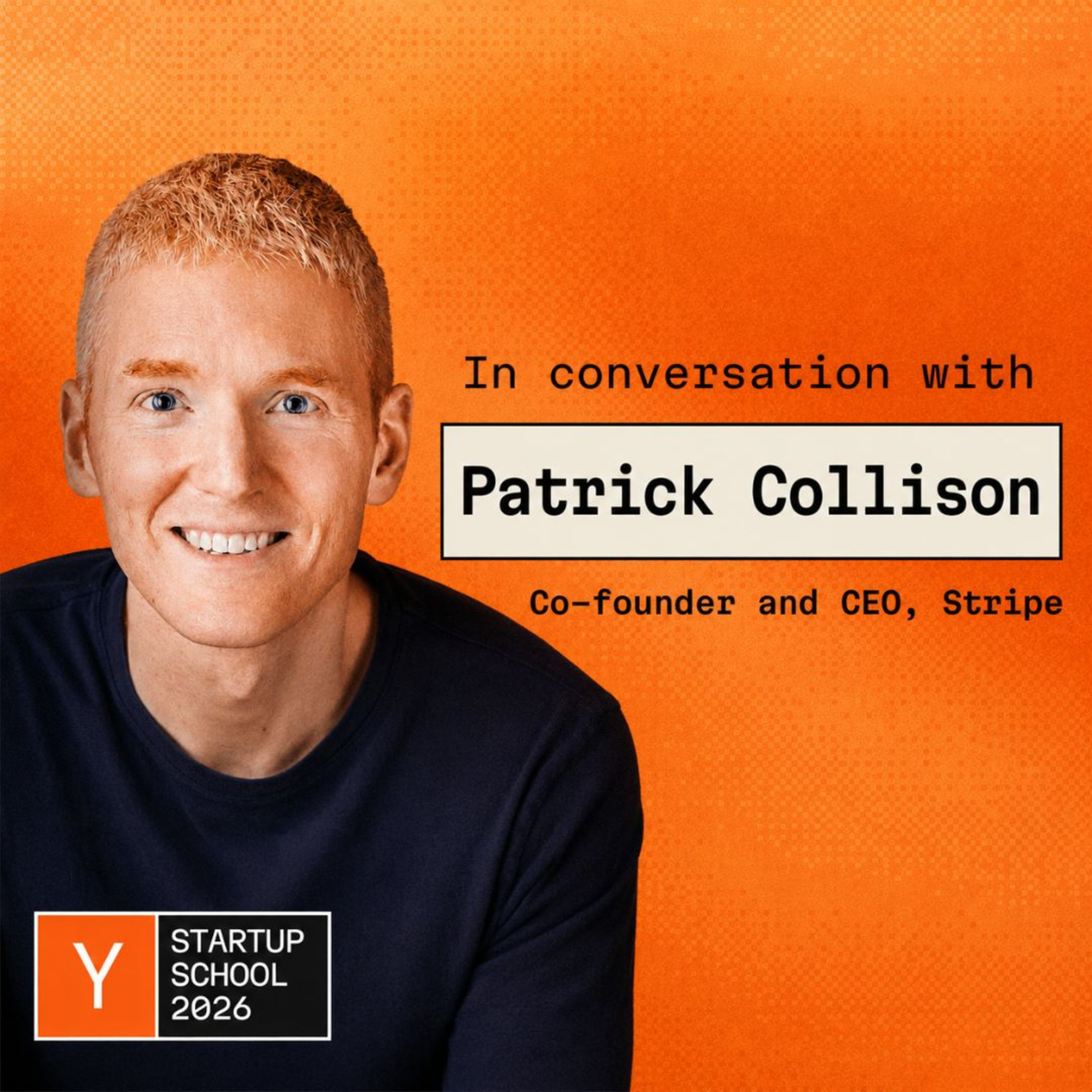
本集简介
双语字幕
仅展示文本字幕,不包含中文音频;想边听边看,请使用 Bayt 播客 App。
好的。
Okay.
帕特里克,非常感谢你来到这里。
Patrick, thanks so much for being here.
欢迎来到创业学校。
Welcome to Startup School.
很高兴来到这里。
Great to be here.
我和哈吉第一次见面是二十年前,当时我们一起创办了一家公司。
Harj and I first met twenty years ago, and he we started a company together.
抱歉。
Sorry.
我是不是把介绍给说漏了?
Am I giving away the introduction?
是的。
Yeah.
我还以为这是我的采访呢,不过你继续说吧。
I I thought this was my interview, but so keep keep going.
你讲得非常好。
You're doing fantastic.
很多很多年前我们一起创办了一家公司,我从Harj身上学到了很多东西。
We started a company together many many years ago, and I learned a huge amount from Harj.
所以做这件事真的很有趣。
So it's it's really fun to do this.
不错。
Cool.
好的。
Alright.
说到这个,我想起大概二十多年前第一次见你的时候,你当时最让我佩服的成就,应该是你开发的Lisp方言Chroma。
Let's well, actually, I mean, speaking of that, so when I think when I first met you twenty something ish years ago, at the time, your most impressive achievement, I would argue, was Chroma, your dialect of Lisp.
现场有Lisp程序员吗?
Any Lisp programmers here?
哦,哇。
Oh, wow.
好的。
Okay.
我好像听到了一声欢呼,比我想象的要多。
That was I think I heard one whoop, which is more than I expected.
不过,是的,我高中时真的很喜欢Lisp。
But, yeah, I I really liked Lisp when I was in high school.
对。
Yeah.
所以我想问的是,今天一个16岁的天才少年大概可以直接用提示让AI写一个自己的Lisp方言。
So what I was gonna ask is a prolific 16 year old today could presumably just, like, prompt call to write their their Lisp dialect.
你会建议他们不要这么做,还是仍然自己动手?
Would you would you advise them to not do that and still still do it?
这种事情还有价值吗?
Is there is there any value in such things?
我不知道。
I don't know.
我经常在想这个问题。
I wonder a lot.
对。
Yeah.
显然,一方面,以前写汇编和机器码、优化指令、布局和内存等等,真的很有趣,但现在我们不用再这么做了。
Like, obviously, on the one hand, it used to be really fun to write all this assembly and machine code and to optimize your instructions and layout and memory and everything, and now we don't have to do that anymore.
编译器替我们做了这些。
Compilers do it for us.
我们也不会太怀念它。
We don't mourn it too much.
所以也许同样地,我们也不该怀念源代码,而是应该直接超越指令层面,完全交给Claudius来处理。
And so maybe in the same way, we shouldn't mourn source code, and we should just transcend the plane of instructions to Claudius at all.
但情感上,我还是会想念它。
But but, emotionally, I miss it.
我觉得吧,就像我跟这些学生待在一起的时候,他们很多人心里都在想,上大学到底该学什么。
How about I think just, like, as I've been hanging out here with these students, like, the the sort of maybe the question behind it is many of them are just wondering what should they be learning at college.
就是说,在这个AI时代,什么才是重要的?
Like, what is sort of in this sort of AI world?
他们应该花多少精力去从基本原理推导和学习,又有多少东西可以直接交给AI来做?
Like, how much how much they'd be trying to learn and derive from first principles, and how much should they just outsource to the to the AI?
对。
Right.
我的理解是,这就像计算机体系结构里的那些常数——你知道,Jeff Dean有一组著名的数字,每个程序员都应该知道,比如带宽、延迟这些相关的常量。
I mean, my model of this is is cash, you know, the c h, not an s h, where Jeff Dean has this famous set of numbers that every programmer should know, bandwidths and latencies and just kind of relevant constants.
你在构建系统的时候,应该基于这些来思考。
You should rather reason about it as you as you build systems.
显然,当你考虑构建任何系统或分布式系统时,所有的查找操作,以及不同组件之间的相关带宽,差异都非常大。
And, obviously, when you're thinking of building any system or distributed system or whatever, like, all lookups and all, you know, relevant bandwidths between different components are are are very different.
对吧?
Right?
你知道,从一级缓存里取数据和从别的地方取数据差别很大。
And, you know, retrieving something from l one cache is very different.
从内存里取数据和通过网络取数据也完全不一样。
Retrieving from RAM is very different from retrieving across the network or whatever.
我觉得知识也是这个道理。没错,你可以让AI帮你算点东西或者查点东西,这都没问题。
And I think it's like that with knowledge where fine, yes, you can ask the agent or something to compute something for you or to look something up for you, whatever.
但那比你自己脑子里直接知道要慢太多了,就像一级缓存里的知识一样。
That's a hell of a lot slower than knowing it in cognitive l one cache.
而且你在脑子里来回思考的次数,可比你对着语音助手嘟囔或者打字要快得多。
And you can have way more round trips in your brain than you can, you know, muttering through, you know, super whisper or typing it out or whatever.
所以,就算AI模型能力再强,我还是觉得,在很长一段时间里,人脑直接调用知识的速度会快得多。
And so I think even granting the full capabilities of the of the models, I still I still think there's a a pretty like, I think for for a long time to come, neuronal lookups will be will be much faster.
再看看实际情况。
And and then look.
你看看那些公司实际是怎么做的,不管是Stripe这样的公司,还是那些实验室,他们依然非常看重人的认知能力。
If you look in revealed preference at what companies themselves are doing, whether they're companies like Stripe or the labs or what have you, there still seems to be an enormous premium on cognitive ability.
所以我觉得,在还没有证据表明我们已经充分利用了这些好处之前,就放弃它,那还为时过早。
And so I wouldn't I I I think renouncing that before there's evidence that we've saturated those benefits would be premature.
我的意思是,有没有一些具体的事情,你个人或者作为 Stripe 的 CEO,仍然刻意选择自己去做,比如从自己的知识库里调取,即使有代理可能做得还不错?
I mean, are there are there specific things that maybe you personally either personally or as CEO of Stripe, you still you purposely choose to sort of do yourself and, like, retrieve from your own cash even though, like, they're agents who probably do a reasonably good job?
我
I
我仍然自己写东西。
still I still write myself.
比如,我——无论是从哲学上,还是具体到实质内容上,我都不喜欢模型写出来的东西。
Like, I I I don't I I both philosophically, but also specifically, substantively dislike the writing of the models.
我是说,这挺有意思的。
I mean, it's very interesting.
对吧?
Right?
因为它们能证明雅可比猜想,你知道的,诸如此类。
Because these can prove the Jacobian conjecture, you know, whatever.
所以很明显,它们能完成这些了不起的壮举。
And so clearly, they're capable of these monumental feats.
但不知怎么的,我还是没读到过一篇让我觉得特别有说服力的语言模型写的文章。
But somehow, I still haven't read the LLM essay that I found super compelling.
现在的问题就是,在那个领域用强化学习来训练它们非常困难,因为效用函数之类的东西很难定义。
Now it is just very hard to, like, RL them in that domain because the, you know, the utility function or something is kinda hard to define.
是的。
But yeah.
我觉得写作是一种很人际化的沟通方式,而写作本身,我认为仍然是根本性的,它关乎在现实的多维空间中进行合理的推理。
I I think writing is a pretty interpersonal communication and writing, I think, are still very fundamental and sort of being able to reason sensibly in the multidimensional space of reality.
而且,在某种难以言说的方式上,我感觉模型在这方面还是有欠缺。
And in some kind of indescribable way, I feel like the model is still kind of deficient at that.
所以,我从来没有——你知道,现在每个工具都在试图给我推送预先写好的建议,不管是Gmail还是WhatsApp,它们最近也推出了这个功能。
And so I've never I've yet to send you know, every tool is now trying to prompt me with, you know, prewritten suggestions, whether it's, you Gmail or, apparently, WhatsApp just rolled this out.
而我呢,这辈子一个都没用过。
And I think I've still sent zero of those in my life.
好的。
Cool.
那聊聊 Stripe 的故事吧,特别是早期那段经历。
How about so if you talk about the Stripe story, the early days in particular a little bit.
你当时在麻省理工,然后退学创办了 Stripe。
You were at MIT, then you left to start Stripe.
你是怎么考虑这个决定的?
How did you think about that decision?
显然,我们现在坐满了一体育馆的大学生。
And, obviously, we're in a stadium full of college students.
他们应该怎么看待这个问题呢?
How should they think about it?
他们怎么判断,自己到底是该提前退学去创业,还是继续留在学校?
How do you how do they know if it's the right decision for them to, leave college early and go start a company versus stay?
对。
Yeah.
嗯,我觉得我有个挺特别的经历,就是两次从大学辍学去创业。
Well, I I think I have the slightly unusual distinction of having dropped out of college twice to start a company.
所以,有一点要知道的是,这并不完全是一条不归路。
So so maybe one thing to know is that it's not totally trapdoor.
你可以辍学,实际上也可以再回去。
You can you can drop out and and, in fact, return.
我大一上学期结束后就辍学了,和哈吉一起创办了那家公司。
So I dropped out after my freshman semester to start this company with with Harj.
那段时间特别有意思。
That was super fun.
然后过了几年,我又回到麻省理工读了一年,之后再次辍学去创办了Stripe。
And then after a couple years of that, went back, did another year at MIT, and and then dropped out again to to start Stripe.
你知道吗,我上大学的时候,可能和在座的很多人一样,曾经幻想自己将来会成为一名学者。
And, you know, I when I went to college, probably like a lot of people here, I I had this vision of my life in involving becoming an academic.
我特别喜欢物理,当时想,嗯,我要搞物理研究。
And so I really like physics, and I thought, you know, I'll do all this physics stuff.
太酷了。
It's so cool.
费曼的书我都看过,你知道的,全都读过。
I'd read all the Feynman books, you know, all of this.
我想我在爱尔兰长大,之前真没怎么想过创业这回事。
And I guess I am well, growing up in Ireland, I hadn't realized I hadn't thought much about the possibility of startups.
向在座的爱尔兰朋友们打个招呼。
Hello to the other Irish folks here.
而且,我是说,在那个差不多是寒武纪之前的年代,创业公司肯定远不如现在这么出名,就算是在校园里也是。
And and, I mean, way back then in the sort of, you know, pre Cambrian era, startups were definitely much less, you know, well known even on campus and so forth.
你知道的,我退学那会儿,大家都觉得这事儿特别奇怪。
You know, when I was dropping dropping out, people thought it was super weird.
我觉得吧,如果你挺喜欢大学生活的,那我真心建议,其实把学位读完也没什么坏处。
I think, you know, overall, if you enjoy college, I I would actually you know, I I I think there's no harm in in finishing.
我当时有一种特别强烈的紧迫感,现在回头看,其实有点没必要。
I I I felt this real sense of urgency, which I think in hindsight was a bit unnecessary.
但如果你不喜欢上大学,那就算了,随便吧。
If you but if you don't enjoy college, just, you know, whatever.
这不是你的菜。
It's not your your thing.
这不是能吸引你的东西。
It's not what captivates you.
你并不真的想学所有那些物理知识之类的。
You don't really wanna learn all the physics things or or whatever.
对,没错。
There yeah.
我觉得很多家长认为辍学风险很大,会毁了你一辈子的名声之类的。
I think a lot of parents think that dropping out is very risky and will impugn your reputation for the rest of your life and so forth.
但据我所知,根本没人会在意。
And as far as I can tell, nobody has ever cared.
所以我觉得你既没必要非得辍学,而且辍学的代价其实微乎其微。
So I I both think you don't need to, but also the cost of doing so are de minimis.
但你当时感受到的紧迫感是什么?
But what was the urgency you were feeling?
紧迫感?
The urgency?
对。
Yeah.
就是想要出去做点什么。
To to go out and do do something.
我不知道。
I don't know.
人生苦短。
Life is short.
对吧?
Right?
我的意思是,那是一种普遍的匆忙感。
And I I I all I mean, it was a general kind of haste.
我觉得,你知道,我们很多人——我相信在座不少人也一样——都会进入一种速通高中的模式。
I think, you know, a a lot of us, I'm sure many of the people here, you you you kinda get into this mode of speedrunning high school.
然后呢,到了大学,自然也想速通,把所有事情都赶紧做完。
And then, you know, once you get to college, it's like, obviously, I wanna speedrun that as well and do all the things.
所以,多少有点这个原因。
So it's a bit of that.
还有一点,马丁·弗里森也提到过类似的情况。
A bit of, Martin Vriesen also talks about a version of this.
我当时觉得,硅谷创业公司之类的很多机会都是转瞬即逝的。
I thought that a bunch of the opportunities, in startups in Silicon Valley and so forth were ephemeral and fleeting.
如果我们当时不把它做出来,那三四年后可能就没机会了,所有机会都会消失。
And if we didn't build it then, that, you know, it wouldn't be possible to do it in three or four years, and maybe all the opportunities will be gone.
现在回头看,我觉得这个直觉其实不太对。
You know, in hindsight, I think that, that was a a poor intuition.
几十年来,情况一直都很稳定、很可靠,硅谷的机会其实多得很。
It's been pretty robustly and reliably the case, over many decades, and Silicon Valley has a a surfeit of opportunities.
对。
Yeah.
我觉得主要就是这两点。
I think it was mainly those two things.
你觉得呢?我是说,我们现在跟学生聊天时经常听到一个说法,他们之所以大规模想辍学,好像是因为担心现在这个时机——有个流行的梗是,如果你不辍学去创业、赚大钱,你就会永远被困在社会底层。
Do you think it's, I mean, this is a very common thing that we hear when we talk to students now is that they are part of the reason they wanna drop out en masse, it seems, at this point is they're worried that actually now is the moment that there's sort of I think the meme going around is that if you don't sort of drop out and start a company and make lots of money, you're gonna be trapped in the permanent underclass.
所以,大家是不是都应该担心自己会永远被困在社会底层?这大概就是问题所在。
So is that should everyone here be worried about being stuck in the permanent underclass, I guess, is the question.
我觉得人类一直对那种末世论式的模式情有独钟,就是觉得一切很快就要终结,社会会发生永久性的变革之类的。
I think humanity has always had a an affinity for these millenarian sort of models of how everything is you know, everything will soon come to an end and be this this sort of permanent transformation of society and so forth.
其实有一本很棒的书叫《飞行的福音》。
Actually, there's a great book, The Winged Gospel.
当时人们觉得,航空发明之后,人类就进入了一个全新的时代,一切都会变得不一样。
People thought that after the, the invention of aviation that it was just like, was just enter and humanity as a species were entering a new era, and nothing is going to be the same.
当然,航空确实是个大事,但我觉得它并没有像当时那些激动的支持者想象的那样,彻底改写社会结构。
And, yeah, obviously, aviation was was a pretty big deal, but, I I I don't think it was sort of quite the, the sociological rewriting, that some of the, know, excitable proponents of the time imagined.
所以,你知道,预测任何事情都很难,尤其是未来,但我认为现在不是创业的最后几年。
So I, you know, it's it's hard to predict anything, especially the future, but I would I would take the under on this being the last couple of years to to create a company.
好的。
Cool.
有道理。
Fair enough.
那么
So
回到Stripe的故事,Stripe看起来确实是个好主意。
going back to the Stripe story, Stripe ostensibly seems like a good idea.
比如,从一开始,互联网就是件大事。
Like, even on day one, it's the Internet's a big deal.
金钱也是件大事。
Money's a big deal.
把这两者结合起来。
Like, combine those two things.
大概是这样吧?你去跟别人说你想创办Stripe的时候,他们是不是都直接说,嘿,这主意明显很棒?
Presumably, is that how it went when you went to tell people you wanted to start Stripe?
是不是所有人都直接说,嘿,
Did everyone just say, hey.
这主意明显很棒?
This is a great this is obviously a good idea?
其实挺有意思的。
It was kinda funny.
我们从YC学到的一点是,要专注于非常具体、容易解释的客户问题。
It was it was so some something we learned from YC was the the importance of focusing on very concrete, easy to explain customer problems.
就是说,你很容易凭空想象出一些客户问题,但实际上并不是那些愿意花钱的人真正切身感受到的。
Like, it's it's very easy to to hallucinate or to, you know, imagine some customer problem that's, not actually something viscerally felt by a person who would pay money.
所以,在之前一起做Automatic的过程中,我们就遇到了这个问题——处理互联网上的资金流动、支付之类的事情,真的特别烦人。
And so over the course of, in part working on Automatic together, we sort of encountered this issue of it being really annoying to deal with, the move movement of money or payments or whatever in the Internet.
一方面,这看起来确实是个明显的好主意,因为没人喜欢现有的方式,它们普遍不受欢迎,而且过时老旧,你得填一堆表格,亲自去银行,表格还是拉丁文的,总之就是一团糟。
And on the one hand, it seemed like a kinda an obviously good idea in the sense that nobody liked the existing ways of doing so, and they were broadly extremely unpopular and kind of antiquated and legacy, and you had to, like, fill all this paperwork and go to the bank in person, and the paperwork was in Latin and just, like, it was all bad.
但另一方面,两个小孩要创办一家金融服务公司,这事儿听起来确实有点离谱。
But then the flip side is it just seemed kinda ridiculous that two kids would start a financial services business.
而且当时金融科技根本还不算一个行业。
And fintech didn't exist as a sector at the time.
这个词都还没出现呢。
Like, the word literally didn't exist.
所以我们就感觉自己像那个老笑话里穿风衣装大人的松鼠,想冒充正经公司或者成熟的大人,但其实对这个领域一无所知。
And so it's just kinda you know, we felt like the proverbial squirrels, you know, in a trench coat trying to masquerade as a sort of a a real business or as, you know, serious adults, but obviously knowing nothing coming in about the about the space.
当然,我们见过、推销过的很多人,比如银行、合作伙伴之类的,他们倒没真把我们笑出去,但你能看到他们手在桌子底下找按钮叫保安,因为这事儿实在太不靠谱了。
And and certainly a lot of people we met and pitched or banks or partners or whatever that we talked to, I mean, they didn't literally laugh us out of the room, but I you kinda see them looking for the button to, like, call security, under the desk and have them haul us out because it just seemed so improbable.
所以总的来说,它既是个明显的好主意——因为人们确实需要这个,又是个坏主意——因为没人把它当回事。
So, anyway, I'd say it, like it both seemed like an obviously good idea in that people really wanted this, but also a bad idea in that nobody took it seriously.
但我觉得,最终是它扎根于一个非常具体、真实、用户确实存在的问题,才救了我们。
But I I think that I think the fact that it was ultimately, the fact that it was grounded in such a concrete, actual, real user problem saved us.
说到这个,你当时为了真正做出产品,是不是得找银行合作,做一些普通软件公司不用做的事?
You actually, speaking of that, how did you you had to in order to actually build the product, you had to get a banking partner and do things that a typical software company did not have to do.
对。
Yes.
作为两个年轻的创始人,你们最后是怎么说服一家银行信任你们的?
As two young founders, like, how did you manage to convince a a bank to trust you in the end?
是的。
Yeah.
其实,这不算直接回答你的问题,但我现在坐在这儿想到的就是:我们决定创办 Stripe,是因为我和 John 在 college 时是同学。
Well, actually, this is not an answer to your question, but just the thing that strikes me as I sit here is the reason we decided to start Stripe is because so John and I, we're in college together.
他当时是大一新生,我们在2009年参加了在伯克利举办的Startup School。
He was in his freshman year, and we went to Startup School in 2009, which was held in Berkeley.
对。
Yep.
我们觉得那活动挺酷的。
And we we thought it was pretty cool.
所以我们去了,之后还在波翠罗吃了寿司。
And so we went, and we got sushi afterwards in Potrero.
我们吃完寿司往回走的时候,就在想,其实我们一直在琢磨支付这个点子,或者说一直在关注这个领域。
And we were walking back from sushi, and we're like, you know, we've kinda been kicking around this idea for a payments thing or, like, we've been thinking of the space.
就是在创业学校结束后那天晚上走回去的路上,我们决定创办Stripe。
And it was walking back that evening after Startup School that we decided to start Stripe.
真不错。
That's cool.
我到现在都还记得当时我们在路上的具体位置,也记得我们当时说的话,就是——对。
Remember literally where we were in the road, and I remember what we said to each other, which was, yeah.
反正试试也无妨,毕竟应该不会太难。
You know, we might as well because it probably won't be that hard.
好的。
Okay.
所以这个故事告诉我们,今晚去Potrero吃寿司,说不定就能创办下一个Stripe。
So moral of the story is go get sushi and Potrero tonight, and you might start the next Stripe.
对,但要小心那些终极的‘雅克剃毛’式的坑。
And, yes, be beware of sort of these these ultimate yak shaves.
我们当时以为可以在大学期间顺便做做。
We thought we could do it on the side while in college.
结果觉得几个月就能搞定,但到现在都快十七年了。
You know, it'd take a couple months, and that was almost seventeen years ago.
我记得那时候,你还有个特别的地方,就是花了比较长的时间才做大规模公开发布。
At the time, I remember you were also unusual in that you took sort of longer to do a big public launch.
尤其是在YC圈子里,大家的理念就是尽早发布、快速发布、先上线再迭代。
And especially within the YC world, the motto is very much sort of launch early, launch quickly, be out there and iterate.
你能不能稍微跟我们聊聊这个?
Could you maybe just talk us through a little bit about that?
好的。
Yeah.
那你们为什么选择那样做呢?
So why did you do it that way?
对。
Yeah.
所以,我们开始认真做Stripe,大概是在那次创业学校之后的那一周开始的,但当时我们还在上大学。
So, we started working on Stripe, kinda seriously in the, in the well, we started working the week after that Startup School, but, we're kinda in college.
不是全职做的。
Wasn't full time.
我们是在2010年夏天开始全职投入的。
We started working full time the summer of twenty ten.
我们在2011年9月公开发布,距离代码仓库建立、写下第一行代码差不多两年时间。
We launched publicly September 2011, so almost two years after, like, the first lines of code after the repo was started.
对,等两年才发布,我觉得……你知道,如果每次去YC开会,每周都被批评的话,我们肯定会被骂得很惨。
And, yeah, waiting two years to launch seems I mean, I you know, if we're going to YC meetings, you know, every every week, I think we'd have been, you know, bludgeoned on the head.
我觉得,在很多领域,这样做可能确实是错的。
I think look, in in many domains, that probably is the wrong thing to do.
但在我们这一行,针对你刚才的问题,因为我们在安全、合作伙伴、资金流转、基础设施和可靠性方面需要做太多事情,我们觉得如果不先把这些前提条件和基础设施准备好,就没法提供一个真正好的自助服务体验。
In our domain, to counter to your last question, because we had to do so much stuff around security and partners and money movement and infrastructure and reliability and, you know, all the things, it just we didn't feel like we could scale a really good self serve experience without getting a lot of the kind of the preconditions and the infrastructure in place.
我觉得,让我们没有完全迷失在荒野里的原因是,我们几乎从一开始就有真实用户在使用产品。
The I think the the thing that saved us and meant that it wasn't a total walk in the wilderness is we had production users almost from the very beginning.
所以第一行代码是在09年秋天写的。
So first lines of code in fall of o nine.
我们在2010年1月迎来了第一个真实的生产用户,也就是大概工作两个月后,而且功能非常有限。
We got our first live production user in in January 2010, so, like, two months into working or whatever, and it did very little.
就像,它还很初级,很不完整。
Like, it was very larval and incomplete.
我们的第一个生产客户是罗斯·布歇,他在一家叫Two Eighty North的公司,当时我只能做刷卡收款这一件事。
And our first production customer was Ross Boucher at a company called two eighty North, and all I could do was charge a card.
所以,罗斯会刷卡,然后他会问一些合理的问题,比如,我怎么查看我所有的收款记录?
And so, you know, Ross would charge the card, and, you know, then he would ask some reasonable question like, you know, how do I how can I look at all my charges?
就像,请求查看。
Like, request.
于是,我们就说,那在这里加个小仪表盘吧。
And so, you know, let's put up a little dashboard here.
然后他们又会说,嗯,我想退款。
And they'd be like, well, I I wanna refund a payment.
然后,好吧。
And, you know, alright.
我们就加上退款功能。
We'll build refund support.
过了几周,他又问,那我什么时候能拿到钱?
And then, you know, after a couple of weeks, he was like, you at some point, do I get my money?
这也是个很合理的要求。
And we're like, also a reasonable request.
那我们就把这项功能做出来。
So let's let's build that functionality.
所以当时基本上就是按需开发,用到什么就做什么。
So it was very kinda just in time development.
总之,我们很早就有了生产环境里的客户,而且当时还在私密测试阶段。
Anyway, so we we had a production customer from very early, and then we did increase it was in private beta.
从那时起直到公开上线,我们每个月都在增加客户数量。
We increased the number of customers every single month, you know, all the way to that public launch.
所以每周都有真实的客户反馈和新用户进来。
And so every, you know, every week, we had actual customer feedback requests, new users coming in.
我们从现实中学习,而不是靠我们自己假设或推测出来的想法。
We're learning things from reality as opposed to our own kind of hypothesized or extrapolated conception of it.
我觉得如果你有这样一个扎实的反馈流,那可能就不需要急着说‘发布、发布’。
And I I I think if you have, you know, a significant stream like that of of of grounding, I think it's probably okay to not be like, launch, launch.
不。
No.
一旦你……哦,你是YC的合伙人。
Once you Oh, I mean, you're you're an Xper YC partner.
你同意吗?
Do you agree?
这是个好问题。
That's a good question.
对,我觉得建议的问题在于它太笼统了,尤其是在创业领域,例外反而证明了规则,对吧?
Yeah, I mean, the issue with advice in general is it's sort of so generalized, especially in startups, the exception proves the rule, right?
所以我觉得,如果失败的成本很高,那几乎肯定得花更长时间来构建。
So I think those are Certainly, the cost of failure is high, then it almost certainly you have to sort of take longer to build.
可能有点跑题,但我对此有个好奇的点——我们刚才聊到这些编程助手,能快速低成本地构建和产出软件,我在想,是不是应该更多人走这条路?
Maybe a slight tangent, but something I'm curious about related to this, though, is we were talking about with these coding agents, the ability to just build and produce software cheaply and quickly, I wonder, should people be taking more of this path?
人们是不是应该对推出的第一个版本更有野心一些?
Should people be more ambitious in general with what the version one of the thing that they launch is?
或者说,从窄处入手、聚焦,然后等知道用户想要什么再扩展,这本质上仍然是好的产品设计吗?
Or, you know, or is it still fundamentally good product design to start, like, narrow and focus and then expand out once you know what people want?
对。
Yeah.
这是个好问题。
It's a good question.
我觉得在AI时代可能吧。
I think probably in the era of AI.
嗯,我也不确定。
I mean, I I don't know.
而且,你知道,某种程度上,YC 可能会是这方面的专家。
And, you know, to some extent, YC will will be, I think, the expert here.
但这就是传统精益创业的那套理论,我明白你的意思。
But, you know, this is the whole kind of traditional lean startup doctrine of I get what you say.
比如,先投个谷歌广告,找个缝隙市场,然后慢慢扩展。
Like, start out by buying the Google Ads or something and and identify this crevice or whatever and and and iteratively expand out from it.
我觉得可以想象,这种方式会变得竞争更激烈,开发得更充分,想找到那些小缝隙就难了。
I think you can certainly imagine that that becomes much more competitive and much more, you know, aggressively tilled, and it's kinda hard to find those those little niches.
互联网比二十年前那些想法刚出现时,要大得多了。
The Internet's a much bigger place than it was twenty years ago when some of those ideas emerged.
而选择那些没人争的、完全不同的起点,可能更像是一种策略——在AI时代,你得更主动地去差异化。
Whereas taking these really divergent starting points where nobody else is trying to occupy that territory is is maybe a more like, basically, maybe maybe you have to more aggressively decorrelate in the era of AI.
而且我觉得挺有意思的是,过去十年里最成功的那些公司,很多都跟精益创业那套完全相反。
And I think it is interesting to think about, you know, many of the companies that are most successful over the last ten years, so many of them are are a very anti lean startup.
对吧?
Right?
不管是那些实验室本身,还是Anduril,对吧。
Whether it's, you know, the labs themselves or Andoril or yeah.
你可以一个一个往下数。
You you you you can go down the list.
很多公司都有这个特点。
A lot of them have this characteristic.
所以我觉得,也许更好的说法是,二十年前,精益创业那套几乎是唯一的选择,因为当时资本有限,而且没有AI让组建一个拥有多种潜力和能力的组织变得这么容易。但现在,我觉得你可以从一开始就启动那些更激进、更有野心的事情。
So I, yeah, I think maybe maybe a better way of saying it is twenty years ago, the whole lean startup thing was, was almost the only thing to do because of capital available, and you didn't have AI that made, I don't know, spinning up an organization with many different potentialities and capabilities so much easier, whereas now I think you can start these much more aggressive and ambitious things up front.
在YC,可能现在在Startup Raw也是,你以保罗·格雷厄姆说的‘苦差事盲点’而闻名。Stripe至少表面上看起来,并不涉及很多苦差事,那些可能不是智力上最有趣的事情。
Within sort of YC and probably Startup Raw at this point, you're famous for the, at least, the Paul Graham term schlep blindness, Stripe, at least on the surface, not like, you know, involved a lot of schleps, like things I presumably weren't, like, the intellectually most interesting things to work on.
我一直觉得这对你来说特别有意思,因为你刚才提到你对物理学有学术兴趣,而且很明显,你是一个有深度、有智慧的人,对很多事情都感兴趣。
And I always found that especially interesting for you because you just mentioned you you had academic interest in physics, and I just think clearly, like, you know, a deep intellectual and have very, very many things that you're interested in.
随着Stripe发展成一家大公司,你在哪些方面放弃了智力上的回报,又在哪些方面获得了新的回报?
As Stripe has sort of grown into this in this big company, in what ways sort of you know, in what ways are there sort of, like, intellectual rewards that you've you've given up, and which ones have you gained?
对。
Yeah.
我的意思是,你看。
I I mean, look.
任何公司里,都有不少事情本身并不那么有成就感,也不那么有趣。
In any company, there's a bunch of stuff that's not that rewarding or in and of itself all that interesting.
比如,设置工资系统。
Like, setting up payroll.
没人创业是为了去搞工资系统的。
No one sort of starts a company so that you can you can set up payroll.
当然,做企业金融服务,还有各种各样更复杂、更繁琐的类似事情。
And certainly building business financial services, there's all sorts of, you know, more arcane and extensive versions of that.
我觉得,在Stripe这件事上,我其实感到非常幸运。
I think that I actually feel extremely lucky with Stripe and in this respect.
这一点,我不知道你是不是需要一开始就想太多,但我觉得,在筹集大笔资金之前,或许应该考虑一下。
And I think this is something I don't know if you need to think about it that much up front, but I think one should think about it maybe before you raise a significant amount of money.
你总是会自然担心可能失败,担心失败后会怎样,以及如何减少和避免失败,诸如此类的事情。
You know, you always worry naturally about possibly a failure and, you know, what'll happen if you fail and how to mitigate and avoid failure and all those things.
我觉得你得反过来想想,万一成功了呢?
I think you need to ask the the sort of converse of that, what if you succeed?
然后你融了资,有了客户,有了员工,事情一大堆。
And, you know, you raise money and you have customers and you have employees and a whole thing.
问题是,你会享受那种状态吗?
Like, are you gonna be are you gonna enjoy that?
你愿意为这件事干十年、十七年、甚至三十年吗?
Are you gonna want to work on that for ten years, for seventeen years, for thirty years?
你看甲骨文的拉里·埃里森,估计都快干满半个世纪了。
I mean, Larry Ellison at Oracle is going for I mean, guess it'll be a half century soon.
对吧?
Right?
所以说,万一成功了呢?
And so so, you know, what if you succeed?
拿 Stripe 来说,我真的很喜欢它,因为我们合作的是全世界最有趣、最有创新力的公司。
And in the case of Stripe, I really love it because, you know, we're working with the world's most interesting and innovative companies.
比如,特拉华州所有C类公司中,有25%是通过Stripe的Atlas项目成立的,然后我们就有机会与他们合作、交流、听取他们的反馈和需求,陪伴他们从起步到成为像Shopify、OpenAI这样的杰出成功企业。
Like, are 25 of all Delaware in co corporations are started with Stripe via Atlas, and then we get to partner with them and work with them and hear from them and get their feedback and get the request and everything, you know, through the entirety of the journey up to being the Shopify's and the OpenAI's and the, you know, all all the the the standout successes.
哦,说到Atlas,我们给所有参加创业学校的人免费提供Atlas公司注册服务。
Oh, and actually, speaking of Atlas, we're giving free Atlas incorporation to everybody at Startup School.
那太好了。
So Nice.
真不错。
Cool.
如果今晚吃饭时你突然有了创业的冲动,就像我们刚才那样,只需发邮件到startupschool@Stripe.com,我们就会给你免费Atlas的链接。
If you are struck by the the urge to found something, you know, over dinner this evening, as we were, just email startupschool@Stripe.com, and we will get you your link for free Anthos.
不过,是的,我觉得PG抓住了重点——确实有很多琐碎的任务,但从Stripe的整体来看,我觉得这非常有趣。
But but, yeah, I I you know, I think PG latched on to something where, yeah, there are all these kind of menial tasks, but but in the kind of totality of Stripe, I find it so interesting.
每一家企业都像是一种应用理论,解释世界某个方面如何运作、某个市场如何运作,或者如果一家新公司采用新模式,它就像是对某种反事实的逆向论点——我从未见过哪个Stripe客户让我觉得无聊。
Like, every business is a kind of applied theory on how some aspect of the world works or how some market works or how some, you know, how if the new company with a new a new model, it's kind of a contrarian thesis on some counterfactual it's just like it's it's I've never met a Stripe customer and thought that's boring.
所以,实际上,整个业务恰恰与那种“逃避琐事”的本能相反。
So so it's actually the business as a whole has been the opposite of of the schlep blindness instinct.
而且
And
你在这个问题上有着特别独特的视角,因为你既跟那些大型模型提供商、头部实验室公司打交道,又深入一线接触那些飞速发展的 AI 初创企业。
and you have a particularly unique perspective on this because you work with the big model providers, big lab companies, and you work with all of the fast growing AI startups on the ground.
说实话,昨天这里讨论得很多的一个话题,在咱们这批学员里也经常出现,就是大家都在担心:我的创意会不会被那些大厂给碾压了?
Something that came up a lot here yesterday, honestly, comes up within the batches too, is people are just worried about, is my idea gonna get sort of trampled by the the big lab providers?
结合你的看法,我挺好奇的,大家该怎么看待这个问题呢?
And I'm just given your perspective, I'm just curious, like, how how should people think about that?
对。
Yeah.
是的。
Yeah.
再说一次,预测很难,而且那些实验室确实是非常专业、有能力的机构。
Again, predictions are hard, and, certainly, the labs are very competent, capable organizations.
也许我们可以稍微分开一点来看。
And maybe just separate a little bit.
是快速进步的AI能力会做到这一点,还是实验室本身会做到这一点?
Will rapidly improving AI capabilities do this, or will the labs specifically themselves do this?
我觉得总的来说,回顾过去二十年,没有一个组织能完全做到——比如当年谷歌给人的感觉就是这样。
I think in general, the track record of like, no organization if we go back twenty years, you know, there was some of the sense with Google.
就像我们做Optomatic的时候,我们公司和其他公司总是担心:如果谷歌也做这个怎么办?
Like, know, when we were doing Optomatic, the question was always for our company and every other company, you know, what if Google does this?
谷歌当时看起来无所不能,拥有海量的人才,几乎无限的资本和服务器资源。
And Google seemed kind of omnipotent and had this, immense number of incredibly talented people and essentially infinite access to capital and servers.
各种条件都具备。
There's all the things.
但人类组织本身就很复杂,要同时推进一百个不同的优先事项,处理它们之间产生的各种问题和干扰,是非常困难的。
And just human organizations are complicated, and it's very hard to have to manage to aggressively prosecute 100 different priorities and to deal with all the issues and interference that arises among them and so forth.
所以,谷歌在某些特定领域确实做得非常出色,但即便从基本的物质条件来看,它也没有把所有事情都做了。
And so, you know, Google has done incredibly well in a bunch of specific places, but it's not like Google has done all the things even if in some kind of basic material sense.
谷歌或许曾经有这个能力。
Google maybe, you know, had that ability.
所以我觉得,这方面的实际表现其实挺参差不齐的。
So I'd say that the kind of the track record of that of that is, is, is checkered.
而且总的来说,我认为这种担忧被夸大了。
And and, in general, I think that fear has been overstated.
不过我觉得,有一个更具体的问题在于模型本身。
Now I think there is a a more specific thing of just, models themselves.
先不管那些实验室,就算它们对扩张业务没那么大的野心,光靠大语言模型或者智能体能力,就足以取代很多特定的垂直领域或任务了。
Forget the labs even even if the labs aren't specific particularly ambitious about expanding their scope, I mean, just, like, literally, LLMs will will obviate a bunch of or agentic capabilities will obviate a bunch of of, you know, specific verticals or tasks or something.
这个确实不好说,显然得看个人的预测。
You know, hard to say, obviously, contingent on one's forecast.
关键还是模型本身的能力。
It's the model capabilities themselves.
不过,我相信在某些情况下,这种情况肯定会发生。
But, you know, in certain cases, I'm sure that will happen.
我的意思是,在某些领域里,这已经发生了。
Mean, you know, in certain domains, it has already happened.
看看Stripe的数据,我想说一点,在座的各位可能会感兴趣:现在新创办的企业比一年前多得多,甚至比五年前多出很多很多。
Looking at the Stripe data, one thing I will say that I think is germane to people here, there are many more businesses getting started now than there were a year ago, like, as little as a year ago, way, way more than we're getting started, you know, five years ago.
而且,实际上,去年到今年的相对变化,是我们历年观察到的最大的一次。
And, actually, the relative change between last year and this year is pretty much the largest relative change we've seen in any given year.
举个例子,从2019年到2020年,我们看到了一个很大的增长,可以理解,因为疫情嘛。
So, for example, from '19 or from 2019 to 2020, we saw a big jump, you know, understandable, during COVID.
所以,2020年2月到4月那段时间,新企业的年增长率大概达到了50%左右。
So, you know, February to April 2020 or whatever, you know, I I I think the growth rate inflected to maybe 50% or thereabouts year over year in terms of new businesses getting started.
现在,Stripe上新增企业的数量,年增长率接近但略低于两倍,这又是我们见过的最大相对增幅。
As I speak, the number of new business starting on Stripe is up around it's a bit under, but around two x year over year, which again is the largest relative jump we've seen.
你可能会想,好吧,这也没什么。
And you might think, okay, fine.
你知道,现在有很多人用vibe coding做点轻量级的东西,或者随便搞搞。
You know, there's way more vibe coded, kinda lightweight, slop, you know, whatever.
行吧,就这样。
Like, fine.
东西是多了,但它们真的能成功吗?
There's more things, but, like, are they actually succeeding?
但实际上,今年普通企业的表现比去年要好。
But, actually, the median business is doing better this year than a year ago.
如果我们再细分一下,看看任意一家企业达到某个收入门槛——比如一百万美元、五百万美元、一千万美元——的概率,这些概率似乎都在提高。
And so and then if we kind of stratify it and look at the probability that any given business will reach some revenue threshold, a million dollars, $5,000,000, $10,000,000, whatever, those all seem to be getting better.
新公司实现收入的时间,在Atlas企业注册平台上正在缩短。
Business are the time to revenue for new companies and corporate Atlas is declining.
所以,从我们能看到的各项客观指标来看,现在似乎是创业的最佳时机。
And so by all the kind of objective metrics we can look at, it seems to be a better time than ever to start a business.
当然,情况也可能变化。
Now, again, things can change.
我不知道五年后世界会是什么样子,但就今天——2026年7月26日左右——来说,Stripe的数据表明,现在是最好的时机。
I don't what the world's gonna look like in five years, but, you know, speaking today on July 26 or whatever it is of of '26, I think it it the Stripe data would suggest it's there's never been a better time.
我们在YC的创业营里也看到了完全一样的情况。
I mean, we see the exact same thing in the YC batches.
公司现在比以往任何时候都能更快地增长。
Companies are just able to grow faster than ever.
当然,在批次内部,
Certainly within the batch,
我觉得以前确实是这样。
I think right it used yeah.
回想当年,哈吉和我刚开始创业的时候,能达到一百万美元的收入——也就是年化收入——那可是件大事。
Back in, again, the old days when Harj and I were first starting out, like, getting to a million dollars of revenue, like, run rate revenue, was a big deal.
大家都会知道那家公司。
Like, people would know about that company.
他们会说,听说某公司做到了一百万美元的收入,而现在呢,那已经……对。
They'd be like, know, I heard that x company got to a million dollars of revenue, and now, I mean, that that's Yeah.
感觉第一个月就该达到这个水平了。
That should you should be by your first month, it feels like.
当然,对在座的各位来说,这有点夸张了。
Should that's an exaggeration for everyone here.
不过,我的意思是,在YC这个阶段的早期,比如从第0天到90天这段时间,增长主要靠那些愿意向初创公司购买新产品的企业来推动。
But, I mean, certainly within sort of that sort of, like, the YC part of the life cycle, like, day zero to 90, it's really being driven by, I would say, enterprises willing to buy from startups, which are for new things.
所以你可以在这一批次里签下这些新合同。
So you can sign these new contracts within, like, the batch.
随着公司不断壮大,你手里也会积累更多数据。
You have the data as the companies keep growing.
我挺好奇的,除了这些因素,还有哪些原因导致了这种从1到10、再从10到100的增长曲线拐点呢?
I'm curious, are there other factors that are driving these sort of inflected growth curves from, like, one to ten and ten to a 100?
我觉得这确实是你刚才提到的那种动态,也就是各地的企业都更有动力去适应变化、尝试新事物。
I I think it's really the dynamic you just mentioned, which is businesses businesses everywhere are more spring loaded to adapt and to try new things.
他们真的非常害怕因为沿用陈旧过时的运营方式而被甩在后面。
And they have a real terror of being left behind with archaic and antiquated ways of operating.
所以在正常情况下,如果你是一家新创公司,
And so in normal times, you're a new startup.
你有一套自己的运作机制,然后去跟某家公司的CIO(首席信息官)、CTO(首席技术官)或者其他负责人谈合作,但他们往往不太愿意跟你聊,因为你的方案还没得到市场验证。
You've, you know, some mechanism for doing whatever, and you pitch the CIO or the CTO or the whoever at some company, and they kinda don't wanna talk to you because, you know, your thing is not validated.
可能你两年后就没了,这些都是很常见的顾虑。
Maybe you won't be around in two year, you know, all all the kinda obvious objections.
但现在人们明白,维持现状的风险其实非常高。
But now people know that, well, the risk of the status quo is actually extremely high.
所以即使尝试新事物有风险,这条路看起来也挺危险的。
And so even if there's risk in doing all the new things, well, this path also looks pretty dangerous.
所以我觉得,对于初创公司来说,现在真是前所未有的好时机,一出门就能把产品卖出去,并且获得相当可观的规模应用。
And so I really think there's never been a better time for start ups to to sell and to have their products get adopted at, you know, pretty meaningful scale right out of the gate.
最近很多YC公司都证明了这一点,但我认为这是一种非常普遍的现象。
A lot of YC companies in recent times have demonstrated this, but I think it's a it's a really pervasive dynamic.
而且我觉得,这里面还有一点别的因素。
And and there's a bit of it, I think, also.
我的意思是,Stripe显然不是面向消费者的公司,但我觉得在消费者端也有类似的情况。消费者对AI的看法很复杂,可能他们不想要那些数据中心。
I mean, Stripe is not a consumer company, obviously, but, you know, I think there's some version of this on the consumer side where I think consumers, I mean, are also pretty I mean, consumers have complicated views on AI, and maybe they don't want the data centers.
但人们对这些产品非常感兴趣,我觉得他们有点被迷住了。
But, people are very intrigued by the products, and I think there is a kind of they're kind of beguiled by them,
而且大家对新事物有一种天然的倾向和开放态度,愿意去尝试。
and there's a a predisposition and an openness to experimenting with the new.
也许更广泛地说,我好奇的是,凭借Stripe掌握的数据,你在过去十二个月里有没有看到什么数据改变了你对人工智能的整体看法?
Maybe just more broadly, something I'm curious about is, again, with the data you have at Stripe, has anything you've seen in that data changed the belief you have about AI broadly, say, over the last twelve months?
有一种担忧是,人工智能会成为一种霸权式的、集权化的、全面控制的力量,少数公司会吞噬经济中很大一部分份额,而许多处于人工智能前沿的公司确实做得非常好,我认为它们未来也会继续做得非常好。
I mean, there's a fear, that AI is going to be this, hegemonic centralizing, totalizing force where a small number of companies gobble up a very large share of the economy, and many companies at the forefront of AI, have done incredibly well and I think will continue to do, incredibly well for sure.
但根据我们在Stripe看到的情况,其他公司——无论是初创公司利用这些新能力,还是现有公司进行转型——它们那种渴望和投入的程度,让我不再那么担心集权化的问题。
But based on what we can see at Stripe, the hunger and the intensity with which other companies are either getting started taking advantage of these new capabilities or existing companies are retooling, I don't worry about the centralization in the same way.
我认为会有成千上万的赢家。
I think there I think there are going to be many thousands of winners.
当然,我们尽量不做任何确定的预测,因为未来不是注定的。
And, again, we try not to offer any definitive prognostications because the future is not predetermined.
但根据我们看到的趋势线,我认为我们正朝着一个更加去中心化、更广泛繁荣的世界迈进。
But based on the the trend lines we can see, I think we are heading towards a more decentralized world and one with more broad based prosperity.
好。
Good.
展开剩余字幕(还有 10 条)
好的。
Cool.
行。
Alright.
好吧,我想今天的时间就到这里了。
Well, I think that is all we have time for today.
非常感谢你,Patrick,感谢你参加
So thanks so much, Patrick, for
这次会议。
the meeting.
谢谢你的邀请。
Thank you for having me.
另外,我必须得说,没有YC就没有Stripe。
And it would be remiss of me not to say that Stripe would not exist without YC.
哦,太好了。
Oh, cool.
好的。
Alright.
非常感谢。
Thank you so much.
关于 Bayt 播客
Bayt 提供中文+原文双语音频和字幕,帮助你打破语言障碍,轻松听懂全球优质播客。