本集简介
双语字幕
仅展示文本字幕,不包含中文音频;想边听边看,请使用 Bayt 播客 App。
耶鲁大学
Yale University.
iGen一代
IGen.
潮热
Hot flashes.
播客
Podcast.
好的
Alright.
大家好,欢迎收听耶鲁iGen播客的又一期节目。
Hello, everyone, and welcome to another episode of the Yale iGen podcast.
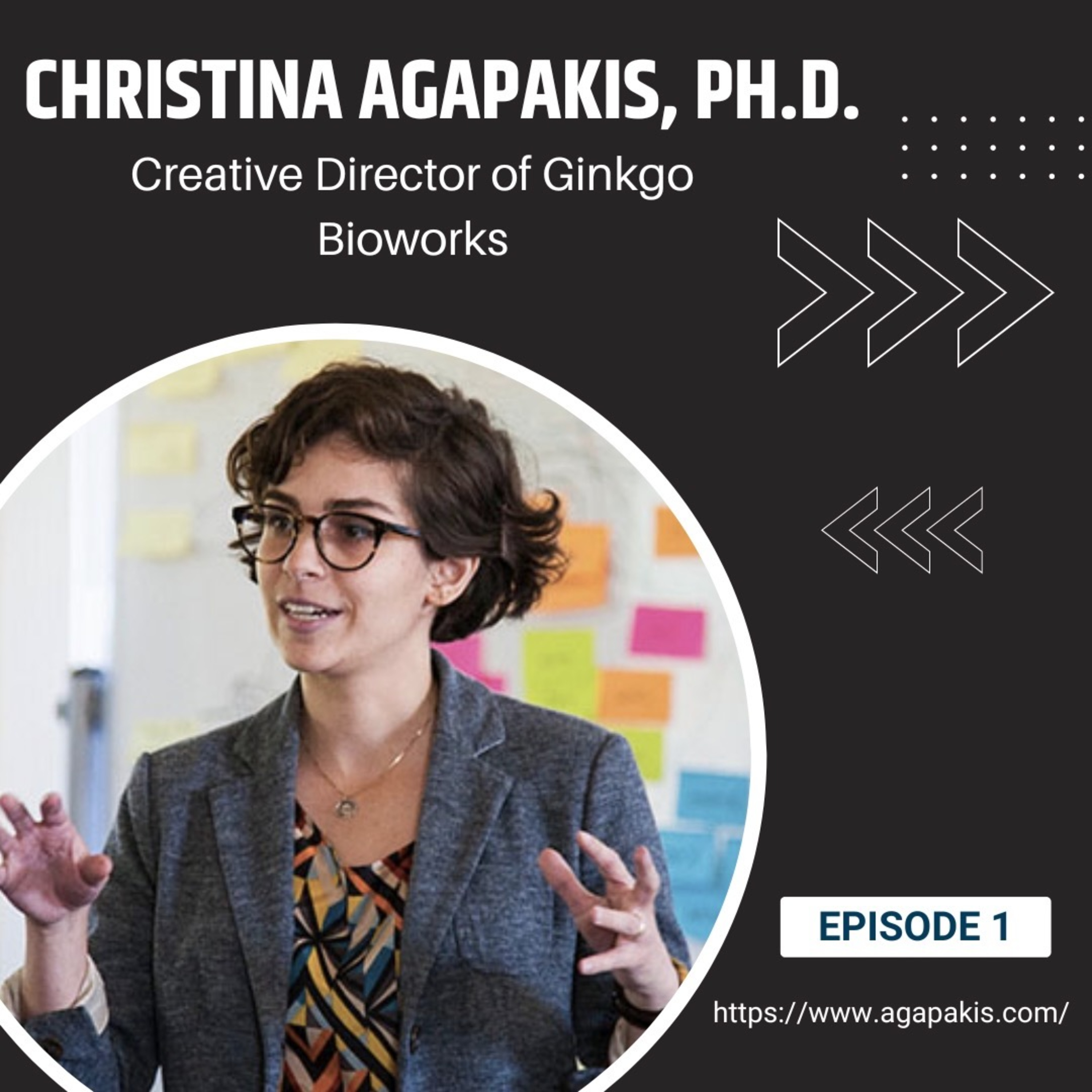
今天我们的嘉宾是克里斯蒂娜·阿加帕基斯博士,她是Ginkgo Bioworks的创意总监。
On our show today, we have doctor Christina Agapakis, who is the who is a Ginkgo Bioworks creative director.
阿加帕基斯博士,能跟我们的听众简单介绍一下您自己吗?
Doctor Agapakis, could you introduce yourself, to our audience?
嗨。
Hi.
我叫克里斯蒂娜。
I'm Christina.
我本科在耶鲁读的,是2006届的。
I, went to Yale for my undergrad, so I was Yale o six.
我最近听说,现在的耶鲁学生对学院没那么在意了。
I I actually heard recently that, current Yale students don't care about the colleges as much.
我就不点名了,但可以跟你们说,我当年可闯祸了。
I won't tell I but I can tell you I was in trouble.
对。
Mhmm.
我学的是生物学,后来去了哈佛读博士,彻底转行成了合成生物学家,还参与了iGEM和其他各种合成生物学项目。
And I studied biology, and then I went to the dark side and went to Harvard for my PhD where I became a synthetic biologist and got involved in iGEM and and all sorts of other synthetic biology things.
现在我在一家叫Ginkgo Bioworks的合成生物学公司工作,我们致力于让生物工程变得更简单。
And and these days, I work at a synthetic biology company called Ginkgo Bioworks where we try to make biology easier to engineer.
真不错。
Nice.
你刚才提到从耶鲁到哈佛,还参加了iGEM团队,能说说这个吗?
So you mentioned, the going from Yale to Harvard and then getting involved with the iGEM team.
我看过一些挺有意思的YouTube视频,讲的是iGEM那个‘便便手提箱’的事。
And so, I've seen I've seen some interesting YouTube videos about this sort of iGEM briefcase of poop.
你能给我们讲讲吗?
Could you tell us
那到底发生什么事了?
more about about what was going on with that?
当然可以。
Sure.
2009年那会儿,我参加了iGEM。
So in in 2009, I was at iGEM.
我当时是评委。
I was as a judge.
我当时穿着裁判的连帽衫,到处走动,跟各个团队的人打招呼。
And so I was I had my my judging, hoodie, and I was going around, and I was meeting people on different teams.
我有幸认识了黛西·银杏,她是一位艺术家兼设计师。
And I I got the chance to meet Daisy Ginkgo, who's an artist and a designer.
在iGEM之前,我们其实已经通过邮件聊过她关于设计生物学的一些研究。
And and we had sort of corresponded right before iGEM about some of her her research about designing biology.
我觉得她的观点特别有意思,她问我:‘我是个设计师,可你们说你们在设计生命,那这东西到底长啥样?’
And I found her point of view really interesting because she was asking these questions about, like, well, I'm a designer, and you're saying you're designing biology.
就是啊,她这么一问,真把我问住了。
Like, how is that gonna look?
我们之前就一直有联系,
And, anyway so we we had been corresponding.
到了iGEM,我们就约着碰面了——那时候iGEM还在MIT校园里办。
We went to get together, and I I met up with her at at iGEM, which at that point was still being held at at MIT on campus.
我们在信息中心的一个角落碰头,她拉着我,给我展示了一番。
And so we meet in sort of one of the corners of the status center, and and she brings me over, and she shows me.
她说:‘我来给你看看我在剑桥iGEM团队里做的东西。’
She's like, let me show you what I've been doing, as part of the Cambridge iGEM team.
她拿出一个银色的公文包。
And she pulls out this silver briefcase.
那样子就像电影里常见的场景——有人穿着西装,神秘兮兮的,公文包还 handcuffed 在手上。
It looks sort of like the kind of thing that in the movies you'd see, like, handcuffed to somebody whether who's wearing a suit and looking mysterious.
她打开包,里面是一堆做得特别精致的‘便便’,像小💩一样,被固定在泡沫里,稳稳当当的。
And she opens it up, and inside are these beautifully crafted turds, like little poops, sort of, like, set into, like, a foam, to sort of, like, keep them keep them steady and still.
这些便便形状特别漂亮,全都是彩虹色的。
And and and they're just beautifully formed little poops, and and they're all rainbow colors.
红的、橙的、黄的……整个彩虹色系,全装在这个公文包里。
So there's, like, a red one, an orange one, yellow one, the whole rainbow, in in this suitcase.
我当场惊呆了,又惊讶又着迷,一下子就被吸引住了。
And I was shocked and surprised and amazed and instantly intrigued.
她又给我多讲了点这个项目的理念,说:‘这其实是一件大猩猩艺术作品。’
And and she told me a little bit more about the the the concept and the project, and she says, well, this is a a gorilla artwork.
对。
Mhmm.
我们跟剑桥iGEM团队合作,他们正在开发生物传感器,能对不同物质做出反应——我记得他们做的是砷之类的污染物,就是那种后来成了iGEM经典项目的玩意儿,反应后会释放出可见的色素,而且是一整条彩虹色的色素。
We we worked with the Cambridge agent team that was building biosensors biosensors to respond to different kinds of, I think they were doing arsenic, you know, the the the things that would have become sort of famous iGEM projects, and respond with a visible output, a pigment, and a whole rainbow of different pigments that you could see.
所以用这个生物传感器的人,光用眼睛就能看到颜色变化。
So somebody working with that biosensor would be able to see, with their own eyes, a a a pigmented output.
他们的想法就是,根本不需要分光光度计那些贵得要命的设备。
So you don't need a spectrophotometer or other expensive equipment was their concept.
于是Daisy和另一位合作者、设计师詹姆斯·金,一起跟团队脑暴:要是……
And so, Daisy and then a collaborator, James King, another designer, worked with the team to sort of imagine, okay.
比如明年,你可能就能拿到那种纸条式的水质检测试纸,一沾水,颜色就立马变出来。
So, like, you could imagine next year, you might have little test strips for paper, for water quality testing, and it would would light up, with this pigment.
那2030年、2040年,甚至2015年呢?
What might happen in 2030, 2040, 2015?
未来到底会变成什么样?
Like, what what happens in the future?
其中一个想法是,嗯,
And one of the ideas, well, okay.
也许到2030年,会出现一种酸奶饮料,里面含有经过改造的细菌,这些细菌活在你肠道里,能感知你体内的信号,并产生有色反应。
Maybe by 2030, there'll be a yogurt drink, using these engineered bacteria that, lives inside of your gut, is sensing is alive and active in in your body and and would produce a colored output in response to some kind of signal in the body.
而这种颜色变化会直接体现在你拉的屎里,肉眼就能看到。
And and and that that colored output would be visible in the poops that you that you are producing.
看到这个真的特别有意思。
And and it was so fascinating to see that.
首先,把大便当成一种技术来想象——我觉得这正是合成生物学当时最独特的地方,跟主流的合成生物学很不一样。那时候主流都在讲什么‘计算模型’、‘细菌电路’之类的,
Like, first, to imagine poop as a technology, I think that's, like, one of the most interesting kind of things about synthetic biology that at the time was actually quite different than the the sort of mainstream synthetic biology, like, where where a lot of the language is about kind of computational, approaches, sort of bacterial circuits Yeah.
然后把细菌养在罐子里,跟我们隔得远远的。
And then growing bacteria in a vat and sort of, like, locked away and and away from from us.
这个项目最吸引人的是,它设想合成生物学发生在我们身体内部,把人体本身当成一个技术平台,用来做干预和设计。
What what what was really interesting about that project was imagining synthetic biology happening inside of the body, and and the body's own biology as as a sort of platform for technologies and interventions and design.
而这个设计本身,就像一场街头艺术,悄悄地让人思考:你想要什么样的未来?
And then the the the the design itself, like, adds as this guerrilla artwork as a way of of asking people questions about, like, what kind of future do you want?
你会愿意喝这种东西吗?
Like, do would you drink this?
你愿意在日常生活中,用这种检测方式来了解自己的身体状况吗?
Would you want to do this kind of diagnostic test in your daily life and your habits and your routines?
那种感觉会是什么样的?
Like, what would that feel like?
看到那些便便本身,真的特别直观。
And and it made it very vivid to see the poops themselves.
总之,我觉得这一切都特别有启发性。
And so, anyway, I I found that all to be really, really inspiring.
我觉得黛西和其他类似的研究,确实产生了很大影响,至少对我是这样,我觉得对整个领域也是。
And and I think that that that Daisy and and other work, like, does have had a pretty big impact, certainly on me, and I think on the field.
现在你就能看到,微生物组方面的研究多了起来,我想你们大家也都是在做这个方向。
Like and so you see now, like, a lot more work in the microbiome, and I think that's what you are you all are working on.
而且,把我们身体里、环境中的生物系统,当作可以被合成生物学去设计的平台,这种思路也越来越受关注。
And and and, like, thinking about sort of the in situ biology in in our bodies and in our environments, like, as these sort of places to be sort of designed, with with synthetic biology.
我觉得这真的很美。
And I and I think that that's that's beautiful.
是的。
Yeah.
我觉得这个故事特别了不起的一点是,任何新兴领域,比如合成生物学,每天都会发生些让人意想不到的事,这正是我特别喜欢的地方。
I mean, I think one thing with that story that's so, like, remarkable is kind of it's with with, like, any new field and something like synthetic biology where you're kind of one thing I, like, kind of love about it is, like, every other, like, day, something will happen.
比如说,某个科学过程突然发生了,可大家根本搞不懂是怎么回事。
Like, some scientific process will occur that people just don't actually understand.
哦,原来如此,就该是这样。
Well, it should be like, oh, yeah.
事情本来就是这样。
That's just how it goes.
所以这个领域充满了不确定性,我们根本说不准哪些只是出于好玩,哪些会成为本世纪最重大的突破。
And and so there's so much uncertainty in the field that we don't really know, like, what is just for fun and, like, what's gonna lead to, like, the greatest breakthrough of the century.
对。
Mhmm.
所以呢,你就有了这种
And so then, like, you have this
有趣也很重要。
Fun is also important.
有些突破纯粹就是图个乐子。
There can be breakthroughs that are just for fun too.
是的。
Yeah.
没错,这确实是真的。
I I mean, that's definitely true.
如果没有人做那些看起来没明确目标、不会说‘我下周就能发篇论文’的事儿的话。
And if you didn't have people doing things that, you know, didn't necessarily seem to have, like, a clear, like, oh, I'm gonna publish a paper next week about this.
对。
Mhmm.
但就是得有人做这种事。
But people need to be doing that sort of thing.
首先,因为你根本不知道这会引向哪里。
First, because you don't know what it'll lead to.
其次,就像你说的,它逼着人们去思考:他们想生活在怎样的未来里?想往哪个方向走。
And and second then because, like you said, like, it forces people to ask the questions about, like, what sort of future do they want to live in and, like, what direction they're gonna go in.
之后你说,我某种程度上启发了你,对吧?
And and so after this, you know, you said that I kind of inspired you.
我就去查了点关于那个奶酪项目的事儿,嗯。
And so I I I read a bit about this, cheese project Mhmm.
用真菌搞出一些新颖的应用来做奶酪。
Cheese through some novel novel applications of fungus.
你能聊聊这个吗?
Could you talk a bit about that?
当然可以。
Sure.
我想先回应一下你刚才说的,关于有用没用那个观点。
Maybe I wanna respond first to sort of your, your point about, like, usefulness versus not.
我觉得,那时候——在我职业生涯的某个节点上,我开始主动做出选择,去推开那些门,去回应那些问题、那些项目和那些关系。
And and I think, like, that that moment or sort of that point in my career, like, was a point at which I I start making choices, about, like, opening those doors and and those questions and those projects and those relationships.
虽然跟科研论文、工作这些明摆着有价值的东西挂钩,但我其实是故意这么选的。
Like, even though the connection to a scientific publication, yeah, like, a job or anything, like, explicitly, like, valuable, like, was a choice that I made to do on purpose.
所以其实我早就走在了做这类选择的路上。
So I sort of had had already sort of gone down the path of making those kinds of choices.
比如,我那时候已经在和iGEM合作,花时间跟哈佛的学生们打交道,尤其是在iGEM团队里,我会试着说服他们,给他们提建议。
So so for example, like, I had already, you know, was working with iGEM and and was spending time with students, Harvard students that I would be trying to convince during the iGEM team, and I would advise them on these projects.
每到暑期招聘会或者类似的活动,学生们过来,我们就会展示iGEM项目。
And they'd be like, like, kids would come to the the sort of, the fair summer or whatever internship fair, and we would show off iGEM.
他们就会问:‘我有多大可能发一篇《自然》这样的论文?’
And they'd be like, well, what's the likelihood that I would get a nature science paper?
他们真就这么直白地问我。
Like, literally, like, they'd literally be asking me.
可他们才刚上大一啊。
I'm like and they're a first year college student.
我当时就想,好吧,行吧。
And I was like, well, like, okay.
那真的是你衡量时间该花在哪的标准吗?
Is that actually your measure of what's valuable to spend your time on?
难道这不才是最重要的吗?
Like, isn't that all that matters?
在耶鲁,我们明白,人生不止是那些看得见摸得着的成就。
At Yale, we understand that there's more to life than just, like, clear cut tangible, accomplishments.
也许那是我耶鲁的那部分在想:天啊,哈佛的学生们?
Maybe that wasn't maybe that was my Yale side being like, what the hell, Harvard students?
你们这样活着,根本行不通。
Like, you you there's no this is no way to live.
但我觉得,这种现象其实挺常见的。
But I but I think that that's something that you see a lot.
所以,我的意思是,确实如此。
And so, like I mean, yeah.
后来我就开始写一些关于设计和生物学的东西,做些怪里怪气的艺术项目,这个我待会儿再说。
Like, then I was started, like, writing about design and biology, like, doing weirdo art projects, which I'll talk get to.
干了这么多事儿,总有人反复问我同样的问题。
Like, doing all of this work, and and and it was a kind of constant refrain that I would get.
他们总问我:‘你做这些,是不是在毁自己的前途啊?’
I'm like, oh, do you think you're hurting your career by doing these things?
‘你这么搞,到底怎么发论文啊?’
Like, do you think that you're, like you know, like, oh, but but, like, how are you gonna actually, like, publish?
‘你到底怎么才能真正做出点名堂来?’——说实话,每次有人这么问我,我都替他们觉得难过。
How are you gonna actually, like, do and and and and I think I anyway, I just felt, like, so sad for the people who asked me that.
因为我明明过得特别开心啊。
Because, like, heck, I was having a great time.
这过程确实挺难的,路也不好走,压根儿没人告诉你该怎么做,方向也不明确。
Like and, like and and it was hard, and it wasn't straightforward, and it wasn't an easy path because it wasn't obvious what would it take.
但现在这成了我的工作,而且真的很重要。
But, like, it is my job now, and and it is important.
而且这事儿真不容易,说实话,我觉得我得有点儿勇气和韧劲儿,才能顶着别人的看法继续做下去——毕竟其他科学家都觉得这事儿挺傻的。
And and it was something and it and it took, I think, yeah, I think it took some strength and courage, if I can say that about myself, to, like, to do it even though people, like and other scientists thought that it was, like, kind of dumb.
我懂。
I know.
所以我想对在听的同学们说,如果你真相信一件事,真对它充满热情,就别让那些问题打乱你的心神。
Anyway, so that's, so my my advice to any students listening is, like, if you believe in something and you're excited about something, like, don't let those kinds of questions, like, get to you.
你真正在乎的东西,对你世界有意义的东西,现在可能根本没法用论文数量那些老标准来衡量。
Like, it you what you what matters to you and what matters to the world may not right now be able to be measured according to the those measures of science papers or whatever the hell.
它可能会以完全不一样的方式呈现出来。
Like, it might it might take a different form.
也许你们现在就已经明白了。
And then maybe you all, like, know that now.
但二十年前,我在大学里根本没这觉悟。
But, like, twenty years ago, I feel like, anyway, I didn't get that in college.
好了,我就说这么多。
And so, anyway, that's all.
那我现在能聊聊奶酪吗?
But can I talk about the cheese now?
当然可以。
Yeah.
不过我觉得有一点是,
I I think one thing about that though, it's
我觉得这是个非常重要的概念。
I think it's a very important concept.
而且就像你说的,现在的耶鲁,满口都是要创新、追梦、打破常规,这挺好。
And, yeah, like you said, it's definitely, like, Yale today is all about, like, oh, like, you know, be creative and, like, follow your dreams and, like, step out of the box, which is good.
但光听这些话可不够。
But, you know, obviously, just hearing that is not enough.
没错。
Yeah.
因为你的日常生活还是在系统里,还是沿着这条老路走。
Because, you know, your daily life is still, like, you're you're in the system, like, you're traveling along this path.
你自然就想做那些稳妥的事儿。
You wanna do, like, the predictable things.
而且呢,这其实特别合理。
And and, you know, like, that's so rational.
你都花了这么多功夫才走到这一步,对吧。
Obviously, like, you put a lot of work to get here.
哪能说放弃就全放弃了呢。
You don't wanna just, like, you know, like, it all.
是啊。
Yeah.
说得通。
Makes sense.
但我觉得,你大概也会同意,到底什么才叫浪费呢?
But I think, like like, you would probably agree, you know, what what does it really mean to waste it?
比如,没发那么多论文,没那么快当上课题组长,可你做的事儿自己真喜欢,真觉得有劲儿——这算浪费吗?
Like, is it really, like, a waste to maybe not get as many publications, maybe not, you know, get like, become a PI as fast as possible, but you still do things you actually find interesting and you actually find, like, invigorating?
你知道,也许不是这样。
You know, maybe not.
我觉得,这确实是关键所在。
I think, I think that that's that's a big piece of it.
对吧?
Right?
当你走在一条既定的道路上时,心里总会有个标准,知道什么叫成功。
Like, I I think you when you're kind of on a track, like, there's a sense of what it looks like to be successful.
对吧?
Right?
但等你真毕业了,看看我那些耶鲁同学后来走的路,天哪,每个人都在做完全不一样的事,而且都特别精彩。
Whereas, like, when you actually, like, graduate and and, like, the the path all the different paths that all my friends from Yale have taken in the end, like, people are doing all sorts of amazing things, right, and and all sorts of very, very different things.
而且几乎没人,真的很少有人,毕业后干的是当年在大学时以为自己会干的事。
And and things that almost no one like, very few of them are doing exactly what they thought they would be doing when they were in college.
对吧?
Right?
比如你直接上医学院,接着住院医,再读专科培训,最后成了主治医生,过得挺好,特别成功,也特别开心。
Like, you know, maybe if you went straight to medical school and straight to residency and straight to fellowship, but now they're attendings and they're doing great and they're super successful and super happy.
但说实话,这种人其实是少数中的少数。
But, like, that I would say is, like, the outliers in the in the end of of people.
对吧?
Right?
其实呢,成功和做有意义的事,有好多不同的方式。
Like, that that, like, there's actually, like, ways of being successful and and doing things that are meaningful.
我觉得,要跳出这个框框挺难的,因为根本没个标准模板可循。
And and there and it is hard, I think, to to be outside of that box because there's no exact model for what it looks like.
对我而言,真正帮到我的,是认识了黛西这样的人,还有社交媒体上的一些人。
And so for me, it was actually, like, meeting folks like Daisy and, like, folks on actually, like, social media was huge for me.
认识那些职业道路跟我在哈佛见过的教授完全不一样的人,对,真的很有启发。
Like, meeting people who had careers that looked different than the faculty that I knew at at Harvard Yeah.
他们的人生很充实,也很成功,只是方式不一样,压根没走那条老路。
And and and who had careers that, like, were really meaningful and, like, successful in in in in their own way and but didn't take were they weren't on the same path.
对吧?
Right?
能看到他们做什么、问什么问题、怎么工作,真的完全不一样。
And and just being able to see what they did and the questions that they're asking and the way that they're working, and, it just looks different.
如果你从来没见过了,根本想象不出来。
And if you've never seen it before, it's hard to imagine.
所以,总之,这算是其中一部分原因。
So, anyway, that's that's part of it.
对吧?
Right?
就是说,能有机会遇到这样的人、这样的机会,然后哪怕有点犹豫,也敢点头答应。
Like, being able to, like, be in a position to find those people and and opportunities and and and say yes to them, even if if you're yeah.
就算它们看起来有点莫名其妙。
Even if they don't quite make sense.
是的。
Yeah.
就是这样
That's
没问题。
okay.
参加iGEM也很好。
Even doing iGem.
太棒了。
It's great.
参加iGEM能帮你打开大门,认识一大堆人,都在Gymboree那儿。
IGem is, like, gonna open the door to, like, you're gonna meet so many people at the Gymboree.
肯定会特别有意思。
It's gonna be so much fun.
你到时候就明白了。
You're gonna, like, see.
对。
Yeah.
不管怎样,这种体验根本不是上一门课或者在实验室里做做常规实验就能想象到的。
Anyway, it's it's sort of beyond, like, what you can really imagine when you're when you're taking a class or even if you're working in the lab.
对吧?
Right?
对我来说,第一次真正进实验室做实验,结果完全不知道会怎样,还遇到那些一辈子就为追问这些问题、搭建这些系统而活着的人,这种感觉太震撼了。
Like, so to me, yeah, like, the the step of working in a lab for the first time and actually doing an experiment where you don't know what the answer is gonna be, and and you're, like, meeting people who like, their careers is to, like, ask those next questions and build those.
那真的彻底打开了我的眼界,这不用说。
Like, that was really like, that opened a huge world to me, obviously.
再往下,就是iGEM整个圈子,还有合成生物学的社群,大家开始问:生物学到底该去解决什么问题?
And then the next layer of, like, yeah, the the whole world of of iGEM and and the community of synthetic biology and people who are now asking, like, well, what should biology do?
我们该优先解决哪些难题?
What problems should we solve?
未来该往哪个方向走?
Like, where should we go from here?
说实话,我也说不准。
Like, I don't know.
我觉得,在我上学的时候,那些打开新视野的时刻特别特别珍贵。
That's I I think that that those moments of opening those doors and those those, like, horizons for me were were really, really special, in my school.
你还记得你第一次做湿实验的很多细节吗?
Do you remember, like, a lot of details about your first, like, wet lab experience?
能跟你聊聊那段经历吗?
Like like, could you talk about that for a little bit?
天哪。
Oh my gosh.
我刚刚就在想这事,因为最近我刚开始和生物巴士合作,昨天他们来办活动,我们还聊了聊。
I was actually just thinking about this because we we, I just started working with the bio bus and and had an event yesterday where the the bio bus was there, and and and we were talking to them.
我回想起上高中时上生物课,他们带我们去参观了一个实验室,好像是什么犯罪实验室之类的。
And I was remembering being in high school, taking high school bio, and they brought us to to I think it might have been even, like, one of the, like, the crime lab or something.
总之,那个实验室在做DNA分析的凝胶电泳。
Anyway, it was a lab where they were, like, running gel electrophoresis, like, for DNA analysis.
他们还准备了一套适合高中生用的实验套件,教我们怎么做。
And so they were like they had, like, a kit like, a high school student kit, for how to do it.
太神奇了。
It was so amazing.
我当时就想,这简直太酷了。
And I was like, this is the coolest thing ever.
我简直不敢相信,我居然能看到DNA。
Like, I can't believe I can see DNA.
对吧?
Right?
真的把我震撼到了。
Like, it blew my mind.
而且,像这种机会,能让我意识到,原来真有人的工作就是专门看DNA的。
And, like, those opportunities, like, again, to, like, see yours like, oh, there's someone whose job it is to, like, look at DNA.
高中时候,我怎么可能知道还有这种职业?
Like, in high school, how would why would I know that?
我怎么可能想得到呢?
How would I could I have known that?
总之,那件事为我打开了大门。
Anyway so, like, that opened the door.
后来我运气不错,大一暑假在耶鲁找了个实习,就在一个实验室——因为我家在波士顿,所以其实是哈佛的实验室。
And then I I had I was lucky to find an internship with my first summer at Yale at at a lab at in because I I'm from Boston, so I was it was a Harvard lab.
我就切老鼠脑子、做Western blot,干各种活儿。
And so I I, like, cut up mouse brains and did western blots and things.
真的超有趣,超酷的。
Was, again, like, so fun and so cool.
那会儿我暑假回家,朋友们都惊讶得不行:‘你居然在摆弄老鼠脑子?’
And, like, none of my my friends, you know, home for the summer after the first year, were being like, you're doing what with mouse brains?
真的,别闹了。
It's like, no, man.
这太棒了。
It's awesome.
我还在那儿染色,干一堆稀奇古怪的事儿。
I'm staining them, like, to do all sorts of shit.
反正吧,我就特别迷这类事儿。
Anyway and, like, anyway, I'm I'm a nerd for that stuff.
那些时刻真的特别特别珍贵。
And so the those moments were really, really, really special.
是的。
Yeah.
没错。
Definitely.
我还记得,第一次听说合成生物学,是在研究生入学Orientation上认识Pam Silver的时候。
I do remember also, like, the first time I learned about synthetic biology, that was when I met Pam Silver, at my grad school orientation.
那是入学周末,我们坐同一桌。
And so we were it was the it was the orientation weekend, and and we were at the same table.
她真的超棒,特别有意思。
And she is so awesome and so fun.
而且呢,你心里其实对教授该是什么样子,早就有个默认印象了。
And, like, again, like, that same, like, you you you have a sense of, like, what it what a professor should act like.
她一下子就让我挺意外的,第一天就直接说:这太无聊了。
And and she just kind of, like, surprised me because, like, in the first day, she's like, this is so boring.
咱们上楼去酒吧喝点马提尼吧。
Let's go up and get martinis at the bar upstairs.
我当时就想,哇,原来当个哈佛终身教授,还能是个牛逼的科学家,又这么有意思。
Anyway, I was like, oh, like, oh, like, you can be a tenured Harvard full faculty professor, like, and be a great scientist, like and be kind of fun.
这太酷了。
Like, that's cool.
好吧。
Okay.
然后她还吐槽Larry Summers,说那年他居然觉得女生天生不擅长科学。
And then she was like, like, nobody like, anyway, anyway, she oh, she was complaining about Larry Summers saying that girls are dumb at science because that was that year.
然后我就说:对啊。
Anyway and I was like, yeah.
那家伙真够烂的。
That guy sucks.
她还说,是啊。
And she's like, yeah.
这人真够差的。
He sucks.
然后她又说,对啊。
And then she's like, oh, yeah.
我以前是搞RNA生物学的,现在在做一门叫合成生物学的玩意儿。
What I do, like, well, was an RNA biologist, and now I'm doing this thing called synthetic biology.
我当时就愣了,啥?
And I was like, oh, what the hell?
那是什么东西?
What is that?
她说我们要解决气候变化,我直接懵了:啥?
And she's like, well, we're gonna solve climate And I was like, what?
我心想,对啊。
I'm like, right.
我当时就想,诶,要是能打开这扇门,问问看——
And the idea that, like, you could to to open up this world and ask, like, okay.
生物学其实能造东西啊。
Biology can make stuff.
那为啥它不能造我们的燃料呢?
Like, why why why shouldn't could it make our fuels?
不能造我们的材料吗?
Could it make our materials?
不能造我们用的那些东西吗?
Could it make the stuff that we do?
我们能不能用生物学重新打造我们的技术?
Could we could we remake our our, you know, technology with biology?
我压根儿没想过,但这一下子给我打开了一个全新的大世界。
It never occurred to me, and it, like, totally opened up this, again, like, huge new horizon, for me.
所以那一刻,我决定去她实验室当轮转学生,然后心里就想:行,就这么干。
And so, that moment and being able to, like, join her lab as a rotation student and and, again, like, be like, okay.
咱们不是得解决气候变化吗?
Like, we're gonna we wanna solve climate change.
那咱们该怎么做?
What should we do?
你平时都干点啥?
Like, what do you right.
那种实验室的规模感?
Like, that that sense of scope lab?
你去Silver教授的实验室轮转过?
You did a rotation at doctor Silver's lab?
是的。
Yeah.
对。
Yeah.
我先去轮转,后来就留在她实验室做毕业论文了。
So the I was I did a rotation and then and then ended up joining her lab for my thesis.
所以我觉得还挺酷的。
So I guess it was Cool.
对,就是这样。
Like, that that so yeah.
所以我才成了合成生物学家。
I that's how I became a synthetic biologist.
哇,厉害。
Oh, wow.
真不错。
Nice.
太棒了。
Nice.
是啊。
Yeah.
没错。
Yeah.
你之前提到,问问题特别重要,比如得想清楚生物学到底该解决哪些问题?
So you mentioned, like, the importance of kind of asking questions as to, like, you know, what what should biology solve?
就是说,它该往哪个方向发展?
Like, what direction should it go into?
所以我刚才其实就问了你这个问题。
So I guess I asked you that question.
你觉得哪些领域或者哪些问题最有趣、进展最快、最有价值?生物学真能帮上忙的?
Like, what are the fields or what are the problems actually that that you think are the most interesting or, like, the most quickly advancing or the most worthwhile, really, that you think biology could have, like, a solution for?
我觉得我一直没变过,还是觉得气候问题最重要。
I think I think it's sort of I'm I'm I'm consistent in this, I'd say, where, I still think it's climate, probably.
可能现在的方式跟2007年想的生物燃料不太一样了,但这完全没问题,也挺好。
Like, I I don't know if it's gonna look the same as we thought it was in 2007 with biofuels, and that's actually, like, totally fine and okay.
但我觉得,生物学能做的事——光合作用、形成碳碳键、制造东西、可再生、可持续、可降解,这些真的太关键了。
Like but I think I still think that what biology can do and how biology does photosynthesis and makes carbon carbon bonds and makes stuff and, like, is regenerative and is sustainable and biodegradable.
这些潜力在应对气候变化上,意义重大,是我们必须去攻克的。
Like, all of those things, I think, me, like, the the potential in climate change is is is really meaningful and really important and essential for us to to sort of tackle.
所以,这就是那个大方向。
So there's, like, that big one.
对。
Yeah.
我觉得……
And I think
另一面呢,我觉得更有趣的是那些好玩的东西。
the the other side, I think, is, like, the fun fun stuff.
我觉得,未来肯定是好吃的食物。
And so, like, I think it is gonna be, like, food that tastes good.
比如会发光的植物,还有全新的时尚、服装和材料的制作方式,诸如此类。
Like, you know, like, plants that glow, like, weird new ways of sort of making fashion and and clothes and and materials and, and and all of those things.
而且我觉得,最让人兴奋、最特别的是,生物学能同时兼顾这两方面——我们能想象一个世界,在解决气候变化这些大问题的同时,生活依然充满乐趣,不是那种苦哈哈、啥都不能有的日子。
And and and I think, like, we can that we that that the fact that biology can do both together is, I think, what is is most exciting and special about it that, like, we can imagine a world where we're solving some of these big problems about climate change, and it's not, like, a miserable, no fun world, like, where it's not like, oh, you can't like, you're not allowed to have anything.
不用活得像苦行僧一样。
You have to, like, live like a monk.
对吧?
Right?
我的意思是,我们不可能因为要应对气候变化就彻底失去乐趣,对吧?
Like, I don't you you you can't you have no fun anymore because we have to like Yeah.
因为气候变化这事儿确实挺让人难过的。
Because climate change is sad.
但其实,我们完全可以通过生物技术,拥有一个丰富、有趣、充满成就感,甚至疯狂又精彩的生活体验——这一切都依托于生物的力量。
Like, that that we can we can actually, like, have a a very, like, rich and and fun and rewarding and and, like, wild experience, like, with our living bodies and central experiences, and and all of that is sort of happening with the the power of biology.
是的。
Yeah.
不是的。
No.
我的意思是,这不仅适用于气候变化,也适用于其他很多领域。
I mean, I I think that definitely makes sense both with climate change and as to kind of, like, the all all the other sort of areas.
不过,我突然想到一件事,比如,这是个开场白。
And then one thing that made me think of though is, like so, like, here's the intro.
前几天我读了一篇论文,讲的是用脱氧核糖核酸——也就是DNA——当药物的外壳,帮它把药送进身体里。
So I was reading this paper the other day about using, like, deoxyribonucleic acid, so so DNA, as, like, a cover for your for your medicine and then using that to deliver the medicine into the body.
这主意不错。
Cool.
但这里的DNA并不是用来存储遗传信息的。
And so this DNA is not being used to storage genetic information.
它只是被当做一个分子来用。
It's just used as a molecule.
对。
Mhmm.
不过呢,有个问题,我们做了一项调查,问大家:你觉得用DNA把药送进体内,这感觉怎么样?
But there's, like, one problem with this is we conducted, like, a survey of people, and we're, like, you know, how would you feel about, like, using DNA to, like, put medicine inside of you?
很多人很合理地觉得:这听着不太靠谱。
And a lot of people very reasonably were like, that sounds not good.
我不想让什么东西搞乱我的DNA。
Like, I don't want something messing up my DNA.
我的意思是,我知道这种DNA听起来挺吓人的。
Like, you know, I know DNA like this is bad.
我觉得合成生物学里好多东西,对不懂的人来说,简直像天方夜谭。
And I think synthetic biology, there's a lot of things where, you know, to someone who's not really well versed, it seems like really insane.
我跟我爸妈说我们在搞大肠杆菌,对生物学家来说这太正常了。
Like, I told my parents we're working with e coli, and for a biologist, that's totally normal.
但他们一听就愣了:等等?
But for them, they're like, wait.
那你们怎么保证自己不会生病呢?
But, like, how do you make sure you don't get sick?
是的。
Yeah.
这问题问得挺在理的。
That's a reasonable question.
问得特别到位。
Super smart question.
所以如果将来,我觉得这一定会发生,生物学和合成生物学越来越多地融入日常生活,变得触手可及,那普通人怎么才能不用花八小时泡在PubMed上,就能搞懂这些事儿呢?
And so if if in the future, and I think this will happen that biology and, like, synthetic biology spreads into more, you know, daily use, like, things that are actually visible to us, how do people, like, how do scientists kind of communicate, you know, what's actually going on in a way that you don't need to, like, spend eight hours on PubMed to understand?
所以你是说,这个更贴切?
So this is more right?
对,这真的是个特别棒的问题,太棒了。
Like, this is this is actually, like, a great this is a great question.
我超喜欢这个问题。
I love this.
其实这恰恰是我现在主要在做的事——思考这类问题。
Because this is actually, like, my maybe my job now, is is thinking about questions like this.
因为说实话,我们科学家理解东西、学习东西,就是靠泡PubMed八小时,我特别享受这个过程。
Because I think, I I think scientists, the way that we understand things and we we learn things and get to is to spend eight hours on PubMed, and I love that.
这真的很好。
It's great.
但说实话,没人真会这么干。
But, like, no one's gonna do that.
而且我觉得,因为我们太看重知识了,总以为别人也得跟我们一样懂这么多,才能真正理解并欣赏同样的东西。
And and I think that also, like, we tend to, have this because we value knowledge so much, we think that people need to have that same level of knowledge, like, in order to understand and value the same things as us.
我们总觉得,要是他们也像我们一样掌握这些知识,自然就会跟我们有同样的价值观,因为我们太把知识当回事了。
And and if they had the knowledge that we had, that they would value the same things as us because we value the knowledge so highly.
这么说你能明白吗?
Does that make sense?
对。
Yeah.
所以我们一直有个错觉——虽然社会科学家早就无数次证明这根本不对了,但它就是挥之不去。
And and so we have this belief, that ironically, like, even though social scientists have debunked it many, many, many, many, many times, so, like, actually, it is not true.
我们总觉得,只要人人都跟我们一样知道这些事实,只要他们也泡在PubMed里八个小时,肯定就会爱上大肠杆菌。
We believe that if only everybody knew the same facts that we did and and and was on PubMed for eight hours, of course, they love E.
而且会希望所有产品都一模一样。
Coli, and they would want every product to be the same.
但我觉得,这根本就不是真的。
And I don't that's just not true.
我觉得那些调查也挺奇怪的,比如问你愿不愿意把DNA注入体内?
I I think that those surveys also, like, where you're like, what do you think about putting DNA in your body?
这根本就不是个靠谱的营销手段。
Like, that's not a very well designed marketing campaign.
好吧,就算吧。
And so, like, sure.
要是有个怪人突然在街上拦住我,哪怕我是个生物博士,他问我:‘现在能给你打点DNA吗?’
If if some, like, weirdo came up to me on the street, even as a PhD biologist, like, if they're like, can I inject you with some DNA right now?
我肯定直接让他滚蛋。
I'd be like, fuck off.
不可能。
Like, no.
我哪知道那玩意儿靠不靠谱。
Like, I don't know.
这东西做过测试吗?
Was it tested?
这有用吗?
Is it good?
这玩意儿对身体到底有啥影响?
Like, what's it gonna do to my body?
对吧?
Right?
这些问题其实都很合理。
Like, that those are reasonable questions.
对吧?
Right?
我觉得,人有权决定自己往身体里放什么,这其实特别好。
And so I I think you when you want to think about, like like, people make choices about the things that they put in their body, and that's a beautiful thing.
我也喜欢自己做这些决定。
I like to also make choices about that.
你得跟他们真正沟通上才行。
And and and you have to sort of, like, connect with them.
展开剩余字幕(还有 332 条)
这有什么重要的呢?
Like, why does this matter?
这对你来说为啥要紧?
Why should it matter for you?
这到底好在哪儿啊?
Like, why why is it good?
这跟你自己的价值观有啥关系?
Like, why does it connect to your values?
你要跟人建立连接,关键在于这些层面,而不是说‘你非得读完那12篇论文才能懂’。
You know, like, all that is the level at which, like, you need to connect to someone, not the, like, oh, well, only if you had read, like, these 12 papers, then you would really get it.
真是傻得可以。
Like, morons.
这种做法根本行不通。
Like, that's never gonna work.
这又是典型的糟糕营销。
Like, that's terrible marketing again.
所以我们这些科学家,老觉得知识最重要,一提到营销就以为是骗人,觉得公关就是撒谎,天然觉得这事儿不靠谱。
So, like, I I think we tend to think of again, as scientists, like, because we value, like, knowledge and we think that marketing means, like, lying to people, We think that it's bad and that, like, PR means, like, it just is bad because it's lies.
其实呢,关键是怎么跟人聊他们真正在乎的东西,咱们怎么一起想象:咱们想吃啥、想过什么样的生活。
I think that, in fact, this is about, like, how do you connect with people about what they want, and how can we work together to imagine what kinds of things we'd want to be putting in our bodies and the kind of world we want to live in.
当然,不是所有人都想要同样的世界,有人想走别的路,那也挺好。
And some people will not want that world and want a different one, and that's also a beautiful thing.
生活本来就是五彩斑斓的。
Life is a rich tapestry.
但如果你从营销的角度看,其实不是这样的——不是说营销就一定得忽悠人。
And and so, like, the but that's that's that's if you look at it from the point of view of, like, of marketing, which doesn't yeah.
你完全可以保持科学的诚信,用靠谱的方式跟人聊他们关心的事儿,这才是真正牛的传播。
You can have high integrity, high scientific credibility, like, and connect with people about what matters to them, and that's great marketing.
对。
Yeah.
你能不能举个例子,比如哪个科学传播或者营销活动,你觉得做得特别好,真正懂怎么跟人沟通的?
Do you could you maybe think of any examples of, like, I guess, a science communication campaign or marketing that you think was, like, effective, went well and, like, kinda understood how to do it?
这问题问得真好。
It's a great question.
我其实是Impossible Foods的铁粉。
I want I'm a huge fan actually of of Impossible Foods.
我觉得他们在营销上做得太棒了,明明用的是转基因技术,目标还这么大胆。
I I think that they have done, like, an absolutely phenomenal job with their marketing because they have a GMO product and, like, a pretty, like, bold mission.
他们想在2030年前彻底终结畜牧业。
They, like, wanna end animal agriculture by the twenty thirties.
但他们居然做出了一款人人都爱的产品,懂得到底该在哪儿跟人沟通,知道哪些餐厅对人们来说特别重要,打造出真正有文化共鸣的东西,还帮大家理解背后的科学和初衷。
But they've been able to, like, make a product that people love, like, connect to people where they are and the restaurants that that are special and meaningful to them and make cultural product that matters, and, like, help people understand the science and and the and the why behind the why they're doing it.
对吧?
Right?
你肯定不会觉得这是科学传播吧?
And so, like, I I don't think you'd think you wouldn't call that sci comm.
我觉得这明明就是营销。
I think but you'd call it marketing.
我觉得他们在这方面做得真的特别棒,我觉得。
And and I think they've done they've done a really terrific job with that, I would say.
所以我特别喜欢拿他们当例子,尤其是针对这种说法——‘人们就是不喜欢转基因,因为他们不理解’。
So I I I love them as an example, especially around this question of, like, oh, well, people just don't like GMO because they don't understand.
我觉得问题其实不在这里,而是你从来没跟人讲清楚,这事儿为啥跟他们有关。
I think it's like, oh, but because you never connected to the people about why it should matter for them.
所以我觉得,Impossible 这家公司真是个绝佳的例子。
And so, like, I think I think Impossible is a great example.
是的。
Yeah.
我的意思是,你刚才说,这不像是科学传播,也许正是因为人家做得太到位了。
I mean and may and you said, like, you wouldn't think of it as, like, science communication, and perhaps that's because they do it well.
对吧?
Right?
我能想象,要是他们搞成那种堆满数据、特别技术流的风格,那肯定一看就是典型的科学传播。
Because I can imagine them doing it in a very, like, fact heavy, like, technical aspect that that, like, screams, like, science communication.
然后大家都会想,我干嘛要买这种奇怪的化学物质呢?
And then, like, everyone's like, why would I buy this, like, strange chemical?
是的。
Yeah.
但当你用更贴近生活的方式解释清楚,为什么这对你重要时,
But when, you know, when you explain it kind of, like, in more human terms, like, why does it matter?
那就更真实、更接地气了。
It's something more realistic.
对啊。
Mhmm.
这跟刚才说的有点相关,就是那种‘奇怪化学物质’的说法。
And this is just semi related, but the idea of, like, strange chemicals.
就连我自己,说实话,我也老干这种事——总觉得要吃成分简单、能念得出来的食物。
Like, even I myself, like, I, you know, I I definitely do that thing where it's like, oh, I wanna eat things with short ingredients that I can pronounce.
对啊。
Mhmm.
这其实是个不错的经验法则。
That's like a good heuristic.
但我记得看过一张图,上面画了个苹果,旁边列了一堆乱七八糟的化学名,什么二号、三号色素氧化物之类的。
But I remember seeing this picture that, had like an apple and then had all these like strange, like, long, like, you know, two comma three, like, dye something oxide.
结果上面还写着:‘这些都是苹果的成分。’
And it said like, oh, these are all the ingredients of an apple.
是的。
Yeah.
没错。
That's right.
这其实关乎视角——到底什么才算不一样,什么才是正常的。
And so it's just perspective as well as to, like, what is different and, like, what is in fact normal.
你刚才提到,我觉得Impossible Foods厉害的地方就在于,它能从普通人觉得正常的角度去沟通,而不是一味强调有多特别。
And I like you mentioned, I think Impossible Foods is able to connect on the scale of what's normal rather than pushing for what's kinda different.
但说到底,那个苹果的例子到底想说明啥?
But, you know, like, what's the point of the Apple thing?
对吧?
Right?
他们到底想表达什么世界观?就觉得我们都是傻子?
Like, what are like, what is the world view that they're trying to, like they're they're just just trying to be like, you morons.
你根本不知道苹果里头有化学物质。
You don't understand that there are chemicals inside apples.
你自个儿去吧。
Go fuck yourself.
这就有意思了?
Like, Like, is that good?
这真的是大家想要的体验吗?
Is that, like, actually, like, the is that the experience that people, like, want from there?
行吧。
Okay.
我倒是觉得没错。
I like yeah.
我就想不通,你干嘛要跟那些对食物里有化学物质感到怀疑或不确定的人说这个啊?
Like and so I don't know why you would like, I I think that is actually that is not communicating to people who are, like, skeptical about chemicals in their food or an uncertain.
你这话说的,分明是说给那些心里早就有数的科学家听的。
That is communicating to scientists who are like, yeah.
我才是最牛的。
I'm the smartest.
我知道苹果里头有分子,这有什么稀奇?
Like, I know that there are there are molecules in apples.
行吧。
Okay.
对。
Yes.
厉害啊你。
Good for you.
厉害啊你。
Good for you.
这不错。
That's great.
再说一遍,跟那个受众沟通确实有它的价值,但你真觉得这样就能让人改变对食品里化学物质的看法?凭什么啊?
Like, again, like and and so, like, you know, there's value to communicating to that audience too, but the idea that that, like, would change anyone's mind about chemicals, like, why?
我干嘛要信这个?
Like, why would I?
嗯,你或许可以说,好吧。
I mean, maybe you can say, like, okay.
行啊。
Sure.
它们没问题。
They're okay.
是啊。
Yeah.
总之我觉得你其实说到点子上了——抛开那些人们常挂在嘴边的说辞,比如‘我不想吃化学物质’之类的。
Anyway, I I'd say, like, you did kind of get down to it, like, if you get beyond the sort of some of the, like, language that people might use, like, oh, I don't wanna I don't wanna eat chemicals.
如果你知道化学物质到底是什么,这话听起来确实傻,但我觉得他们说的‘化学物质’根本不是科学家那个意思。
That does sound stupid if you know what chemicals are, but I don't think that it actually means it doesn't mean, like, literally chemicals because they're not using that word the same way that scientists are.
对。
Yeah.
确实如此。
It is.
他们用这个词,更像是你刚才说的那种意思。
They're using it more like what you were saying.
没错。
Like, sure.
我想吃天然食物。
I wanna eat whole foods.
当然了,所有食物都是由化学物质组成的。
And, of course, foods are made of chemicals.
但那其实不是我想表达的重点。
But, like, that's not the point, actually, that I'm making.
所以,归根结底,你得想想,我们到底想活在一个什么样的世界里?我们真正追求的是什么?
And so, like, again, you you need to sort of ask, like, what is what is the world that we wanna live in, and what are we trying to get to?
说实话,我一点都不想活在一个科学家们互相攀比谁更聪明的世界里。
And, like, winning living in a world where scientists are, like, one upping each other about how smart they are, like, don't wanna live in that world, honestly.
坦白说,我特别讨厌大部分科学传播,太精英主义了,烦得要命。
I I act I actually hate most sci comm, if I'm honest, because I find it sort of insufferably, like, elitist and annoying.
是的。
Yeah.
对。
Yeah.
没错。
Yeah.
这确实说得通。
That definitely makes sense.
有一件事挺有意思的,咱们可以聊聊你之前提到的,比如食物啊这些东西的来源。
So one thing thing that's kind of interesting, I guess we can talk about something you mentioned earlier is, like, foods and stuff like that, kind of where it comes from.
你知道吗,很多食物的制作过程,真要是深究起来,其实挺古怪的。
And, you know, they're they're like so, like, the process of making a lot of foods can really be, like, strange if you look into it.
比如做面包用的酵母,这类东西。
Like, the yeast that's, like, used in bread and things like that.
对。
Mhmm.
不过别让我们的听众干等着,我觉得你现在可以聊聊那个奶酪产品了。
And so, you know, not to leave our listeners hanging, but I think perhaps now you could mention, the kind of cheese product.
因为这特别有意思,也特别贴合我们刚才说的——什么算正常吃的东西,什么算不正常。
Because that's I think it's very interesting and kind of relevant to the idea of, like, what is normal and, like, what is abnormal for us to eat.
我认识黛西之后不久,她正好参与了一个叫‘合成美学’的项目。
So, right after I met Daisy, she was actually part of this project called synthetic aesthetics.
我们之前在iGEM就熟了,她就跟我说:‘你得去申请这个我参加的项目。’
And so, like, we had gotten to be friends at iGEM, and she's like, oh, you should apply to this program that I'm part of.
这项目叫‘合成美学’。
It's called synthetic aesthetics.
我们会请科学家和合成生物学家跟艺术家一起合作一个月,共同搞一个研究项目。
We're gonna pay for scientists and synthetic biologists to work with artists for a month and and and develop a a sort of research project together.
这听起来太棒了。
It's like, that sounds awesome.
我超感兴趣的。
Like, I'm into it.
我想学这方面的内容。
Like, I wanna learn this stuff.
我想搞清楚,要是真在这样的环境里工作,会是什么样子。
Like, I wanna I wanna figure out what it might look like to to work in a space like this.
所以我决定以学生身份申请。
And so I'll apply as a student.
我导师Pam特别支持我,她就说:
So I had a very supportive PI in Pam, and so she's like, yeah.
去吧,放手干。
Go for it.
去申请吧。
Apply.
我成功被录取了,还和一位叫塞西尔·托拉斯的气味艺术家配对了。
And I was able to get get accepted and and paired with an artist named Cecil Tolas, who's a smell artist.
突然间,塞西尔就出现在了实验室里。
And so all of a sudden, Cecil comes to the lab.
我呢,是个典型的书呆子,哈佛大学四年级的博士生。
Like, I am a hyper nerd fourth year grad student at Harvard.
她呢,是个金发美女,穿着五英寸的高跟鞋,大摇大摆走进实验室。
Like, she is a, like, amazing blonde, like, like, wearing five inch heels, like, coming into the lab.
她真的太有魅力了。
Like, just like, she she's amazing.
她是个艺术家。
She's an artist.
总之,她给人感觉特别有压迫感。
She's, like anyway, very intimidating.
她一直在闻这闻那,还滔滔不绝地聊,我吓得不行,当时就……
And she's, like, smelling everything and just talking and I was so scared, I like,
那你打算怎么办?
what are you gonna do?
我对气味根本一窍不通。
I don't anything about smells.
我真的不知道你在说啥。
Like, I don't know what you're talking about.
她把整个实验室的东西都闻了个遍,把大家都吓坏了。
And so, like, she's smelling everything in the lab, like, scaring everyone.
她来实验室是因为她长得太惊艳了。
She put them in the lab because she looked amazing.
总之,挺棒的。
Anyway, great.
太有趣了。
So fun.
她很多研究都在挑战这种说法,认为有些气味是好的、有些是坏的,其实气味本身就是一种情绪体验。
And a lot of her work had been sort of challenging this idea that there are good smells or bad smells, and that and that smells are actually, like, emotional.
我们其实是把自己的情绪投射到气味上的。
Like, we bring our emotions to them.
如果你能把这些气味和它们背后的情绪脱钩,就能更理性地去看待它们。
And if you might disconnect some of these smells from their emotional centers, like, you can address them sort of more logically.
她常说:‘没什么气味是臭的,是你自己想多了才觉得臭。’
And so, like, she would say things like, nothing stinks, but thinking makes it so.
她还做过一些艺术作品,比如收集不同男性体味,把它们画在墙上,让人走进空间里去闻那些腋下的味道。
And she would make artworks like making the smells of body odors, different men men's body odors and and painting them on the walls and having people come and smell their armpits, like, in in a space.
我当时就想:好吧。
And I was like, okay.
这确实挺酷、挺怪的,但我懂她的意思。
Well, that's cool and weird, and I get it.
对,没错。
I yeah.
我明白你想表达的意思。
I get where you're going with this with your concepts.
于是我就开始查资料,比如打开PubMed找信息。
And, and so we started like, I started researching, like, you know, pulling up PubMed.
汗里到底有哪些分子呢?
Like, what's the molecules in sweat?
我就去翻找这些成分,心想,好吧。
And I would sort of look for them and say, like, okay.
腋下其实有微生物群落,正是它们在产生这些气味分子。
Well, there's microbial communities in in the armpit that are making those molecules.
对吧?
Right?
咱们不如搞清楚这事儿。
Like, let's understand this.
于是我找到了腋下产味的菌株列表,然后一个个去谷歌搜索。
And so I found the list of strains that are in armpits making smells, and I would Google them.
你一搜这些菌,最先冒出来的就是奶酪。
And the first thing that pops up when you Google them is is cheeses.
比如丙酸杆菌,它会让腋下和袜子有异味,同时也会让瑞士奶酪有同样的味道。
So, like, there's, like, propino, propinobacteria, like, that's, like, makes smells like sweaty socks, and and armpits, and and it's also smells like Swiss cheese.
所以瑞士奶酪闻起来像脏袜子,就是这个原因。
And that's why Swiss cheese smells like dirty socks.
后来发现,这些在人体里的菌株,情况都差不多。
And and it kinda just kept happening with this all these strains that are the same in the body.
可能属于同一个属、不同种,但很多时候,连种都一样——它们既长在皮肤上,制造体味,也用来做奶酪的风味。
And and and, like, maybe maybe that's the same genus, different species, but often, it's like they're the even the same species, live on the skin, make the body smells, and make cheese smells.
所以我们当时就觉得,这太有意思了。
And so that we were like, that's cool.
要是用我们自己身上的细菌来做个奶酪,会怎么样?
Like, what if we made our own cheese with our bone like, bacteria on our body?
那画面也太怪了。
That would be weird.
咱们看看会发生啥。
Let's see what happens.
对吧?
Right?
我就想啊,要是真这么干,会咋样?你懂我的意思吧?
And so, like, I'd say, I think that's actually that what if, like, what would it what you know what?
就是那种‘大不了就是失败’的劲儿。
What's the worst that could happen kind of, like, feeling?
等你真把这事儿做出来的时候,那种感觉,别的真没法比。
And then, like, with a tangible thing that you can, like, actually implement, like, that feeling, oh, there's nothing like it.
然后我们就直接去超市了。
Like and and and so we we just, like, went to the grocery store.
买了一堆牛奶。
We got a bunch of milk.
顺手把实验室里那些闲置的无菌棉签、瓶子、小瓶盖全翻出来了,你懂的,实验室里总能翻出一堆这种东西。
We soon we got all these, like, sterile Q tips that I had lying around the lab, and I got all these bottles and little caps on the like, all the stuff that, you know, you find when we're lying around the lab.
然后我们做了一大堆奶酪。
And we made a bunch of cheese.
那玩意儿又怪又恶心,大家都说:‘你们俩真够怪的,真恶心。’
And and it was weird and gross, and everyone was like, ah, you guys are weird and gross.
但我心里想:等等,这事儿有点门道。
And I was like, ah, like, there's something here.
对吧?
Right?
就是那种感觉——当我们聊这个、做奶酪、给人们看,还发推特的时候,真的引起了反响。
Like, that feeling that we're getting when we're talking about this and making these cheeses and showing them to people and taking you know, like, posting posting on Twitter, like, that was they really got a reaction.
所以你慢慢就明白了,没错,就是这么回事。
And so you come to understand, like, right, like, okay.
我们总以为科学嘛,就得把感情剔得干干净净。
Science, like, we think about it as something that, like, you you wanna take the emotion out of.
但你终究是个活生生的人啊。
But you but you're a human being.
你有这些情绪,有这些反应。
Like, you have these emotions and these reactions.
对吧?
Right?
所以呢,你知道吗?
And so, the you know?
我们当然能聊细菌、聊它们产生的分子,但这些东西其实跟我们的身体体验,还有那些根深蒂固的文化观念紧密相连——比如什么是干净、什么是好食物、什么是恶心的东西。
And and we can talk about the the bacteria and the molecules that they make, but they're connected to, like, our experiences in our bodies and and and and these, like, very, very deep, like, cultural ideas about cleanliness, what's good food and bad food, what's disgusting and not.
对吧?
Right?
当你盯着这块奶酪看的时候,所有这些事其实都在同时发生。
And, like, all of these things were happening at the same time, like, when you just look at this cheese.
对吧?
Right?
你一看这奶酪,突然就被带进了一个全新的世界——关于人到底意味着什么,我们怎么吃东西,我们跟食物之间的联系,还有那些关于人类文化的根本问题。
So you look at cheese, and all of a sudden, you're in this, like transported into this whole world about, like, what it means to be human, how we eat food, like, how we're connected to our foods, and, like, these these questions about, like, human culture.
对吧?
Right?
什么叫好食物,什么叫坏食物?我们是怎么判断的?
Like, what what is what is good food and bad food, how do we decide?
不管怎么说,我觉得这特别有意思。
And and, anyway, I thought that was really special.
所以啊,这根本就是件概念艺术作品。
So, like, that's an that's that's conceptual art.
这奶酪就是艺术。
So the cheese is art.
对吧?
Right?
它其实是个工具,帮我们思考自己的生理、人性,还有我们和微生物的关系,以及这些关系可能有多不一样。
Like, it's it's a tool for thinking about our biology, our humanness, and our relationship to microbes and how it might be different.
反正呢。
And and and and anyway.
所以这个项目讲的就是这个。
So that's what that project is about.
是的。
Yeah.
对。
Yeah.
不是的。
No.
这太有意思了。
That's very interesting.
你其实是在说,科学写作通常得用第三人称,对吧?
And, like, you're talking about kind of, you know, how while the scientific process requires a lot of kind of third you're you're writing in a third person Mhmm.
但现实中,它从来都是第一人称的。
But in reality, it's always first person.
不管做什么事,背后都有人的文化因素,这其实挺好的。
And there's always, like, a human culture aspect to, you know, everything we do because I mean, that's great.
我的意思是,人是有生活的,我们不是机器。
Like, humans have a cult like, we we have lives.
对吧?
Right?
是的。
Yeah.
而且
And
我一直在想,至少在历史上,科学创新有时候会跟文化产生冲突。
I guess one thing I was thinking is though, sometimes, at least in history, there have been times where, like, scientific, like, innovations can sometimes come into conflict with culture.
比如转基因种子,像黄金大米这种,大家都知道的。
And one thing I'm thinking is, like so you have, like, genetically modified, like, seeds, like golden rice, things like that, like, well known.
还有啊,咱们有不少慈善组织,砸了大把钱真真切切想帮人。
And, you know, I'd I'd say, like, you know, we got charities, like, dumping a lot of money to to seriously try and help people.
这真的挺好的。
And that's, like, really good.
但问题来了,你这么一推广,整个国家都得吃这种大米,结果把他们原来吃的东西、原来的生活方式、饮食习惯,甚至整个文化都给挤没了。
But then there's a question of, like, oh, like, you're pushing whole, like like, nations onto this rice, and then you're kind of, like, pushing out thing that they used to eat, like, the lifestyle that they used to live, the the diet they used to consume, their own culture.
所以我觉得,合成生物学这么有颠覆性,能从这么独特的角度去看待问题,我们怎么才能在推动创新的同时,把那些真正值得保留的过去的东西留住呢?
And so I guess with synthetic biology and it's like transformative power and the ability to kind of look at things to stretch a strange angle, how do we at the same time make sure that we're preserving the things that we want to keep going from the past?
这个问题我喜欢。
I love that question.
问得特别好,我觉得这恰恰点出了iGEM和合成生物学最有趣的地方——其实从一开始,合成生物学就伴随着这些文化层面的疑问。
It's a really good one, and and I think it sort of points to, what I think is actually, like, again, super interesting about iGEM and synthetic biology, like and and the fact that synthetic biology, like, did even in its earliest days, like, have some of these kind of, like, cultural questions.
像黛西这样的人,早就出现在这些会议上了。
Like, folks like Daisy were at these conferences.
我们一直在问这些问题,也在努力摸索一种工程方式,能同时去面对和回应这些议题。
Like, we're we're we've we've been asking them and trying to figure out a way to do engineering that sort of is at least able to sort of ask and and engage these questions at the same time.
我觉得这本质上是在打破我们人为划出的那道界限——科学、技术跟社会本来就不该是割裂的。
And I think it and I think it does look and in some ways, like, about, like, fundamentally breaking some of that, like, separation that we put between science and technology and society.
对吧?
Right?
所以这看起来就像是iGEM的模式。
So that, like and and it looks like an iGEM.
我觉得这叫整合式人文实践。
I think it's called integrated human practices.
在其他领域,你可能会称之为以用户为中心的设计,或者共同设计。
In other fields, you might call it, like, human centered design, like, codesign.
开发一项新技术,就意味着要全面参与这项技术将在现实中产生的各种维度。
Like, there's there's a sense where to make a new technology in the world means to, like, engage with all of the dimensions in which that technology is going to to be, like, out in the world.
对吧?
Right?
而其中很多都涉及文化层面。
And and and many of them are cultural.
那么,它到底取代了什么?
And so how like, what is it displacing?
人们会把什么带进自己的生活呢?
Like, what how would people bring into their lives?
你有没有想过,黄金大米当初设计的时候,能不能换个方式,避免这种冲突?
Like, what how could could you design Could you have designed golden rice differently so that you don't have that conflict?
要是那样做,会是什么样子?
Like, what might that have looked like?
你该请哪些人早点参与进来?别等到东西做完了才丢给人家说‘拿去吧’。
You know, what kind of what kind of people would you wanna bring in, into the processes or, like, earlier, where you're not like, here you go.
别客气。
You're welcome.
其实,真正该问的是:大米对人们来说到底意味着什么?
But but but in fact, it is a process of sort of designing, like, well, how what does the rice mean?
它在日常生活中是怎么被使用的?
How is it used in our day?
颜色变了,会不会影响人们吃饭的习惯?整个食用流程会不会因此改变?
How would the color change be be sort of, like, affect the food, right, like, in the in the processes go through.
总之,如果你不只是从分子和DNA的角度去看,而是更全面地思考,这些问题都值得好好琢磨。
Anyway, there's the all of those questions are things that you might ask if you're looking at it, like, again, not just from the point of view of the molecules and the DNA, but sort of a little bit more holistically.
所以你要明白,这项技术一旦进入现实世界,就不再是孤立的,它嵌在社会关系、人性和政治现实里。
So understanding that, like, the technology is part of a social fabric and and and a a human and political reality when it is out in the world.
而这就是iGEM里所谓‘融入人类实践’的真正含义。
And and that's and that's that's integrated human practices at iGEM.
我觉得,这对我们、对学生、对所有人来说,都特别难做到。
And so I think to me, like, that's something that I think is very hard for us to to do and hard for students and and hard for everyone.
这跟我们平时接受的科学和工程训练方式完全不一样。
It's it's different than how we are often trained to do science and engineering.
所以,这正是我觉得iGEM最神奇的地方之一。
And so, like, that's, again, one of the magical things I think about iGEM.
我要提醒你,别一上来就搞问卷调查或者什么SICOM来应付‘融入人类实践’这一项,不如多问问这些根本问题:谁会用这个产品?
And so resist, I will tell you, resist to the urge to do a survey or SICOM as your integrated human practices and ask instead, like, some of these questions about, like, who might be using the products?
他们真正想要的是什么?
Like, what do they want?
他们是怎么看待这个世界的?
Like, how do they see the world?
他们到底有什么样的问题和需求?
Like, what are issues and needs that they have?
多跟他们聊聊,真正了解他们,这样才能做出有用的技术。
Like, actually talk to them as much as possible to build those kinds of technologies.
这么做的话,我觉得咱们其实就解决了你之前提到的那些问题。
And and and then by doing that, I think we we we solve some of the other problems that you raised.
别一上来就搞个‘我给你做个东西,你拿去用吧’的套路。
Like, where you're not gonna get to the place where you're like, here you go.
我给你造了个DNA炸弹,要不要?
I made you a DNA bomb.
你问人家:‘你喜欢吗?’
Would you like it?
人家心里肯定在骂:这帮傻子。
And then you're like, ah, morons.
你根本什么都不懂。
You don't know.
对吧?
Right?
因为他们早就参与了这个过程。
Like, because they've been part of the process earlier.
对吧?
Right?
你不仅更能理解这个解决方案会不会被接受,还更能真正弄清楚你一开始想解决的是什么问题。
And you've you not only understand how the solution might be accepted, but you, like, better understand the problem that you're trying to solve in the first place too.
是的。
Yeah.
当然了。
Definitely.
我就说,像参加iGEM啊,或者做本科科研,真的很容易就陷入这种思维里。
I even even just doing, like, you know, iGEM, like, undergrad research, it's so easy to actually, like, fall for you that sort of thinking.
没错。
Mhmm.
就是,这种事一直都在发生。
Where, you know, it's it's all the time.
比如,我们有个工具,就想找个办法用上它。
Like like, we have a tool and we just wanna use it somehow.
哎,要是能合成这个分子就好了,然后找个人帮忙,结果这事儿就这么搁那儿了。
Like, oh, like, oh, it'd be kind of cool if we could, like, make this molecule, then we come up with, like, some someone that could help, and this didn't kinda, like, stick it there.
当然啦,一开始拿个酷炫技术,再硬找用途,有时候也挺有意思的。
And, you know, that's not I mean, that can sometimes be fun to, like, start out with, like, have this cool technology and then just try and find a use.
但就像你说的,真要做点什么,就得好好想想这东西到底给谁用、派啥用场,然后去问问他们的想法。
But like you said, like, if you're actually doing something, you you have to, like, really be thinking about what is gonna be used for and who's gonna use it and then ask them for for what they think.
是的。
Yeah.
但这让我想到
But this makes me
最小化
think Minimum.
对吧?
Right?
如果你真想帮人解决问题,这起码应该是基本要求。
Like, that should be, like, a minimum expectation if you're gonna just try to solve a problem for somebody.
没错。
Exactly.
对。
Yeah.
这让我想到,从结构上来说,或者更准确地说,是组织方式上的问题。
I just made me think so about, like, kind of, like, structural in terms of or rather organizational, and maybe it's a better word.
比如大学的组织架构,就拿我来说吧,我进实验室,先跟我的iGEM队友聊聊,再跟那些做合成生物学的厉害博士们交流。
Because, like, the way a university is organized like, me personally, like, I come into the lab, I talk to the people on my iGEM team, I talk to, like, the the really cool PhDs here doing synthetic biology.
偶尔也能见到导师,那也挺不错的。
Sometimes I see the PI, and that's pretty cool as well.
然后就没别的了,接着我就回家了。
And then that's it, and then I go back home.
这中间隔得太厉害了。
There's a lot of, like, siloing off.
对吧?
Right?
你就在自己那一亩三分地里,非得这样不可。
Where you're, like, you're in your field, like and you have to.
你得记一堆一堆的事实。
You have to learn all these facts.
东西实在太多了。
There's so much.
可你就是很难真正跟那个问题产生连接。
But then it's, like, so hard for you to actually connect with, like, the problem.
我们真正想解决的问题,其实就是怎么缓解更年期症状。
Like like, the problem that we're trying to solve is basically, like, helping come up with ways to treat menopause symptoms.
对啊。
Mhmm.
我看了不少这方面的资料,觉得咱们现在走的路还挺对的。
And, you know, I've read a lot about it, and I think we're, like, on a good track.
但另一方面,我99%的时间都在琢磨怎么克隆这些序列,完全跟问题脱节了。
But on the other hand, like, 99% of my time is, like, just, like, thinking about how to, like, clone these sequences.
这跟实际要解决的问题简直一点关系都没有。
It's so divorced from the problem.
是啊。
Yeah.
从组织层面来看,你觉得大学的科研体系得大改一番,才能应对这个新技术时代的挑战吗?
So on an organizational level, do you think that universities will, like, a science like, the science aspect of universities will have to, like, undergo major change to kind of meet the challenges of this, like, new technological era?
如果要改,你觉得会是什么样子?
And if so, like, what might that look like?
这问题问得太好了。
That is such a good question.
我觉得吧,真要克隆一个基因,确实得花时间去克隆基因。
I don't think that like, I agree that to clone a gene, you need to spend time cloning gene.
对吧?
Right?
这事儿真耗时间。
Like, it takes time.
对吧?
Right?
这需要一套专门的技能。
It's and it's a specialized skill set.
这本身就是一门学科的专业本事。
It's it's a disciplinary, sort of expertise that you need.
我的意思是,这种设计角色里头,其实也有学科专长——比如,我们到底想解决什么问题?
I think what I'm saying is that there's also a disciplinary expertise, like, in that, like, design role of, like, what is it that we're trying to what is the problem that we're trying to solve?
我觉得科学家们真正需要学的,不是每一步都自己上手,那根本做不到。
And and that what scientists need to learn is not, like not necessarily to do all of the pieces all of the time because that's just not possible.
但关键是要回到最初:得有个环境,让科学家们别一味排斥那些真正能跟人打交道的技术。
But but to like, again, going back to, like, the beginning, like, you need a world where the scientists aren't, like, actively rejecting the the techniques of that, like, actually engage people.
所以这更多是一种心态的转变,而不一定非得是学科上的,或者具体技能上的改变。
And and so it's it's more of a mindset shift, than necessarily, like, a disciplinary one or, like, a like, a specific like, a skill set one even.
我的意思是,这两者其实是有关联的。
I mean, they're connected.
对吧?
Right?
如果你的心态不一样,你掌握的技能自然也会有点不同。
Like, I think you would have a slightly different skill set if you have a different mindset.
但我想说的是,科学家们,我爱你们。
But, it's more to say, like, scientists, I love you.
我本人就是个科学家。
I'm a scientist.
你们做得真的很好。
Like, you you are you're doing great.
你们特别聪明,但这并不是世界上唯一重要的事。
You're very smart, but it's not the only thing that matters in the whole world.
对吧?
Right?
就是要学会欣赏不同的观点和技能,找到方法去沟通、连接这些不同的领域。
Like, to sort of value other perspectives and and other kinds of of skills, and to be able to find ways to, like, translate and connect, like, between those things, like, between those different disciplines.
这是一种能力——能去理解、参与并尊重他人,而不是为了当个科学家就否定人性。
Like, that that it's it's a skill set and the ability to sort of translate and engage and value other like, the human, rather than reject the human in order to become a scientist.
这样说你能明白吗?
Does does that make sense?
我觉得我在耶鲁确实学到了这一点。
And so, like, I think it is something that I did get at Yale.
就算我的专业课没怎么体现,但耶鲁作为一所顶尖文理学院,整体氛围就是这样。
Like, even if it wasn't necessarily happening, like, at the level of my science classes, like, the fact that Yale, like, is so, like, so so much a liberal arts institution.
是的。
Yeah.
当然。
Definitely.
我选过一些社会学课,探讨科学在性别、性取向、种族和族群问题上是如何被运用甚至滥用的。
Take these classes that that I took these kind of sociology classes that did engage these questions of, like, how is science, like, used and abused when it comes to questions of sex and gender or race and ethnicity?
这些东西的历史是怎么演变的?我们对‘什么是自然’的理解,又是怎么随时间改变的?
Like, what is the history of these things over time, and and how has have our ideas of what is even natural, like, changed over time?
这些人文层面的问题,如果能介入科学,哪怕只是让你意识到这一点,都会改变你看待这些问题的方式。
And and and how might these kind of human questions, like, intervene in science in ways, like and and even just being able to have that awareness, I think, changes how you might approach these questions.
但这并不意味着,你就不需要一套高度专业、需要大量训练和 expertise 的技能,那种东西其实特别宝贵。
But it doesn't mean that, like, yeah, you wouldn't have, like, yeah, a very specialized skill set that requires a ton of training and expertise and and is super valuable.
关键是一种心态——能真正看到其他领域的价值,而不是一味排斥。
It's just about a mindset of, like, being able to, like, yeah, recognize the value in the other fields and not reject them.
对。
Yeah.
现在‘跨学科’这词都快被用烂了,动不动就挂在嘴边。
You know, it's it's obviously it's like an a super hyped buzzword at this point, like, interdisciplinary.
对。
Yeah.
而且我觉得,很多人可能误会了,觉得搞跨学科就得啥都会。
And, you know, I think, like like, you got on, like, there can be kind of a misunderstanding that, oh, to be interdisciplinary, I need to know how to do everything.
但就像你说的,这根本不可能。
But, of course, like you said, it's impossible.
不过我觉得你说得对。
But I think you're right.
关键是心态,但要改变心态真的很难。
Like, the mindset and it's so hard to change a mindset.
这事儿吧,确实没法像做实验那样严谨。
It's so, like, you know, not rigorous.
总不能给我来个双盲实验吧。
Like, I can't do, like, a double blind, like, test on it.
但心态真的特别重要,
But the mindset is really
这种东西是没法用那种方式衡量的。
can't be measured that way.
没错。
Exactly.
但我觉得这真的特别重要。
But it's, like, really something that I think is really important.
而且说实话,我觉得这个问题跟我们之前聊的很多内容都息息相关。
And I, you know, I mean, I feel like it's this question kinda relates to, like, a lot of what we've been talking about.
我们就想想,
We're like, okay.
科学传播和营销之间的心态到底该是什么样?
What's our mindset between, like, science communication and marketing?
奇怪和正常之间的界限又该咋定?
Between something that's, like, strange and normal?
成功该走的路,和你真正想走的路,之间又该咋平衡?
Between, like, you know, the successful path and, like, the actual path that you want to follow?
对。
Mhmm.
所以啊。
So yeah.
我觉得这次讨论特别棒,肯定能做成一集超棒的耶鲁iGEM播客。
I mean, I think it's been a really great discussion, and I think it'll make for a very great episode of the Yale iGEM podcast.
谢谢您今天来参加,阿加帕基斯博士。
So thank you, doctor Agapakis, for coming on today.
如果大家想看更多内容,可以去她的网站 agapakis.com,就是 agapakis.com。
And if you guys wanna read more, you can go to her website agapakis.com, agapakis.com.
最后还有什么想说的吗?
And is there is there any last thing that you wanna say?
你们也可以去看看Ginkgo的其他项目,了解一下我们是怎么把这种理念融入公司的——当然不是每个人都在做,我们团队有很多不同背景的人,但我的小组正在试着在公司内部建立这样的职能。
You can also check out, like, maybe other things to check out, to look at the sort of see how this approach works at Ginkgo and and how we're sort of building it into again, like, it's not everyone in the company, we have lots of disciplines, but, like, my team is trying to build this kind of a function inside the company.
我们的网站是 ginkgo.studio。
Our website is ginkgo.studio.
你们可以在那儿看到我们的一些项目和做法,包括我们自己制作和出版的杂志。通过杂志里这些故事,你能更直观地看到,怎么用一种更整体的方式来看待科学。
And if you can see some of the projects and approaches that we have, including the magazine that we, that we produce and publish, And that's a way to kind of see, like, in action through these stories that we tell in the magazine, like, how you might look at science in this kind of more holistic way.
大家去瞧瞧吧。
So check that out, everybody.
对。
Yes.
没错。
Yes.
希望听了这期节目的每个人,都能像我和阿加帕基斯博士一样,打开思路,重新思考这些问题——因为现在正是合成生物学最令人激动的时刻。
Hopefully, everyone who listens to this will, expand their mindset in the way that, me and doctor Agapakis as well and everyone really needs to, think about these sorts of things, because it's a very exciting time to be in synthetic biology.
关于 Bayt 播客
Bayt 提供中文+原文双语音频和字幕,帮助你打破语言障碍,轻松听懂全球优质播客。