本集简介
双语字幕
仅展示文本字幕,不包含中文音频;想边听边看,请使用 Bayt 播客 App。
二百五十年前,国家的奠基者们认为,自由的媒体是对我们人民至关重要的保障。
Two hundred fifty years ago, the nation's founders considered a free press a critical protection for We the People.
如今,NPR网络以对您负责的报道,坚定维护您的宪法第一修正案权利。
Today, the NPR network proudly upholds your First Amendment rights with reporting accountable only to you.
这是我们共同守护的事业。
It's something we protect together.
支持真正独立的新闻媒体。
Power a truly independent press.
前往 +.npr.org 支持NPR网络。
Support the NPR Network at +.npr.org.
这是来自NPR的《金钱星球》。
This is Planet Money from NPR.
上周,有史以来最伟大的足球运动员之一做了一件令人意外的事。
Last week, one of the best soccer players of all time did something kind of shocking.
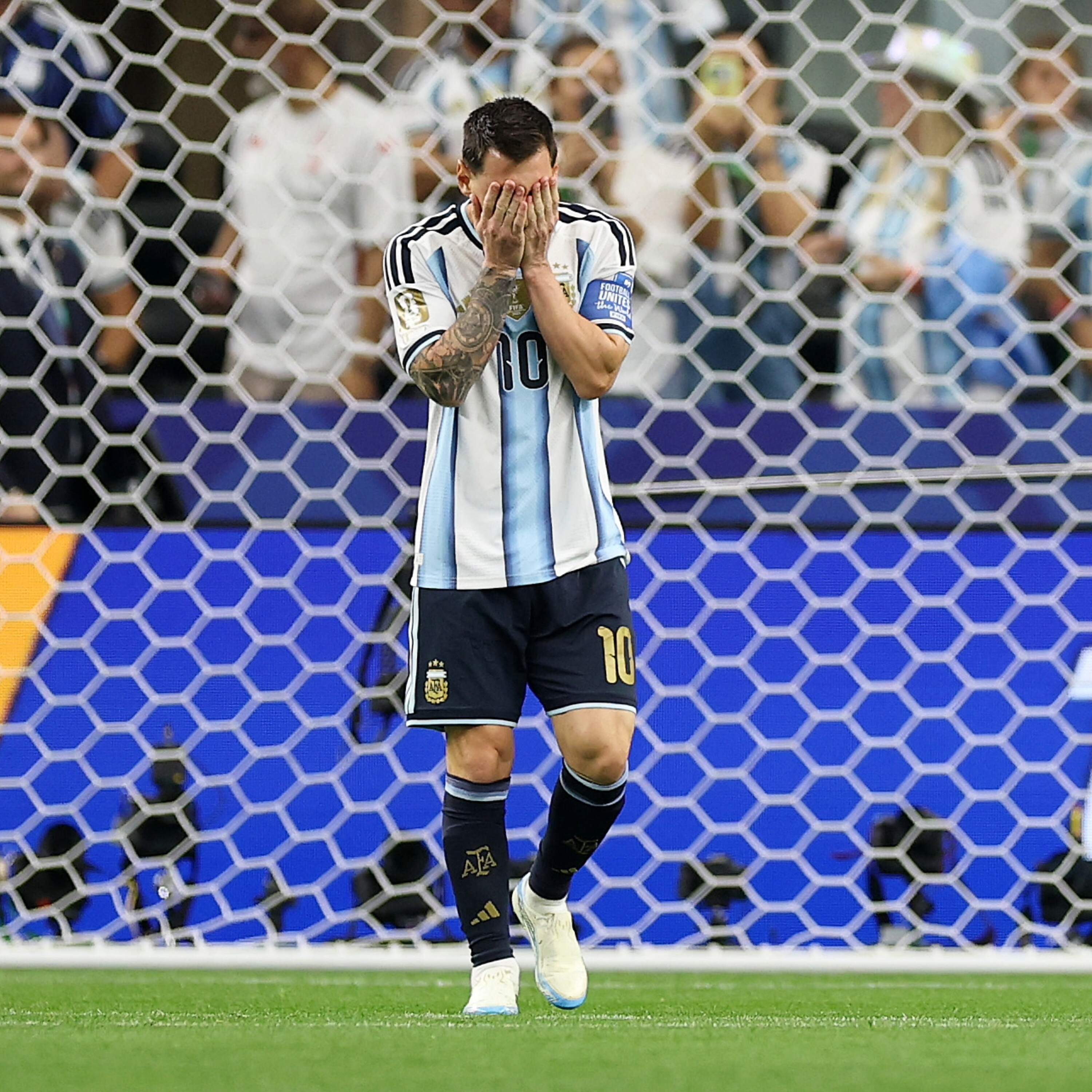
利昂内尔·梅西罚丢了点球。
Lionel Messi missed a penalty kick.
有史以来世界杯进球最多的球员,点球命中率其实只比平均水平略低。
The top World Cup scorer of all time is actually a slightly below average penalty kicker.
他有可能是世界杯历史上错失点球最多的球员。
He's in the running for missing the most penalties of any player in World Cup history.
奇怪的是,梅西在离球门仅12码、面前只有守门员的情况下,反而更难把球打进。
Somehow, Messi is worse at scoring when he's just 12 yards from the goal with no one but the goalie between him and the back of the net.
这可能是因为点球背后还涉及另一种能力。
And that might be because there's another skill at play when it comes to penalty kicks.
这不光看你踢球的技术有多好。
It's not just about how good you are at kicking the ball.
更重要的是我们Planet Money特别感兴趣的东西——博弈论。
It's about something we here at Planet Money love, game theory.
你好,欢迎收听Planet Money。
Hello, and welcome to Planet Money.
我是Jeff Guo。
I'm Jeff Guo.
在足球点球中运用博弈论,可能是经济学理论最引人入胜的应用之一。
The use of game theory in soccer penalties might be one of the most interesting applications of economic theory, like, ever.
今天节目中,我们邀请《Soccernomics》播客的团队,聊聊点球背后的技巧与策略。
Today on the show, we hear from the folks at the Soccernomics podcast about the art and strategy of the penalty kick.
在今年这个可能有更多比赛进入点球大战的世界杯年,我们会看看博弈论是如何改变这项运动的。
In a World Cup year where there might be more games going to penalties than ever before, we're gonna learn how game theory has changed the sport.
本周《Shorewave》节目,居家办公正变得越来越流行。
This week on Shorewave, working from home is popular.
不用通勤,穿着运动裤就能上班。
No commute, sweatpants.
做过的人说,这样让他们更开心。
People who do it say it makes them happier.
但数据显示,至少平均来看,他们可能想错了。
And the data suggests they're probably wrong about that, on average at least.
我们会深入分析一项关于远程办公带来的社交孤立及其对健康影响的新研究。
We unpack a new study about the social isolation of remote work and what it means for your health.
本周《Shortwave》,NPR科学播客。
This week on Shortwave, NPR Science Podcast.
请在NPR应用或您常用的播客平台每日收听。
Listen daily on the NPR app or wherever you get your podcasts.
你好。
Hi.
我是《Fresh Air》的主持人特里·格罗斯。
It's Terry Gross, host of Fresh Air.
嗨。
Hey.
暂时远离24小时滚动新闻,和我们一起聆听深度访谈,嘉宾包括你喜爱的作家、演员、电影人、喜剧演员和音乐人——那些创作出滋养心灵、回应时代的作品的人。
Take a break from the twenty four hour news cycle with us and listen to long form interviews with your favorite authors, actors, filmmakers, comedians, and musicians, the people making the art that nourishes us and speaks to our times.
欢迎收听来自NPR和WHYY的《Fresh Air》播客。
So listen to the Fresh Air podcast from NPR and WHYY.
好的。
Okay.
博弈论的核心,就是找出并分析制胜的策略。
So the whole point of game theory is to come up with and analyze winning strategies.
有趣的地方在于,任何游戏中,对手都会试图预测你的策略,而你也在猜对方怎么想。
And where it gets fun is that in any game, your opponent, of course, is trying to anticipate your strategy and vice versa.
所以你的选择,取决于你认为对方觉得你认为他觉得你认为他会怎么做。
So your strategy depends on what you think they think you think they think you think they think they're gonna do.
对吧?
Right?
如果你特别爱钻牛角尖,博弈论大概是最好的研究课题了。
Like, game theory is probably the best subject to study if you're an overthinker.
而这些心理博弈,在足球点球大战时表现得最精彩、最有画面感。
And nowhere are these mind games more cinematically laid out than on the soccer field when it's time for a penalty kick.
斯特凡·斯扎曼斯基是播客《Soccernomics》的主持人之一。
Stefan Szymanski is one of the hosts of the podcast Soccernomics.
他曾经是密歇根大学的教授,专攻体育经济领域。
He's a retired professor at the University of Michigan and an expert in the economics of sports.
他说,如果你观察顶尖的点球手,他们并不总是选择自己最擅长的那一侧射门。
And he says if you watch elite penalty kickers, they are not always taking the shots that they are the best at.
几乎每个人罚点球时都有一个擅长的侧边和一个不擅长的侧边。
Everybody takes a penalty has a good side and a bad side, almost everybody.
你可能会觉得应该总是往擅长的一侧踢,但那样的话,你的动作就太容易被猜到了。
And you might think that you'd always shoot to your best side, but if you do that, you're predictable.
所以有时候,尽管你踢向弱侧得分的概率更低,但你反而更应该选择那一侧。
And so what you have to do is sometimes, even though your chances of scoring are lower, you actually want to shoot to your worst side.
而你要做的,就是以一种让人无法预测的方式去做,这在博弈论里叫混合策略。
And what you have to do is do this in a way that's unpredictable, and that's what's called in game theory a mixed strategy.
要随机选择一串数字其实挺难的,比如在一系列射门中随机选左或右。
Now picking a sequence of random numbers is a quite a difficult thing to do, to choose at random left or right in a sequence.
左,右,右,右,左,右,左,诸如此类。
Left, right, right, right, left, right, left, so on.
这实际上非常难做到。
That's actually very hard to do.
大多数人其实做不好这一点,而罚点球时恰恰就需要这样。
Most people aren't very good at it, and that's what you have to do with penalty taking.
有时候你得往左边踢。
Sometimes you have to go one way.
有时候又得往右边踢,但关键是得做到完全让人猜不透。
Sometimes you have to go the other way, but you have to do so in a way that's completely unpredictable.
结果发现,职业足球运动员在选择这些随机序列方面其实非常在行。
And footballers turn out professional footballers turn out to be very good at picking those random sequences.
不过在这场博弈中,不只是罚球的人想做到不可预测。
Now in this game, of course, it's not just the penalty kicker who's trying to be unpredictable.
《Soccernomics》播客的另一位主持人阿希什·马尔霍特拉指出,守门员也在琢磨怎么让自己难以被预判。
Another host of the Soccernomics podcast, Ashish Malhotra, points out that the goalie is also thinking about how to be unpredictable.
所以这是两个人同时在这么想,而且彼此都清楚:如果我知道你了解我的习惯,那事情就更复杂了。
So it's two simultaneous people sort of thinking about this in this way and and also sort of knowing, you know, if I know that he knows, you know, what my tendencies are, then that's gonna complicate it further.
说得太对了。
That's exactly right.
这里的情况是,双方处于一种镜像对称的处境。
What's happening here is that both sides are in a in a mirror image situation.
罚球者要决定往左还是往右踢,而守门员如果面对的是一个高质量的射门,根本来不及反应方向,必须在球被踢出前就决定往哪边扑。
The penalty taker is trying to choose whether to go left or right, and the goalkeeper, if the penalty is well taken, that doesn't have time to react to the direction, has to choose before the ball is hit which way to dive.
于是他们都在选择自己的最佳策略:是扑左边还是扑右边。
And they're then choosing what is their best strategy, dive left or dive right.
他们面临同样的问题,因为守门员通常在某一个方向上表现得更好。
And they have the same problem because goalkeepers are often better going one way or going the other.
结果发现,守门员其实也很擅长构建这种随机序列。
And so what it turns out is the goalkeepers are also good at constructing these sequences as well.
顺便说一句,在经济学里,这种随机混合策略过去曾引发不少争议。
By the way, in economics, these random mixed strategies, they actually used to be fairly controversial.
有些经济学家根本不相信人们在现实生活中会使用混合策略,部分原因是大多数人根本无法真正做到随机。
There were economists who didn't think that people used mixed strategies in real life, partly because most people are just really, really bad at being truly random.
人们在实验室里做过实验,给学生几美元,让他们在几个选项间做选择,看看能不能生成随机序列,结果都失败了。
People tested this in laboratories with very simple experiments offering students a few dollars to try and choose between alternatives and see if they could construct these random sequences of choices, and they couldn't.
他们做得并不怎么样。
They weren't very good at it.
于是有人开始说,这种混合策略理论也没什么大不了的。
So people started to say, oh, this mixed strategy theory is not up to much.
后来有几位经济学家提出了不同看法,其中包括伊格纳西奥·克拉修斯·斯韦瑟,我们接下来会多次提到他。他专门研究了点球射门,发现实际比赛中罚球者的选择几乎完美契合了理论预测。
And then what happened was a few economists came up, including Ignacio Clasius Swerther, who we're gonna talk about a lot, actually studied penalty shooting and found out that the choices of penalty takers in practice almost exactly match the theory.
这成了博弈论的一个重要突破,它证明了混合策略这个概念——许多学者曾对它是否实用持怀疑态度——确实在现实中行得通,只要事情足够重要,人是能做到的。
So this was the sort of a breakthrough in game theory to be able to demonstrate that this concept of the mixed strategy, which many academics have been quite skeptical about as a practical strategy, that kind of showed that this really did work and that people could do it if it was important enough.
当然,在职业足球里,点球的重要性不言而喻。
And, of course, in professional football, penalty taking is pretty important.
顺便说一句,对我们这些不是顶级球员的人来说,这项关于混合策略的研究依然非常重要。
Now just as an aside, for those of us who aren't elite soccer players, this research into mixed strategies is still really important.
它其实随处可见。
They show up in everyday life.
比如,它能帮你赢下下一局猜拳。
Like, this could help you win your next game of rock, paper, scissors.
你看,根据博弈论,猜拳最好的策略就是随机混合出招。
You see, according to game theory, the best possible strategy in rock, paper, scissors is a mixed strategy.
你得做到完全随机,让对手没法猜到你下一轮会出石头、剪刀还是布。
You wanna be perfectly random so your opponent can't predict whether you're gonna go rock or paper or scissors.
但现实中,人根本做不到完全随机。
But in real life, people are never perfectly random.
对吧?
Right?
比如你连续出三次石头。
Say you go rock, like, three times in a row.
接下来你就会特别想换剪刀或者布,而对手恰恰知道你会这么想。
There's this big psychological temptation to go scissors or paper next time, and your opponent knows that.
这时候,心理战就派上用场了。
This is where the mind games come in.
实际上,世界上还有一群专门打竞技猜拳的选手。
There's actually an entire world of competitive rock, paper, scissors players.
早在2007年,他们甚至在ESPN直播了世界锦标赛。
Back in 2007, they even aired the championships on ESPN.
这项比赛的核心在于,到了顶尖水平,你要抓住对手那些微小的、偏离完美随机策略的漏洞。
And the entire basis of this competition is that at the elite level, you're trying to exploit your opponent's tiny little deviations from that perfect random strategy.
在职业足球里,当人们意识到点球其实存在最优的随机策略后,球队就开始收集对手的数据,分析谁更擅长保持不可预测,谁又容易被看穿。
Now in professional soccer, once people started to realize that there was this optimal mixed strategy for penalty kicks, you started to see teams collecting data on their opponents to see who was good at being unpredictable and who wasn't.
西蒙·库珀是《足球经济学》播客的另一位主持人。
Simon Kuper is another one of the hosts of the Soccernomics podcast.
他是一名记者兼足球评论员,解释了有一位经济学家如何推动了点球大战的数据革命。
He's a journalist and a soccer commentator, and he explains how one economist led a kind of data revolution in penalty shootouts.
很长一段时间里,几乎没人记录球员罚点球的方式。
Well, for a long time, almost nobody is tracking how people take penalties.
而且八九十年代很多联赛的电视录像本来就少,想搞清楚球员们过去怎么罚点球,根本没多少资料。
And of course, there isn't much TV footage in the eighties and nineties of many leagues, so it's hard to know, you know, what the guy what penalties have been.
直到二月份,几乎没有任何球队会参考球员以往罚点球的数据。
Really, until into the February, almost no teams are using records of how people have taken penalties.
但有一个人做到了,他是我们的朋友、经济学家伊格纳西奥·帕拉西奥·乌尔塔,从九十年代起他就开始收集成千上万个点球的数据。
But the one guy who has this is an economist, a friend of ours, Ignacio Palacio Huerta, and he from the nineties is mapping he's collecting this database of thousands of penalties.
他的妻子和母亲给他寄来西班牙和其他地方的点球录像,他由此建成了全球最完整的球员点球习惯数据库。
His wife and his mother are sending him videos of penalties from Spain and elsewhere, and he is, creating the best database in the world of how footballers are taking penalties.
于是出现了这么一种奇怪的情况:这个芝加哥大学的研究生,对点球手的习惯了解得比任何俱乐部都多,而他本人根本用不上这些信息,俱乐部却急切地需要。
And so you've got this weird situation that this guy who's a graduate student at Chicago, he knows more about the habits of penalty takers than any club, even though he doesn't need the knowledge, and they desperately do.
那这个发现是什么时候派上用场的呢?
So when does this come to the floor?
2008年欧冠决赛,切尔西对曼联。
Two thousand and eight Champions League final, Chelsea, Manchester United.
太精彩了。
So dramatic.
欧冠赛事。
The Champions League.
这项赛事汇聚了欧洲顶尖的俱乐部球队。
This tournament features the top club teams in Europe.
在2008年决赛前,切尔西队的主教练听说了伊格纳西奥的数据库,就找他帮忙。
And ahead of the two thousand eight championship match, the manager of one of the teams in the final, Chelsea, had heard about Ignacio's database and asked him for his help.
于是伊格纳西奥为切尔西写了一份关于曼联点球习惯的分析报告。
So Ignacio ends up writing a penalty report on Manchester United for Chelsea.
当然,比赛最后进入了点球大战。
And then, of course, the game goes to a penalty shootout.
我当时在莫斯科的南边。
I'm in the South in Moscow.
点球大战开始时已经快凌晨一点了,因为得赶着西欧的黄金时段播出。
It's about one in the morning when the shootout starts because it has to be prime time in Western Europe.
伊格纳西奥的那份备忘录上写了什么?
And what does Ignacio's crib sheet say?
上面有一些非常精彩的建议。
It has some amazing advice.
比如,年轻的C罗在助跑时如果停顿,门将绝对不能动,因为C罗会盯着门将的反应。
So for example, Ronaldo, the young Cristiano Ronaldo, when he pauses in his run up, the keeper should never move because Ronaldo watches what the keeper does.
当他停顿一下准备射门时,通常会往右边踢。
And when he pauses in his run up, he usually shoots right.
如果你看着点球大战,知道伊格纳西奥的建议,简直太刺激了。
If you watch the penalty shootout, knowing Ignacio's advice is absolutely thrilling.
克里斯蒂亚诺·罗纳尔多,全世界都在看着。
Cristiano Ronaldo, the world is watching.
切尔西门将彼得·捷克严格遵循了这些建议。
So Peter Czech, the Chelsea goalkeeper, follows this advice.
他大步助跑,然后停住,
Big, big step, and he waits,
他盯着看,捷克稳稳站着不动。
and he looks, and Czech stands big.
捷克扑向右侧,挡出了罗纳尔多的点球。
And Chek dives right, stops Ronaldo's penalty.
捷克居然扑出了罗纳尔多的射门。
And Chek has saved from Ronaldo of all people.
是的
Yeah.
看来切尔西门将完全采纳了那位经济学家的建议。
It seems like the Chelsea goalie is following the economist's advice to a t.
但伊格纳西奥给球队最重要的建议,可能是关于切尔西点球手该如何应对曼联门将埃德温·范德萨,怎样才能骗过对方。
But the most important advice that Ignacio has for the team might involve what Chelsea's penalty kickers should do, how they can outsmart the opposing goalkeeper, Manchester United's Edwin van DiSar.
伊格纳西奥说,曼联的门将其实并没有采用随机化的策略。
And Ignacio says, the sorrow, the United keeper, doesn't really follow a mixed strategy of randomizing.
他总是太频繁地扑向右边。
He dives too often to his right.
很明显,切尔西球员们已经掌握了这些信息。
And so clearly, the Chelsea players got the notes.
对
Yeah.
网上到处都能看到这段录像。
There are clips of this all over the Internet.
我们会在节目笔记里附上一个视频链接,你可以看到一个接一个的球员把球射向曼联门将的左侧。
We'll link to one of them in our show notes where you can see player after player shoot to the Manchester United keepers left.
他之前也罚过关键点球,每次都稳稳命中,这次也不例外,一脚精准射门得分。
He's taken some pressure penalties before answered and scored, and he drills this one in.
切尔西的第二个点球也进了,第三个也进了。
Chelsea's second penalty kick also goes in, and the third.
第四个点球也勉强进了,擦着门柱钻了进去。
The fourth sneaks in too, just barely.
哎呀,刚好进去了。
Oh, it got in just.
就差一点。
Just.
但就是那一点点。
But just
接下来轮到切尔西的第五个罚球手,约翰·特里。
Then comes Chelsea's fifth penalty kicker, John Terry.
他滑倒了,因为下雨,没踢进球门,现在比分打平了。
He slips because it's raining, so he misses his goal, and now it is tied for all.
这段时间两队你来我往,现在进入了第六轮,接着是第七轮。
This whole time, the teams have been going back and forth, and now they go to a sixth round and then a seventh.
曼联第一个主罚的球员上场了。
Manchester United's kicker goes first.
他罚进了,接着切尔西的尼古拉·阿内尔卡走上点球点,面对曼联门将埃德文·范德萨。
He scores, and that's when the Chelsea player, Nicholas Annelka, steps up to the penalty spot to face off against the Manchester United goalie Edwin Vandesar.
阿内尔卡必须把这一球打进。
And Annelka has to get this one in.
就在阿内尔卡即将射门时,范德萨看出了门道。
And just when Annelka is about to kick, Faldesari's figured it out.
他明白了。
He's worked out.
他们都往他的左边踢。
They're all kicking to his left.
我当时就在球场里。
And I was in the stadium.
我觉得没人注意到球场里那个小动作。
Nobody noticed, I think, this gesture in the stadium.
赛后报纸上也没提过这事。
It wasn't in newspaper reports afterwards.
我压根没看见。
I didn't see it.
我也没写过这件事。
I didn't write about it.
但你要是回看YouTube上的点球大战视频,就能很清楚地看到,冯达萨站在球门线上,身形特别高大。
But watching the penalty shootouts on YouTube, you see very clearly, Fondesar is standing on his goal line like this, massive figure.
在安内尔卡助跑之前,冯达萨朝自己的左侧指了一下。
And before Arnelka runs up, Fondesar points left to his left.
他是在告诉安内尔卡:我知道你们打的什么算盘。
And he's saying to Arnelka, I know what you guys are doing.
你们全都往左踢。
You're all going left.
阿内尔卡本来也打算像其他切尔西球员一样往左踢,但现在他知道,丰德萨尔已经看穿了他心里的想法——知道丰德萨尔会往右扑。
And Arnelka probably meant to go left like all the other Chelsea kickers, but now he knows that Fondesar knows that he knows that Fondesar dives to off from right.
那他该怎么办?
So what does he do?
丰德萨尔说了,我觉得你会往左踢。
Fondesar has said, I think you're gonna kick it left.
阿内尔卡这时候肯定乱了阵脚。
Annelka's probably very shaken.
阿内尔卡走上前的时候,表情一点都不轻松。
He didn't look happy coming forward, Annelka.
他踢的球,正好就是伊格纳西奥说过的,千万别对丰德萨尔踢的那种。
And he kicks exactly the kick Ignacio said, never take against Fondesar.
他说,对付丰德萨尔,要么低球贴地,要么高球顶角,千万别踢在中间高度。
He said against Fondesar, either go over the ground or high in the top corner, but do not hit it mid height.
所以安内尔卡把球射向了丰德萨尔的右侧,高度正好在中间。
So Annelka hits the ball mid height to Fondesar's right.
他现在显然不高兴了,因为这在俄罗斯可是红牌。
And he's not happy now because it's red in Russia.
丰德萨尔轻松就把球扑住了。
Fondesar saves it quite easily.
在欧洲的夜晚,正是曼联的时刻。
Night in Europe is Manchester United's night.
最棒的。
Best
曼联赢得了欧冠冠军。
United win the Champions League.
这份精妙的点球数据分析,最后反而害了切尔西。
So this brilliant data penalty report for Chelsea ends up backfiring.
明白了。
Okay.
好的。
Okay.
我不确定‘适得其反’这个词是不是最准确的。
I don't know if backfiring is the right word.
没错,伊格纳西奥的报告确实没帮上切尔西,但我认为博弈论还是赢了。
Like, yeah, Ignacio's report didn't end up working for Chelsea, but I would say that game theory still prevailed.
对吧?
Right?
尽管曼联门将的反应太容易被猜到,但最终切尔西也是一样。
Because even though United's keeper was too predictable, in the end, so was Chelsea.
他们做了最显而易见的事。
They did the most obvious thing.
每次射门都直奔门将的左边。
They shot to the keeper's left every single time.
所以切尔西自己其实并没有真正采用那种难以预测的混合策略。
So Chelsea themselves didn't quite employ that unpredictable mixed strategy.
而这一点,再加上场地湿滑,最终让他们失去了胜利。
And that, and maybe the wet field, is what ultimately cost them the victory.
广告结束后,我们会再分享几个关于博弈论如何改变足球比赛的技巧。
After the break, we're gonna learn a couple more tips about how game theory has changed the game of soccer.
足球。
Soccer.
你好。
Hi.
我是《新鲜空气》节目的主持人特里·格罗斯。
It's Terry Gross, the host of Fresh Air.
听听我关于文化战争起源的访谈吧。
Catch my interview about the birth of the culture wars.
就连早餐麦片也卷入了文化战争。
Even breakfast cereals have become part of the culture wars.
作家艾萨克·巴特勒带我们回顾了基督教右翼如何对具有挑衅性的艺术发起抵制的那段历史。
Author Isaac Butler takes us back to when the Christian right mobilized against provocative art.
请在NPR应用或您常用的播客平台收听《Fresh Air》。
Listen to fresh air on the NPR app or wherever you get your podcasts.
《It's Been a Minute》——NPR的文化时事播客,每期开头都会提三个问题。
Every episode of It's Been a Minute, NPR's What's Happening in Culture podcast starts by asking three questions.
谁?
Who?
怎么发生的?
How?
为什么是现在?
Why now?
只要文化圈在讨论,我们就跟着聊。
If the culture's asking it, we're talking about it.
在NPR,我们支持你保持好奇,尽情探索文化话题。
At NPR, we stand for your right to be curious and indulge your cultural curiosity.
在您常用的播客平台关注《It's Been a Minute》,我们会帮你拆解那些刷屏的热门话题。
Follow It's Been A Minute wherever you get your podcasts, and we'll break down the zeitgeisty topics that are filling your feed.
想在五分钟内快速了解全球大事?立即收听NPR新闻。
For instant clarity on world events in just five minutes, listen to NPR News now.
每小时更新新一期节目,涵盖美国政治、国际新闻、经济、健康、科学、科技等最新动态,只需五分钟,你就能跟上NPR新闻的全部要点。
New episodes drop every hour with the latest on US politics, international news, the economy, health, science, technology, and more, five minutes is all it takes to get fully caught up with NPR News Now.
通过NPR应用,或在你常用的播客平台收听。
Listen on the NPR app or wherever you get podcasts.
自2008年以来,许多球队都采用伊格纳西奥的数据策略来备战点球大战。
Since 2008, a lot of teams have used Ignacio's data strategy to prepare for penalty shootouts.
伊格纳西奥曾为英格兰国家队提供过支持。
Ignacio has worked with the English national team.
他还为西班牙联赛的毕尔巴鄂竞技队工作过,现在门将们甚至会把备忘小抄贴在水瓶上。
He's worked for athletic Bilbao in the Spanish league, and goalies now often even have their crib sheets taped onto their water bottles.
而对方的罚球手也知道,门将的水瓶上贴着这些备忘小抄。
And the opposing kickers know that the goalies have these crib sheets taped onto their water bottles.
那么,当所有人都在试图实施自己认为对方最优策略的最优策略时,局面又会如何变化呢?
So how do things change now that everyone is trying to play their optimal strategy, which is based on what they think their opponent's optimal strategy is.
足坛现在有个争论,到底是心理战术更有效,还是纯粹靠数据分析更靠谱。
There is a bit of a debate going on in the football world about whether, really, there's the better approach is the psychological approach or the sort of pure statistical approach.
我觉得有意思的是这一点。
So I think the interesting thing is this.
伊格纳西奥把数据和量化分析带入了点球训练,说白了就是对数字的分析。
So what Ignacio did is she brought data and quantification to penalty taking, and, you know, that that's just about the analysis of numbers.
但现实并不完全符合理论,因为理论假设只有左右两个选择。
But the the world doesn't quite fit perfectly with the theory in the sense that the theory is based on there are two choices, left or right.
其实哪有那么简单,只有两个选择呢。
Well, there aren't really two choices.
球门上方左侧、上方右侧、下方左侧、下方右侧,选项多得很。
There's obviously up top up top left, top bottom right, and so there's there there are different options.
所以问题在于,光靠算数能走多远?还得加上多少心理因素?
And so the I think the issue is how far does pure number crunching get you, and then how much is additionally, you know, psychology?
而麦克纳齐厉害的地方,就在于他两方面都做得很好。
And then what's interesting about McNazio is he's clearly good at both.
他把所有数据都算得明明白白,然后退一步想想:从我们已知的信息里,能推断出些什么?
He does all the numbers, but then he sort of sits back and says, well, you know, what can we surmise from from what we know?
他慢慢培养出一种直觉。
He sort of develops a feel for it.
在过去二十年里,随着博弈论和足球心理学研究的深入,大多数球队对待点球的方式已经彻底改变了。
So over the past two decades, between the research into game theory and the research into soccer psychology, most teams have started to treat penalty kicks in a totally different way.
其实,关于点球的一些研究已经发现了一些值得借鉴的做法。
I mean, there are some findings from broader penalty research about things that are good to do.
比如,射门前别着急,稍微停一停。
So for example, take your time before your shot.
花上几秒钟时间。
Take a few seconds.
2006年,英格兰球员杰米·卡拉格就是个典型例子,他常常冲上去就射,这其实是个错误的做法。
England players Jamie Carra in 2006, famous example, would often rush in and shoot, which is a bad way of doing it.
另外,你还要在模拟点球大战的环境下多加练习。
And then you want to practice under kind of shootout conditions.
所以他们在训练时也会播放观众的喧闹声,完全模拟点球大战的场景。
So I think they pipe in noise of the crowd even in training sessions, and you actually recreate the shootout in a training session.
让每个人都参与练习。
You make everybody practice.
甚至还有关于点球顺序的策略。
There's even a strategy for the order in which you wanna take your penalty kicks.
你应该先踢,因为后踢的球队往往处于必须进球才能继续比赛的心理压力下。
You should always shoot first because the team shooting second is often in the psychological position of having to score just to stay in the game.
所以后踢的球队压力更大,这大概能解释为什么在过去、在点球数据分析出现之前,先踢的一方获胜概率高达60%。
So there's higher stress on the team shooting second, which probably explains why certainly in the past, in the era before penalty reports, the chances of winning if you shot first was 60%.
现在由于几乎所有顶级球队都有了点球分析报告,先踢的优势已经没那么明显了。
I've said going first has lost some of its value now that pretty much every top team has penalty reports now.
每支顶级球队赛前都会准备点球应对方案,这让比赛更依赖技术,而不是对后踢方的心理压迫。
Every top team will go into a game with a report for the shootout, and that makes it a slightly more skill based and less about psychological pressure, I guess, on the team going second.
对。
Yeah.
比赛正在发生变化。
The game is changing.
我们甚至看到一些研究指出,现在由于点球报告如此普遍,先踢的优势可能已经不复存在了。
We've even seen studies that say the advantage of going first might not even exist anymore now that penalty reports have become so common.
过去,球队都把点球当成碰运气,觉得这就是一场随机游戏,根本没法提前准备。
It used to be that teams treated penalty kicks as basically a lottery, a game of chance, something you couldn't really prepare for.
但现在,很多球队都会专门委托制作这种战术报告。
But nowadays, you see a lot of teams commissioning these strategy reports.
他们会花时间训练点球,还会播放假的观众噪音,让球员学会在压力下保持冷静和随机应变。
They take time to practice penalty kicking, piping in, you know, that fake crowd noise so that players can learn how to perform unpredictability under pressure.
接下来几周的世界杯上,我们可能会看到这些训练的成果。
And we might see the product of all that over the next couple weeks at the World Cup.
32支球队晋级淘汰赛,这意味着可能会出现比以往更多的点球大战。
32 teams moved on to the knockout rounds, which means there could be more penalty shootouts than ever before.
所以,我们终于能亲眼看看,这些数据分析和心理战术在世界最大舞台上到底管不管用。
So we'll get to see how this data analysis and psychology works out on the world's biggest stage.
嘿。
Hey.
我需要你帮忙做一个即将播出的节目。
I need your help for an upcoming episode.
你是饮料控吗?
Are you a beverage goblin?
我们正在研究为什么最近出现了这么多新饮品和新口味,想知道这是否也影响到了你的生活?
We are looking into the economic forces behind why there are so many new types of drinks and drink flavors, and we wanna hear, is this something that's affecting your life?
另外,如果《Planet Money》是一种口味,你觉得会是什么味道?
Also, if Planet Money were a flavor, what flavor would we be?
我觉得可能是咸的。
I think maybe salty.
把你的想法发给我们。
Send us your ideas.
录一段语音留言吧。
Record a voice memo.
发邮件给我们:planetmoney@npr.org。
Email us planetmoney@npr.org.
另外,我们在线上直播活动上见到所有Planet Money会员,真的特别开心。
Also, we loved seeing all of you Planet Money Plus subscribers at our virtual live event.
你们提的问题太棒了,我们特别想多办一些这样的线下和线上活动。
You had awesome, awesome questions, questions, and we wanna do more of these events in person and virtually.
告诉我们你对什么话题感兴趣吧。
So let us know what you're interested in.
再次发邮件给我们:planetmoney@npr.org。
Email us again at planetmoney@NPR.org.
本集《Planet Money》由艾玛·皮斯利制作,詹姆斯·斯尼德协助,杰西·江剪辑,西耶拉·华雷斯核对事实,黄安莉负责音频制作。
This episode of Planet Money was produced by Emma Peaslee with help from James Sneed, was edited by Jess Jiang, fact checked by Sierra Juarez, and engineered by Annlie Huang.
亚历克斯·戈德马克是我们的执行制片人。
Alex Goldmark is our executive producer.
《Soccernomics》这一期最初由阿希什、西蒙和斯特凡主持,音效设计由亚历克斯·罗尔丹完成。
The Soccernomics episode was originally hosted by Ashish, Simon, and Stefan, and sound designed by Alex Roldan.
他们有关于世界杯的精彩节目,其中一集探讨了足球教练是否真的能带来改变。
They have great episodes about the World Cup, including one on whether soccer managers actually make a difference.
他们的播客基于西蒙和施特凡合著的同名书籍《足球经济学》。
Their podcast is based on Simon and Stefan's book, also called Soccernomics.
如果你想更深入了解足球和博弈论,伊格纳西奥·帕拉西奥·乌尔塔也写过一本书。
And if you wanna learn more about soccer and game theory specifically, Ignacio Palacio Huerta has also written a book.
书名叫《美丽游戏的博弈论:足球如何帮助理解经济学》。
It's called beautiful game theory, how soccer can help economics.
我是杰夫·郭。
I'm Jeff Guo.
这里是NPR。
This is NPR.
感谢收听。
Thanks for listening.
你好。
Hi.
我是特里·格罗斯,《新鲜空气》节目的主持人。
It's Terry Gross, host of Fresh Air.
嗨。
Hey.
暂时远离二十四小时滚动新闻,来听听我们深度访谈你喜爱的作家、演员、导演、喜剧人和音乐人吧——正是他们创作了滋养我们、回应时代的作品。
Take a break from the twenty four hour news cycle with us and listen to long form interviews with your favorite authors, actors, filmmakers, comedians, and musicians, the people making the art that nourishes us and speaks to our times.
欢迎收听来自NPR和WHYY的《新鲜空气》播客。
So listen to the Fresh Air podcast from NPR and WHYY.
每天在NPR金球奖提名晨间新闻播客《今日要闻》里,我们都会为你带来三条关键新闻。
You know, every day on Up First, NPR's Golden Globe nominated morning news podcast, we bring you three essential stories.
每条新闻的核心,都是几个关键问题。
At the heart of each story are questions.
到底发生了什么?
What really happened?
真正重要的是什么?
What really mattered?
接下来会发生什么?
What happens next?
在NPR,我们支持你保持好奇,追寻事实的权利。
At NPR, we stand for your right to be curious and to follow the facts.
无论你在哪儿听播客,都来关注《Up First》,让你每天一早就知道哪些事重要,为什么重要。
Follow Up First wherever you get your podcasts and start your day knowing what matters and why.
关于 Bayt 播客
Bayt 提供中文+原文双语音频和字幕,帮助你打破语言障碍,轻松听懂全球优质播客。